More from life

The hazards of being a good sport

Not a day passes when I don’t look on my father’s record with shock and awe. I’m not talking about his authorship of Labour’s 1945 manifesto, his invention of the word ‘meritocracy’ or his creation of the Open University. I’m talking about the fact that he fathered a child at the age of 80. How on earth did he cope? My eldest was born when I was 40, with three more following in quick succession, and I already think of myself as an old dad. The problem is, they want to play with me all the time — rough, competitive, physical games — and it’s completely debilitating. The boys, aged six, seven and ten, are particularly demanding. I’m just not up to it. God knows how my father managed to stay alive until he was 86.

Long life | 16 April 2015

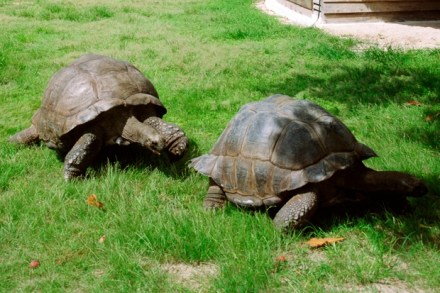
No sooner had I written last week’s column about the sad disappearance of the two tortoises in my care than they suddenly showed up. The sun had shone for two days, and that was enough to bring them out from underground. I had become convinced that I would never see them again. They had vanished from sight nearly five months earlier, and the expert websites that I consulted not only said this was longer than tortoises normally hibernate but also made clear that I had been an utterly irresponsible tortoise-keeper. They should have been starved before hibernating, they should have been measured, weighed and minutely inspected, and then they should have been placed in a ‘vivarium’ with a glass front through which they could be regularly examined throughout the winter.

No fairy tale ending

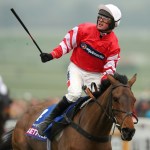
It all depends how you like your fairy tales. OK, so we would have loved the retiring Tony ‘AP’ McCoy, 20 years a champion, to have won his last Grand National on Shutthefrontdoor, owned by his long-time patron J.P. McManus, jump racing’s biggest benefactor. But fate rarely reads the full script and this year’s National went instead to the talented Many Clouds, owned by Trevor Hemmings, another who has poured a fortune into racing. Many Clouds was trained in Lambourn by the generous-hearted Oliver Sherwood, a man claimed truly as a friend by more people in racing than anyone else I know and who has in his choice of riders and assistants over the years launched a whole series of racing careers.

The extraordinary Green manifesto

I’m disappointed that Ed Balls’s suggestion that the Office of Budget Responsibility should audit the parties’ manifestos was never taken up, not least because we will never know what Robert Chote thinks of the Green party’s claim that all its proposals are ‘fully costed’. Believe it or not, this includes the commitment to spend £45 billion on loft insulation in the next parliament. It’s quite something, the Greens’ manifesto. No doubt you’ll have already read about some of their more reasonable measures — such as the ‘complete ban on cages for hens and rabbits’ and the insistence that ‘UK taxpayers’ money is not used for bullfighting’.

Miliband vs Millwall

I’ve been trying to think of a good football analogy to describe the battle between the two main parties as the general election approaches. One suggestion is the second leg of a Champions League game, with the Conservatives having won the first leg by one goal to nil. If we assume that the Tories are playing at home, that means Labour have to score two goals to win, whereas all the Tories have to do is not concede. Last week’s debate certainly felt like that, with Cameron playing a tight, defensive game and Miliband trying to score at every opportunity. The Conservative leader ended up winning on aggregate because the Labour leader failed to find the back of the net. But a Champions League match suggests two teams of real quality, which is where the analogy breaks down.

Long life | 9 April 2015

It’s April. It’s spring. The daffodils and the cowslips are in flower. The birds are chirping merrily. But where are the tortoises? There were two of them, a big one called Alice and a small one called Gertrude. They have been in my care since last summer when a friend, their owner, moved from her London house, which had a garden, into a flat nearby, which hadn’t. So the tortoises came up here to my house in Northamptonshire to be looked after by me. I put them in a patch of garden, about 20 yards by 15, surrounded by walls and yew hedges. Within these was erected a chicken-wire fence, buried into the ground so that they couldn’t escape; and there they stayed happily from June until the autumn when the weather got cold and they disappeared, presumably to hibernate.

The fox that killed my chickens depressed me more than 250,000 tsunami deaths

It is hard to know how a tragedy is going to move a person who is not directly affected by it. Over a death or misfortune in the family, or among one’s friends, one is sure to feel pain and grief. But what of those other ghastly events involving people, maybe hundreds or thousands of them, with whom one has no connection? They provoke shock, disgust and horror, but not necessarily great personal sadness. Could it be true that I was more depressed when a fox killed all my chickens than I was when the Indian Ocean tsunami of 2004 swept over a quarter of a million people to their deaths? I have an ugly, shameful feeling that I might have been. Perhaps I am uniquely unimaginative and lacking in empathy, but I fear not.

Who will fund a prize for the true fighter pilots of the Turf?

After listening to a violinist’s justification of his playing, Dr Samuel Johnson responded tartly: ‘Difficult do you call it, Sir? I wish it were impossible.’ Racing’s marketing arm, Great British Racing, probably attempted the impossible in trying to satisfy all parties concerned in devising a new structure for the Flat Jockeys Championship. As part of its efforts to give greater narrative and structure to racing’s untidy seasons, its plan is for the title, which will now include a £25,000 prize, to be awarded to the jockey who rides the most winners between the Qipco-sponsored Guineas meeting at Newmarket on 2 May and the Qipco-sponsored Champions Day on 17 October. It is not a perfect situation.

Lefty myths about inequality

As a Tory, I’ve been thinking a lot about inequality recently. Has it really increased in the past five years? Or is that just scaremongering on the part of the left? By most measures, there’s not much evidence that the United Kingdom became more unequal in the last parliament. Take the UK’s ‘Gini co-efficient’, which measures income inequality. In 2009/10, it was higher than it was at any point during the subsequent three years. Indeed, in 2011/12 it fell to its lowest level since 1986. Data isn’t available for the last two years, but there’s no reason to think it has exceeded what it was when Labour left office.

Be different, be original: that’s what makes a popular politician

I sometimes try to imagine what it would be like being a political leader. I find this difficult because I would be so utterly ill suited to the role. I’m too lazy, too disorganised and too undisciplined to be remotely credible at it. But the area in which I would fail most completely would be in the projection of a suitable image. Not only would I be incapable of saying the right things at the right time; I don’t have the appearance or bearing or dress sense to convey calm, self-confidence and authority. I suppose you could say much the same of Adolf Hitler were it not for his gift for inflammatory speechmaking. He was a miserable, rather jumpy-looking creature.

How (and why) we lie to ourselves about opinion polls

A strange ritual takes place on Twitter most evenings at around 10.30 p.m. Hundreds of political anoraks start tweeting the results of the YouGov daily tracker poll due to be published in the following day’s Sun. Some of them are neutrals, but the majority are politically aligned and will only tweet those results that show their party in front. I often wonder what the point of this is, even though I’m guilty of it myself. It’s not as if anyone is going to see the tweet and say, ‘Ooh, I wasn’t going to vote Conservative, but now that YouGov has them two points ahead I’ve changed my mind.’ I can think of only two sensible reasons for doing this, both quite weak. The first is it has a mildly demoralising effect on your opponents.

An Episcopalian vicar made me warm to the principle of women joining gentlemen’s clubs

In 1993, when I was living in Manhattan working for the New Yorker magazine, I was chosen as ‘distinguished visitor’ to be a temporary member of the Century Club: there were two of us in this category, me and the Tanzanian ambassador to the United Nations. The Century, in midtown Manhattan on West 43rd Street, is one of the grandest clubs in New York, most of which were opened in the 19th century in imitation of the gentlemen’s clubs of London. The Century was founded in 1846, only 15 years later than the Garrick Club, of which I have long been a member. It was originally planned as ‘an association of artists, writers, musicians and amateurs of the arts and letters devoted to companionship and conversation’.

Disneyland comes to the Cheltenham Festival

Irish racing guru Ted Walsh was asked at the start of Gold Cup day if retiring champion jockey Tony McCoy could win his last Cheltenham Festival race. ‘No,’ came the unsentimental reply. ‘This is Cheltenham, not Disneyland.’ But within three hours, racing’s raucous pilgrims cheered home a fairytale winner: the novice Coneygree ran his rivals ragged from the front in the hands of the young jockey Nico de Boinville and collected the Betfred Gold Cup for the ten-horse stable of Mark and Sara Bradstock, recently profiled here. Said former trainer Charlie Brooks, ‘That was the best victory ever in the history of horse-racing,’ and his opinion had plenty of takers.

I’m working to make education fairer. But I’m still not sure what ‘fairer’ means

Civitas has just published an interesting book called The Ins and Outs of Selective Secondary Schools. Edited by Anastasia de Waal, it’s a collection of essays by the usual suspects in the never-ending argument about grammar schools. De Waal points out that the two sides have more in common than you’d think. In particular, they share a common goal, which is to sever the link between a child’s socio-economic status and attainment. In 2009, according to the OECD, the variance in the scores of British children in the Pisa international tests in maths, reading and science that could be explained by their backgrounds was 13.8 per cent. By this measure, the best-performing region in the world is Macau (2 per cent) and the worst is Peru (27.5 per cent).

It’s a pointless waste of time for David Cameron to resurrect the hunting debate

Of all the election promises politicians make in the run-up to a general election the one most certain to remain unfulfilled is David Cameron’s pledge to try to repeal the foxhunting ban. He has said he will give MPs a free vote on the issue, but he promised something similar before the last election, only to be prevented from doing anything by his coalition partners, the Liberal Democrats, who remain firmly opposed to hunting with hounds. So does the Labour party, and so does the public. A recent opinion poll found that 80 per cent of people in this country, in rural communities as much as in towns, want to keep the ban in force.

Could my son Charlie become a Premier League footballer?

My son Charlie was scouted by QPR last week. I say ‘scouted’, but that’s not quite accurate since he’s only six. Rather, a man claiming to be a member of the club’s coaching staff suggested I bring him along to the QPR pre-academy in Willesden. At first, I was suspicious. The man in question teaches football at the local leisure centre and I was worried that this ‘pre-academy’ would turn out to be an expensive, fee-paying affair with no official links to QPR. When the man first introduced the idea, I had to ask if he’d got the right boy. Charlie’s quite small for his age and not exactly lion-hearted.

I’ve been sacked more times than I can exactly remember. It teaches you nothing

The Oldie magazine — of which, until otherwise advised, I appear to be the editor — runs an occasional article about someone’s experience of being sacked. When I was young, this used to carry something of a stigma: other people found it hard to believe that you could be sacked without having somehow deserved it. But since then so many admirable people have lost their jobs for no good reason that nobody thinks any the worse of them for it. And now we are told by Anna Wintour, the editor of American Vogue and queen of the fashion world for 27 years, that to be sacked is actually a good thing. ‘I think everyone should be sacked at least once,’ she told Alastair Campbell in an interview for his new book Winners: And How They Succeed.

Racing’s biggest issue is the decline in field sizes

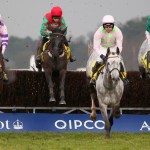
‘I don’t want to seem unromantic,’ said Mrs Oakley as St Valentine’s Day approached, ‘but this year please don’t buy another of those Monet cards you seem to find appropriate for all occasions from birthdays to anniversaries.’ And there was me thinking I had cleverly avoided slush and over-commercialism all these years. Behaviour patterns creep up without you noticing and the same is true in racing. For too long we have been enduring small fields, especially in steeplechases, still to me the most exciting of all the spectacles racing has to offer. Ascot recently celebrated its 50 years of jump racing with a racecard that included three chases. One had attracted six runners, one had five and the other four.

My plan for Question Time: mug up and fail anyway

I was invited on Question Time this week, which gave me a few sleepless nights. Natalie Bennett’s disastrous interview on LBC was a reminder that appearing on a current affairs programme in this febrile pre-election environment can be a bit of a minefield. Admittedly, I’m not the leader of a political party but that’s no guarantee I won’t make a fool of myself — a moment that will be preserved for ever on YouTube. There are no opportunities for glory on Question Time, but plenty for embarrassment. The most you can hope for is to get through the experience in one piece. By now you may well have seen what happened — but I am writing this on Tuesday evening, full of nerves. My biggest fear is that someone might ask a ‘funny’ question.

If you think Britain’s corrupt now, watch what happens if we ban second jobs for MPs

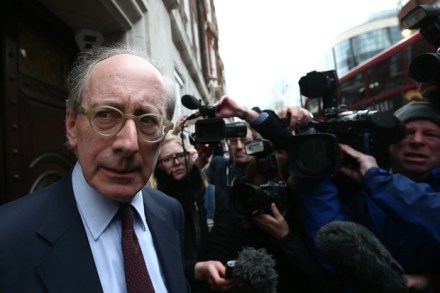
Last year, I had an exchange with Hugo Rifkind on Twitter in which I bet him dinner at Clarke’s that his father would stand down before the next election. My reasoning was that, at the age of 68, his dad wouldn’t want to serve another five years in the Commons and would be happier in the Lords. I hadn’t anticipated he would depart as a result of a cash-for-access scandal. I’ve always rather fancied running in Kensington myself. Rifkind has a majority of 8,616, which makes it a safe seat, and it’s only a 15-minute cycle ride from my house. But I’m not going to throw my hat into the ring because I still have numerous responsibilities in connection with the three schools I’ve helped set up.