More from life

Without Jesus and with less Santa, what does Christmas mostly consist of?

More than ever this year I find friends planning to go abroad for Christmas, some to countries such as India where the sun shines and Christmas is barely celebrated at all. I can see why. The goodwill and good cheer that the festival is intended to foster is all too often outweighed by the stress and anxiety it causes. This has been the case for years, but it gets worse with the passage of time. More couples divorce, more families break up, and Christmas tends not to heal such wounds but to aggravate them. The preparations for Christmas are more than joyless; they are soul-destroying. Try visiting Oxford Street at this time of year; or rather, don’t. There is frenzy in the air, and it can’t be attributed to philanthropy.

Christmas reading for racing folk

‘Hang on a minute—he’s a bit wobbly,’ trainer Oliver Sherwood told photographers imploring him to stand with his winner when Many Clouds won this year’s Hennessy Gold Cup at Newbury. Truth be told, Many Clouds’s popular trainer was wobbly too, understandably emotional after a victory which reminded many that a trainer whose string of Cheltenham Festival victories were a year or two back can still produce big race winners when he has the horse. The after-race moments were a reminder, too, of the warmth and generosity of the jumping scene. As I was shaking the tearful Oliver’s hand in congratulation, he was hugged vigorously by Sarah Hobbs, wife of Philip Hobbs who had expected, as I had, that they were going to win the race with Fingal Bay.

What will it take to live up to my father’s Great Life?

I received a phone call the other day that I wasn’t expecting. It was a BBC producer calling about a Radio 4 series called Great Lives, presented by Matthew Parris. Each week, a distinguished guest is asked to nominate someone they believe is truly deserving of the title ‘Great Life’ and then they come on the radio to discuss that person, along with an ‘expert’. I got rather excited as she was explaining this. Had someone really nominated me? When she told me the name of the guest I was even more thrilled — Brian Eno, the founder of Roxy Music. ‘The rock legend?’ I said. ‘That’s awfully flattering.’ ‘Yes, isn’t it?’ she replied.

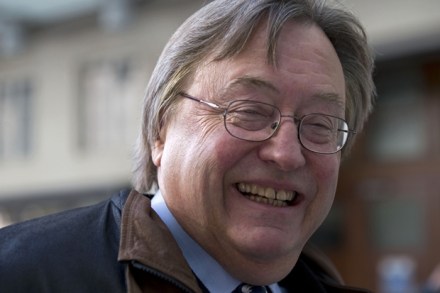
Will anyone admit to being in the establishment? (No, not you, David Mellor)

This is a tremendous time for ‘ordinary’ people. The elitists, the members of the ‘establishment’, are all on the run. Except, of course, that everybody is ordinary now. Or at least nobody admits to being an insider, a member of the Westminster bubble, of the establishment, or of any such posh outfit. There is no ‘them’, only ‘us’, united in conflict with an arrogant, out-of-touch, privileged class that doesn’t apparently exist. Those who don’t recognise their ordinariness, but persist in believing in their superiority, are instantly cut down.

Don’t want paternity leave? Soon, you may not have a choice

Earlier this week, the law changed to enable men to share the leave that women are currently entitled to after the birth of a child. From 5 April next year, men can take up to 50 weeks of paternity leave, while their partners can go straight back to work. The prospect of shared parental leave hasn’t gone down well with British men, according to a survey in the Daily Mail. Seventy-five per cent of men are opposed to the new law, rising to 80 per cent for the over-45s. Only 10 per cent said they’d like to take full advantage of this new entitlement. I can’t say I’m surprised. It’s not the prospect of having to compete with women on a level playing field that frightens men, but the thought of having to look after their babies for a year.

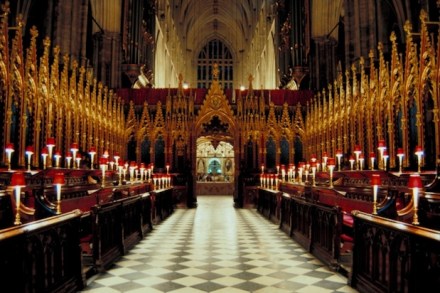
Westminster Abbey was a fitting setting in which to celebrate the life of Winston Churchill’s last child

The Times has given way to the Daily Telegraph as the bastion of the established order, for— with the one exception of the Prince of Wales and his wife — it listed the thousand or so people who attended last week’s memorial service for Lady Soames in Westminster Abbey in alphabetical order. This meant, for example, that my name, since it begins with C, came hundreds of places ahead of all the members of the Soames family, and even further ahead of the eighth Duke of Wellington, who is to be 100 years old next July.

Silviniaco answered his critics emphatically at Haydock

‘I’m going for Al Ferof,’ said a suit in front of me in the Totepool queue at Ascot on Saturday before the Amlin steeplechase. ‘Don’t waste your money,’ said his companion, a man with the sort of face that made you feel he should have been somewhere else helping the police with their inquiries. ‘He hasn’t been the same horse since he won this race last year. Forget it.’ His companion listened, but if ever I have learnt a lesson in racing it is not to dismiss as a light of former days a horse that Paul Nicholls keeps sending to the racecourse. Remember a certain Kauto Star? He fell in the 2010 Cheltenham Gold Cup.

If you want an argument against state-school-only Oxbridge colleges, just look at me

I read with some interest the proposal for Oxford and Cambridge to set up state-school-only colleges in the Guardian this week. As someone who was educated exclusively in the state sector, and then went on to Oxford and Cambridge, I have a special interest in this area. I’m not in favour, obviously. The main objection is that if Britain’s two best universities set aside a quota of places for applicants from state schools they would effectively be saying that independent schools will always be better. That would be profoundly demoralising to those of us trying to raise standards in non-selective state schools.

Lottery winners are strikingly unimaginative about spending money

I thought that this week I might write about memory loss, but couldn’t remember if I’d written about it last week. Then I remembered that I had written about it, not in The Spectator but in the current issue of the Oldie magazine of which, if I remember correctly, I am the editor. I wrote there about my fear of being exposed by my doctor as mentally deficient in return for the £55 that David Cameron proposes to pay doctors every time they find signs of dementia in any of their patients. So I won’t go on about that again, but will instead celebrate the 20th anniversary of the National Lottery, which I have always hoped might come to the rescue if senility were ever to set in.

Pity I’m a Celebrity’s token old guys

I had thought that my days of being approached by reality show producers hoping to put together a cast of D-list celebrities were behind me. Apparently not. A couple of weeks ago, I was contacted by the makers of The Jump, a Channel 4 programme in which assorted ‘personalities’ try their hands at various Alpine sports, including downhill slalom, bobsleigh racing and ski-jumping. I’d never heard of it, but it sounded like fun so I told my agent to set up a meeting. I thought the reason I must be back on the reality show radar was because I’ve published a book this year. Then, when I watched the first episode of I’m A Celebrity… Get Me Out of Here, I realised what was going on.

A trip to Berlin with John Smith before the wall came down

Last Sunday night 8,000 illuminated balloons, tethered along eight miles of Berlin’s former inner-city border between East and West Germany, were released into the sky to commemorate the dismantling of the Berlin Wall 25 years ago. The wall, built to stem a growing flood of East Berliners to the western part of the city, had stood from 1961 until 1989, when it was breached as the consequence of a muddled East German response to a wave of protest by people demanding democracy and freedom of movement against a background of liberalisation in the Soviet Union.

Robin Oakley’s Twelve to Follow for 2015 (this year’s came out ahead)

November has never been my favourite month, not since the time when as a Rugby-playing student my face was rearranged by an opponent’s boot. At an Oxford hospital’s casualty department that 6 November fireworks lost their fun. Before they could see me the attendant clinicians were busy for hours tending children’s burns. November, too, is the reckoning time when I must reveal how the 12 animals whom I urged you to support through the Flat season have performed. Fortunately, as this column embarks upon its 20th year the news is good: had you invested £10 to win at starting price every time our Twelve reached the racecourse you would today be sitting on a comfortable tax-free profit of £171.

The man feminists seemed to think was worse than the Taleban

Feature writers aren’t often acclaimed for their courage, but Neil Lyndon deserves a bronze plaque in St Bride’s. Twenty-two years ago, he wrote a book called No More Sex War in which he questioned some of the assumptions underlying the modern feminist movement. He pointed out that many of the advances made by women over the past 200 years have been made with the help of men and suggested that men should be regarded as allies in the war against injustice, not defenders of the status quo. Perfectly reasonable, you might think. Not a misogynistic tract, but a progressive critique of radical feminist ideology. Yet that wasn’t the way it was received. Almost without exception, the book was reviewed as if it was a full-blown assault on women’s rights.

Two ways to disgrace a president

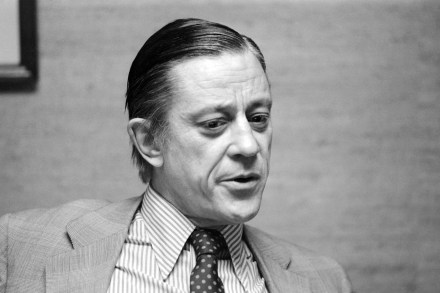
On 21 October Ben Bradlee, the famous ex-editor of the Washington Post, died, aged 93. The day before that, on 20 October, Monica Lewinsky, 41, the even more famous ex-girlfriend of Bill Clinton, made her first public speech after ten years spent keeping out of the public eye. They had nothing in common except for the fact that each had been responsible for bringing disgrace to a president of the United States. Richard Nixon would have faced impeachment by Congress over the Watergate scandal, which the Post exposed, if he had not first resigned in 1974 (the first president ever to do so) and then been pardoned by his successor, Gerald Ford. President Clinton was impeached in 1998, but acquitted by the US Senate.

Why schools can’t teach character

I participated in a lively discussion about character education at Policy Exchange earlier this week. For those of you who don’t follow every twist of the education debate, the idea that ‘character’ should be taught in schools has gained a lot of traction in recent years. And support for it doesn’t divide along party lines: both Tristram Hunt and Nicky Morgan are advocates of character education. By ‘character’, the supporters of this idea have various desirable traits in mind, such as tenacity, reliance and self-control. There’s plenty of evidence that a child’s possession of these qualities is a strong predictor of later success.

The only good thing about Halloween is that it makes people hate bats

I always dread Hallowe’en. It may have originated in Europe as a Christian celebration for remembering the virtuous dead and wishing them on their way to heaven, but its origins have been long forgotten. Now, more even than Christmas, it is a secular festival sustained by commercial greed. In its modern form, it is an American import, its main inspirations being Count Dracula and horror movies (and perhaps now also Harry Potter). Hallowe’en is a time for the exploitation of children’s love of ghouls and magic and dressing up. Long before the day arrives, the supermarket shelves are stacked with pumpkins carved with the grimacing features of Jack-o’-lanterns, once meant to frighten away evil spirits, and with black witch’s costumes of cheap polyester fabric.

Maybe Mrs Oakley is right: all my tips will come in second

The novelist Anita Brookner once declared that in real life hares always beat tortoises: ‘Every time. Look around you. And in any case it is my contention that Aesop was writing for the tortoise market… Hares have no time to read. They are too busy winning the game.’ Bob Ford, one of this column’s Twelve to Follow last jumping season, was not one of the biggest contributors to our fortunes, winning just once in five outings and then at a miserly price of 8-15. But at Chepstow on Saturday on soft ground Tom Scudamore sent him off like a hare in front, daring the field to catch him. ‘He’ll never keep that up,’ said two racing sages beside me but he did, pulling right away to win by 13 lengths for Rebecca Curtis.

I swam up to a beautiful girl on the beach, and my life changed

I’m writing this from Portugal, where I’m staying with my old friend Sean Langan. His family has owned a farm in the Algarve for several generations and I first came to stay with them when I was 18. I continued to spend every summer here for the next five years and, together, they represent some of the happiest periods of my life. This is the first time I’ve returned in a quarter of a century. Wherever I go, the memories come flooding back. There’s the veranda where I sat with a bucket of warm water and a Bic disposable razor, shaving off the hairs that had appeared on my chest. There’s the car park where Sean and I raced around in our Mini Mokes, practising our handbrake turns. There’s the cave that I swam out to with Mandy, a freckle-cheeked brunette.

Russell Brand and Nigel Farage remind me of myself five years ago

I’m often asked by other free school proposers what lessons I’ve learnt over the past five years. Any pearls of wisdom I can pass on so they don’t make the same mistakes? My standard response is to reel off a checklist of things I would have done differently if I’d known then what I know now. To take just one example, we probably wouldn’t have introduced a ‘no packed lunch’ rule if we’d known that we’d have to provide all our four-to-seven-year-olds with free school meals. But the biggest lesson is one I daren’t share, which is that trying to give children a better education than the neighbouring local authority schools, with no additional funding, is really, really difficult.

If you don’t like this stupid survey, there’ll be a contradictory one along in a minute

Perhaps it is because newspapers are going through such hard times that they fill their pages with items that cost them almost nothing to report: in particular, they show ever increasing reliance on futile pieces of research carried out by often obscure academics in any corner of the globe. These people are greedy for publicity of any kind and our newspapers are only too eager to oblige. The subjects investigated include such things as the supposed effects of drinking too much or too little, or of taking too much or too little physical exercise; and they are frequently contradictory in their conclusions.