More from life

Nuclear reaction

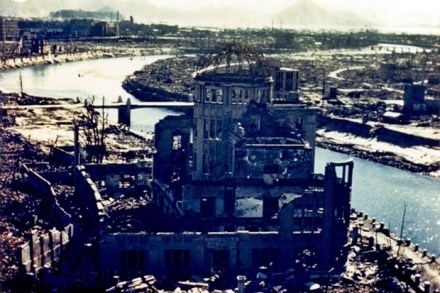
The 70th anniversary of Hiroshima and Nagasaki has produced some predictable wailing and gnashing of teeth about the horrors of nuclear weapons. The Guardian called the dropping of the bombs ‘obscene’, citing the figure of 250,000 casualties, and CND organised a commemorative event where Jeremy Corbyn renewed his call for unilateral nuclear disarmament. As a conservative and a realist, I don’t have the luxury of moral certainty. Was Harry Truman wrong to take the decision he did? On 16 August 1945, Winston Churchill defended him in a speech in the House of Commons, making what has since become the standard case. Yes, Japan would have been defeated eventually, but the bombings brought the second world war to an end without the need for a land invasion.

Even the Chinese can’t teach Kevin the Teenager

Watching a group of unruly children make mincemeat out of a well-meaning teacher has become a television staple and Are Our Kids Tough Enough? Chinese School, a factual entertainment series that debuted on BBC2 on Tuesday, is a case in point. We look on aghast as five teachers from China struggle to manage a class of ordinary 14-year-olds in England. They quickly discover that the techniques that have made Chinese schoolchildren the envy of the world don’t work with Kevin the Teenager. On the face of it, the Chinese educational model has much to recommend it. Shanghai is at the top of the Pisa international education league tables in maths, while the UK is in 26th place.

Long life | 6 August 2015

Most people, when asked if they would rather be deaf or blind, say they would rather be deaf. I would say that, too. Deafness is obviously a wretched and isolating condition, but it appears to be less absolute in its effects than blindness. A blind person simply can’t see anything. With the deaf it is more complicated. Dame Evelyn Glennie, whose deafness didn’t stand in the way of her becoming one of the world’s greatest percussionists, contends that hearing is just a form of touch; that if your ears aren’t working, you can feel sounds as vibrations in other parts of the body.

Racing loses its Voice

Reviewing a biography of Arkle, Peter O’Sullevan wrote, ‘He had an obit to die for.’ So did The Voice himself. It could have been a sad Goodwood with the death of the greatest racing journalist and the retirement of champion jockey Richard Hughes, the stylish equine burglar who stole so many last-gasp victories on the difficult undulating track, but instead it proved to be as Glorious a week as ever celebrating those two fantastic careers. Peter O’Sullevan (like his late friend Lord Oaksey) drew countless thousands of us into racing with his ability to convey the excitement of the sport in print or behind the microphone. He then kept us there with his wit, his compassion and his instinctive ‘sens du cheval’.

Trouble withthe neighbours

A few years ago, I got a bit fed up with receiving Christmas cards from my friends designed to show off just how well they were doing. A typical card consisted of five or six blond children on ponies or quad bikes with a massive country house in the background. The caption would be something like: ‘Greetings from Shropshire.’ So I came up with an idea. Why not create my own version? I’d get my four children to strike a variety of delinquent poses. One would be outside QPR stadium, fag in mouth and can of beer in hand. Another would be doing an impression of Lord Coke with a rolled-up £10 note sticking out of his nose. My daughter would be pushing a double buggy containing two snotty babies and sporting a Croydon facelift.

Long life | 30 July 2015

I was wondering what to write about this week when I suddenly realised that exactly 40 years ago this Saturday I became editor of this magazine. Despite eventually getting the sack, I hung onto the job for nine years, from 1975 to 1984, which is still the longest that anyone has had it since Wilson Harris ended his 21-year tenure in 1953. The Spectator has had 15 editors since him, but none apart from myself has lasted for much more than six years. Fraser Nelson, however, looks set to outlast us all. I am surprised how little I can remember of those years (or perhaps I shouldn’t be surprised, given my drinking habits at the time), but I will never forget how they started.

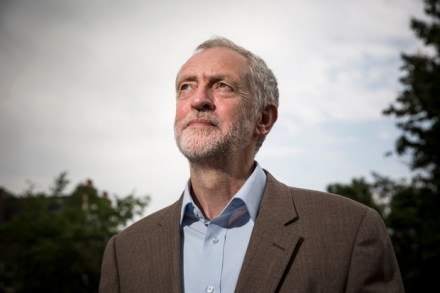
Why I voted for Jeremy Corbyn

Is the ‘Tories for Corbyn’ campaign politics at its most infantile? As one of the few conservative commentators willing to defend it in the media, I’ve been doing my best to rebut that charge. The most frequent line of attack is that there’s something dishonest about it. The Labour leadership election isn’t an open primary. It’s restricted to members, registered supporters and affiliated supporters. OK, you can register as a supporter for £3 — a change brought in by Ed Miliband to reduce union influence — but only if you pretend to be a Labour sympathiser. And that’s just wrong. The short answer to this is that no such pretence is necessary — at least, it wasn’t when I signed up via the party’s website.

Long life | 23 July 2015

The smart phone is a wonderful thing. We are never out of touch anymore, neither with friends nor with the world at large. But increasingly we read of the harm that it is doing us. We are no longer its masters but its victims. It makes us tense, anxious and insecure. We respond with unnatural haste to every noise it emits; and even when it isn’t peeping or squeaking at us, we neurotically check it all the time for messages that might have crept in surreptitiously. Psychologists and sociologists are having a field day warning us of its dangers. Our obsessive phone checking is affecting our brains, they say. It blights our relationships and stops us concentrating on anything.

Easy does it

For all their formidable physical presence, racehorses spook easily. A sudden gust of wind flapping a plastic sack, a page from yesterday’s Racing Post blowing across the stable yard can provoke a fit of the twitches: eyes rolling, nostrils flaring and back legs snapping out a lethal kick. Trainers need a capacity for quiet reassurance and you don’t need long at Clive Cox’s Beechdown Farm in Lambourn to be struck by its overriding calm. His charges had pounded up watered gallops dried by a breeze like a hairdryer and as Clive hosed down their sleek coats afterwards, he declared, sponge in hand, ‘This is the best part of the day, a proper de-stress.’ ‘Yes, they love it, don’t they?’ I replied — but he meant for him.

Long life | 16 July 2015

I have always been what I suppose one could call a weed, and a cowardly one at that. I never liked sports and was never any good at them. When fielding at cricket at my prep school, I used to while away time making daisy-chains. Of my part in football one prep-school report merely said, to my mother’s great amusement, ‘Chancellor prefers to avoid the ball.’ At my public school, where you had to choose between rowing and cricket, I chose rowing, but only because I was just small enough to get away with being a cox, which only involved sitting in the stern of a boat and bellowing orders at the oarsmen who were doing all the work.

Urban foxes, the ginger menace

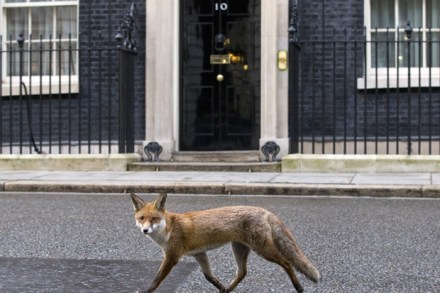
Forget about the countryside. When is the government going to do something about the vulpine creatures wreaking havoc in central London? The situation is now so out of control, it’s time the Prime Minister convened a meeting of Cobra to discuss the ginger menace. I’m talking, of course, about the horde of SNP MPs who’ve invaded Westminster. Actually, I’m not, but I couldn’t resist that gag. No, foxes are the problem. I don’t actually keep a chicken coop in my back garden in Acton — and, for that reason, I’m spared the sight of my beloved poultry lying in a pool of blood with their heads bitten off. But I still have a long list of complaints. First, there’s the appalling sound they make, particularly during the mating season.

Dettori’s double

Eclipse was one of the most remarkable racehorses ever. Sired by the then undistinguished Marske, whom mares could visit for a mere half-guinea,and born in Windsor Great Park on the day of the annular eclipse of the sun in 1774, the chestnut with one white stocking retired unbeaten after 18 victories in the days when races were run in heats over two or four miles. Famously, Dennis O’Kelly, who became his part-owner, placed a bet on his second contest that the result would be ‘Eclipse first, the rest nowhere’, which technically meant that he had to finish a ‘distance’ (that is, 240 yards) clear of the rest.

Long life | 9 July 2015

The 1960s were already more than halfway over when I realised that I was living through what was supposed to be an exciting decade. I had got married, found a job, had two babies and was leading the stressful life of a young family man, quite unaware that all around me Britain was bubbling with excitement. In 1966 I was in Paris, doing night shifts as a trainee journalist for Reuters news agency, when I happened upon a cover of Time magazine, emblazoned with girls in miniskirts and boys in flared trousers, announcing that London was ‘the swinging city’. When I came home to check this out, London seemed much the same as it had been in the 1950s — a grey and grimy but dignified city, old ladies still wheeling their wicker shopping baskets up and down the Brompton Road.

True grit and pushy parents

I took my three boys for a cycle ride in Richmond Park on Sunday. Under normal circumstances, this would have been a good way to relax, but I had to be back home in Acton by 2.15 p.m. for my daughter’s 12th birthday party. Given that we didn’t leave the house until 11 a.m., and were relying on public transport, we were slightly up against it. We got to the park at noon, which gave us about 75 minutes to complete a seven-mile circuit, allowing for an hour to get home. Just about doable, but only if all three boys went flat out and resisted the urge to get off and push when we were going uphill. The weakest link was seven-year-old Charlie, who still has the same bike he had when he was five. No gears and tiny wheels, so he has to pedal twice as quickly to keep up.

Long life | 2 July 2015

The Eurostar train descended gently into the Channel Tunnel, went halfway along it, and then stopped. There it remained for what seemed a very long time, the silence broken only occasionally by mumbled announcements in French and English. The speaker was French, and his English was incomprehensible, his French only slightly less so. All that we could gather was that the train was being delayed by some sort of trouble in Calais. Only much later did we learn that migrants from a refugee camp had been swarming on to lorries heading for England and generally creating mayhem. They had even lit a fire on the railway track. Eventually it was announced that we wouldn’t be going to Paris quite yet but would go backwards instead to Ashford in Kent to await the all-clear to resume our journey.

Giving up alcohol is not as much fun as I’d hoped

Two months ago, I set myself the target of losing 11 pounds in time for the Spectator’s summer party on 1 July. To help achieve that, I swore off alcohol and, had I succeeded, my plan was to start drinking again at the party. I managed the weight loss, but didn’t make it to the party because it clashed with a board meeting of the educational charity I set up five years ago. The upshot is that I haven’t started drinking again and I’m debating whether to remain teetotal in perpetuity. Temperance has its advantages. I’ve experienced almost no headaches or stomach aches since I gave up the booze, although that may also be connected with my diet.

In defence of Gove’s grammar

[audioplayer src="http://rss.acast.com/viewfrom22/angelamerkel-sburden/media.mp3" title="Toby Young and Oliver Kamm debate Gove's grammar" startat=1394] Listen [/audioplayer]Few things are more likely to provoke the disapproval of the bien-pensant left than criticising someone’s grammar. The very idea that one way of speaking is more ‘correct’ than another is anathema to them. Under the guise of being helpful, it asserts the supremacy of the white educated bourgeoisie and seeks to rob the working class and ethnic minorities of any pride in their own culture. It’s a form of ‘linguistic imperialism’.

Long life | 25 June 2015

It is nearly two years since the police were granted new powers to fine motorists for ‘hogging’ the middle lane of a motorway, but it’s only now that anyone has been convicted in court of this offence. A person driving a van at 60 mph on the M62 near Huddersfield has been fined £500 and given five penalty points for doggedly refusing to move out of the middle lane on to the inside one. Press reports of this judgment failed to say to what extent, if any, police have exercised their two-year-old right to give on-the-spot fines to drivers behaving in this way, but I have yet to hear or read of a case, and I would be surprised if there had ever been one.

Simply the best | 25 June 2015

Nothing pleases the Royal Ascot crowd more than a winner for the meeting’s crucial supporter, the Queen. Imagine, then, the dilemma of one of her Windsor Castle lunch guests, trainer Roger Charlton, when Her Majesty asked him, ‘Are you going to beat me?’ on the day of the Tercentenary Stakes. Charlton is one of the six Flat trainers with whom she has horses, but in that race his entry was Times Test, whom he trains for Khalid Abdullah, and Her Majesty’s runner was Peacock, trained by Richard Hannon. Charlton didn’t know how to answer and just hoped for a dead heat. After Times Test had run out one of the most impressive winners of the week, beating Peacock by three-and-a-quarter lengths, he reflected, ‘I don’t think I’ll get lunch again.

Long life | 18 June 2015

My friend Alan Rusbridger has just given up editing the Guardian after a distinguished 20-year reign that has climaxed, as befits an accomplished musician and former chair of Britain’s National Youth Orchestra, with a magnificent crescendo of earthshaking scoops. He has now, at 61, ascended to more serene heights as chairman of the Scott Trust, the company that owns the Guardian, and also as principal of an Oxford college, Lady Margaret Hall. His departure from the Guardian after one of the most outstanding, if also rocky, periods in its long history has been appropriately marked by articles, interviews, speeches and other celebrations in which he has reflected with shrewdness and modesty on the lessons of his editorship for the troubled and topsy-turvy world of journalism today.