More from life

You can’t force low-income people to go to an art gallery or the theatre if they don’t want to

I went last week to see the justly praised production of Wagner’s The Mastersingers at English National Opera, and I didn’t see a single black face there, nor even much dark hair (except in the case of Melvyn Bragg who, though now greying a bit, still seems to have Ronald Reagan’s gift for keeping white hairs at bay). This chimed with the finding of the Warwick Commission on the arts in Britain that much the greater part of live-music audiences, theatre-goers and gallery visitors is old, white and middle-class. Even though this wasn’t actually the reason for the Arts Council’s drastic decision to curtail ENO’s funding — this was because of its allegedly shambolic management — it easily might have been.

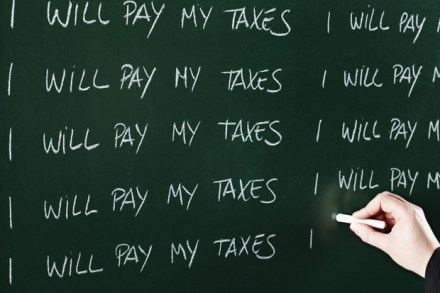
I don’t know why I’m against tax avoidance (and I bet you don’t either)

On the face of it, the moral case against tax avoidance seems pretty straightforward. If you’re a UK taxpayer and benefit from public goods and services, then you should pay your fair share of tax. If you’re paying less than that, then you’re a free rider. You’re breaking the social contract. But what do we mean by ‘fair share’? The standard defence of tax avoidance is that it’s perfectly legal — if it wasn’t, it would be tax evasion — and the social contract only obliges people to obey the law, not to pay more tax than they have to. To maintain that people are morally obliged to pay an additional amount of tax, over and above what they’re legally required to pay, is a tricky position to defend.

The elderly are society’s new baddies

The gulf in understanding between the old and the young has widened with the news that the young are beginning to turn teetotal. If there was one thing that the old thought they knew about the young, it was that they drank too much. British youth led the world in its enthusiasm for alcohol. Our cities swarmed with loutish binge drinkers. Yet now, all of a sudden, we learn that abstinence is becoming fashionable. The number of people under 25 who don’t touch a drop has increased by 40 per cent in eight years. More than a quarter of people in this age group now don’t drink anything at all. What is going on? The conditions for heavy drinking would seem to be perfect: there is economic hardship and a generally gloomy outlook on most fronts.

Why Mark and Sara Bradstock have only 12 horses is a mystery to me

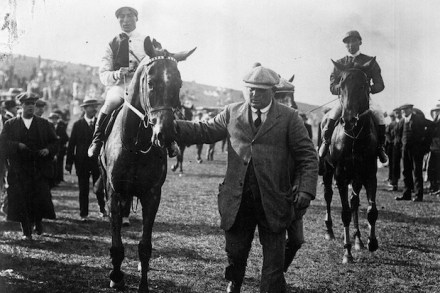
Some mysteries will never be solved, like why planes and boats disappear in the Bermuda Triangle, cats always land on their feet and why Mrs Oakley can always find a parking space plumb outside a restaurant when I am lucky to squeeze in 400 yards away. Add one more conundrum: why are there only 12 horses in the successful racing stable run by Mark and Sara Bradstock? Since 1994 they have trained in Captain Tim Forster’s old yard opposite the church in Letcombe Bassett. On the skyline above their glorious gallops are tree clumps planted by the Captain to celebrate his Grand National successes. Their home is in a row of converted boxes where the great Golden Miller was once trained and where an irrepressible terrier shares the breakfast table with your coffee.

How the driverless car will liberate us all (except smokers, of course)

I was listening to the radio the other morning to hear people complaining about the huge cuts in the number of traffic police patrolling English roads. This meant that drivers would disobey motoring laws with impunity, they said. They would babble away on their mobile phones, unfasten their seat belts, and generally break the rules of the road in the knowledge that they were most unlikely to get caught. The only things left for them to fear would be speed cameras. As a result, road deaths, of which there were already more than 1,700 in Britain last year, would go shooting up. A grim outlook indeed. But wait, there is hope on the horizon. This is the exciting prospect of the driverless car.

Immigration, not money, will improve Scotland’s most deprived schools

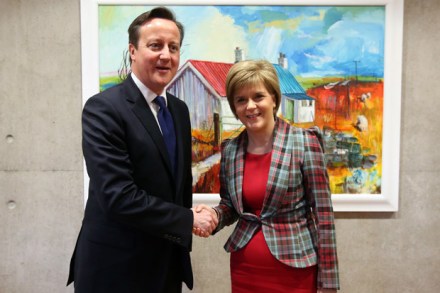
I suppose we should be thankful that Nicola Sturgeon has acknowledged there’s a problem with Scotland’s public education system, even if she’s hit upon the wrong solution. Earlier this week, the First Minister announced that the Scottish -government would be trying out its version of ‘the London challenge’, a programme carried out by the last government, to address the chronic underachievement of Scotland’s most deprived children. In the past, the SNP has deflected criticisms of its education record by pointing out that Scottish 15-year-olds did marginally better than their English counterparts in the 2012 Pisa tests. But the difference between the two groups is minuscule and both have declined dramatically since Pisa first started testing in 2000.

This autobiography written by a horse that is not as offputting as it sounds

Banks only lend money to those who can prove they don’t need it and it has not been a happy few months for racing with one trainer after another giving up the unequal struggle and shutting the stable doors. The only thing that could make it worse for many small yards is an election victory in May for the Greens: they have vowed, if they win power, to outlaw zoos and circuses and a ban on horseracing clearly would not be far behind. I have had my problems too. Gremlins from outer space this week seized control of my laptop and have locked away my racing notes behind an immovable screen that resembles an early Jackson Pollock.

Like Arthur Daley playing Garry Kasparov: why I won’t miss Harry Redknapp

I can’t say I’m surprised by the departure of Harry Redknapp. Since I started supporting Queens Park Rangers in 2008 we’ve gone through seven managers — 13 if you count the caretakers. Indeed, it’s a miracle he’s lasted this long. The club was relegated during his first term in charge and we only returned to the Premier League thanks to a last-minute goal by Bobby Zamora in the play-off final against Derby at the end of last season. I was at that match and Derby were easily the better side. If Harry had been sensible, he would have announced his retirement after that game and gone out on a high. But what Enoch Powell said of politicians is also true of football managers: their careers always end in failure.

You realise how little you know of anybody when they die

Whether or not you believe in the afterlife, death remains an impenetrable mystery. One moment a person is making jokes and comments and observations about life; the next he is gone. What has happened to that store of wit and wisdom acquired over a lifetime, to that particular way of understanding and looking at things, to that unique muddle of thoughts and feelings that every individual has? Even if someone has gone to heaven, it is difficult to imagine that he has taken these things with him. If he did, they would hardly be compatible with eternal rest.

Come on, Tristram Hunt, if you think you’re hard enough

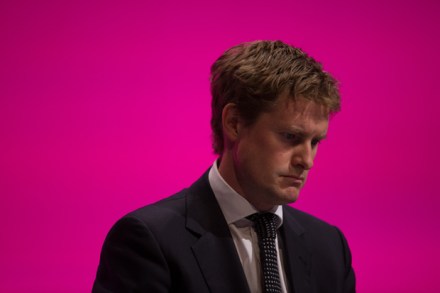
For a brief moment earlier this week, I thought education might become an issue in the general election campaign. The Commons Education Select Committee’s lukewarm report on the government’s academy and free school programmes was leaked to the Guardian on Monday and the accompanying story claimed that Labour hoped to open a ‘second front’ following the ‘success’ of its attacks over the NHS. ‘It is undeniable that the last Labour government dramatically improved school standards in secondary education,’ said Tristram Hunt, the shadow education secretary. ‘But the progress that we made… is being undone by a government that is obsessed with market ideology in education.

The Grand National doesn’t need Jeremy Kyle

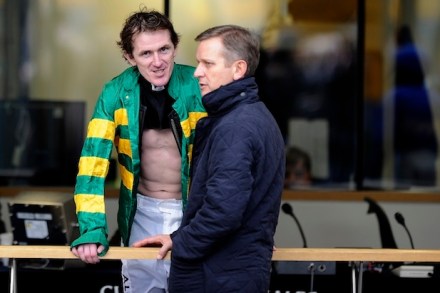
Never mind David Cameron. Are you participating in the Great Debate about an event of national significance that stirs the blood of millions? No, I don’t mean the General Election: racing is in a tizzy about who should lead the television coverage of this year’s Grand National since the sainted Clare Balding (whom God preserve) has opted on the big day to cover instead the predictable procession in the Oxford v. Cambridge Boat Race. Channel Four, in whose hands Aintree coverage rests, has been semi-publicly agitating whether to allow Clare’s fellow racing presenter Nick Luck to replace her in fronting the show or to go outside for a ‘big name’, who will supposedly resonate with the wider non-racing public who tune into jump-racing just once a year.

The quiet pleasure of washing up (and why I’m still buying a new dishwasher)

I have been having trouble with my dishwasher. It’s seven and a half years old, and it’s manufactured by a German company called Miele. Several important people told me at the time that anyone who was anyone had a Miele dishwasher, so naturally I bought one. I found it perfectly satisfactory until a couple of weeks ago, when it suddenly stopped working; so I called up Miele and they sent someone to investigate. He said he’d repaired it and charged me £117 for the visit. But when I turned it on afterwards, the lights fused. So another Miele man came and said that his colleague hadn’t noticed that it was in fact a wreck and would need £500 spending on it for it to work again.

Page 3 was harmless. Here’s why I’ll miss it

‘I for one would be sorry to see them go,’ wrote George Orwell. ‘They are a sort of saturnalia, a harmless rebellion against virtue.’ He was writing about the seaside postcards of Donald McGill in 1941, but his defence of them and their ‘enthusiastic indecency’ could equally well apply to Page 3. Orwell’s argument was that McGill’s caricatures of women, ‘with breasts or buttocks grossly over-emphasised’, gave expression to ‘the Sancho Panza view of life’. There’s a fat little squire in all of us, he thought, although few of us are brave enough to admit it. ‘He is the unofficial self, the voice of the belly protesting against the soul,’ he wrote.

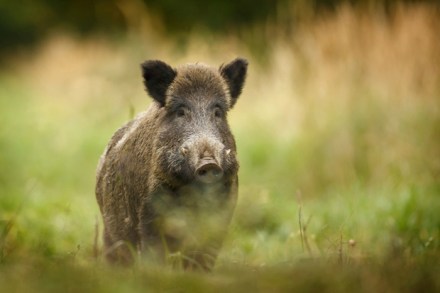
Do your patriotic duty and shoot wild boar

It’s 15 years since I first wrote an article about the threat to the nation of the wild boar; but only now, following the death of a driver in a collision with one of these fearsome beasts on the M4 in Wiltshire, is anyone taking any notice (and not very much notice at that). The government is planning to introduce the same kind of road warning signs for wild boar as those that already exist for deer, horses, toads and ducks. ‘Road safety in the context of wild boars is an emerging issue that needs to be addressed,’ says roads minister John Hayes. ‘The addition of a warning sign for wild boar in areas with populations of the animals would be a sensible step to encourage people to slow down and watch out.’ It is certainly a good idea to watch out.

David Sedaris was right: litter is a class issue

David Sedaris is my new hero. Not because he’s such a funny writer, but because he’s obsessed with litter. He told a group of MPs last week that he spends up to five hours a day picking up fast food containers and fag ends around his home in Pulborough, west Sussex. Thanks to his unstinting labours, he’s become a local hero and has had a rubbish lorry named after him. I’ve some way to go before I qualify for such an honour, but I do my bit. For instance, on Monday I spent an hour clearing the litter from the flowerbed outside the West London Free School in Hammersmith. This was rubbish left by passers-by, not the pupils. Sedaris said what infuriated him the most were crisp packets tied into a knot and stuffed into soft drink cans, but I can trump that.

Here I am on Twelfth Night with nothing but benevolence to look back on

For the past two and a half years my brother John has been living next door to me in the Northamptonshire countryside. We have both been most of the time alone in our separate houses, 25 yards apart, and, whenever I’ve been there, I have shared at least one meal a day with him. It was a very cosy and mutually supportive set-up. Then, on New Year’s Eve, he suddenly died. His death wasn’t exactly premature — he was 87 and increasingly debilitated by Parkinson’s disease — but it came as a shock nevertheless. On the two last evenings of his life he had come over to my house to have supper and watch his daughter Anna star with Miranda Richardson in the three-part television adaptation of E.F. Benson’s Mapp and Lucia.

Venetia Williams: an enigmatic woman who trains winners

Welsh Grand National day at Chepstow could not have had a better climax than the big race. After slogging three miles four furlongs on heavy, clinging ground, three horses came to the last with a chance: leading was the Irish-trained Glenquest ridden by Peter Buchanan, in second was Benvolio ridden for Paul Nicholls by Sam Twiston-Davies and third, at that point, his chance seemingly gone when the other two had passed him two out, was Emperor’s Choice ridden for Venetia Williams by Aidan Coleman. The crowd were on tiptoe roaring all three home as first Benvolio battled past a tiring Glenquest and then Coleman somehow galvanised Emperor’s Choice into one final heave, which took him past Benvolio to snatch victory by a head in the photo-finish.

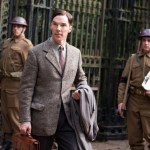
The misguided bid to turn Alan Turing into an Asperger’s martyr

When I first heard the story of Alan Turing in my late teens I made what must be quite a common mistake. I concluded that his conviction in 1952 for committing a homosexual act was indefensible in light of his immense contribution to the war effort. The fact that he was forced to undergo a course of hormonal ‘therapy’ which led to his suicide two years later underlined just how badly he was treated. The British authorities should have been erecting statues to him, not hounding him to his death because he was attracted to other men. The reason this was a mistake is because I’d made a connection between Turing’s war record and the injustice of persecuting him for being homosexual, when it would have been equally wrong if he’d been a conscientious objector.

I think I’ve found a miracle cure for a bad back

I’ve had various ailments during my first 74 years — the worst being those induced by smoking, such as emphysema and chronic bronchitis — but never before have I suffered from back pain. I know many people who have, and I have witnessed the miseries they have suffered — their months spent lying on the floor, their desperate search for suitable treatments, their failed operations. I had begun to think that I might be immune to this particular affliction, attributing this to the fact that I have rather a short back.

A year ago, I had big plans to unite the right. This year, I’m keeping my ambitions more modest

This time last year, I wrote an article saying my main project in 2014 would be to unite the right. That is, I would start a political movement that would bring together Conservative and Ukip activists in a tactical voting alliance. We would select a few dozen battleground constituencies and campaign for whichever candidate was best placed to win in each seat, whether Ukip or Tory. The name for this movement was to be ‘Country Before Party’. The initial response was encouraging. Hundreds of people emailed me offering their support, including MEPs, members of the House of Lords, ex-MPs, and so on. I set up a website, assembled a steering committee and started drafting detailed plans. I felt like I was really on to something.