More from life

The politics of envy has failed

Last week I put £25 on Lady C to win I’m A Celebrity… Get Me Out of Here. At 25/1, I thought it was quite a good bet – until she withdrew for medical reasons. For those not watching the 15th series of the jungle reality show, Lady C is Lady Colin Campbell, a self-proclaimed ‘socialite’ and author of several royal biographies. Some of her fellow contestants, such as ex-Spandau Ballet frontman Tony Hadley, have accused her of not being a ‘real lady’, but they don’t have a clue, obviously. They mean she swears a lot, which hardly disqualifies her from being a toff.

How do you explain events that even adults can’t understand to a child?

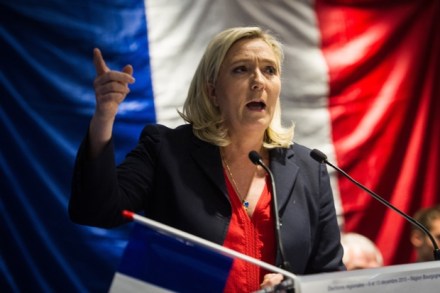
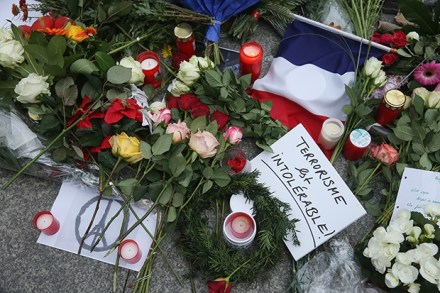
Seeing my ten-year-old daughter, Freya, a week after the massacre in Paris, I asked her if she had heard anything about the events there. She said, in a matter-of-fact kind of way, that she had heard something, but didn’t say what it was or from whom she had heard it. All she would say was that it hadn’t been mentioned by her teachers at school. And then she changed the subject. I didn’t feel like saying any more on the matter. Either she didn’t know anything much or she didn’t want to talk about it. And what would have been the point of discussing something so horrible with her? We turned on the television and watched an old Bing Crosby movie instead. But one of the hot topics of recent days has been what to tell children about this Isis atrocity.

Essential racing books for Christmas

Do horses have souls or a ‘spirit’? When form expert Marten Julian was looking to buy a horse, he asked Declan Murphy to assess it. The former jockey watched it walk then studied its face closely before giving the thumbs-down. ‘That horse,’ he said, ‘has had its spirit broken.’ Murphy’s response led Marten to roam the world of those who work with horses to ask how they try to assess a horse’s individual personality and seek to maximise its potential.

Mr Spielberg, you cannot be serious

I wonder if Steven Spielberg is having second thoughts about Bridge of Spies in light of the attack on Paris? Spielberg’s latest film —released this week and tipped for Oscar glory — is an espionage thriller set at the height of the Cold War with no immediate relevance to the ‘war’ we find ourselves in today. But it contains a strong liberal message about the importance of observing due process when dealing with enemy combatants and prisoners of war. The hero of Bridge of Spies is James Donovan (Tom Hanks), a straight-arrow insurance lawyer who is asked by the American government to defend Rudolf Abel (Mark Rylance), a Brooklyn-based artist who’s been caught spying for the Soviets.

How the Germans made Glyndebourne

This is hardly the time of year for picnics on the lawn, but I have nevertheless had a week dominated by Glyndebourne. First I went to London to see David Hare’s play The Moderate Soprano, about the creation of the Glyndebourne opera festival by John Christie in 1934; and then to a Glyndebourne production in Milton Keynes of Mozart’s opera Die Entführung aus dem Serail. John Christie was an extraordinary man. A rich country landowner, who served bravely in the first world war, he returned home to his house in Sussex to pursue his interest in music. He purchased a colossal organ, perhaps the biggest in England outside a cathedral. He put on little opera performances in the organ room.

Are we looking at the end of liberal democracy?

[audioplayer src="http://rss.acast.com/viewfrom22/parisattacksaftermath/media.mp3" title="Toby Young and Kemi Badenoch discuss the role of integration in the rise of Isis" startat=1470] Listen [/audioplayer]As a graduate student in the Harvard Department of Government in the late 1980s, I became slightly jaded about the number of visiting academics who warned about the imminent demise of the West. The thrust of their arguments was nearly always the same. The secular liberal values we cherish, such as the separation of church and state and freedom of speech, won’t survive in the face of growing religious animosity unless they’re rooted in something more intellectually and spiritually compelling than capitalist individualism.

Long life | 12 November 2015

It is hardly uncommon for politicians to lie, especially when their careers are threatened by a sexual transgression — John Profumo about Christine Keeler, for example, and Bill Clinton on not having had ‘sexual relations with that woman, Miss Lewinsky’. But there is a particular kind of distortion of the truth that is rare over here but almost routine among American presidential candidates; and this is the way they embellish their personal histories to maximise their appeal to voters.

Triumphant Twelve

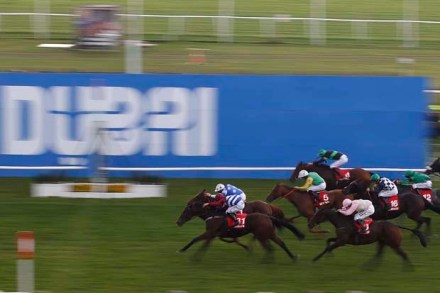
Three personalities dominated the Flat season: Gosden, Dettori and Golden Horn. Victories for the trio in the Derby, the Irish Champion Stakes and the Prix de l’Arc de Triomphe ensured that John Gosden, a true ambassador for the sport, once again won the trainers’ championship, a title determined by the value of victories won. Frankie Dettori was not champion jockey and never again will be: that title (who needs logic in racing?) is determined by the number of winners ridden and deservedly went to the hardworking Brazilian Silvestre de Sousa. What Dettori did was to demonstrate that he is still as good as anybody when it comes to the flair, the judgment and the sheer balls needed on the big occasions.

Meet Leo, the youngest member of our household

I’m pleased to announce an addition to the Young household — a ten-week-old Vizsla. For those unfamiliar with this particular breed of dog, they are Hungarian in origin and when fully grown are about the same size as a lab. They make good bird dogs — they’re excellent retrievers — but can also double up as household pets. We’ve named him Leo on account of his leonine colouring. Caroline says it’s like having a new baby, save for the fact that she isn’t breastfeeding him, and that’s not a joke. For one thing, I had no choice in the matter, just as I wasn’t consulted on the four occasions she decided to get pregnant.

Long life | 5 November 2015

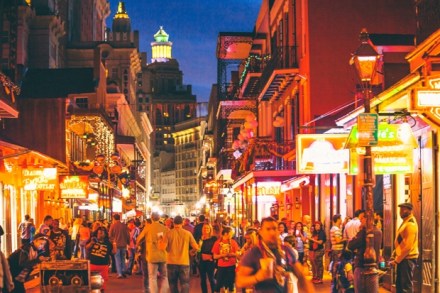
The last time I was in New Orleans was during the BP oil spill in the Gulf of Mexico when the city was still also reeling from the effects of Hurricane Katrina. Now it seems to have recovered from these traumas. The restaurants are packed and the picturesque French Quarter, the old heart of the city, throbs to the sound of jazz music in streets blazing with neon lights and crowded with excited fun-seekers. But things are hardly perfect. The city has one of the highest crime rates in America — well over 100 murders already this year — and even in the Garden District, the city’s most expensive area, full of gracious Victorian villas, the pavements are in such disrepair that they are perilous to walk on.

Nature beats nurture nearly every time

I’ve been doing some thinking recently about the findings of behavioural geneticists and their implications for education policy. For instance, a study of more than 10,000 twins found that GCSE results are nearly 60 per cent heritable. (This research, by Robert Plomin, was first revealed in The Spectator.) So genetic differences between children account for almost 60 per cent of the variation in their GCSE results, with the environment, such as the schools they go to, accounting for less than 40 per cent. One very obvious implication of this research is that we may need to lower our expectations when it comes to the impact schools can make on the underlying rate of social mobility. But behavioural geneticists are upending our assumptions in other areas, too. Parenting, for example.

Long life | 29 October 2015

The Metropolitan Club in Washington is so close to the White House that President Obama chose to walk there for lunch on Tuesday through Lafayette Park while his motorcade followed behind. The lunch was described in the media as ‘secret’, and American reporters were frustrated by the refusal of the White House and the club’s staff to divulge anything whatsoever about it. But nothing the President does is really secret, and his visit was certainly not secret to me, since I was staying in the club at the time under a reciprocal arrangement between the Metropolitan and the Garrick in London, of which I’m a member.

Jumping for joy | 29 October 2015

Thank God for jump racing. The Flat has its glitz and speed and glamour, and we could not help but thrill to the sheer quality on view at Ascot’s Champions Day this year with Solow and Muhaarar strutting their stuff. But as Jack Dowdeswell, champion jump jockey in the days when it was £3 a ride and a fiver for a winner, once said of the Flat: ‘In the end it is just going down and coming back.’ With jump racing there is a story in every race — not just the thrills and spills from extra risks over obstacles but the promising novice chaser who catches your eye and who you follow until he runs three years later in the Gold Cup.

Club class won’t fly any more

I’m getting a lot of abuse on Twitter for saying that having been a member of the Bullingdon is more of a hindrance than a help in contemporary Britain. My comment was a response to a piece by Charlotte Proudman in the Guardian on Monday that Oxford and Cambridge’s drinking clubs ‘cement the succession of power and influence in Britain among a narrow elite’. In response to my claim, numerous people have pointed out that the Prime Minister, the Chancellor of the Exchequer and the Mayor of London were all members of the Bullingdon. The problem with this rebuttal is that merely pointing out that Cameron, Osborne and Johnson are successful politicians doesn’t, by itself, prove their membership wasn’t a hindrance.

To tip or not to tip

As I grow older, I find myself increasingly reluctant to travel, which is why it’s been a few years now since I last visited New York. I like New York, but there are few nastier experiences than going there. The usual horrors associated with modern air travel are bad enough, but the passengers on transatlantic flights tend to be especially uncongenial — harassed mothers with screaming babies, tattooed, pot-bellied men bursting out of their jeans. By the time I reached the check-in desk at Gatwick Airport I had become so alarmed at the thought that I might be put next to one of the scarily obese women who’d been in front of me in the queue that I paid for an exorbitantly expensive upgrade to a ‘premium’ seat.

The fine art of talking bunkum

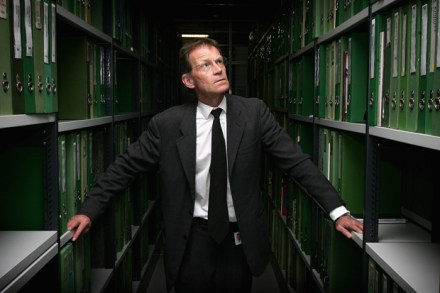
At the last minute, a friend invited me to a ‘Distinguished Speakers Dinner’ at the Oxford and Cambridge Club earlier this week. The dinner was being hosted by Christ’s College and the speaker was Sir Nicholas Serota, director of the Tate galleries and one of the college’s alumni. His subject was ‘The arts in education: luxury or necessity?’, which is why my friend thought I might be interested. Indeed I was. There’s an awful lot of bunkum talked about the arts in education and I’m afraid Sir Nicholas’s speech was no exception.

Be warned: the mighty Air Force Blue blows away all before him

I was both delighted and unsurprised that Denis Healey made it to 98. One day in the 1970s I took him to lunch at L’Epicure. As he encouraged the waiter to pile his plate higher and higher from the hors-d’oeuvre trolley, my astonishment must have been plain because he grinned and declared: ‘Don’t worry about me — both my parents lived into their nineties.’ Another time, Mrs Oakley and I were in a dusty square in Collioure in south-west France when music began blaring from a loudspeaker to advertise a nearby circus.

My home Stoke Park has become a hotbed of sex and violence

When I’m not busy editing the Oldie magazine, I live near Towcester in south Northamptonshire where things are pretty unexciting. It’s at a place called Stoke Park, where two 17th-century pavilions, originally a chapel and a library linked by colonnades to the sides of a substantial country house, survived a fire that destroyed the main building in the late 19th century. It wasn’t always so dull here. In Tudor times one could have looked out across the valley of the River Tove to see Henry VIII hunting deer with Anne Boleyn. On the horizon one can still see the tower of the church at Grafton Regis where Henry used to stay and where he had his last ever meeting with Cardinal Wolsey.

How I’d make a success of a nude-free Playboy

I can’t say that I’m surprised Playboy has decided to stop publishing pictures of naked women. On the contrary, I was amazed to learn that it still does. What on earth is the point of a nudie magazine in an era when pornography of every conceivable kind is available at the click of a mouse? Hugh Hefner, the magazine’s 89-year-old founder, has always strongly objected to the word ‘porno-graphy’ — he prefers ‘erotica’, obviously — and, to be fair, he did manage to position Playboy as more upmarket than rivals such as Penthouse and Hustler. In its heyday, it included interviews with the likes of Martin Luther King and Jimmy Carter and could afford to pay proper writers such as Norman Mailer and Martin Amis to contribute.

Oh, how I will miss the plastic bag!

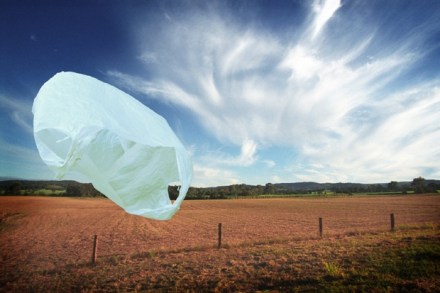
It has taken years, but finally England has joined the rest of the United Kingdom and other countries around the world in declaring war on the plastic carrier bag. This week for the first time English supermarkets are being forbidden by law to give plastic bags away for free. From now on they will have to charge 5p for every one of them. It is the beginning of the end. The plastic bag is heading for oblivion. The most useful shopping tool of the last half-century will soon, I imagine, be extinct. It seems only appropriate at this point to say how wonderful plastic bags have been. They are the most useful carriers ever invented — strong, light, capacious and absurdly cheap to produce. Life without them will never be so easy again.