More from life

Long life | 7 April 2016

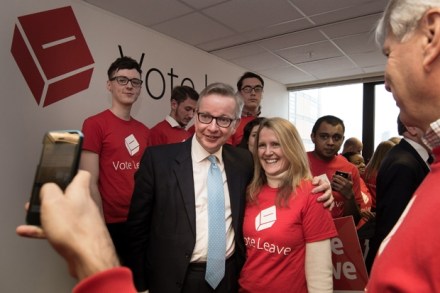
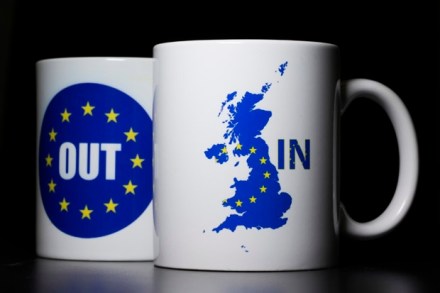
Forgive me if I feel a little depressed at the moment. There are a lot of contributory factors — among them the massacre of my ducks by an otter, the unstoppable rise of Donald Trump, and of course the European Union referendum campaign. This last is especially dispiriting, as I am tired of it already and there are still nearly three months to go before the vote. The first propaganda letter plopped through my letterbox last week, and doubtless it will be the first of many such. It was from the ‘Leave.EU’ campaign and its only effect was to strengthen me in my decision to vote to stay in.
A big hand for the two-faced tax hacks

Something odd happened at the Guardian after the paper’s editorial staff were basking in the glow of their just-published splash about the Panama papers. They were understandably excited, having sat on the revelations for months, and were about to put flesh on the bones of the stories that had broken on Sunday evening about the elaborate tax-avoidance schemes of assorted Tory bigwigs. The Guardian was one of 107 media organisations that had been secretly going through the cache of 11.5 million documents stolen from the Panamanian law firm Mossack Fonseca and these were the golden nuggets: disclosures guaranteed to cause the government maximum embarrassment and — an added bonus — give a much-needed boost to Jeremy Corbyn.

Long life | 31 March 2016

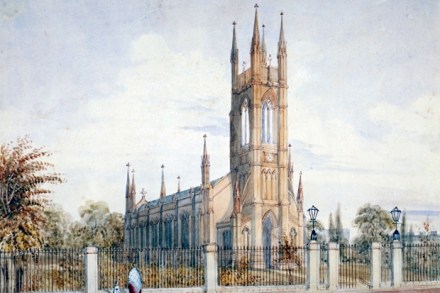
The Parish Church of St Luke in Sydney Street, Chelsea, is enormous. Vaguely reminiscent of King’s College Chapel, Cambridge, it was built in the 1820s to accommodate a congregation of 2,500 people and was one of the earliest Gothic Revival churches in London, with a higher nave than any church in the capital other than St Paul’s Cathedral and Westminster Abbey. It was built at great expense with the help of a government subsidy as a result of the Church Building Act of 1818, by which Parliament allocated funds for building new churches in the urban areas of Britain where populations had greatly outgrown the facilities for Christian worship.

My Cheltenham misery

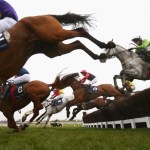
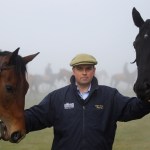
Everybody has their glory memory from Cheltenham this year. Some celebrate the extraordinary seven victories for the quietly confident Willie Mullins, together with such versatile horses as Douvan and Annie Power. Others will forever remember a misty-eyed Nicky Henderson greeting Sprinter Sacre after his Champion Chase victory enabled the most handsome idol in training to leap back onto his pedestal after two injury-dogged years. Then there was the Rolls-Royce supercharger effort that saw Thistlecrack surge clear of his field in the World Hurdle. I carry one other image, an image conjured up for me by the great French trainer François Doumen, who won a Gold Cup with The Fellow in 1994 after two agonisingly close defeats.

Why I’m uneasy about academies for all

As someone who believes in limited government, I feel conflicted about universal academisation. I’m a fan of the academies policy because it reduces the involvement of politicians and bureaucrats in taxpayer-funded education, but there’s something a little Stalinist about the state forcing all local-authority schools to become academies. It’s using socialist methods to bring about a conservative goal. It reminds me of that paradox first-year philosophy students struggle with — is it right to force a slave to be free? Jeremy Corbyn and the teaching unions have decided that this is a good issue for them and are planning a national campaign against ‘forced academisation’.

Long life | 23 March 2016

Apart from the right to life, liberty and the pursuit of happiness, I’ve never known what my human rights are supposed to be. Presumably they include the right to go about my daily business without being attacked, insulted or otherwise abused. But there are many grey areas. Are sudden loud noises or disgusting smells violations of my human rights? And what about the deafening mirthless laughter that I have to endure in British pubs? Perhaps my human rights are changing with age. Am I, at 76, entitled to expect an offer of a seat on a crowded Tube train? Is it my right that somebody should help me with my suitcase when I am carrying it upstairs? I don’t know. Nor do I care. But some people care very much about the deprivation of rights that they believe to be theirs.

Why I’d like to be a more dangerous dad

According to figures obtained by BBC Breakfast last week, more than 500 people were arrested in England and Wales in 2014–15 for leaving children unattended. In the majority of cases, the children concerned were aged ten or under, but some parents got into trouble for leaving their 15-year-olds home alone. It’s hard not to conclude that the police are being a bit heavy-handed, trying to take on responsibility for something that properly belongs to parents. As regular readers will know, Caroline and I have four children aged 12 and under and we don’t see eye to eye about this. Her level of anxiety about the various disasters that might befall them is about average for a west London yummy mummy, whereas I’m at the intensely relaxed end of the spectrum.

Long life | 17 March 2016

My time as a duck-keeper seems to have come bloodily to an end. I have had ducks on my pond for some years now, and I have kept buying new ones to replace those that have got murdered. This stretch of South Northamptonshire may look rather cosy and suburban, but it’s ruled by the law of the jungle. Not a day passes without some creature viciously killing another. Only a month or so ago there were 13 ducks on my pond. Then there were eight. Then there were five. And now there is only one, an Indian Runner drake that stands forlornly on the base of a statue in the middle of the pond, awaiting what it probably feels is its inevitable fate. As you see, I have stopped replacing lost ducks in the way that I used to. I became too disheartened by the endless killings.

Farewell to Fergie

Writing a Turf column before the Cheltenham Festival, as the Spectator schedule requires, which you are reading only after the four-day jump-racing bacchanal has concluded, was a problem. I could neither revel in the moments of glory some equine fighter pilots will have enjoyed nor reveal hard-luck stories behind others who did not make it. But after a frozen morning near Newmarket last week, watching one batch of Festival combatants going through their paces, I had one hope above all others: that before the Festival ended the words ‘Trained byJ. Ferguson, Cowlinge, Suffolk’ would have entered the official record beside at least one winner’s name. The great David Nicholson took 18 years to train his first Festival winner.

The miracle of Michaela

It was like being on the set of an inspirational Hollywood film about a visionary teacher who transforms the lives of disadvantaged African-American and Hispanic children in a run-down part of Los Angeles. The young woman leaping about at the front of the class, who had somehow got a group of 12- and 13-year-olds speaking fluent French, looked a bit like Emma Stone. If this was a film, she’d be a cert for an Oscar. But this was no movie and I was in Wembley, not LA. The French class I was observing at Michaela Community School — a free school opened in 2014 by Katharine Birbalsingh — was the most impressive I’ve ever seen, and I’ve visited dozens of schools across the world, including some of Britain’s top public schools.

A new taste of Twitter nastiness

Whenever I hear a leftie complain about being abused on Twitter, I think: ‘You should try being me.’ A case in point is the journalist Caitlin Moran, who has often taken up the cause of feminists threatened with violence. Among other things, she campaigned for a ‘report abuse’ button in the hope of making Twitter a safer place, more in keeping with ‘the spirit that the internet was conceived and born in — one of absolute optimism’. A noble sentiment, but I couldn’t help taking this with a pinch of salt after the abuse I’ve suffered at the hands of feminists on Twitter. Take the time I appeared on a BBC2 discussion programme with Germaine Greer.

Long life | 10 March 2016

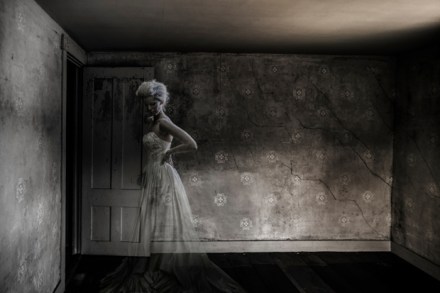
I used to enjoy the ghost stories of M.R. James, but I’ve never actually seen a ghost or even believed that ghosts existed. I have visited many allegedly haunted houses in my life but no scary apparition has ever crossed my path. The old house in which my grandparents lived in Lanarkshire was such a place (its ghost, like so many others around Britain, was supposed to be a ‘grey lady’), but I stayed there year after year untroubled by spirits, though the portraits of my puritan Scottish ancestors were sometimes frightening enough. I have always thought that people who claimed to see ghosts suffered from hallucinations or had especially sensitive peripheral vision.

Long life | 3 March 2016

On Monday I went to the newsagent to buy the newspapers and picked up the first issue of a new one calling itself the New Day. This is the creation of the company that publishes the Daily Mirror, and it is, the publishers say, intended to appeal to people who have given up reading newspapers, people now so numerous that they are rapidly bringing the industry to its knees. The paper’s rather odd title is reminiscent of the carefree song ‘Many a New Day’ from Oklahoma!, and it is presumably intended to emphasise what the publishers call its ‘optimistic approach’. ‘We like to think we’re a modern, upbeat newspaper for modern, glass-half-full kind of people,’ writes its editor Alison Phillips in her introductory letter to readers.

Nice guys do finish first

Richard Johnson, possibly the nicest man to occupy a saddle and certainly the most modest, once said of his Irish rival Ruby Walsh, ‘Ruby never seems to fight horses. It never looks forced with him, he never throws the kitchen sink. But I do — metal ones and porcelain if necessary.’ There weren’t too many of us there to see it but there was a trademark kitchen-sink job in Warwick’s third race last Friday, the Listers Audi Novices’ Handicap Steeplechase, worth just £2,972 to the winner. Johnson’s mount Cheat The Cheater shared the lead much of the way but before the last turn the nine-year-old was passed by three horses who appeared full of running. Most jockeys would have given up then and waited for another day.

What would my socialist dad think of me now?

On Tuesday night I went to a birthday party for my father at the House of Commons. Hosted by the Labour MP Rushanara Ali, it was an enjoyable affair, full of left-wing journalists and maverick social entrepreneurs. I chatted to the Independent’s Andy McSmith, Prospect founder David Goodhart and the newly ennobled Lord Bird of Notting Hill, who set up the Big Issue. My dad wasn’t there, unfortunately. He died in 2002 and this was an event organised by the Young Foundation, a sort of incubator for social enterprises that he set up in 1954 and which is still going strong. It was to celebrate the centenary of his birth and I couldn’t help but wonder what he would have thought of me if he were still alive.

Long life | 25 February 2016

There are still four months to go before the vote, but I already feel quite exhausted by the Europe referendum campaign. Such has been the excitement in the British press that I have taken to starting the day by reading the New York Times online, which is so uninterested in this historic matter that it never seems to mention it at all. Monday’s British papers, announcing Boris Johnson’s defection to the Brexit camp, provided the kind of coverage you’d expect if the country had just won a war. Indeed, the Daily Telegraph looked exactly as if it had, with most of its front page, including its logo, consumed by an enormous colour photograph of a triumphant, smiling Boris acknowledging the applause of an invisible crowd. He looked a bit like Churchill on VE Day.

Vote ‘leave’ and stop the blurring of Britain

I don’t remember the last European referendum being nearly as dramatic as the current one. In 1975, we were being asked about our membership of the Common Market, not the -European Union, so there was less at stake — at any rate, that’s what the inners -wanted us to believe. The battle was also much more one-sided. Then as now, the pro-European side included the Prime Minister and the leaders of the other two main parties, but there were fewer cabinet ministers on the other side and it was easier to -caricature the antis (Tony Benn, Enoch Powell) as extremists. In 1975, the national press was overwhelmingly in favour of staying in and the ‘yes’ campaign was able to outspend the ‘no’ campaign several times over, neither of which are true today.

Long life | 18 February 2016

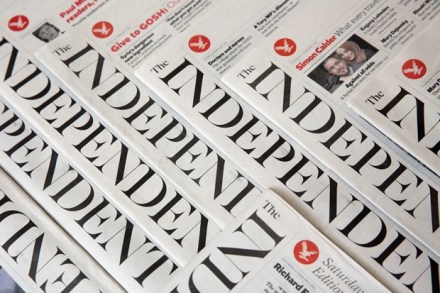
It had been many years since I had seen anything of Andreas Whittam Smith, but he popped up on the television this week to discuss the fate of the Independent, the newspaper he founded 30 years ago but which is now about to close. I was pleased to see that at 78 he had acquired a knighthood, for this was an honour he had deserved for a long time. The strange thing, though, is that he was given it for services to the Church of England, to which he later became a financial adviser, and not for his great lifetime achievement in founding and successfully editing a national daily newspaper.

King of the hills

There are now two Kings of the Marlborough Downs. Leading jumps trainer Alan King has long trained top horses at Barbury Castle but since summer 2014, to the confusion of delivery drivers, he has had a new neighbour, the former Newmarket trainer Neil King. The only surprise is that Neil did not come sooner: driving with him up and down the gradients and gulleys of Upper Herdswick Farm was — if his wife Clare will forgive the comparison — like witnessing the consummation of a love affair. He eagerly showed off his refurbished woodchip gallop, his fine schooling grounds and the laurel bushes that will in time provide cross-country obstacles, his loose school and the ponds he has established to benefit local wildlife.

Emma Thompson’s wrong, and not just about the EU

At first glance, Emma Thompson’s intervention in the Brexit debate earlier this week didn’t make much sense. Asked at the Berlin Film Festival whether the UK should vote to remain in the EU, she said we’d be ‘mad not to’. She went on to describe Britain as ‘a tiny little cloud-bolted, rainy corner of sort-of Europe, a cake-filled misery-laden grey old island’. She added that she ‘just felt European’ and would ‘of course’ vote to remain in the EU. ‘We should be taking down borders, not putting them up,’ she said. I think I get the bit about Britain being ‘rainy’. That’s true, obviously, and some people dislike our islands for that reason.