More from life

Would I break my neck for a bit of TV fame?

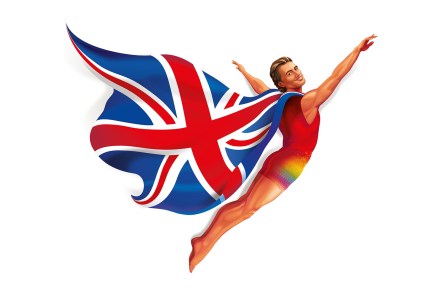
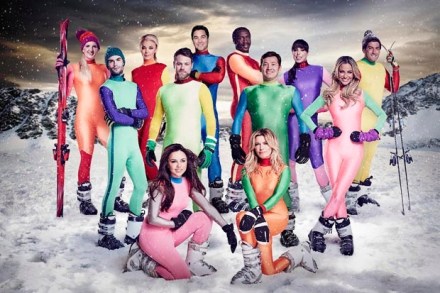
Not long ago I was asked if I wanted to participate in a Channel 4 reality show called The Jump. Rather embarrassingly, I’d never seen it, but my agent’s description of it sounded quite appealing. A bunch of micro-celebrities are taught a variety of winter sports, including skeleton, bobsleigh, speed skating, giant slalom and ski jumping. Once they’ve mastered the basics, they’re flown to an Austrian ski resort where they compete against each other in a D-list version of the Winter Olympics. A lot more appealing than Celebrity Big Brother, I thought, and less risk of ruining your reputation (yes, George Galloway, I’m thinking of you). However, there was a chance of damaging something more concrete.
Long life | 11 February 2016

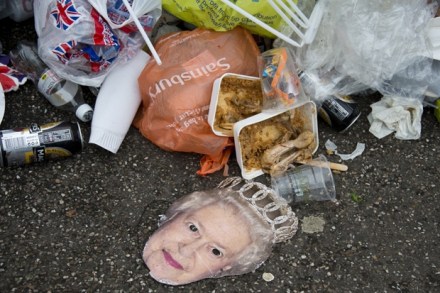
I am sure that the Queen disapproves of litter as much as anyone else, but she’s hardly ever exposed to it. There isn’t litter around at Buckingham Palace or at Windsor Castle or at any of her other homes. And when she goes away on a visit, her destination is always assiduously cleaned and tidied up in advance. She is, I suspect, almost the only person in Britain who barely knows what litter looks like. Yet we are all being asked to volunteer to spend the first weekend of March picking up litter everywhere in Britain to make the entire country clean before her 90th birthday in April.

Second thoughts

Racing Life is all about judgment and I got one thing right at Cheltenham last Saturday after the overnight rain. Waved on to soggy grass by a parking attendant, I demurred, insisting that anyone who parked there would never drive off. I was waved on impatiently and foolishly let her win. When it came to leaving, I managed to start slithering across the grass towards safety, only for a 4 x 4 driving up the hard core to refuse to let me in. As I braked, I knew I was doomed. It must be something about being so high up that makes 4 x 4 drivers so arrogant but at least the arrival of the tractor 50 minutes later taught me where to find the bolt-on towbar for my car.

Why does no one speak up for poor white boys?

David Cameron can be a frustrating figure at times. He wrote an article for the Sunday Times this week in which he drew attention to the under-representation of disadvantaged students in Britain’s universities, which he was quite right to do. But he is wrong about the ethnicity of those students and wrong about where the problem lies. It’s working-class white boys who fare the worst, not black boys, and when it comes to broadening access, the track record of our tertiary education sector is pretty good. It’s state schools that could be doing more. First, a few facts.

Long life | 28 January 2016

No good deed goes unpunished. This is a saying that applies with special poignancy to Olive Cooke, the 92-year-old poppy seller who jumped to her death in the Avon Gorge near Bristol after receiving something like 3,000 begging letters a year from charities. Mrs Cooke was a great believer in charity. She had sold poppies on behalf of the Royal British Legion since 1938, taking up position every November outside the entrance to Bristol Cathedral. She may have disposed of more than 30,000 poppies during her eight decades of selling them there. She was, said her family, somebody of an ‘incredibly kind, generous and charitable nature’ who held 27 direct debits to charities. The word got about. Here, obviously, was a sucker.

Is this a golden age of protest?

Are we living in a golden age of protest? A bunch of aggrieved citizens only has to raise a murmur of protest, whether it’s about racism, sexism, homophobia, transphobia or Islamophobia, and the institution they’re targeting instantly capitulates. A case in point is the Academy of Motion Picture Arts and Sciences. No sooner had a group of prominent African-American actors and directors complained about the lack of black Oscar nominees this year — ‘whitewash!’ — than the president of the Academy announced she would be taking ‘dramatic steps’ to address the problem. The Academy will enlarge its membership to include hundreds of entertainment industry figures from diverse backgrounds.

The Islamist Nazis and Corbyn’s wilful blindness

Many people watching Jeremy Corbyn’s interview on Marr last Sunday will have been shocked by his remarks about the need to begin a ‘dialogue’ with the leadership of the Islamic State. ‘I think there has to be some understanding of where their strong points are,’ he said. Afterwards, when these comments were widely reported, Corbyn’s supporters said they’d been taken out of context — the standard defence whenever he is criticised for saying something positive about Islamist terrorists, such as describing Hamas and Hezbollah as his ‘friends’ or the death of bin Laden as a ‘tragedy’. But there are only so many times this excuse can be used to explain these apparently supportive remarks.

Long life | 21 January 2016

Here I go again. I have stopped smoking. Until recently I had been smoking about 40 cigarettes a day, but it is now two weeks since I last had one. Initially I used e-cigarettes and nicotine lozenges to help me give up, but now I already feel I can manage without them. I think I may have conquered my addiction. I feel I could be free at last. But I hesitate to say so, because it is a feeling I have often had before. Like Mark Twain, I have often stopped smoking, but always after a period of time, even one as long as five years, I have taken it up again. If one wants to stop smoking, one really should try to avoid reading Mark Twain, because his enthusiasm for it is infectious.

Small wonder

Cheltenham, Ascot and Sandown Park are wonderful but without the little tracks racing would be lost. It was perishing cold — cold enough for brass monkeys to be keeping a watchful eye on their private parts — and the ground was heavy, but you could not have a better day’s racing than Warwick gave us on Saturday. I fuelled myself at the blue-and-white Whitby scampi stall, which would be a welcome presence on any track, and a fellow muncher set the tone: ‘I only really come for the scampi,’ he said. ‘And I don’t mind if I never back a winner.

Tell the truth about benefit claimants and the left shuts you down

Next month sees the release of Trumbo, a biopic about Dalton Trumbo, the screenwriter who was blacklisted by the Hollywood studios after refusing to testify before the House Un-American Activities Committee in 1947. Trumbo continued to work under a variety of pseudonyms and won two Academy Awards for his screenplays, neither of which he was able to receive. He wasn’t rehabilitated until 1960, some 13 years later. I’ve seen Trumbo and it isn’t much good, but Bryan Cranston has been nominated for numerous awards for his portrayal of the tortured martyr, including a Bafta. People who work in the film industry are, of course, almost universally liberal, and recognising Cranston’s performance is a way of signalling their disapproval of McCarthy-ism.

Long life | 14 January 2016

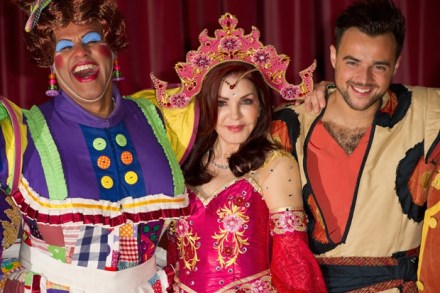
Before the start of Aladdin in Milton Keynes this week a promotional video showed Brian Blessed in oriental costume bellowing to the audience that pantomime had never been so popular in its long history and that Britain was still full of people longing to shout ‘He’s behind you!’, ‘Oh, yes it is!’, ‘Oh, no it isn’t!’, or whatever. It was a Sunday afternoon matinée and the theatre was full. The same had been true the week before at Cinderella in Northampton. The evidence seemed to suggest that Brian Blessed was right. But I did find myself wondering why. The pantomime may still be able to fill provincial theatres, but as entertainment it has deteriorated steadily over the years.

North-south divide

The well-bred Sea Pigeon, who had finished seventh in the Derby when trained at Beckhampton by Jeremy Tree, was later bought by the wine and spirits importer Pat Muldoon to go into training over hurdles with Gordon W. Richards in Penrith. The story goes that on his first foray out of his new northern yard, the gelding who was to become one of the greatest hurdlers we have seen stopped still in shock at the sight before him: it was the first time he had ever encountered a cow. Many find the north is a different place. As one who cut his journalistic teeth in Liverpool, I go with Tennyson’s verdict: ‘Bright and fierce and fickle is the South/ And dark and true and tender is the North’.

Long life | 7 January 2016

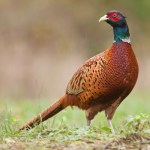
This is an uplifting story of survival with which to usher in the New Year. At Stoke Park, my home in Northamptonshire, I went the other day into the West Pavilion, one of two 17th-century buildings that were once connected by colonnades to a country house that burned down in 1896. It is one large room with a single entrance door, originally used as a library, then in the 19th century as a ballroom, and nowadays only for wedding receptions and the like. It is kept locked and protected by a burglar alarm, but inside was a hen pheasant scurrying frantically about. I wondered how it could possibly have got in there until I looked up and saw a jagged hole in the large Venetian window overlooking the park and splinters of glass all over the floor inside.

The left’s war on science

How much longer can the liberal left survive in the face of growing scientific evidence that many of its core beliefs are false? I’m thinking in particular of the conviction that all human beings are born with the same capacities, particularly the capacity for good, and that all mankind’s sins can be laid at the door of the capitalist societies of the West. For the sake of brevity, let’s call this the myth of the noble savage. This romanticism underpins all progressive movements, from the socialism of Jeremy Corbyn to the environmentalism of Caroline Lucas, and nearly every scientist who challenges it provokes an irrational hostility, often accompanied by a trashing of their professional reputations.

Long life | 31 December 2015

The Egyptian driver of a London minicab said almost nothing during our journey but dropped me off at my destination with the words ‘What do you think of the condition of the world at the moment?’ He didn’t think well of it himself, he added: and I could not but agree. I don’t think I’ve ever felt so uneasy, not even during the Cuban missile crisis. The threats to international order and stability are now so varied and so amorphous that it is difficult to know how they are to be confronted, and even more difficult to predict when or where the next horror will erupt. But that, I suppose, gives us all the more need to be hopeful and to look on the bright side of life.

The plot to save our allotments

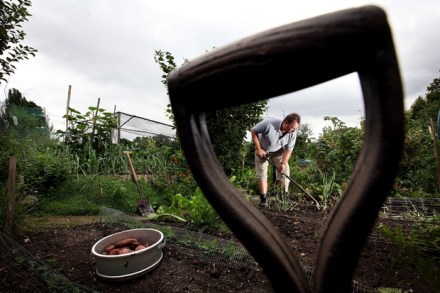
Since turning 50 I have become a gardening enthusiast. It started with tomatoes, then spread to raspberries and last year extended to French beans. I’ve now run out of space and was hoping to get an allotment in 2016. They’re like gold dust in west London, but one of the perks of living on my street is that the residents’ association has access to the Goldsmith’s Close Allotments, a two-acre plot abutting the backs of our houses. I put my name down when I first moved in and was optimistic one might become available this year. Imagine my dismay, then, when the chair of the residents’ association told me the allotments had been sold to someone called David Parry — a local property developer — and the users had been given their marching orders.

Tis the season for disagreeing with your spouse about everything

The older I get, the more Scrooge-like I become. I’m dyspeptic, misanthropic, curmudgeonly, parsimonious and unsentimental. Caroline, by contrast, is even-tempered, sweet-natured, charitable, generous and easily moved. Yet paradoxically, I love Christmas, whereas she regards it as a time of year to be endured rather than enjoyed. This inevitably leads to a number of arguments and, as with everything else connected with the festival, they’ve become ritualised. So here are the rows that are guaranteed to occur in the Young household at this time of year. The season always begins with a heated discussion about external lighting. My ideal is to go Full Chav, with a giant neon-lit Santa plastered over the front of the house, along with sleigh, reindeer, elves… the lot.

The Lord’s Prayer is no more offensive than Jeremy Clarkson or deodorant

There was a time not so very long ago when the most common complaint about Christmas was that it had become too commercial and that its Christian significance was being forgotten. Since then the decline in religious belief in Britain has grown so much that the secularity of Christmas is taken for granted. It is effectively a pagan festival now. According to the Church of England, only about one million people, or around two per cent of the population, still attend church on Sundays (though about twice that number do so on Christmas Day).

Wear The Fox Hat looks innocent enough but try saying it in an Irish accent

President Lyndon B. Johnson’s image never quite recovered in many people’s view from the photograph of him picking up his two beagles by their ears. Personally, I was nearly as affronted by the names he had given the two dogs: Him and Her. A dog is entitled to a good name, and so, for me, is a horse. The Tennessee novelist John Trotwood Moore once noted, ‘Wherever man has left his footprint in the long ascent from barbarism to civilisation we will find the hoofprint of the horse beside it,’ and while that may be going it a bit in the age of the drone and the mobile phone, racehorses are noble beasts and the names some people give them are an insult to their breeding.

Long life | 3 December 2015

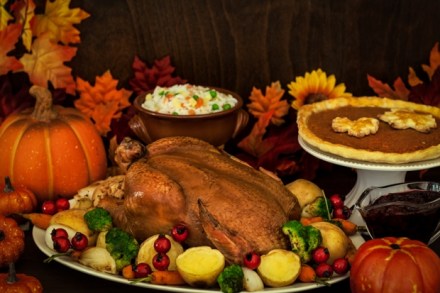
I have always found Thanksgiving, which was celebrated in the United States last week, the most agreeable and least stressful of holidays. It involves no present-giving, so it is almost free of commercialism and the anxieties associated with shopping; and it has no religious or political connotations, which means it can be enjoyed in equal measure by Americans of every kind. Christmas, on the other hand, despite all the efforts made in America to play down its religious origins, retains an element of exclusivity about it: if you are not a Christian, it is not really your day. Thanksgiving, with its emphasis not only on gratitude but also on goodwill and generosity towards everyone, yet without the divisive intrusion of religion, is perhaps the ideal family festival for the modern world.