More from life

Long life | 16 June 2016

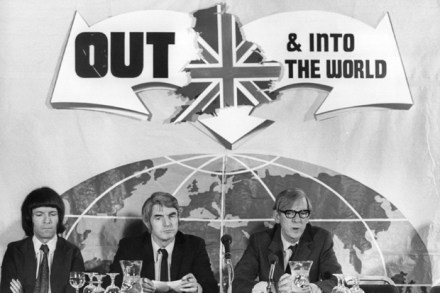
It was 41 years ago that The Spectator first urged its readers to vote Brexit in a referendum, but the circumstances were different then. In 1975 the Establishment was generally enthusiastic for Europe. Most of the Tory party, including its new leader, Margaret Thatcher, was keen to keep Britain in the Common Market it had only recently joined. The dissenters were few among the Tories and were mostly on the left wing of the Labour party and the trade unions, which saw Europe as inimical to socialism. Almost a third of Harold Wilson’s cabinet members were Eurosceptics, and he set the precedent (later followed by David Cameron) of suspending cabinet collective responsibility to let his ministers campaign against each other on this occasion.
Confessions of an England fan

[audioplayer src="http://feeds.soundcloud.com/stream/268140526-the-spectator-podcast-brexit-strategy-what-would-the.mp3" title="Toby Young explains his excitement at Euro 2016" startat=1096] Listen [/audioplayer] If you’re a proper football supporter, getting excited about England on the eve of a major tournament is considered uncool. I’ve lost count of the number of times I’ve tried to engage people in conversation about England’s chances, only to be greeted with a look of bored condescension. ‘I’m not really interested in international football,’ is the inevitable reply. Well, sorry, but I’m pretty fired up about the Euros — although, to be fair, I do conform to the stereotype of the inauthentic, prawn-sandwich-eating fan.

Girl power | 9 June 2016

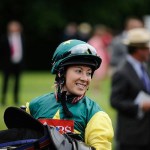
How much strength do you need to win a horse race? Do women have enough? And if they don’t should they be given an allowance to help them in one of the few sports where they compete professionally against men? The question came up as I shared a farmer’s platter with champion trainer Paul Nicholls in his Ditcheat local at the end of the jumping season. Paul is no softie: one of the things he most admires in Ruby Walsh is his toughness, win or lose, and the end was signalled for one young rider in the Nicholls yard because he came into the unsaddling enclosure in tears after a mistake. But, like the former champion jump jockey Sir Anthony McCoy, Paul believes that it is time to give the girls some assistance.

Long life | 9 June 2016

I’m back in England after travelling from Italy by railway, because I have been forbidden to fly in case the altitude affects my wobbly brain. It was rather a complicated train journey, involving changes in Florence, Milan and Paris, but rather exciting. Florence looked wonderful, as did Paris, and, perhaps because of my brain damage, even Milan seemed rather beautiful. Only London appeared dull and drab on arrival. The other excitement was that I travelled as an invalid because of the brain haemorrhage suffered during my holiday in Tuscany.

Call yourself a friend?

Should we be surprised that friendship isn’t always mutual? That is one of the findings of a team of researchers at Tel Aviv University who’ve just published a paper in an academic journal. They asked several hundred students to identify which members of their peer group they considered to be ‘friends’. On average, half the people included in this category by each respondent did not feel the same way about them. According to the researchers, this news would come as a shock to most people. The students in the survey thought that 95 per cent of the people they regarded as ‘friends’ would identify them as ‘friends’ too. But I can’t say I’m surprised. In fact, a 50 per cent reciprocity score strikes me as suspiciously high.

Long life | 2 June 2016

It was a famous American editor and columnist Michael Kinsley who once defined the political ‘gaffe’ as something that occurs when a politician tells the truth; and he was right, for it is usually the case that a person gets into most trouble when he publicly says what he actually believes. There were a couple of examples just the other day — one when the Queen said that Chinese officials had been ‘very rude’ to a British ambassador during a visit to London, and the other, even more embarrassing, when David Cameron described Nigeria and Afghanistan as ‘fantastically corrupt countries’.

Long life | 26 May 2016

When your mind suddenly goes wonky, you may be the one person who doesn’t realise that there is something wrong with it. That’s what happened a month ago when I was on a country holiday in Tuscany with my wife. It was lovely weather, and lunch had been laid out of doors. I had cooked a sea bass and was feeling rather pleased with myself. We were both happy, and things could hardly have been better. But everything began to go wrong when my wife decided to ask if I could pass her a knife. A knife? I didn’t know what a knife was. I had never heard of such a thing. I was damned if I was going to respond to this strange request, however much she persisted with it.

Numbers game

‘After a few decades of marriage a man ought to be able to recognise his own wife,’ Mrs Oakley observed a little tartly last Saturday when I picked her up post-Goodwood from Reading station after patrolling the concourse for 15 minutes. But if a woman buys herself a beanie to keep out the rain and buries herself behind A Month in the Country in the station café’s furthest corner he might be excused. Well, I thought so anyway. It has been excuses all round this week with three of our Twelve to Follow running unplaced while Brando, She Is No Lady and Mecca’s Angel all occupied the dreaded second place.

The only Eurosceptic in the room

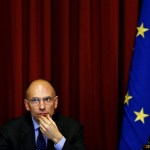
I was in Paris last week to take part in an EU referendum debate at Sciences Po, a French university that specialises in international relations. It’s not an exaggeration to describe Sciences Po as a finishing school for Europe’s political elite. Twenty-eight heads of state have studied or taught there, its graduates include five of the last six French presidents and the current dean is Enrico Letta, a former prime minister of Italy. My fellow panellists included Ana Palacio, the Spanish minister of foreign affairs from 2002 to 2004, and Hubert Vedrine, the French minister of foreign affairs from 1997 to 2002. I think it’s safe to say I was the only Eurosceptic in the room. I was listened to with polite amusement, but almost no one took the threat of Brexit seriously.

My soppy, dopey, deadly predator

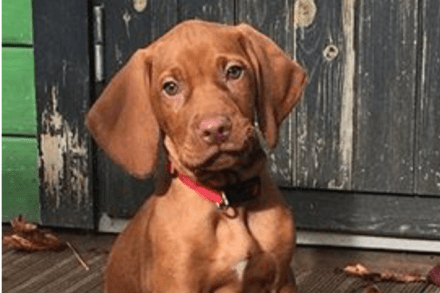
Leo, the Hungarian Vizsla my wife brought home unexpectedly last year, is approaching his first birthday and not getting any easier to manage. Caroline decided to buy him on the spur of the moment because she ‘liked the way he looked’, by which she means he looks like her. Not the face, obviously, but his figure — thin, athletic, muscular, big ears, big feet. Indeed, she was walking Leo in Gunnersbury Park a few days ago when another dog -walker, spotting them together, burst out laughing. ‘I don’t think I’ve ever seen an owner who looks more like her dog,’ he said. This may have been his attempt at flirting — always hard to tell with dog owners. She noticed he had a pug, but managed to avoid the obvious -rejoinder.

Twelve to follow | 12 May 2016

It has been a little like scraping from the plate as slowly as possible the last traces of Mrs Oakley’s exquisitely sauced vitello tonnato; like draining reluctantly the last glass of our best Condrieu: this year I never wanted the jumps season to end. Sprinter Sacre came back to his best, Richard Johnson finally won the jockeys’ title, Paul Nicholls gutsily collected his tenth trainers’ championship. But if the joy of jump racing is continuity, the attraction of the Flat lies in its sense of renewal. As sleek would-be contenders started strutting their stuff in the Classic trials, as the first precocious two-year-olds bounded excitedly on to the scene, I remembered why I love the summer game too. Which will be the breakthrough stables this year?

These heartless Europhile snobs

One of the interesting features of the Brexit debate is that it has laid bare a schism in British society which runs much deeper than the conventional Labour-Conservative divide. On the one hand, we have the prosperous, educated elite, mainly based in cities and university towns, who are liberal on social issues, pro-immigration, believers in free trade and internationalist in outlook. On the other, we have the white working class, clustered in areas of economic stagnation, particularly seaside towns, who are socially conservative, anti-immigration, suspicious of free trade and staunchly nationalist. This isn’t a perfect summary. Dan Hannan, Boris Johnson and Michael Gove fall more naturally into the first category, whereas Scottish and Welsh nationalists are mainly pro-EU.

Middle-class warriors

Tuesday’s protest against Key Stage 1 Sats was moronic on so many levels that it’s hard to know where to start. For one thing, it wasn’t a ‘kids’ strike’. Did a national committee of six- and seven-year-olds get together and decide on a day of action? Even in Brighton, the centre of the boycott, that seems a bit far-fetched. The grown-up organisers of the protest clearly believed that was a cute way of packaging it for media consumption, but the thought of such young children engaging in political activism is actually a bit sinister. It’s like something out of a dystopian satire — a cross between Brave New World and Nineteen Eighty-Four. Then there’s the sheer selfishness of the whole thing.

Sandown thrills

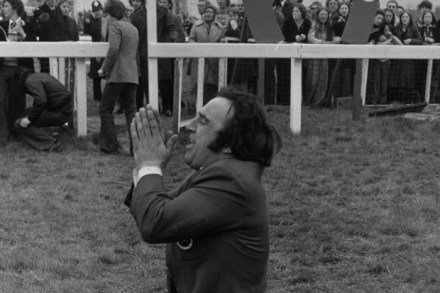
The difference between praying in church and praying at the racecourse, a gnarled old punter once said, is that at the track you really mean it. At Sandown last Saturday, the last day of the jumping season, all our prayers were answered: you simply could not have asked for a better day. One reason we were all there was to celebrate Richard Johnson’s first jockeys’ championship after 16 times finishing a good-tempered and sporting second to his friend A.P. McCoy. In between the autograph-signing, Dickie Johnson provided the perfect seasonal sign-off by winning the bet365 Oaksey Chase on Menorah for trainer Philip Hobbs in the familiar blue colours of Diana Whateley.

What if Murdoch owned the Beeb?

A new book published today by the Institute of Economic Affairs called In Focus: The Case for Privatising the BBC includes a chapter by the economist Ryan Bourne on the BBC’s left-of-centre bias. As you’d expect, Bourne’s contribution includes plenty of fascinating data, such as the fact that ‘Thought for the Day’ contributors are eight times more likely to offer a negative view of market-based and capitalist activity than a positive view. However, Bourne doesn’t accuse the Beeb of straightforward left-wing bias. Its partiality is more subtle and complicated than that. He cites an example of the BBC’s coverage of immigration provided by Roger Mosey, a former editorial director.

Long life | 21 April 2016

As we prepare in Britain for our momentous referendum in June, Italy has just had one. It happened last Sunday while I was on holiday in Tuscany, and it was about as futile an exercise in democracy as there could be. Italy has lots of referendums. They come in two kinds. First, there is the constitutional referendum, which is used to approve any change to the constitution that has been passed twice by both houses of parliament. Then there is the popular referendum, which is held by popular demand to request the abolition of the other kinds of law that parliament has enacted. Constitutional referendums are rare.

Long may we laugh at our absurd demagogues

In Reflections on the Revolution in France, Edmund Burke warned that ‘pure democracy’ was as dangerous as absolute monarchy. ‘Of this I am certain, that in a democracy the majority of the citizens is capable of exercising the most cruel oppressions upon the minority whenever strong divisions prevail,’ he wrote. He compared demagogues to ‘court favourites’ — gifted at exploiting the -insecurities of the powerful, whether the people or the monarch. For Burke, the risk of democracies being captured by demagogues then degenerating into tyrannies was a good argument against universal suffrage.

My confession: I began dodging tax aged eight

As someone who still entertains hope of becoming a member of Parliament one day, I’d better come clean about my own tax affairs. It’s a torrid tale, as you’d expect, but rather than wait for my political opponents to winkle the story out of me bit by bit, I thought I’d get it all out in the open. I blame the Cub Scouts for starting me on the wrong path. As a boy of eight, I was an eager participant in bob-a-job week, which involved going from door to door on my street offering to do odd jobs. I turned all the money over to my Cub pack, but I realised I could earn extra pocket money from then on by washing cars and weeding gardens. Before long, I’d earned enough money to buy my own portable black-and-white tele-vision — about £40, if I recall.

Long life | 14 April 2016

The Royal College of Nursing (founded in 1916 with 34 members, but now with 440,000) is busy celebrating its centenary; and, at its grand headquarters in London’s Cavendish Square, there was another little celebration last week. This was to mark the centenary of a small, short-lived and generally unremembered medical institution, the Anglo-Russian Hospital of St Petersburg, at which some 6,000 wounded Russian soldiers were treated by British doctors and nurses during the last two years of the first world war. These were only a tiny fraction of the millions of Russians killed and wounded in that dreadful conflict, and the hospital was so completely forgotten that it didn’t even get a mention in the ‘Official Medical History of the Great War’.

National review

With great victories in Flat racing you witness hats-in-the-air exultation. You see the pride of trainers who nurtured the winner to full potential or of jockeys who timed their challenge perfectly. Sometimes you even spot the quieter satisfaction of the owners and breeders who framed the mating that brought it all about. But much of the joy springs not from the victory itself but from the oodles of cash the winner is now worth at stud. In jump racing that financial bonus is lacking and yet the raw emotion often seems ten times as intense, as we saw after Rule the World won this year’s Grand National. The winning trainer, Mouse Morris, was literally speechless.