More features

The joy of 1995 Lagavulin

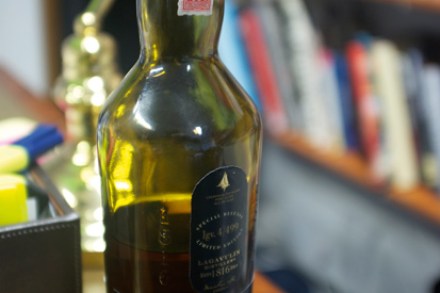
In a small cupboard at the end of my office sits a bottle of 1995 Lagavulin, distilled in a Pedro Ximénez sherry cask. Just looking at it from my desk gives me immense pleasure. I can open it and smell the cork if I need inspiration. And sometimes, after The Spectator is put to bed, I may take a sip or two. Maybe not even enough to reach the throat, just to moisten the tongue and refresh the palate. It is the most remarkable whisky I have ever owned. I’m sure that Taki, our High Life correspondent, knows his whisky. I like to think, then, that he appreciated the bottle he somehow liberated from my office to pour into a plastic glass at The Spectator’s recent tea party.
A grand tour in a glass

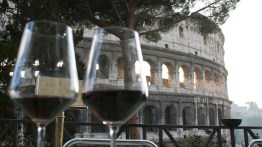
What a challenge. To travel across Italy in an afternoon of wines. I arrived at the soaring spaces of Lindley Hall in Victoria, where Berry Bros & Rudd had assembled 43 growers from 11 regions for its Grand Tour, Italy 2013. Master of ceremonies David Berry Green strolled among the tables tasting and gossiping, introducing old friends to new. An Englishman living in Barolo, Piedmont, David is a lean, towering figure who looks like the youthful Jeremy Irons. His passion is infectious. After chatting to him for ten minutes, I felt I’d watched a documentary about Italy. Wine, he told me, was imperial Rome’s secret weapon. The Romans conquered with the sword but pacified with the grape.

Rod Liddle: My career as a wine writer started out so well

Ah, this all started out so well, and with such good intentions. This attempt of mine to write seriously and informatively about wine. Well, to write about wine, full stop, really. There was always going to be a problem with someone who rather likes retsina, I suppose. My chief criteria for judging wine is quantity. The many bottles of Spanish wine arrived. My wife and I sat in the courtyard, at the little iron table. I had a notebook on the table, and there was a bucket beneath the table, so that we could spit out the wine, like I’ve heard they do. It was a warm and scented summer evening; earlyish — the rabbits were hopping around in the field, the bats were still asleep. The bottles were lined up. We had Manchego cheese, and olives.

The joy of rum

Until a few years ago, I knew nothing about rum. There was the dark stuff, coveted by the pirates of Treasure Island, used by the Navy for grog on board warships and abused by Churchill in his sarcastic account of naval traditions: rum, sodomy and the lash. At least rum would be preferable to the other two. There was also white rum, usually the preserve of those too young to appreciate a decent drink, who often mixed it with Coca-Cola. Even as a child, I did not like the taste of Coke. I last drank it about 40 years ago. I was travelling by bus across Anatolia and we stopped at a village for refreshment. I would have killed for a beer, but the choice was the local water or warm Coke.

All the Iron Ladies

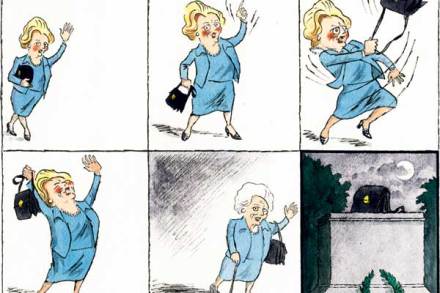
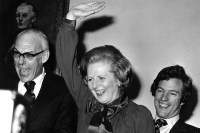
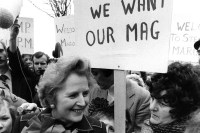
The day Mrs Thatcher became Leader of the Opposition was a nightmare. Her victory over Mr Heath meant that I had to do a cartoon featuring her for the next day’s Daily Telegraph. But her arrival had been so swift that I barely knew who she was, and had almost no idea what she looked like. I had a problem. I don’t remember getting the photographs from her file in the picture library to draw from. My memory begins as I sat at my desk and looked through them. They were all close-ups of her teeth and upper gums, bared in smiles, under various pantomime ugly-sister hats. In those days, all Tory women wore peculiar hats most of the time. I did not have enough to go on. I struggled for hours to draw her likeness and I still feel the pain of my failure.

Working for Mrs Thatcher

A doctor providing geriatric care once told me of the damage Mrs Thatcher had done to the NHS. He used to employ a simple test to find out whether his elderly patients had become seriously gaga. He would ask them who the Prime Minister was: as their minds weakened so the only name they came up with was Winston Churchill. But after Mrs Thatcher had become Prime Minister even the most confused of his elderly patients gave the right answer. Now of course his test can work again. Right through until the middle of the next century, elderly people in nursing homes will be assuring polite young doctors that Mrs Thatcher is the Prime Minister. I joined her Downing Street staff at the beginning of 1984 during the miners’ strike.

Trying to get the mad, broody chicken off her addled eggs

A friend who is not normally receptive to left-wing or republican ideas suddenly exclaimed at dinner in my house the other day that he was bored, sickened and disgusted by the Queen and all the royal family, and thought it was high time they were removed. In the mood of the moment, nobody seemed disposed to disagree, although compassionate noises were made from some quarters about the Queen Mother and the Waleses. In the ensuing discussion, everyone observed that they were not aware of having felt this way before, but agreed that they felt it now — that is to say, at about 9.45 p.m. on Saturday, 12 August 1989. There had been nothing to annoy us about the royal family in the news. It traditionally keeps a low profile at this time of year.

Three faces of Thatcher

Politicians can be divided into two categories; those whose public face is different from their private face and those for whom they are the same; put another way, those who feel it necessary in public appearances to put on an act, and those who manage to remain themselves. Among the latter are (or were) such disparate characters as Jack Kennedy, Willy Brandt, Jo Grimond, Edward Heath, Neil Kinnock; and among the former Adolf Hitler, Winston Churchill, Richard Nixon, Harold Wilson and Arthur Scargill (if you don’t like that list, you are welcome to make your own). Prominent among the last-named is our Prime Minister, but she is almost unique in having not two faces but three.

Mrs Thatcher goes to Brussels

‘Délégation Royaume Uni. Salle 4’ announces a scruffy piece of paper projected onto the black and white television screens of the Centre Charlemagne. The journalists hurry upstairs for the latest from Mr Bernard Ingham, Mrs Thatcher’s press secretary. Mr Ingham is not conspicuously communautaire. He tells us who spoke in the session — Mr Lubbers, Herr Kohl, Mrs Thatcher and ‘Mr Papandreou — I always call him Mr Papadopoulos’. A nodding acquaintance with recent Greek history would have made Mr Ingham realise that such a slip, though easier on the tongue, is as politically uncomfortable as calling M. Mitterrand ‘Marshal Pétain’. But then Mr Ingham is not paid to spread sweetness and light.

The Falklands victory

A little rejoicing is now in order, but only a little. We may rejoice that the Falklands war did not end in a bloodbath at Port Stanley, that the Argentinians did not stage a last doomed defence of the islands’ capital. We may rejoice at the performance of our armed forces who have conducted themselves with great skill and courage and with as much humanity as is possible in war. We may rejoice that they achieved their objectives, for to have lost a war against the Argentinians would have been an unthinkable disaster. We may rejoice that the conflict has accelerated the decline of the British Labour party.

Mrs Thatcher’s triumph

There was never a more disenchanted victory. The moment the size of the Tory swing was known, the doubts began, not least among those hundreds of thousands who had voted Conservative for the first time in their lives. Would the unions allow Mrs Thatcher to govern? Would the promised tax cuts be blown in betting shops and strip clubs, instead of fructifying in the pockets of the people? Would investors once again be fatally attracted to the hustlers and twisters? Was there any way of bridging the growing gulf between North and South? Did the British people as a whole have any stuffing left in them? Could any government muster the zest to halt the de-industrialising of Britain? Was this to be yet another false dawn, a surrender to a fresh set of illusions?

Clear choice for the Tories

If I start with a reference to the sorry condition of the Tory party, I hope readers will not immediately turn to another page. If only the Tories can take a fairly cool look at themselves, it will quickly be apparent that the condition is not as serious as all that; and that it is certainly capable of repair. Housman’s ancient ‘three minutes of thought’ will suffice to show that there is only one direction in which the Tories can go. Once their collective mind is concentrated on that fact the rest will be, if not easy, at least far advanced in ease from the complicated and tragic business of the present run-up to what looks like being a bitter leadership contest. A commonsense analysis of this confused situation would run as follows.

Her brilliant career

In 1975, when Keith Joseph dropped out of the race for the Tory leadership and his campaign manager stepped into his place, almost no one took it seriously. She was ‘precisely the sort of candidate… who ought to be able to stand, and lose, harmlessly’ said the Economist. Only one publication in Britain backed her then, and our endorsement is reprinted in our supplement. The values she represented are the ones The Spectator has championed for decades: small government, low taxes and personal freedom. And a preference for those who enter politics to do something, rather than be someone.