David Willetts

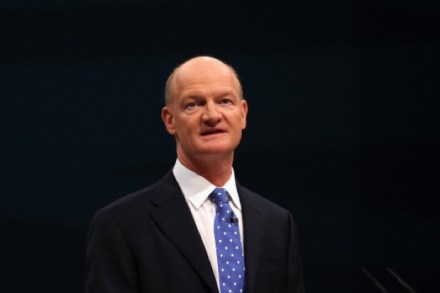
David Willetts was formerly a science minister and he now sits on the board of a number of scientific bodies, including the UK Space Agency. He is a fellow at the Royal Society.

Defending science from ‘cancel culture’

From our UK edition

27 min listen

Freedom of speech is one of the fundamental tenets of a liberal democracy, and yet threats to freedom of speech today don’t so much come from authoritarians abroad as they do from within. The idea of ‘no-platforming’ those you disagree with, or ‘cancelling’ them, has taken root in all forms of public debate, and increasingly so in science. The word ‘science’ can today often be a shorthand for ‘truth’, which creates an orthodoxy where diversity of opinion is not welcomed. Science is meant to be ongoing process of finding truth, where what each generation takes as given may well be overturned as we discover more. On this podcast, we will be looking into the question of free speech within science, and asking whether we have lost sight of what science means.


Time to start saving – how to make the best of uncertainty

From our UK edition

32 min listen

The economic impact of coronavirus is already felt keenly by many people. A large chunk of the population is having to dig into its savings to cover for lost income. But what if you don't have much in the piggy bank in the first place? Often, the discipline to save gets overtaken by events. With two-fifths of adults having less than £500 in savings, what can be done to encourage people to think about their life savings more?With Mims Davies, Minister for Employment; Lord David Willetts, President of the Resolution Foundation; and Emma Watkins, Annuities Director at Scottish Widows. This episode is sponsored by Lloyds Banking Group.

Will Theresa May’s grammars undermine David Cameron’s free schools?

From our UK edition

Grammar schools remain one of the most highly-charged issues in domestic politics. There is bound to be controversy about how to boost social mobility and educational standards. But grammar schools bring to the surface other deep undercurrents as well. Were things better in the 1950s? What was Margaret Thatcher’s role in closing so many of them and did she want to see them brought back? Does the call for more grammar schools represent the best of authentic politics shaped by our own experiences, or does evidence-based policy making mean going beyond that?

Working for Mrs Thatcher

From our UK edition

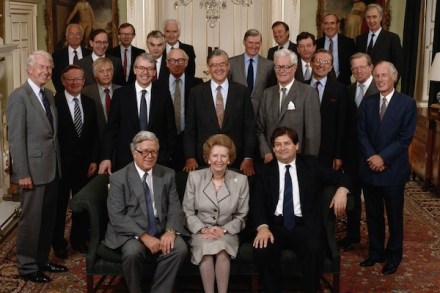
A doctor providing geriatric care once told me of the damage Mrs Thatcher had done to the NHS. He used to employ a simple test to find out whether his elderly patients had become seriously gaga. He would ask them who the Prime Minister was: as their minds weakened so the only name they came up with was Winston Churchill. But after Mrs Thatcher had become Prime Minister even the most confused of his elderly patients gave the right answer. Now of course his test can work again. Right through until the middle of the next century, elderly people in nursing homes will be assuring polite young doctors that Mrs Thatcher is the Prime Minister. I joined her Downing Street staff at the beginning of 1984 during the miners’ strike.

The role of the state

From our UK edition

Tony Judt is a vivacious and controversial historian. He is Jewish but has turned against Israel. He is a thinker of the Left who has ended up in the USA. And now he has been struck down with a grievous illness, a virulent form of motor neurone disease which has left him paralysed from the neck down. As a result he has composed his latest book in his head and then dictated it to an aide, using the classic memory device of setting the text in different rooms of an elaborate building. This elegant essay is the result. Judt’s illness has left him determined to restate his belief in what he calls social democracy. It is above all aimed at the younger generation. He fears that, because of the dominance of neo-liberalism, they have lost an appreciation of the good that the state can do.

The world we have lost

From our UK edition

The Whig interpretation of history, a relentlessly progressive account of the emergence of our parliamentary system, has long been out of fashion when it comes to politics. But histories of social policy are all too often complacent accounts of ‘the development’ or ‘evolution’ of state provision. This excellent book breaks with that tradition by reminding us of what was lost as the conventional welfare state expanded. A vigorous network of working-class institutions ranging from friendly societies to dissenting chapels was bulldozed out of the way as the state moved in. E. G. West powerfully showed how much schooling there was before Foster’s Education Act of 1870.