Letters

Letters: I was once on Prince Harry’s side. Not any more

On child care Sir: Your recent editorial deplores, among other things, the cost of child care, to which you attribute the loss of female skills to the workplace (11 January). I would agree that pursuing a career is easier if one has no children. I also agree that the cost of child care is a significant drain on the income of young families. I am less convinced by the implicit suggestion that cheaper child care is the solution. I speak from experience and with hindsight. My son was born in 2000. For women of my age and education, at that time it was almost imperative to shove your baby into an expensive nursery and get back to work as quickly as possible. This is what I did — and I can’t say it was a good investment, for me, for his father or for him.

Letters: Roger Scruton and the meaning of life

Wonder and gratitude Sir: Roger Scruton, in a very personal and moving portrait of his year (‘My Strange Year’, 21 December), reminds us that crisis is opportunity; and concludes that the meaning of life is gratitude — something we may only realise when, as Virgil put it, ‘mentem mortalia tangunt’. I think that language may betray us a bit on this great question and that there is no meaning of life. Rather, the meaning is life. Our response to this is-ness — this amazing, often painful gift — may be to turn aside into the ressentiment which Nietzsche warns against; or — as Roger Scruton does — to feel wonder and sheer gratitude at what is, might never have been, and one day will not be.

Letters: Should conservatives be worried that high-spending Boris has a majority?

My father’s imprisonment Sir: Harald Maass’s piece on the plight of Uyghurs in China (‘A cultural genocide’, December 14) captures the grim reality of what has been happening. Articles like this draw vital attention to the crisis. I am an ethnic Uyghur and live in Belgium with my wife and children. My father, a 58-year-old secondary school teacher from Xinjiang, was jailed in China in April 2018. No reason was provided by the authorities as to why, and there was no trial or any other legal procedure. He was obviously imprisoned just because he is a Uyghur. After 18 months in prison, he was finally released recently and is at home in Xinjiang. Even so, we have only been in touch once — he and all my family members in China are too afraid to be open with me.

Letters: Why have the Conservatives decided Chesterfield is a lost cause?

Given up on Chesterfield? Sir: Matthew Parris makes some interesting and accurate points about growing Tory support in the north and Midlands (‘The Tory push north will end in failure’, 7 December). He did not mention Chesterfield in his article, but it is a good example of what he talks about. It seems to me that the Conservatives have decided Chesterfield is a lost cause, even though it would on the face of it seem promising territory for them. With an average age higher than the national average and no university, it is one of those ‘left behind’ areas with a lot of traditional working-class voters who dislike Corbyn. A good local candidate and some active canvassing could at least have made a dent in Labour support. So what did the Tories do?

Letters: Governments should be promoting marriage, not discouraging it for the sake of equality

Look closer to home Sir: In your interview with Boris Johnson (‘Austerity was not the way forward’, 30 November) he attributes the EU referendum result to ‘regional inequality… parts of the UK were simply being ignored… leaving people behind’. Yet he says his remedy for this is ‘infrastructure and education and technology’. In other words, people voted Leave for reasons that had nothing to do with the EU: they were ‘left behind’ because of the austerity policies of the British government. The remedy he identifies is also entirely within the power of our own government.

Letters: Just how should you pronounce vermouth?

Down to zero Sir: Paul Collier’s siren call to take advantage of near-zero interest rates to go on a massive government infrastructure splurge is one Jeremy Corbyn might welcome but Conservatives should resist (‘Back to Plan A+’, 16 November). Japan tried what he is proposing when its bubble burst in 1990. The result: $6.3 trillion debt and two wasted decades. As Harvard’s Edward Glaeser has noted: ‘No one can look at the Japanese numbers and conclude that the money has ramped up the growth rate.’ Apart from anything else, politicians are poor allocators of capital.

Letters: The Politically Homeless Party are now a force to be reckoned with

Nowhere to turn Sir: Like Tanya Gold and Matthew Parris (9 November), I too am feeling politically homeless. Over the decades my vote has wandered along the mainstream party spectrum but today that seems wider than ever and its constituents increasingly unappealing. A vote for the Conservatives would be to endorse utter incompetence in government of several years, whereas Labour’s neo-Marxist tendencies are not to be countenanced in power. As a Remainer, in ordinary times I might, as previously, be attracted to the Liberal Democrats, but their policy on revocation makes them no longer democrats. It is disingenuous of Matthew Parris to not worry about this just because they will never be in a position to implement it.

Letters: Why I’ll vote for Boris

A bad idea Sir: Your editorial in favour of an amnesty for illegal immigrants (‘The case for amnesty’, 9 November) flies in the face of extensive evidence. Italy, Spain and France have, between them, granted any number of amnesties; almost without exception, each one prompted further waves of illegal immigration. In 2005 the French Interior Minister said further amnesties were out of the question. His German counterpart in the same year said that ‘wide-ranging campaigns to legalise illegal immigrants such as in Spain mean more illegal immigrants are drawn to Europe’. Your editorial avoids any mention of the potential risks to life highlighted by the recent tragic events, and suggests that a ten-year rule would have little effect on inflows.

Letters: How to squash a Speaker

No special protection Sir: Rod Liddle’s joke that the election might be held on a date when Muslims cannot vote, thereby reducing support for Labour, has apparently led to outrage. There has been no similar outrage over your front cover (‘A vote is born’), which satirises the Christian nativity by portraying Johnson, Corbyn and Swinson visiting the stable in Bethlehem. It should be a principle of free speech in any free society that all religions are equally subject to satire, criticism and even gentle mockery; there should be no special protection for one set of beliefs over another. In allowing satire about two mainstream religions in the same issue, you have shown admirable balance.

Letters: What would be the point of a second referendum?

Another referendum? Sir: Matthew Parris’s article ‘What question should a second referendum ask?’ (26 October) occasioned a wry smile from me this morning. His first question — whether Britain should remain in or leave the European Union — has already been asked and answered, at great expense and trouble, in 2016. The only logical reason why it should be re-asked is if the first time it was asked was illegitimate in some way. But it was only after the result was known that questions were raised about its legitimacy. At the time, not a breath was raised. However, I do like Mr Parris’s second question. We shouldn’t have a second referendum, but if we do let’s make the choice ‘deal or no deal’.

Letters: David Cameron’s real referendum mistake

Cameron’s fatal error Sir: Jo Johnson’s otherwise informative review of David Cameron’s For the Record (Books, 12 October) suggests Cameron’s ‘mistake’ was to not call the referendum earlier, and his ‘fatal error’ was his failure to nail down the Leave campaign on how they ‘would actually deliver Brexit’. Not so. Cameron’s mistake was to assume the referendum would produce a Remain result. Cameron’s fatal error was to have taken sides in the referendum.

Letters: Shoots should be about quality, not quantity

Bad sport Sir: At last a respected member of the shooting community has popped his head above the parapet. Patrick Galbraith has had the courage to express the view that many of us from the ‘bygone sporting era’ hold, but have either been too afraid of the commercial consequences, or too idle, to go public (‘Dangerous game’, 12 October). The shooting fraternity has done an awful job of educating newcomers about what constitutes a great day out. It has allowed quantity to prevail over quality. It has failed to ensure that appreciation of the ‘craic’ and the environment are an essential element of the experience. Like all activities, when you do it to excess, you draw unwelcome attention.

Letters: Remainers lost – and Richard Dawkins needs to accept that

Deny Remainers oxygen Sir: Your correspondent Richard Dawkins seems to have a very tenuous grasp of logic for an academic (Diary, 5 October). He excoriates a referendum on the grounds that in the run-up the voters may have been misled. There is one choice between two alternatives, and the supporters of each outcome will do their best to persuade. Both may be less than truthful. Yet he adores a general election with five or six candidates hawking their conflicting and unfulfillable manifestos — all of them those pillars of veracity, politicians. Let us be frank. Since the shock result of 2016 we have listened to the whines of the EU fanatics for more than three years until they have become extremely boring. Please do not lend your valuable pages to giving them yet more oxygen.

Letters: We need judges with practical experience

Judges of experience Sir: In the midst of the furore about the Supreme Court judgment, many people are now questioning how the senior judiciary are appointed (‘Imbalance of power’, 28 September). Lady Hale is undoubtedly extremely clever. But perhaps that is at the heart of the problem. It is well established that the ranks of academia are now predominantly left-wing in their political views and this has unfortunately permeated down to the teaching profession in schools. I am a retired barrister who specialised in employment law, working in companies which were highly unionised. During my career I gained immeasurable practical experience, but as time went on I realised I was drifting further and further apart from lawyers in pure academic fields.

Letters: We must grasp the dangers of cannabis before it’s too late

On judging the judges Sir: The spectacle of judges questioning essentially political decisions is not an edifying one. But we should be slow to dismiss the importance of the role of judicial review. Dr Ekins is justifiably troubled by the escalation of appeals to the Supreme Court in politically sensitive terrain. (‘Judgment day: the danger of courts taking over politics’, 21 September), but there are a number of positive features of this always contentious activity. First, it is the proper responsibility of the judiciary to determine the moral principles which underpin our law and to apply them as they do the law itself. Secondly, judicial review is a powerful check on the tyranny of the majority.

Letters: parliament has a responsibility to stop Brexit

Parliament’s responsibility Sir: I always enjoy reading the intelligent and outspoken Lionel Shriver. But her latest article (14 September) puts forward an invalid argument. As Ms Shriver points out, no one in the USA seriously argued that the disaster of Trump’s election, and the damage it could cause the country, meant the result should be contested. She compares this with the fact that many in the UK want to overturn the EU referendum result; and concludes from this that our political system is ‘broken’. But had an election been fought here, with one party promising Leave and the other Remain, few would be seriously arguing for the overturn of the outcome — whatever it was. Elections are, rightly I believe, taken more seriously than referendums.

Letters: There is more to village life than shutters, benches and paint

Shambles at sea Sir: On 19 July Iranian Republican Guard forces captured the UK flagged tanker Stena Impero, as described by former defence secretary Penny Mordaunt in her Spectator Diary (3 August). It was a national humiliation and it needn’t have happened. As was made clear at the House of Commons Defence Committee hearing on 9 September, warnings were being given about possible Iranian actions as early as mid-June. The UK naval presence in the area comprised only one frigate, HMS Montrose, and more ships were needed to protect UK shipping. The HCDC was surprised to discover from Mordaunt that she had been trying to stimulate a response, but had her requests for a Cobra meeting refused on at least five occasions.

Letters: History has not done justice to Neville Chamberlain

Helping the homeless Sir: The number of rough sleepers in one of the richest countries on the planet is surely a finger of accusation pointed at our generation (‘Wake-up call’, 31 August). Adam Holloway is correct when he says that giving cash directly to those living on the streets often compounds rather than alleviates the problem. Smarter ways should be found to direct compassion effectively, and a new charity, Nextmeal, is attempting to do just this. It uses GPS mapping technology to locate the nearest centre helping the homeless. The database currently details almost 400 such centres across the country, most of which are charities that can dovetail with state services. Thousands of cards have been printed with a link to the website, www.nextmeal.co.uk.

Letters: Prince Harry has been searching for purpose since he left the army

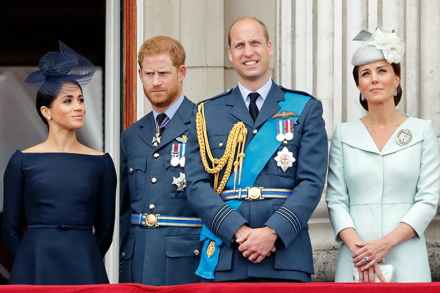
Harry’s army career Sir: I believe Jan Moir has misread the situation over Harry and Meghan (‘By royal disappointment’, 24 August). Shortly after Prince Harry left school he was filmed leading drill as a cadet. He was grinning ear to ear, clearly enjoying himself. Harry flourished in the army, which made his leaving it in 2015 such a surprise. In an interview at the time, he related the struggles of ‘trying to get the balance right’ between royal and military life. Prince Harry’s army career was a tremendous boon to the monarchy, and I never understood why the royal family gave that asset up. All of the Duke of Sussex’s ‘woke’ entanglements have been a search for a new sense of purpose after his vocation was denied him.

Letters: civil servants have ruined our trains

Travelling in discomfort Sir: I don’t agree with much of what Matthew Parris says these days, but he was spot on with his piece about train seats (‘Who’s to blame for my terrible journey?’, 17 August). I think his hunch about where the blame lies for such uncomfortable seats is correct. In these parts, our train service provider is GWR, which has introduced new trains with bum-numbingly unforgiving seats that are wholly unsuited to typical journeys of four to five hours. When questioned, the always helpful staff respond that: ‘This is what happens when you get civil servants to design the trains.’ To add insult to injury, the new GWR trains also have no buffet carriages. Instead there is an elusive, poorly stocked trolley.