Letters

Letters: Who’s responsible for Putin’s rise if not Russians?

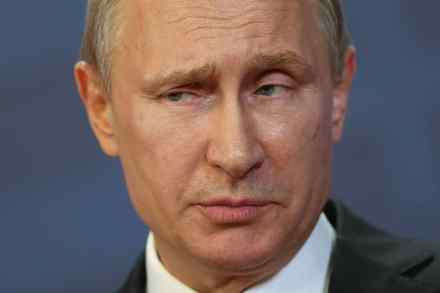
Russian misrule Sir: Your editorial (‘Sanction Schroder’, 21 May) laments that western sanctions may be harming ordinary Russians, given that they too ‘are victims of Vladimir Putin’s corruption and misrule’. Yet who if not the Russian people themselves are more culpable for the rise of Putin? The unpalatable fact that both he and his assault on Ukraine still enjoy such considerable popular domestic support cannot be put down merely to his iron grip on the levers of coercion and propaganda. For most of the last century the Russian people have allowed themselves to be misruled and oppressed by a succession of malevolent tyrants and despots. There comes a point when the people of a country have to take responsibility for their leaders.

Letters: The true state of Oxbridge admissions

Applying myself Sir: It was interesting to read David Abulafia’s rather damning critique of the Oxbridge admissions process (‘Who’s out’, 14 May), given the fact that he entirely contradicts much of what he must have seen as a professor of history at Cambridge. Abulafia criticises the fact that ‘candidates from one type of school with better scores (on the TSA) are being turned away in favour of those from another type of school with lower scores’. I’m a Year 13 student at a state school and was turned away from Cambridge this year after applying to study philosophy. For me, there was little to no advice given by the school, and no friends or family members or teachers to ask about it (as none have been to Oxbridge).

Letters: Banning Russia’s culture only benefits Putin

Don’t ban Russia’s culture Sir: It is uncouth, illiterate and actually beneficial to Putin when theatres, opera houses and other cultural institutions in Britain and across the globe block access to these heights of culture (‘Theatre of war’, 14 May). During Stalin’s last decade and throughout the Cold War, Isaiah Berlin was a superb help to this country and to Russia through his connection with Anna Akhmatova, including the award to her of an honorary doctorate at New College, Oxford, in June 1965, the year before her death. Censorship and blocking of the free flow of culture between Russia and western society is what the Soviet Union enforced.

Letters: What happened to hymns in schools?

Disarming by default Sir: Underpinning Rod Liddle’s amusing article on use of nuclear weapons last week is the reassurance provided by our deterrent (‘Will Putin go nuclear?’, 7 May). It is not difficult to imagine Putin’s behaviour if Russia alone possessed nuclear weapons. Our nation has embarked on refreshing the deterrent; and replacement of the four ballistic missile submarines, modifications to missiles and production of a new warhead are at the very limit of our nation’s industrial capability. Despite the US being extremely helpful, the performance of the Atomic Weapons Establishment (AWE) does not inspire confidence. It is crucial that there is sufficient funding, particularly at AWE, over the next ten years.

Letters: an artist’s work shouldn’t be judged by how he leads his life

Wrong is right Sir: Having spent most of my working life in Rhodesia (now Zimbabwe), I never pass up an opportunity to catch up on what is happening in Africa. Michela Wrong’s article (‘Hotel Rwanda’, 23 April) illustrates well the incompetence of Priti Patel in sending asylum seekers to President Paul Kagame’s Rwanda against, apparently, the advice of her own civil servants. I had to read that bit twice because I have always admired Patel for her forthright and sensible executive decisions. But what is the motive here? Michela Wrong itemises Kagame’s history of killings going back to 1994 and the atrocities committed by Rwandan troops in the Democratic Republic of Congo in 1996 and 1997 in an unholy alliance with Congolese rebels. Frankly, I am appalled.

Letters: Workshy Whitehall has its benefits

In check Sir: Jade McGlynn (‘Conflict of opinion’, 23 April) has a point that there are many reasons for popular support inside Russia for Putin’s ‘special operation’ to take over Ukraine. Whether a country is a democracy or a repressive dictatorship you will always find supporters of a patriotic war. Nonetheless you have to take into account the effects of a repressive state on ordinary people’s motivation to protest, even if they want to do so. Millions in Russia and Belarus are either state employees or dependent on the state in some existential way. If you protest you are locked up or beaten up; in many cases both. Would you – and I am pointing my Kitchener finger at you here – risk your life or livelihood for your views?

Letters: The hard truth about soft power

Soft ground Sir: We have heard much over the years from the overseas aid lobby about the value of soft power. Now the chips are down, we see how empty those claims were. Aidan Hartley (‘Russia’s special relationship’, 16 April) outlined how African nations have lined up to support Russia rather than Ukraine or the West, exposing how wasted the UK’s investment in soft power has been. The same applies to aid given to Pakistan and India. The absurdity of an overseas aid target of 0.7 per cent (of GDP) must be abandoned and replaced by an 0.5 per cent spending ceiling, at or below which the UK’s aid objectives in the third world must be seen to bring results.

Letters: The Scottish government must be held to account

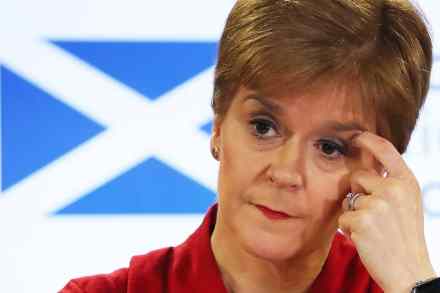
Backward devolution Sir: Thanks for once again highlighting the many issues with government in Scotland (‘Sturgeon’s secret state’, 9 April). It is time for the opposition leaders and the Scottish voters to temporarily put aside differences on other issues – including independence – and focus on holding the Scottish government to account. Surely no one could possibly wish for the additional misuse of public and party funds, and to watch Scotland’s services continue to deteriorate? The faults in the devolution set-up have been exploited by the 15-year-old SNP government for many years. This has resulted in a government which is obsessive about control, secrecy and hiding and denying mismanagement. So the faults must be addressed.

Letters: The revelation that could force Boris to resign

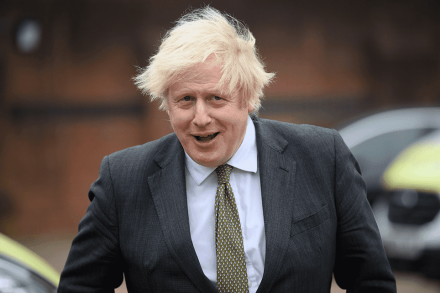
The lie’s the thing Sir: Your leading article (‘Partygate’s hangover’, 2 April) maintains that if the Prime Minister receives a fixed penalty notice, he shouldn’t have to resign. No fair-minded person would disagree with this, for such a resignation would indeed be absurd. However, there is a more serious issue. The Prime Minister repeatedly assured the House of Commons that all Covid guidelines were followed in Downing Street. If it is found that he knowingly misled MPs with these claims, then the Ministerial Code is entirely clear: he would have to resign. John Hatt Firbank, Cumbria Thatcher’s war Sir: Charles Moore writes that if Margaret Thatcher had failed to retake the Falklands, she would probably have had to resign (Notes, 2 April).

Letters: To achieve net zero, we need to go nuclear

Nuclear future Sir: It is refreshing to see Martin Vander Weyer note that, properly and fully costed, nuclear power is cheaper than power from wind and solar sources (Any other business, 26 March). That is because, as he says, ‘wind and solar require excess capacity and battery storage to compensate for periods of low output’. It cannot be predicted when those periods of low output will occur, and the proportion of our electricity provided by wind at any one time can be anywhere between 2 per cent and 40 per cent. Martin supports the aim to meet 25 per cent of UK energy needs using nuclear by the net-zero deadline of 2050. However, he has not yet asked the crucial question of where the non-nuclear portion of our energy might come from in 2050.

Letters: We’re all still paying for the financial crash

Don’t blame the banks? Sir: Kate Andrews struggles to disentangle the causes of the developing cost-of-living crisis (‘Cold truth’, 19 March), with the fallout from Brexit, Covid and Putin’s invasion of Ukraine all vying for responsibility. She forgets the financial crash of 2008, when a few irresponsible banks and building societies dragged this country into a financial abyss. The jury is still out on the effect that the Bank of England’s remedy of quantitative easing has since had on inflation and wealth inequality. We are all still paying the price for this disaster, as will be the next couple of generations.

Letters: Ukraine’s perpetual struggle against Russia

Two Russias? Sir: I have been turning Owen Matthews’s article (‘Putin’s rage’, 5 March) over in my mind since I read it, and I feel compelled to respond. I am married to a Ukrainian, so I have some insight into the relevant history. After the Wall came down, my wife’s uncle Stephan visited us in England. He had spent 20 years in a Soviet gulag because his brother – my father-in-law – had fought against the Russians for a free Ukraine in the 1940s, during what they still call the Great Patriotic War. Unable to imprison him, they took his brother instead.

Letters: Britain must offer immediate sanctuary to Ukrainians

Unintended consequences Sir: The West has got it wrong when it comes to putting a stranglehold on Vladimir Putin (‘Putin’s rage’, 5 March). Harsh economic sanctions will ultimately punish millions of ordinary Russians, many of whom are poor and probably against the invasion of Ukraine. If the products Russian workers produce do not sell then those workers become unemployed and forced into poverty. That could quickly turn more Russian citizens against the West, strengthening support for Putin rather than weakening it, thus prolonging the occupation and hostilities. So far, the West hasn’t done a great deal regarding this invasion, other than turn the wheels of Putin’s propaganda machine for him.

Letters: How the UK should respond to Russia

Soft options Sir: In relation to strengthening the impact of the Russian sanctions package (‘Tsar Vladimir’, 26 February), please may I suggest three enhancements? Firstly, to encourage the UK’s Dependencies, such as the British Virgin Islands, to enforce the UK’s sanctions on the government target list of Russian criminals who are operating within their corporate jurisdiction. Secondly, to define the Russian state, Putin and his cronies, as terrorists, much like the members of Islamic State. This is appropriate and proportional, and will enable institutions in the City, and elsewhere, to treat the Russians accordingly.

Letters: It’s time for the common cup to return to communion

The Bull of Oman Sir: There was one significant omission in the cast of characters mentioned by Charles Moore in his notes on the Sultan of Oman’s armed forces (Notes, 19 February): General Sir Timothy Creasey KCB . The omission is all the more surprising given the key role Margaret Thatcher played in getting General Tim to take up the Sultan’s invitation to go back out to Oman as deputy commander in chief and chief of defence staff. Having been instrumental in achieving a satisfactory resolution of the insurrection in Dhofar as a senior loan service officer, General Tim was highly regarded by the Sultan but he was not keen to take up the offer of direct employment.

Letters: In defence of the police

A health-care disaster Sir: Kate Andrews’s piece on who really controls the NHS (‘Waiting game’, 12 February) gives us a flavour of how things have come to this: an unaccountable health service with a government attached. We are about to enter a new phase, with additional taxation in the form of increased NI based on promises which are already looking hollow — waiting lists will continue to rise. There is no sign that the 100,000 key workers who are needed are going to be found any time soon.

Letters: What happened to bells on bikes?

Jesus wept Sir: Sam Dunning’s brilliant exposure of the corrupting links between Jesus College, Cambridge and the Chinese Communist party (‘Centre of attention’, 5 February) raises the question of how the college can be rescued from its current leaders. Their virtue-signalling gestures (the Benin bronze, the Rustat memorial etc) have already prompted many of us alumni to delete Jesus from our wills. But this association with vile tyranny is altogether more serious. Perhaps an academic boycott might bring the Master and Fellowship to their senses. Certainly something must be done to save this ancient Christian foundation from its present role as an agent and support of manifest evil.

Letters: The Christian case for cash

Naysayers needed Sir: I was struck by James Forsyth’s observation that in 10 Downing Street, ‘hard truths and hard choices are too often ignored… because the Prime Minister’s top team fear he will find them uncomfortable’ (‘The battle to save Boris’, 22 January). During a working life spent in business, I came to realise that one of the most valuable skills you could master was how to tell someone things they would rather not hear while maintaining good relations with them. If the PM is intent on firing many of his staff, it would be prudent for whoever appoints their replacements to ensure that as many of them as possible possess that ability.

Letters: The BBC licence fee is a protection racket

Russia’s star Sir: Wolfgang Münchau is surely right to highlight the risk posed to European peace and stability by Germany’s strategic myopia (‘In the pipeline’, 22 January). But he may be in error to assert that ‘Russia is in the ascendant’ — at least in terms of the fundamentals. Russia no longer makes it into the top ten of the world’s economies and is about to be overtaken by South Korea. Its poorly developed economy is unduly reliant on energy exports — a sort of Saudi Arabia with snow instead of sand. A state whose star is rising has every incentive to sit tight and allow that to continue — which is what China has been doing for years.

Letters: Our broken civil service

Beyond the party Sir: Rod Liddle is spot-on in arguing that the attitudes revealed by ‘partygate’ extend to senior civil servants (‘The truth about that No. 10 party’, 15 January). He gets the extent wrong by tarring all public-sector workers with the same brush, which would include all NHS workers, and is not true. What is true is that the attitude has indeed spread in the civil service well beyond the public school and Oxbridge-educated elite. I spent a couple of years seconded to a department of state, trying to make progress on implementing reforms that had been approved by parliament. I failed. I was eventually blackballed for speaking truth to power — that is, reporting directly to a minister, as my contract said I should.