Letters

Letters: The case for legalising cannabis

Paying the price Sir: Lionel Shriver’s piece about university standards rang true to me (‘University is supposed to be hard’, 15 October). When I, then working for a distinctly moth-eaten British university, visited a very famous private college in Massachusetts in 1985, I expressed my envy of his luxurious surroundings to a professor of English. His reply was: ‘Don’t envy us. You have something we don’t have. It’s called standards.

Letters: red kites are a menace

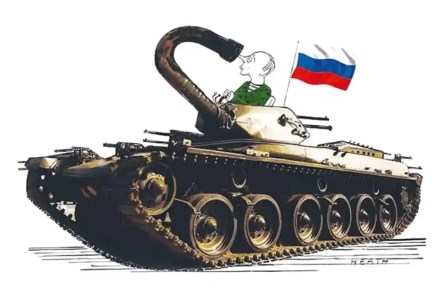
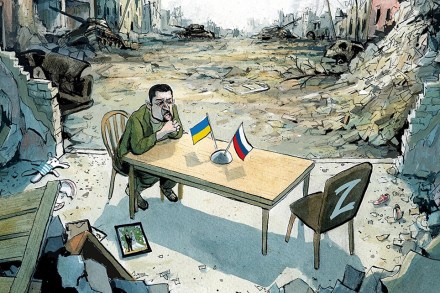
Free Kaliningrad Sir: Mark Galeotti was right to identify the exclave of Kaliningrad as a target for a strong western response to any use by Putin of a nuclear weapon against Ukraine (‘Nuclear options’, 8 October). Perhaps it should be offered the chance of secession from Russia, not only to avoid destruction, but to secure a better future than Putin or any successor could offer. It was subject to terrible ethnic cleansing after its conquest in the second world war, which rules out its return to Germany. But it could lose its dismal association with Kalinin. Under its historic name of Königsberg, it could revert to its previous status as a Free City – within the EU and as part of Nato’s territory.

Letters: Why I love Warhammer

Troubles ahead? Sir: Jenny McCartney’s article ‘Border lines’ (1 October) was a profoundly depressing one. Perhaps there will be a united Ireland within the next 30 years; but will it be a peaceful and happy place? I have my doubts. Might not areas such as overwhelmingly Unionist Antrim, north Down, north Armagh, east Belfast and indeed much of Co. Londonderry become no-go areas for the new Irish governing authorities – rather in the same way as Derry, west Belfast and south Armagh were for the British in the times of the Troubles? Most of the wiser commentators observe that the Good Friday Agreement was only a truce, not a perpetual cessation of hostilities.

Letters: Britain needs the English National Ballet

Putin’s options Sir: I agree with Paul Wood that Vladimir Putin is on the back foot (‘Cornered’, 24 September). His actions, from partial mobilisation to nuclear threats to the rapid referenda in occupied Ukraine, indicate a psychopathic gambler who hopes that one last spin will turn Lady Fortune his way. However, there is a big gap between ‘losing’ and ‘lost’, and that is where the focus on the nuclear threat by the West is unhelpful and dangerous. As well as the partial mobilisation, Putin ordered in August a 10 per cent increase in the size of the military to more than a million combat troops.

Letters: Why the Union may not be so secure under Charles

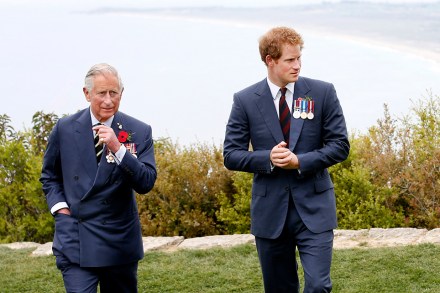
The Queen’s kindness Sir: Last week’s Spectator (17 September) was thoughtful, insightful and at times hilarious; just the tonic I needed. Many reading this will have their own memories of the Queen, but I would like to tell a personal story recounted by Christopher Chessun, the Lord Bishop of Southwark, in his address to the House of Lords of my sister’s meeting with her. He said: ‘My late sister-in-law, who was profoundly deaf, accompanied me during my time as Bishop of Woolwich when the Royal Artillery moved from Woolwich down to Salisbury Plain. Her Majesty the Queen was there for the occasion and spotted that my sister-in-law was wearing a Duke of Edinburgh gold badge.

Letters: My childhood memory of the Queen

Majestic memories Sir: The sad news of the death of Queen Elizabeth II took me back 70 years to my earliest memory. I was three years old; the location was the Fleet Review at Spithead and the date was 15 June 1953, 13 days after the coronation. Some 325 ships of the Royal and Merchant Navies, including vessels from many other countries, were lined up at anchor between Gosport and Ryde. The assembled fleet was reviewed by HM Queen Elizabeth and many members of her family on board the ‘stand-in’ royal yacht, HMS Surprise. There was a 21-gun salute and cheering from the ships’ crews as the Surprise proceeded up and down the rows of vessels. My father was second officer of the Shell tanker Velletia and I was on board with my mother and older brother.

Letters: Why we obeyed lockdown

Why we allowed it Sir: In her article ‘Why didn’t more people resist lockdown?’ (3 September), Lionel Shriver partially answers her own question. Priti Patel told us it was our public duty to shop our neighbours if they had three friends to tea, and our previously invisible police force started to patrol parks and beaches with unprecedented vigour, with a threat of £1,000 fines for malfeasance. There was no eagerness, but the public were glued to the nightly broadcasts from No. 10, where the PM told us we would be little better than murderers if we didn’t obey the diktats. The fear all this created is still evident as I walk round Sainsbury’s every week and see masked shoppers disinfecting their trollies as if their life depended on it.

Letters: Lockdown saved lives

Lockdown saved lives Sir: Rishi Sunak presents an alarming picture of what happened during lockdown (‘The lockdown files’, 27 August) – and one echoed by lockdown sceptics who claim that Covid policy was a disaster, stoked by fear and based on questionable scientific advice. Worst of all, they cry, the trade-offs were not even discussed. But none of this is true. I know because I sat around the cabinet table as politicians, scientists, economists and epidemiologists agonised over the extent to which lockdown would devastate lives and livelihoods. It was not an easy decision for anyone. Looking back, it’s clear that the biggest mistake we made wasn’t locking down, but doing so too late.

Letters: How to reform the GMC

Overhaul the GMC Sir: Max Pemberton’s cogent criticism of the GMC (‘Unfit for purpose’, 20 August). is one of the more nuanced and on the nose of those that I have read. A client of mine was reprimanded and subjected to a fitness-to-practise investigation after an attempted suicide following a financial crisis. The experience worsened his mental health, which then prolonged the investigation. Other clients have been forced to sell their homes or relocate. Some initial steps I implore the GMC to take include limiting the length of investigations, improving mental health reporting, providing more support for doctors about fitness-to-practise issues, and overhauling how evidence is handled.

Letters: Blame the regulators, not the water companies

No competition Sir: Ross Clark’s compelling critique of the water companies comes to the wrong conclusion (‘Water isn’t working’, 13 August). He is right to say that water privatisation has been a failure, but this was inevitable given the nature of the industry – a monopoly providing an essential public service. Clark’s suggestion that there should be more competition is unworkable for the simple reason that there is too much fixed investment stretching back to the 19th century and we all have only one pipe into our homes. There are parallels with the rail industry, where a quarter of a century of trying to introduce competition has resulted in a handful of open access services and vastly higher costs.

Letters: The Tavistock is a national health scandal

The race isn’t run Sir: Bravo Fiona Unwin (‘Rooting for Rishi’, 6 August) for the best piece I have read on the grassroots take on the Conservative party’s leadership election. Having attended several such hustings both this time and over the years, this one does remind me of 2005: David Davis vs David Cameron. Lots of career-focused senior MPs backing an early front-runner, and then quiet reflection from the life-experienced sensible grassroots membership. Few predicted the 2005 winner until that electric party conference speech. This time, with dozens of events like the one the vice-president of West Suffolk describes, the typical Spectator reader rather than the Westminster hack will select the next prime minister. It’s all to play for.

Letters: How Rishi Sunak could beat the odds

Injured party Sir: Prue Leith’s short interlude as a Conservative party member and subsequent resignation underlines a feature of the current membership and the impact of resignations (Diary, 30 July). The Johnson era has seen the continuing decline in party membership brought about by the resignation of many members who were dissatisfied with the evidence of endemic dysfunctionality by the Prime Minister. The consequence is that the membership is likely to be dominated by Johnson diehards. Liz Truss is certainly focusing on them. Those who did not renew their membership but are still likely to be Conservative supporters in a general election are now disenfranchised. Sir Charles Walker is right to call for an overhaul of this electoral process.

Letters: Let’s get fracking

Get fracking Sir: All credit to The Spectator for grabbing the cancelled Tory leadership debate slot (‘The final three’, 23 July) and for quizzing the contenders on the massive cost of net zero. Rishi Sunak’s response was particularly disappointing. Here is a man who has financial acumen and who has spent his entire cabinet career in the Treasury. Yet he would have us believe that the offshore wind industry, whose biggest costs are incurred in erecting huge structures of steel, iron, plastic/resin and concrete, has somehow contrived to cut those costs by nearly three-quarters over a decade.

Letters: What William Blake meant

Procurement profligacy Sir: In response to Susan Hill’s query ‘Who allows the profligacy in NHS hospital procurement to continue?’ (‘Best medicine’, 16 July), it seems the national scale of public sector bureaucracy is just too great. Given the size and spending power of the NHS, no one should come close to achieving equal efficiencies in economies of scale, nor gain better prices from suppliers. But this is not the case. As a non-clinical procurement professional in the NHS, having come from the private sector, I’ve been surprised to consistently find the national purchasing authority of the NHS (formerly ‘NHS Supply Chain’, now ‘SCCL’) to be the worst pricing option available to us.

Letters: In defence of Boris Johnson

Boris’s legacy Sir: It is grossly unfair to assert that Boris Johnson’s legacy was the lockdown (Leading article, 9 July). His chief legacy was, of course, Brexit, followed by the crushing of Corbynism, the world-beating vaccine rollout, and his leading role in supporting Ukraine against the Russian invaders. Not a bad tally. Most European countries, though not Sweden, imposed lockdowns of varying lengths and severity, on the advice of scientists and with overwhelming public support. Governments were on a learning curve when the vicious virus struck. Johnson’s government made mistakes, but got most of the big decisions right. We all know about Johnson’s flaws, but he was a remarkable prime minister. He deserves more credit than you give him.

Letters: What Sturgeon has got wrong

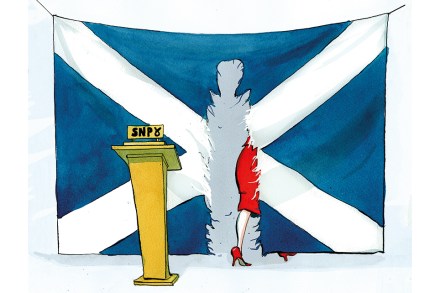
Sturgeon’s single issue Sir: Nicola Sturgeon needs to be careful what she wishes for. Declaring that the next general election will be concerned solely with the issue of Scottish independence is, as you say, ‘a constitutional absurdity’ (‘Sturgeon’s bluff’, 2 July). Heads of government who stipulate single-issue elections are on a hiding to nothing, and rightly so. Theresa May’s ‘Brexit’ election in 2017 turned out badly for her, although at least she kept her job (just). Ted Heath wasn’t so lucky in 1974 (‘Who rules Britain?’), ditto Churchill in 1945 (‘Who won the war?’) or Stanley Baldwin in 1923 (‘Free trade or protection?’).

Letters: Why do we bully PMs’ wives?

Strong leaders Sir: Freddy Gray states that ‘voters seemed most enthusiastic about the leaders who removed their liberties’ (‘Leaderless’, 18 June). I believe people just like to see their government take strong measures. People like to see the effect of a government policy straight away, especially in a crisis. This is probably the reason so many Americans like the idea of Trump’s wall. It is an immediate and physical solution to a large problem that can be seen and felt, even if it is not necessarily the best solution.

Letters: How to face death

Be prepared Sir: The advice of Jeremy Clarke’s Aunty Margaret that he ‘must “get right with the Lord” as a matter of the gravest urgency’ in the light of his cancer diagnosis is spot on. I say that not just because I’m a vicar, but because I have sat at innumerable bedsides of people in the last days of their lives and have often found myself thinking: ‘You really should have prepared for this a long time ago.’ But by then they were too sick, too tired or too drugged up to think straight about spiritual matters and I have always felt that I would be intruding if I forced the issue. Deathbed conversions such as Lord Marchmain’s in Brideshead Revisited are, in my experience, almost nonexistent.

Letters: Boris Johnson might be the leader we need

The leader we need? Sir: Matthew Parris excoriates Boris Johnson for administrative incompetence, mendacity, personal immorality and utter lack of political vision (‘I told you so’, 11 June). Mr Johnson may have multiple personal failings, but surely it is obvious that we live in times which call not for a leader with lofty political vision, but for one who can react instinctively and reasonably competently to exogenous events. Johnson’s refusal to be battered down by successive crises, his cocksure ebullience, and his ability to turn patent negatives into positives clearly irritate his former journalistic colleagues – and infuriate his political opponents.

Letters: Becoming a GP is not an ‘easier’ option

Saving general practice Sir: Regarding J. Meirion Thomas’s article (‘Medical emergency’, 4 June), traditional general practice continues to thrive in private medicine. For a 20-minute consultation costing £80, a patient can still get a rapid face-to-face appointment. I believe historians will record that NHS general practice reached its zenith in the mid-1990s when John Major was PM and most patients phoned their GP before calling an ambulance. The rot set in under Tony Blair, when he abolished ‘fund-holding’ (a good example of levelling-down) and we lost control of waiting lists and many ‘in-house’ services such as physiotherapy, counselling and minor surgery.