Leading article

Is Wes Streeting the Hamlet of the health service?

Is Wes Streeting the Hamlet of the Health Service? Is this undoubtedly talented and thoughtful young Labour prince fatally irresolute when it comes to doing what he knows must be done? Few politicians have articulated so clearly the need for reform of our healthcare system. Streeting’s insistence that the NHS should be a service not a shrine angered all the right people, which is to say the BMA. It marked a welcome departure from the treacly displays of affection which have hitherto characterised ‘debate’ about the health service. More recently, the Health Secretary has frankly admitted that the NHS is letting patients down and acknowledged its manifold inefficiencies. The need for change has been recognised. The case for reform is urgent.
The futility of Martyn’s Law

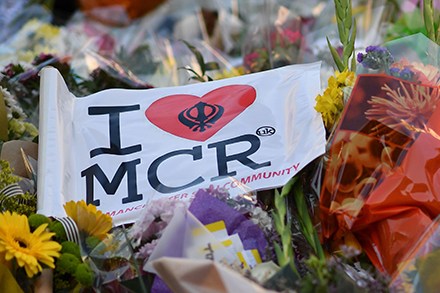
There have been few acts of terrorist violence on British soil as grotesque as the Manchester Arena bombing in May 2017. An Islamist extremist, Salman Abedi, detonated a bomb at an Ariana Grande concert killing 22 and injuring 1,017. An evening of enjoyment for hundreds of young people turned into a spectacle of wanton cruelty. The law does nothing to address the real state failures that have allowed extremism to flourish One of those who died was 29-year-old Martyn Hett. His mother, Figen Murray, has campaigned ever since for legislation to better protect potential victims of terrorism. This week the Commons debated the measure she has fought for – the Terrorism (Protection of Premises) Bill – to be known as Martyn’s Law.

Labour’s first 100 days: the verdict 

This Saturday marks Labour’s 100th day in office. But they are unlikely to be popping champagne corks in Downing Street – even if Lord Alli offered to pay for the Dom Pérignon. This has been a disheartening time for the government and those who wished it well. The promise of dramatic change has been overshadowed by a series of errors, misjudgments and scandals that one would associate more with an administration in its dying days than a government enjoying a fresh mandate, a massive majority and an absent opposition. Ministers might fondly hope voters will have been encouraged by the introduction of legislation to help renters, the abolition of one-word Ofsted judgments or the establishment of Great British Energy.

‘No win, no fee’ has no place in war zones

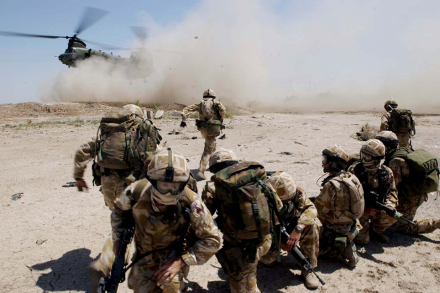
The guilty plea of the former human rights lawyer Phil Shiner this week to charges of fraud is a story that deserves considerable attention. Shiner had tried to claim £200,000 in legal aid without disclosing that – in the breach of the rules – he had employed an agent to cold-call potential ‘victims’ of mistreatment at the hands of British service personnel in Iraq. An inquiry held by the UK government in 2014 found that the allegations of abuse or violence which Shiner brought forward had little basis in fact: one fighter who was said to have been killed in custody by a British soldier was established to have died in battle, never captured alive.

Are the Tories in any state to choose a leader?

Are the Conservatives in a fit state to choose a new leader? The party that gathers in Birmingham next week needs to face a difficult fact: no matter how bad things are, they may become a lot worse. The party has lost, but not learned. They preach liberty while preparing to vote for a smoking ban. They are wedded to a net-zero agenda that forces up the cost of living. The difficulty is that all four candidates for the leadership are deeply compromised by the biggest mistakes of the past few years. On the issue of lockdown – perhaps the most damaging policy ever inflicted on this country by its government – none of them can say they did what they could to mitigate its damage. They ducked for cover instead. The Red Wall is there for the taking.

Labour vs labour: how can the government claim to be promoting growth?

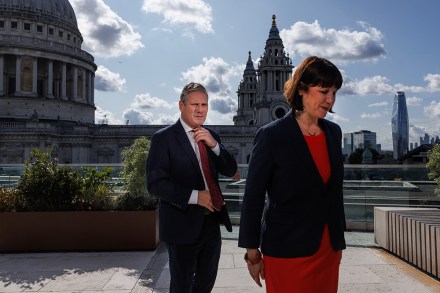
Growth, growth, growth: that was what Keir Starmer told us would be his government’s priority in his first press conference as Prime Minister. Nearly three months on, as the Labour party heads into its first conference in power for 15 years, it is becoming ever harder to reconcile Starmer’s promise with the policies that his government seems determined to deliver. With junior doctors voting to accept a 22 per cent pay rise, yet another group of public sector workers has been lavished with financial reward without any obligation to accept or implement more productive working practices. The NHS is in the midst of a pay bonanza at a time when productivity in the health service has been declining. Since the pandemic, ever more employees are delivering significantly fewer treatments.

How to manage migration like the Swedish

In the end, the German state of Thuringia did not fall into the hands of the far-right Alternative für Deutschland (AfD). The party won the most votes in the recent election but was unable to form a coalition, meaning that Björn Höcke will not be the state’s minister-president. This is ideal for him: he can cry foul, claim to represent the true voice of Germany and point to a conspiracy to keep him out of power. His incendiary strain of politics proved more popular than the more moderate version of the AfD in Saxony, which held elections the same day. These will all be lessons taken into consideration ahead of Brandenburg’s state elections in two weeks’ time. The growing strength of the AfD has sent mainstream parties scurrying to respond to public concerns.

The real crisis in our school system

For years, each school in England has been put in one of four categories: ‘outstanding’, ‘good’, ‘requires improvement’ and ‘inadequate’. While undoubtedly crude, the system offered clarity to parents. Bridget Phillipson, the Education Secretary, has now abolished this categorisation structure but not yet said precisely what will replace it. Children are returning to school in the middle of uncertainty. Are politicians blind to the staggering inequality within a state system that educates 93 per cent of pupils? The National Education Union has long urged schools to ignore Ofsted ratings and to stop referring to them on their gates. Phillipson’s reform seems to nod towards this.

Is this Rachel Reeves’s idea of a programme for growth?

It is certainly true that the Labour party has been more than a little devious over the tax rises that are to come. After an election campaign in which it insisted it had no plans – and no need – to increase taxes beyond a few measures such as extending VAT on school fees, mysterious holes started appearing in the public finances as soon as the party achieved office. So acute, apparently, is the lack of funds that Sir Keir Starmer felt the need to warn us this week that October’s Budget will be ‘painful’. It is an old trick, which David Cameron and George Osborne also tried to pull off: making out that the public finances handed over to a new government are in a much worse condition than had previously been believed.

Labour’s union problem

Less than two months in, one aspect of Keir Starmer’s government is becoming clear. This administration is closer to the trade unions than any we have had in the past 45 years. It is not just that the government has ceded readily to wage demands from teachers (a 5.5 per cent rise this year), junior doctors (22 per cent over two years) and train drivers (15 per cent over three years) – it has done so without seeking any agreement to changes in working practices. Given the abysmal productivity record of the public sector in recent years, especially since the pandemic, this is a remarkable omission. The government’s failure to represent tax-payers’ interests in these pay awards serves as an invitation for further unreasonable demands.

What today’s A-level results reveal about boys

In her first speech as Chancellor, Rachel Reeves made much of being the first woman to hold that position. ‘To every young woman and girl,’ she said, ‘let today show that there should be no ceilings on your ambitions.’ Britain has already had three female prime ministers, two female foreign secretaries and six female home secretaries – so what makes Reeves think that girls and young women have low ambitions? This week’s A-level results and accompanying university offers will show that it’s the boys she should be more worried about. For every 100 girls who secure a university place this week, about 75 boys will do the same For every 100 girls who secure a university place this week, about 75 boys will do the same. Why should that be?

The inherent unfairness of the Olympics

The Olympics can hardly fail to be the greatest show on Earth. For the last two weeks, the world has been transfixed by sports which attract little interest at any other time. From beach volleyball to BMX bike racing to obscure forms of wrestling – all, briefly, seem to be vitally important, such is the prestige of winning a gold medal. Yet at the same time there is something rotten about the modern Games. Their pretension to moral virtue is too often at odds with reality. They impose such a burden on their host cities that only a few countries in the world are capable of staging them. The 2024 and 2028 Games were apportioned between the only two cities, Paris and Los Angeles, left standing after others, including Boston, Budapest and Rome, withdrew their bids.

Rachel Reeves has proved that strikes pay

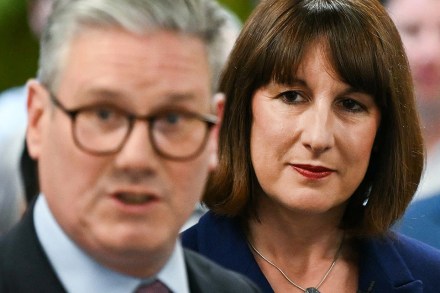
Keir Starmer and Rachel Reeves were adamant that economic growth would be their first priority in government. It is hard to square that with the decisions the Chancellor has announced this week. The Chancellor claims to have discovered a £21.9 billion ‘black hole’ in the nation’s finances, yet she has created the largest part of that sum by deciding to spend £9.4 billion on inflation-busting pay settlements for public-sector workers without asking for reforms in return. This, it seems, is the first Reeves doctrine: pay now to avoid strikes later Junior doctors are to receive a rise of more than 20 per cent, spread over two years. But it is also the way that Reeves has justified the move that may well cause her trouble in the future.

After Rwanda: what will Labour do now?

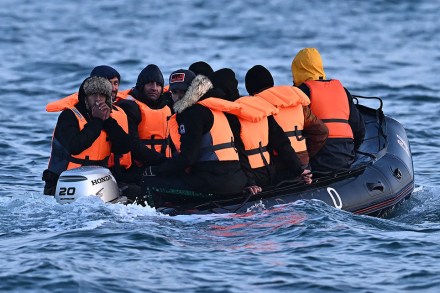
Keir Starmer is advertising for someone to head his newly created Border Security Command. The salary is higher than his own: the person in charge of stopping the boats would earn between £140,000 and £200,000. According to the ad, the job of patrolling the English Channel can be done remotely from any one of 12 cities, including Edinburgh and Belfast. It will require coordination with the Home Office, parts of the navy and even MI5. Never mind that this goes on already, with no discernible effect. The key requirement for the job, it would seem, is to be the fall guy, someone ready to take the blame for a policy that is certain to fail. Rishi Sunak’s pledge to ‘stop the boats’ never stood a chance. This was resented by voters.

How would we handle an avian flu pandemic?

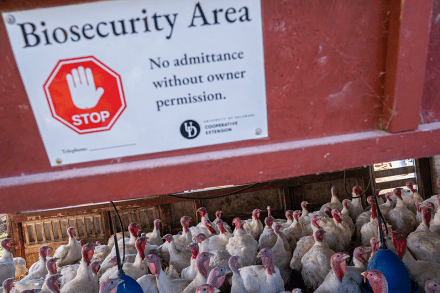
Concerns have been raised in recent months after an outbreak of avian flu caused by the virus H5N1 was detected in cattle in the US. To date, 139 affected herds have been identified, and four dairy workers have contracted the virus. The UK Health Security Agency, which previously believed there to be minimal risk of the virus evolving into a form which could spread among humans, now believes there is up to a one-in-three chance of it doing so. A factory in Liverpool has been busy manufacturing stockpiles of a ‘pre-pandemic’ vaccine which will be given to farm workers and others in occupations that bring them into close contact with bird flu. We have been here before with bird flu.

Why don’t international laws apply to Russia?

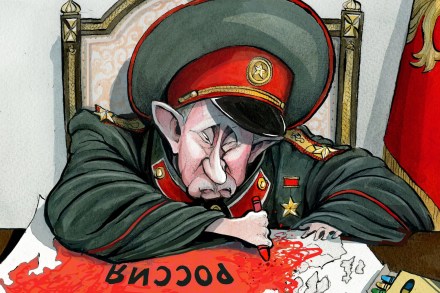
The Kremlin has denied it targeted the Kyiv children’s hospital that was struck by a missile on Monday. It was aiming at legitimate military and civil infrastructure targets, it says, but the missile was intercepted by Ukraine’s Nasams defence system and the debris fell on the children’s ward. This is an easily debunked lie. The Spectator’s correspondent Svitlana Morenets was nearby and reports in these pages that there is plenty of video evidence to show exactly what happened: a perfectly intact, precision-guided Kh-101 missile going exactly where it was aimed. It is a war crime to target hospitals, yet Russia does so and still a European head of government, Viktor Orban, will pay homage to Vladimir Putin in Moscow.

A manifesto for Labour

Never has an opposition leader with ratings as dismal as Keir Starmer’s gone on to win an election. In any other year, his wooden speeches and nebulous agenda would have earned him a place on the long list of Labour losers. But this time, the real question of the election was: who has disappointed voters most? And here the Tories proved hard to beat. Years of talking right and governing left has left them with a record that is the opposite of what was promised. ‘Either I’m delivering for you, or I’m not,’ said Rishi Sunak. It really is that simple, he said. Voters, it seems, agreed. Conservatives have all summer for their postmortem, but for the government now there is work to do. Having won over the public, Starmer’s next job will be to win over the markets.

The ideas-free election

On the face of it, 2024 is a great year for democracy. Britain is one of 50 countries to hold elections, with a record two billion people globally expected to have cast a vote by Christmas. This is partly down to the growing number of democratic countries, particularly in the past three decades. Last year the Economist Intelligence Unit’s Democracy Index judged two more to have made the grade, bringing the tally to 74. Alongside that, there is greater participation and wider suffrage. No one has worked out how to win elections while telling the public to expect less from government In Britain the past five weeks cannot be said to have shown democracy at its shining best, though. Our political system has felt jaded.

Starmer and Le Pen’s similarities

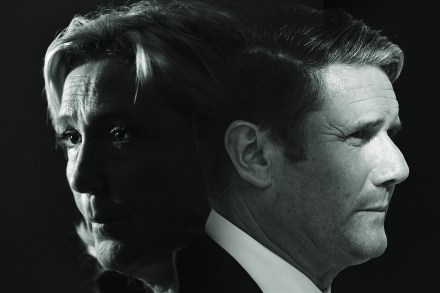
Emmanuel Macron’s decision to call a snap election in France is turning out to be a blunder of Sunakian proportions. His second term as president lasts until 2027 and he could have struggled on with a hung parliament in which his was the largest single party. But when Marine Le Pen’s National Rally won 31 per cent of the vote in the European Parliament elections, to his party’s 15 per cent, he decided to call French voters’ bluff. In a parliamentary election, would they really back Le Pen and put in Jordan Bardella, her new 28-year-old party frontman, as prime minister? It is becoming clear that they may well do that. Macron’s Renaissance party, which won 39 per cent of the vote in the last legislative elections two years ago, is now polling at about half that.

The danger of a Labour supermajority

We are witnessing what could well be the last few weeks of a constrained Labour party. Sir Keir Starmer is saying as little as possible about his agenda and is instead listing what he won’t do (raise income tax, etc). He is rightly fearful that the Conservatives may do better than the opinion polls suggest. That has happened in the past. There may be a ‘shy Tory’ effect in the polls as there was in 1992, 2015 and 2019. Who would admit to voting Conservative in the current climate? Regardless, power now looks certain to come Starmer’s way – perhaps with a majority bigger than that of any modern prime minister. It doesn’t much matter that he has not enthused voters with his promises.