Leading article

Why won’t Europe defend its own interests?

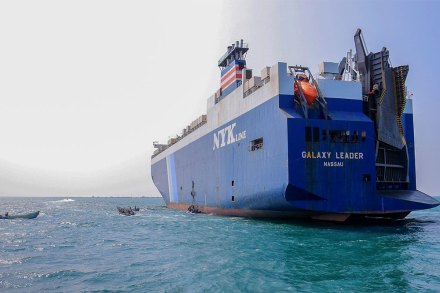
The US and Britain have joined forces to strike Houthi rebels who have been attacking commercial shipping in the Red Sea. But where is the rest of Europe when it comes to defending its own interests? The Netherlands has provided some logistic support – along with Australia, Bahrain and Canada – but European countries have otherwise opted out of the operation, just as they have so many times before. The attacks on shipping cannot be allowed to persist, and the operation to prevent them must continue This response to the Houthi attacks is no military adventure. It does not compare with the invasion of Iraq 21 years ago, which raised legitimate questions about the legality and wisdom of trying to invade, seize and rebuild a country.
Britain should watch America – and learn from its mistakes

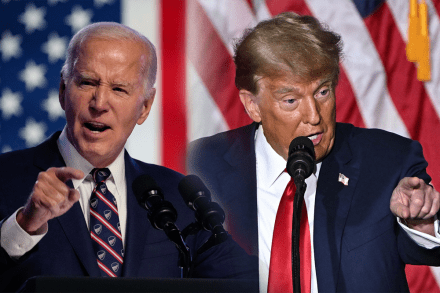
For many people, Donald Trump’s victory in Iowa this week will seem incomprehensible. Not only did he win – he did so by a margin that no other Republican has achieved since the state became the first to choose its candidates. This is quite a feat from a man facing almost 100 criminal charges, who was also twice impeached – the second time for encouraging his supporters to riot on Capitol Hill on 6 January 2021. It now seems inevitable that Americans will be offered the same unappealing choice of leader in November as they had in 2020, but with an even older Joe Biden doing battle with an even more rumbustious Donald Trump. On current polling it looks as if Trump could win.

The Online Safety Act is already stifling free speech

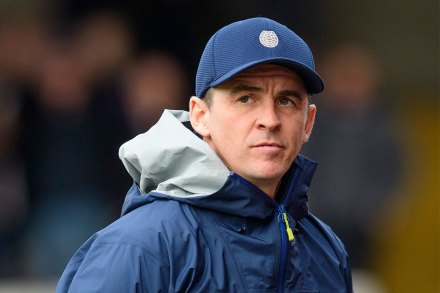
Joey Barton, the footballer turned manager, may be a controversial figure, but is it really the business of the sports minister, Stuart Andrew, to threaten to silence him on Twitter and Facebook? Andrew this week described Barton’s derisive remarks about female football commentators as ‘dangerous comments that open the floodgates for abuse’. He called upon Ofcom to take action under the new Online Safety Act. The notion of free speech – including the freedom to be offensive – seems increasingly alien to ministerial minds. The Online Safety Act only came into law in October, and politicians already think it’s up to them to regulate who says what online. For 300 years, newspapers vigorously fought off any attempt by the state to suppress freedom of expression.

It’s junior doctors – not underfunding – pushing the NHS to the brink

Yet again we start the year with news that the NHS is facing the worst crisis since its inception. This has a real impact. People who think the health service is in crisis will be less inclined to use it. As we saw over lockdown, this leads to fewer treatable conditions being diagnosed, more ‘excess deaths’ from various causes and a greater healthcare burden for the longer term. It’s a calamity that only worsens. The NHS is forever on the point of disintegration and collapse. Or, in the words of the British Medical Association, the system is under ‘intolerable and unsustainable’ pressure. Why, then, do so many members of the BMA seem to be determined to make matters worse?

Has there ever been a better time to be alive?

The recent United Nations climate summit in Dubai ended up becoming a carnival of gloom. Speakers competed to paint the bleakest outlook for the world. But while it’s right to focus on the challenges that lie ahead, the doomsday narrative risks obscuring all the progress we have made. ‘Records are now being broken so often that we are perhaps becoming immune to what they are really telling us,’ said King Charles in his address to COP28. The King makes a fair point, one that it is worth elaborating on as the year draws to a close. A few weeks ago, for example, it emerged that Britain has become the first G20 country to have halved its carbon emissions. This went entirely unreported – as is often the case with good environmental news – but it is a landmark.

The Covid Inquiry is a case study in how not to learn lessons

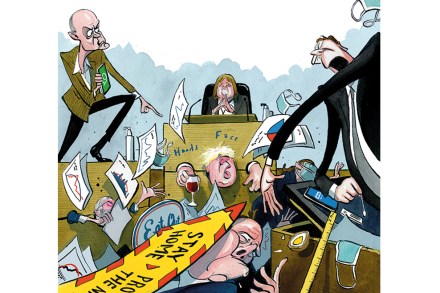
Two years ago, a new strain of Covid emerged and with it came calls for a Christmas lockdown. The Omicron variant was said to spread far faster than previous iterations of the virus and Imperial’s Neil Ferguson warned that it was no less deadly. The call for lockdown began and Britain came very close to implementing it. A press conference was called and Rishi Sunak, then chancellor, returned from a trip to California to try to stop what he thought would be another needless social and economic calamity. In the end, another lockdown was avoided. Cabinet members had come to realise that the Sage ‘scenario’ graphs were indefensibly misleading.

Press freedom isn’t ‘sentimental’ – it’s vital

‘We can be quite sentimental about some of our so-called treasured assets,’ said Lord Johnson, one of Kemi Badenoch’s business ministers, earlier this week. ‘The reality is that media and information has moved on. Clearly, most of us today don’t buy a physical newspaper or necessarily go to a traditional news source.’ His implication was that it doesn’t really matter what happens to The Spectator and the Daily Telegraph, both of which are currently up for sale, and that it is old-fashioned to be concerned about the state of press freedom in general. We beg to differ. John Howard, the former prime minister of Australia, put it well when he observed recently that law, parliament and the free press are the three main components of a functioning democracy.

Britain’s welfare system is out of control

To grasp the scale of Britain’s welfare crisis, consider some of the changes announced by the government this week. There will be tighter restrictions on sickness benefit and people with mobility issues will have to work from home. It’s a big and controversial reform. But the result? The number of Britons claiming sickness benefits – 2.8 million – will still keep rising to 3.4 million by the end of the decade. Reversing this trend, it seems, is a political impossibility. The worst aspect is that Mel Stride, the Work and Pensions Secretary, is probably going as fast as the system can manage. His reforms will likely be met with a volley of judicial reviews, even though no changes are due before April next year.

Sunak only has himself to blame for the Rwanda ruling

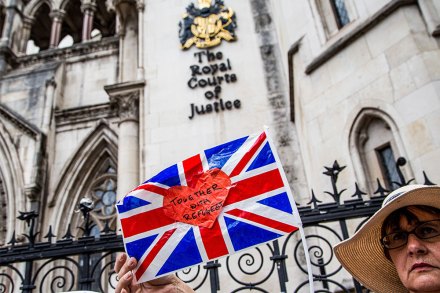
It is seven years since the British public voted by a slim majority to leave the European Union. The idea was to ‘take back control’ by retrieving powers of sovereignty that had been given to Brussels. But there was another part of the equation that was less talked about: the power over law that had been given to the European Court of Human Rights in Strasbourg. When the Rwanda scheme was thwarted last year, some argued it was time to pull out of the ECHR. It’s hard to blame Strasbourg now that the Supreme Court of the United Kingdom has just thwarted the Rwanda plan. The court’s verdict is a humiliation for Rishi Sunak, who promised to ‘stop the boats’ and to succeed where Boris Johnson had failed.

Britain has led the way on migration

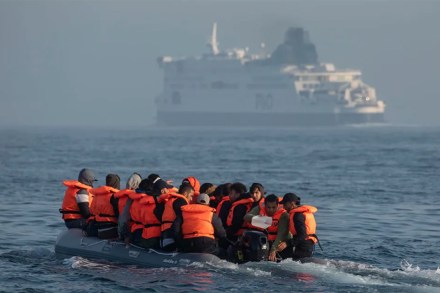
Human trafficking is a multi-billion-pound global industry. It is fuelled by the desperation of migrants seeking a better life and the cynicism of those who are now adept at identifying and exploiting loopholes in western border controls. One of Germany’s proposals is to explore copying the British model and process asylum applicants elsewhere As ever larger waves of migrants cross the Mediterranean, Rishi Sunak has told European leaders that their efforts at policing illegal migration are ‘not working’ – because there is no shortage of poor people willing to pay smugglers for their ‘barbaric enterprise’. He has raised difficult questions about how the rich discharge their duty to the poor in a world with about 100 million displaced people.

We have more to fear from social media than AI

For once, Nick Clegg had a point. At the start of this week’s Artificial Intelligence summit at Bletchley Park, our former deputy prime minister spoke about the need to get priorities right. ‘My slight note of caution,’ he said, is that we ‘don’t allow the need to focus on proximate challenges to be crowded out by speculative, sometimes futuristic predictions’. He’s quite right. The most immediate threat is not the prospect of dysfunctional AI but the power wielded by Mark Zuckerberg, Sir Nick’s boss at Meta, and the extent to which the companies it runs, Facebook and Instagram, control the news. On its own, Facebook has a stunning concentration of power: it’s now the UK’s third biggest news source after BBC1 and ITV, according to Ofcom surveys.

The Tories are slowly turning the tide on immigration

For years the government has appeared to be setting itself up for failure with its promises to crack down on illegal immigration. The plan to process asylum claims in Rwanda was always going to excite immigration lawyers. Sure enough, it remains mired in the legal process. Even if the government wins its case in the Supreme Court, there remains the vast obstacle of the European Court of Human Rights. The promise to ‘stop the boats’ was a hostage to fortune. The boats continue to arrive; it is not possible to patrol every square inch of the English Channel. The discovery of legionella bacteria on the Bibby Stockholm, the barge on which the government is planning to house asylum seekers, seemed at the time to be the final straw for the hapless Home Office.

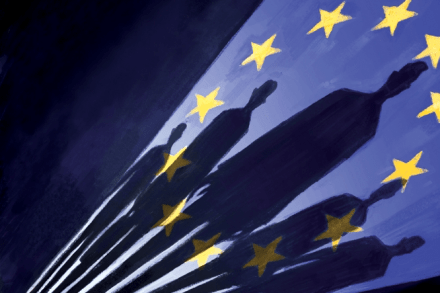
Europeans are rejecting the EU’s unworkable vision

The recent election in Poland has been presented by some as a triumph of liberalism over the dark forces of populism, but this is a misreading of events. It’s said that the Law and Justice party, which has ruled Poland for the past eight years, was trounced, but it won the largest share of votes (35 per cent) and the largest number of seats in parliament. It is nevertheless almost certain to lose power because three other parties – Donald Tusk’s Civic Platform (PO), the centre-right Third Way and the Left party – will likely form a coalition against it. The result does little to reverse Europe’s rightward drift, and neither does it turn Poland back in the direction of the EU (Tusk is better known in Britain as the former president of the European Council).

The problem with Labour’s fiscal promises

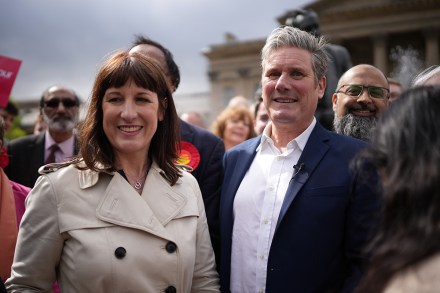
It is remarkable that in his conference speech in Liverpool, Sir Keir Starmer hardly mentioned the government’s biggest failures. There is burgeoning public debt, caught in a feedback loop by soaring gilt yields. It didn’t even feature. We have persistent inflation but although Starmer mentioned the ‘cost of living’ crisis several times, he missed out the vital word ‘inflation’. There are ever-increasing levels of illegal migration and a failed pledge to ‘stop the boats’, but again not a squeak from him. There is a reason why Starmer would avoid mentioning these things, even though the Conservatives’ record provided him with ample ammunition. These are all issues on which, historically, Labour has been weaker than the Tories.

Is now really the time to scrap A-levels?

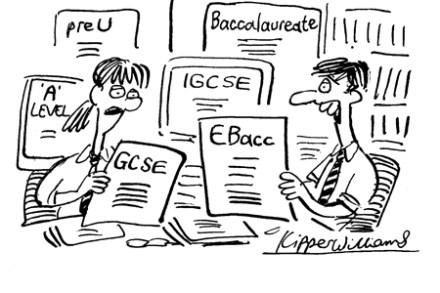
The history of education reform is a graveyard of acronyms: TVEIs, GNVQs and so on. There have been many well-meaning initiatives that made sense at the time but struggled to gain acceptance. Rishi Sunak needs to proceed with caution before he launches into yet another reform of school qualifications, especially if it means the end of the only one that has stood the test of time: the A-level. The Prime Minister’s concern – shared by many educationalists – is that A-levels are too narrow and specialised and lead to too many people entering adult life lacking adequate literacy and numeracy skills.

Can Sunak establish himself as a radical?

The Conservatives gather in Manchester this weekend for what may well be their last hurrah as a governing party. Bookmakers are offering odds of 7:1 to anyone bold enough to bet on Rishi Sunak winning the next general election. The Prime Minister himself is in a gambling mood and has started to make some brave and overdue decisions: rethinking HS2 and overhauling net-zero policies. Such decisions bring short-term embarrassment, and were avoided by his predecessors, but they offer long-term dividends. The question is whether this is a wise strategy in the lead-up to an election. Typically, a prime minister makes their big promises in a pre-election year.

Rishi Sunak is right to reconsider his green pledges

The old carmakers were slow to realise the potential of electric cars and didn’t innovate. So Elon Musk, an internet tycoon, bought Tesla and stole a march on an entire industry. The internal combustion cohort then rushed to catch up: Jaguar Land Rover, Volvo and Ford all committed to go electric-only by 2030. The problem is that electric cars are expensive, so most drivers still prefer cheaper petrol ones. Ministers came up with a plan to deny people the choice, to pass laws that would ban the sale of new petrol-based cars. Britain has led the world in decarbonising its economy. No other G7 country has done more This always was a conspiracy against the public, justified on very thin environmental arguments.

Republicans will regret impeaching Joe Biden

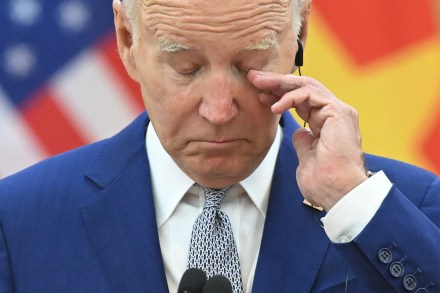
As Napoleon is reputed to have said, never interrupt your enemy when he is making a mistake. So why are Republicans seeking to impeach Joe Biden when he’s looking increasingly capable of losing next year’s presidential election all by himself? We will never know what kind of president Biden would have made in his prime, but it is clear that his prime was passed some time ago. It has become painful to watch the President interact with people or make a speech – even with prompt cards at the ready. This week, his press secretary Karine Jean-Pierre was moved to call a premature end to a press conference he had attempted to hold in Vietnam on his way back from the G20 summit, after he began rambling. His own team tried to drown him out by playing music as he continued to speak.

Will the collapse of councils be the next great scandal?

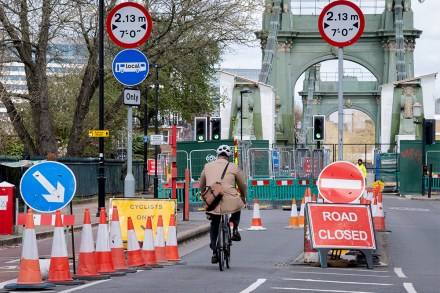
Last month India managed to land a spacecraft on the moon for a third of the price of refurbishing Hammersmith Bridge. This startling fact captures both New Delhi’s efficiency and the staggering incompetence of our local councils. It took two years and £9 million (in real terms) to build the bridge. It is set to cost almost £200 million to spruce it up and the work may not be complete until 2030. Hammersmith Bridge has become the perfect metaphor for what’s gone wrong with government: the carelessness, inertia and lack of concern for public money that is rife across the country. The bill for doing up Croydon council’s headquarters was greater per square metre than that for building the Shard, Britain’s tallest skyscraper.

British conservatism is lurching from one crisis to another

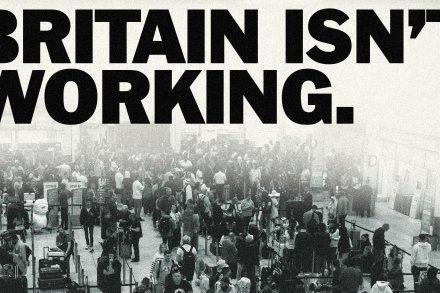
No. 10 quickly asserted that the meltdown at National Air Traffic Services was a technical issue rather than a cyber attack. This was presumably meant to be reassuring. It is anything but. It speaks, once more, of a Britain with creaking infrastructure, where national paralysis has become a regular occurrence. The highest tax revenues in peacetime history have not created a properly functioning country.  The breakdown was caused by a single mis-filed flight plan. That such havoc can result from one trivial event does little credit to the organisation entrusted with our airspace. This week’s event may not be a cyber attack, but hostile states and organisations will be taking note.