Leading article

The underlying message of Rachel Reeves’s Spring Statement

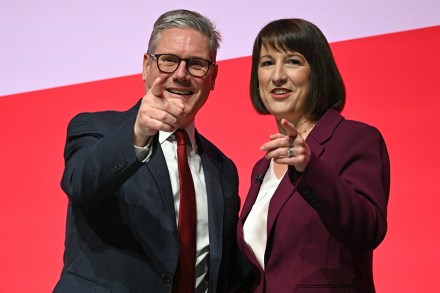
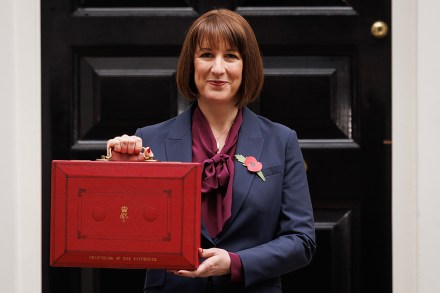
Rachel Reeves may not be the most mellifluous writer ever to inhabit 11 Downing Street. At the weekend, she informed readers of the Mail on Sunday that she would ‘make no apology for keeping an iron grip on the country’s finances’ but was happy to spend money on training more ‘brickies, sparkies and chippies’. The lurch from cliché to fake colloquialism does not suggest Reeves will be bracketed with Disraeli, Gladstone, Churchill or Lawson. But there is one addition to the political lexicon for which Reeves is responsible and which deserves a revival – ‘securonomics’. Before Labour’s election, the term was never far from Reeves’s lips.
Kemi’s stance on net zero is courageous – and correct

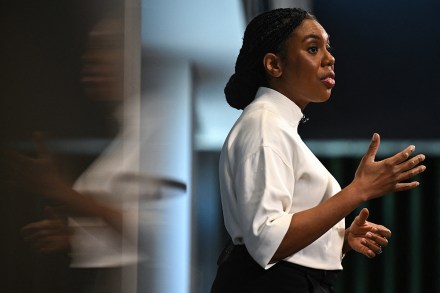
Kemi Badenoch secured the Conservative leadership on the basis that she would confront her party and the country with uncomfortable truths. This week, in a speech to launch the Tories’ policy renewal programme, she effectively told Theresa May and Boris Johnson that they were naifs for committing to unachievable climate targets. The decarbonisation of our economy, she said, was a ruinously expensive folly. By stating baldly and unapologetically that it will be impossible for Britain to get to net zero carbon emissions by 2050 without huge economic pain she has broken a consensus and breached a taboo. It is difficult for opposition parties to attract attention for policy announcements so far out from a general election, but Badenoch’s clarity is welcome and necessary.

The West must not look away from what’s happening in Syria

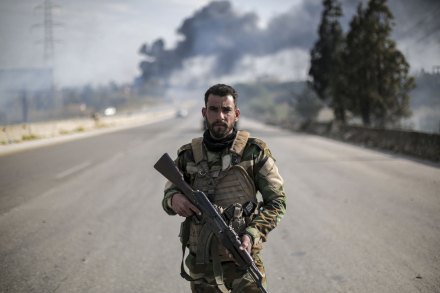
Tony Blair’s former spin doctor Alastair Campbell has many talents. But his understanding of Middle Eastern politics leaves much to be desired. Last month he welcomed Syria’s new leader Ahmed al-Sharaa on to the podcast he hosts with the former Conservative minister Rory Stewart. Reflecting on the encounter afterwards in a newspaper column, Campbell was anxious to give the ‘gently smiling President’ the benefit of the doubt. He was ‘definitely saying a lot of the right things’. There was, Campbell acknowledged – ‘one big blot on the Syrian landscape’ – the ubiquity of men smoking. But otherwise everything seemed in order. It was the case, he said, that ‘virtually everyone you meet says that they feel happier than they did under [Bashar al] Assad’.

Trump has shifted the world in Putin’s favour

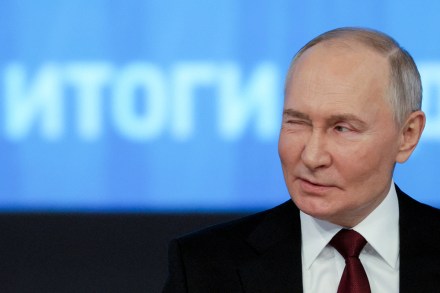
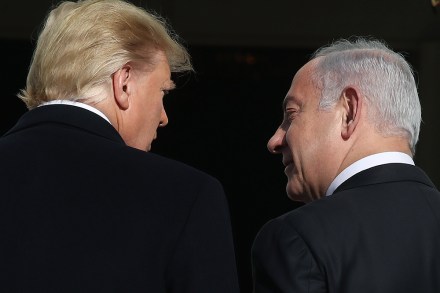
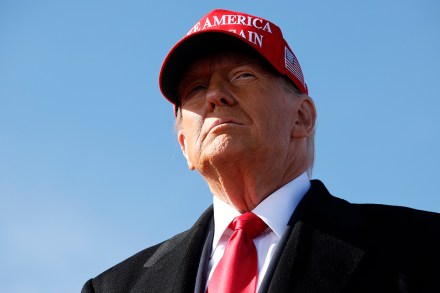
The verbal pummelling of Volodymyr Zelensky in the White House last week was an ugly moment of bitter truth. We saw the West tearing itself apart thanks to Donald Trump’s vanity and J.D. Vance’s disdain for the Ukrainian leader. If there is anything positive to be taken from the uncomfortable spectacle, it is that Europe now understands it has to take its defence much more seriously. And it is a mercy that negotiations between Zelensky and Trump have not been derailed for good. The Ukrainian President spent the week doing what his US counterpart accused him of failing to do: thanking the US for military and other aid it has received since Russia’s full-scale invasion three years ago. Zelensky appears keen to return to the table to discuss a minerals deal.

Keir Starmer’s welcome embrace of realism

Sixty-five years ago, a British Prime Minister acknowledged that a new world order was coming to pass and that it was time to lay down a burden the country could, and should, no longer shoulder. Harold Macmillan’s ‘wind of change’ speech in Cape Town signalled the eclipse of empire, the retreat of Britain from imperial pretensions and a new age of nationalism in Africa. Today, our own Prime Minister has trimmed his sails to catch a very different wind of change. He is navigating a new path – necessitated by the impact of Storm Donald from across the Atlantic. Sir Keir Starmer has indicated that Britain is willing to bear new burdens, shoulder graver responsibilities and prepare for a new era of realism across the globe.

Who lost Ukraine?

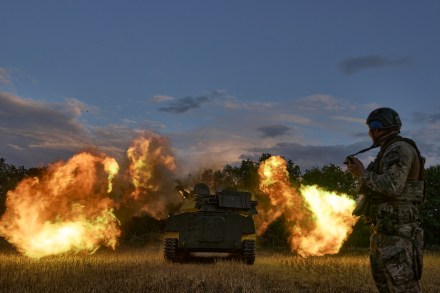
In the America of the 1950s, one question dominated foreign policy: ‘Who lost China?’ The Communist victory in the Chinese Civil War and the defeat of America’s ally, the Kuomintang regime, provoked agonised debate about the principles that should guide statecraft – the balance between containment and pushback, the relative importance of winning hearts and minds or prevailing by strength of arms. The question that we might ask today is: ‘Who lost Ukraine?’ Of course, the war between Kyiv and Moscow is not over. Ukraine’s army continues to fight with a tenacious courage that is inspiring. Volodymyr Zelensky’s diplomatic efforts to maximise support for resistance are unflagging. But all the winds blowing now are ominous for Ukraine.

The Spectator fights back against government excess

Britons used to be able to rely on their parliament to safeguard liberty and their wallets. Those who were sent to the House of Commons came not as petitioners for a larger government and greater state expenditure but as guardians of individual freedom and defenders of private property. It was self-evident to them that those who spent their own money would always spend it more wisely than those who took others’ money and spent it to please whom they may. During those times MPs, including even ministers, regarded restraint on executive power and tight control on public spending as unquestioned virtues, and the nation prospered.

Britain could learn from Trump’s approach to foreign policy

The Foreign Secretary describes his approach to diplomacy as ‘progressive realism’. One can legitimately ask what is progressive about a closer accommodation with the slave-labour-deploying Leninists of Beijing or what is realistic about ceding the UK’s sovereignty over the Chagos Islands to China’s ally Mauritius. But David Lammy seems happy in his work. His choice of words serves to give an updated gloss to what most observers would readily recognise as the Foreign Office’s traditional approach – appeasement of our enemies and embarrassment at anything which appears to be a reminder of our colonial past. Whatever the aptest description of this government’s foreign policy, it is fair to say Donald Trump is piloting a different approach to international affairs.

DeepSeek’s cheap information comes at a high price for the West

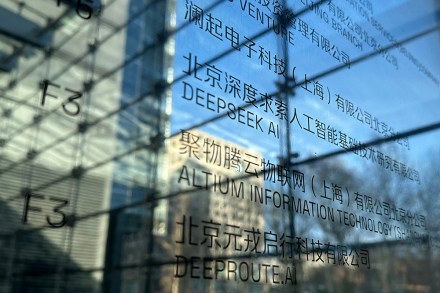
This week, Chinese technology has shown the West the challenge it faces – ruthless, implacable and impossible to ignore. The unveiling of the Chinese artificial intelligence model DeepSeek has not only disrupted the business models of America’s tech behemoths; it has also shown that, in the race to develop the tools for economic hegemony, Beijing is set on supremacy. The launch of DeepSeek came just days before the CIA’s conclusion that, on the balance of probabilities, the Covid virus was incubated in a Wuhan lab – a man-made killer, not a product of nature’s evolutionary mischief. China stands revealed as a power bent on using science to secure not human flourishing but geopolitical dominance for its Leninist leadership.

Why won’t Keir Starmer use the word ‘terrorist’?

Why does Keir Starmer find it so hard to use the word ‘terrorist’ when talking about a man who buys ricin and a machete online, reads up about killing people in an al Qaeda training manual – and then goes out and stabs to death three young girls attending a dance class? When asked this week whether he regarded the crimes committed by Axel Rudakubana as a terrorist act, the Prime Minister couldn’t quite bring himself to do so, instead referring to it as an act of ‘extreme violence clearly intended to terrorise’. The fight against terrorism seems to have been infected by the fear of appearing racist or Islamophobic Starmer has obfuscated over the Southport killings since they occurred in July. Like the police, he immediately declined to treat the attack as terrorism.

The folly of Keir Starmer’s Chagos Islands deal

It would be natural to assume that sinking bond markets would be the government’s priority this week, as low UK growth and high borrowing rattles investors. Yet remarkably the Prime Minister’s attentions seem to be focused elsewhere: on advancing a deal to cede sovereignty of the Chagos Islands to Mauritius in the days before Donald Trump is inaugurated for his second term as US President. Trump is an opponent of the deal for good reason. The US military base on Diego Garcia proved invaluable during the two Gulf Wars. Keir Starmer is yet to meet an international tribunal he won’t genuflect before Keir Starmer, a former human rights lawyer, appears to be motivated by a desire to observe the rule of international law.

It’s time to fast-track our adoption process

The debate surrounding the sexual exploitation of thousands of children over decades, which has re-ignited this week, should act as a reproach to the nation. The details laid out in court transcripts, in the testimonies of victims, show how completely the institutions of the state failed them. The case for a comprehensive national inquiry to determine what further lessons still need to be learned has been well made by the leader of the opposition. The work of Alexis Jay in uncovering the terrible crimes committed in Rotherham and her subsequent wider-ranging inquiry into other areas of child sexual abuse were powerful interventions.

The growing wealth gap between Britain and the US

New year predictions are always rash, but it feels as though one aspect of the story of 2025 can already be written. The gap between the economic fortunes of the US and Europe will continue to widen – and Britain will be trapped very much on the European side of the divide. In three weeks’ time the US will have a new leader, one who will unashamedly put the interests of US business first. Donald Trump’s threat of punitive tariffs may or may not be realised (as in his first term, it could prove to be a negotiating tool to press for the removal of restrictions on US exports and an end to currency manipulation by China). But several things are certain. A Trump-led US will not be adopting a growth-destroying social democratic model.

In defence of faith

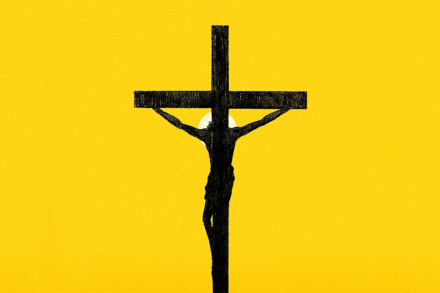
For what should we give thanks this Christmas? The faith that sustains millions through life’s challenges and inspires countless acts of compassion every day? The hope that our world may be redeemed by love? The charity that makes us think of the voiceless and the vulnerable who need our love and protection? Faith, hope and charity are virtues at the heart of Christian belief. They are not exclusive to Christianity, of course, but the place of religion in our national life has underpinned the moral reasoning which has upheld our civilisation. The idea that atheists are privyto some higher level of neutrality doesn’t stand up to scrutiny The principle of the equal worth of every individual is at the heart of Christian belief.

Labour’s confidence tricks

There is nothing new, nor necessarily fatal, about making a poor start in government. Margaret Thatcher had a torrid first couple of years in office, set back by galloping inflation and mass unemployment, before she found her direction. Those who assume that Keir Starmer is doomed to be a one-term prime minister thanks to his plunging popularity are speaking too soon. The resignation of Louise Haigh over a historic fraud conviction will swiftly pass. The mini-scandal of freebies accepted by government ministers, which kept Fleet Street occupied over the summer, has already been largely forgotten.

Labour’s little helper: the CBI is failing British business

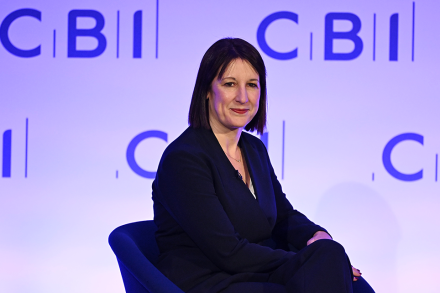
What is the Confederation of British Industry for? Indeed, who is it for? The soi-disant voice of British business held its conference this week. As one might expect, the organisation’s chief executive, Rain Newton-Smith, lamented the tax increases levied on employers in the Budget. She issued a plea to the Chancellor for the CBI to be more closely involved in the design of fiscal events in the future. She was joined by the organisation’s chair in chiding Labour for treating the private sector as a cash cow. But these criticisms were pianissimo compared with the chorus of praise the group has been orchestrating for Labour. The CBI welcomed the Labour manifesto during the general election for its mission to deliver sustainable growth.

Rachel Reeves can still repair the damage done to farming

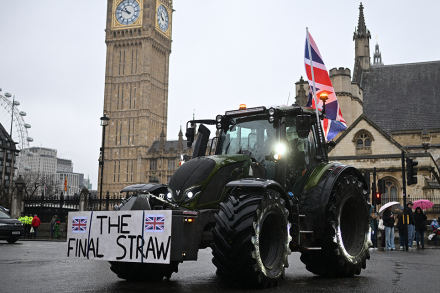
The Chancellor of the Exchequer found time this week to edit her own page on the social media site LinkedIn. She had, it appeared, fallen into error by saying that she had worked as an economist for the Bank of Scotland. Her role had in fact been humbler. No one should be criticised for seeking to correct a mistake. There is no fault in acknowledging that your claims to economic authority were exaggerated, and no shame in embracing humility. Which is why Rachel Reeves should apologise again – without further delay – to Britain’s farmers. For the grotesque, unjust and vindictive tax assault she has launched on the nation’s food producers.

The case against assisted suicide

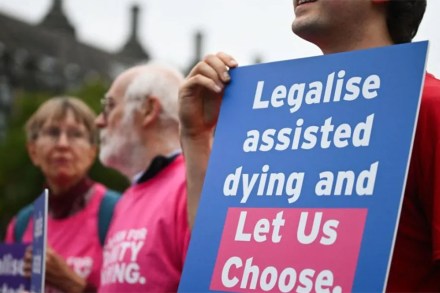
Those in favour of the Terminally Ill Adults (End of Life) Bill insist they’ve addressed critics’ principal concerns and that ‘stringent safeguards’ are in place. But it is impossible to see how this could be the case. If suicide is institutionalised as a form of medical treatment it is inevitable that vulnerable people will feel under pressure to opt for it, and inevitable that the bill will in time be amended and extended. In Canada, denying assisted suicide to people who are not terminally ill has been ruled to be discrimination Under the terms of the existing bill, a terminally ill person given less than six months to live will legally be able to take their own life if sanctioned by two independent doctors and a High Court judge.

What Britain can learn from Donald Trump’s victory

This has been the year of ejection elections. Across the democratic world, incumbents have been thrown out and insurgents have triumphed. And nowhere has the establishment been so humbled, the insurgency so resurgent, as in the US – still the world’s greatest democracy. For Democrats, it is mourning again in America. Just as in 2016, it is not just their candidate who has been defeated but their beliefs about their country. There are lessons for them, and for all political actors across the West, in Donald Trump’s victory.

Rachel Reeves is taking us back to the 1970s

The first fiscal event to be delivered by a female Chancellor of the Exchequer is a landmark moment, but in every other regard this Budget was a return to the familiar, and failed, approach of Labour governments past. This was the Life on Mars Budget – a journey back to the 1970s, only without the cheap booze and fags. Tax rises, increased borrowing, a bigger state, spending on public services unaccompanied by meaningful reform and additional costs for those businesses which create wealth – we have seen all these before and we know they are the markers of decline. This Budget was a journey back to the 1970s, only without the cheap booze and fags Before the election there were signs that Labour’s leadership understood the need for a different approach.