Leading article

The EU ‘elections’ vindicate Brexit

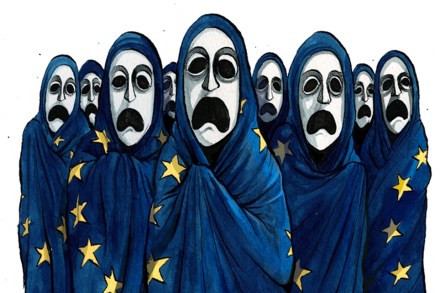
If Britain had not left the European Union, we would be going to the polls this week as well as on 4 July. The European parliament elections have come round again and it is likely that there will be a mass revolt against the direction of the EU project. Across the continent, voters disillusioned with the EU model of democracy are turning to the Eurosceptic right. Marine Le Pen’s National Rally is on course to become the biggest single party in the European parliament. AfD is polling in second place in Germany. Geert Wilders’s Freedom party is comfortably ahead in the Netherlands. Chega, a new far-right party from Portugal, is expected to make big gains, as is the Freedom party in Austria and the Croatian Homeland movement.
What Labour lacks

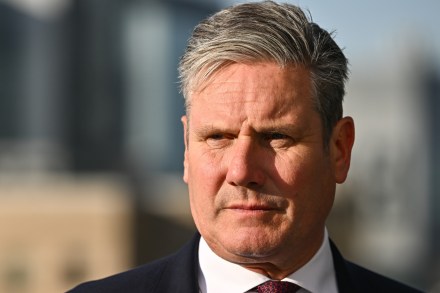
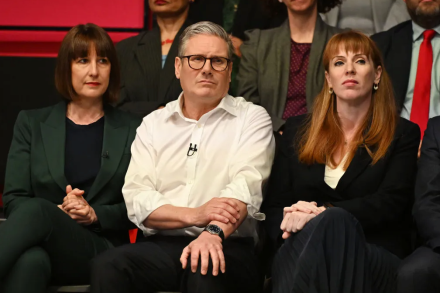
Has Keir Starmer promised anything so far, during this general election, that will make anyone’s life significantly better? The clearest pledge is to impose VAT on independent schools and it’s hard to see how this benefits anyone. Many of the smaller schools will have to close and others will be forced to cut bursaries. The money raised is intended by Labour to increase the number of state-school teachers, but it will do this by just 1 per cent – and, even then, this non-ambition is to be staggered over a five-year period. When it comes to firm commitments this is about all Labour has to offer.

A summer election is suicide for the Tories

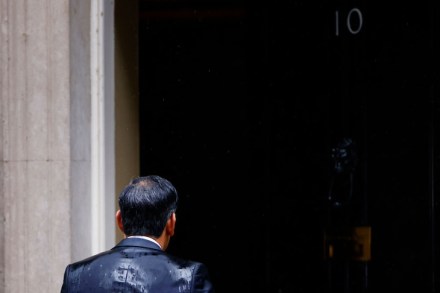
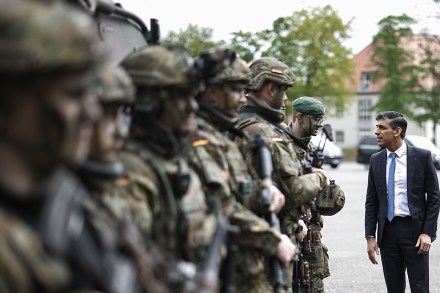
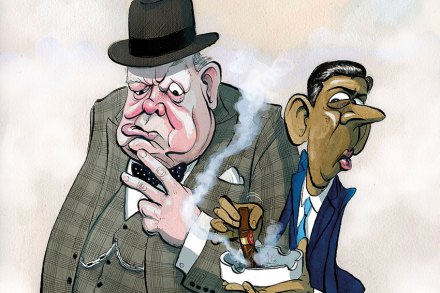
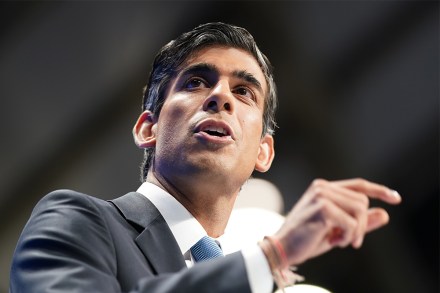
As soon as Rishi Sunak told the House of Commons that ‘there is going to be a general election in the second half of this year’, nervous Tory MPs spotted a problem: that could mean 4 July, which the Prime Minister has now announced will be the election date. Calling an early election is an admission of defeat – and that, on everything from public finances to public services, the worst is yet to come With every opinion poll pointing to a Labour landslide, it’s unclear what Sunak is trying to gain – unless he has given up hope of victory altogether. Calling an early election is an admission of defeat and signals that, on everything from public finances to public services, the worst is yet to come.  Of course, holding the line until November would have been tricky.

Britain should embrace the AI revolution

Rishi Sunak’s big speech this week was easily lampooned. Having accused Keir Starmer of ‘doomsterism’, the Prime Minister warned that Britain’s most dangerous years lay ahead, and talked of the threat from ‘colluding authoritarian states’. Less attention was paid to the part of his speech about artificial intelligence, which was in fact genuinely optimistic. As well as bringing greater freedom, choice and opportunity, AI could double productivity ‘in the next decade’, he said.

Tories for Starmer

Nick Boles was once at the heart of a mission to renew Conservatism. He was one of a small number of modernisers, central to the Cameron project, who ended up serving as Tory ministers. He quit over Brexit and this week made his public debut in a new job as an adviser to Rachel Reeves. He was chosen to introduce the shadow chancellor’s speech about how Keir Starmer’s government plans to revive the economy. The lack of any serious clash of ideals between the main parties has allowed a lazy consensus to thrive This is part of a new movement in British politics: Tories for Starmer. It’s something we will see a lot more of as Labour approaches power.

Why Sunak should stay

In the end, the Tories did just as badly as predicted in the local elections. They lost about half of the council seats they were defending as well as ten out of the 11 mayoralties up for election and did not even come close in London. It's a disaster, but one consistent with the opinion poll picture painted with such devastating regularity over the last year or so. Any Conservative now tempted to depose Rishi Sunak should study the pantomime playing out in Holyrood. The Tory motto, now, is to remember that there is always someone worse off than you are – and that person is usually in the Scottish Parliament. The SNP is reminding the world that changing leader does not help a party running from its record.

The cost of European peace

After six months of delay, the US Senate has finally passed a $60 billion foreign-aid package which will send urgently needed ammunition and military equipment to Ukrainian soldiers. It may well be the last such cheque to be signed in Washington. Donald Trump is favourite to be the next president of the United States and the senators closest to his brand of ‘America First’ politics, J.D. Vance of Ohio and Josh Hawley of Missouri, led the opposition to the Ukraine package. Their argument, crudely put, is that Europe should bankroll its own defence. The American money confirmed this week gives Europe about a year to adjust to this new reality and prepare for it. A generation had grown up believing that peace and democracy were the natural order of things.

A smoking ban is pointless and illiberal

Why is Britain poised to ban cigarette smoking, when the habit is already dying out anyway? Smoking is seen by the young as disgusting and outdated. A generation ago, 50 per cent of school pupils said they had smoked at some point. By the time David Cameron came to power, this was down to 25 per cent. It has since halved again, to 12 per cent – of whom just 1 per cent smoke regularly. Vaping among the young presents its own challenges, but smoking cigarettes (at £15 a packet) is in terminal decline. So naturally the state has decided to intervene. Smoking is dying out among the young because they are choosing not to smoke, not because it is banned Politicians of all parties united this week to usher in the Tobacco and Vapes Bill, which will create two categories of consumers.

Common sense prevails in the gender debate

The publication this week of the Cass Review into gender-identity services for young people marks a welcome return to reason in an area of medicine which for the past few years has been driven by identity politics. No one is denying that there are those who deserve psychological – and in some cases physical – help to cope with their condition. But the explosion in the number of children treated on the NHS for gender-identity issues (and in many cases being given powerful drugs with severe side effects) should have set alarm bells ringing long before it did. The NHS first set up its Gender Identity Development Service (GIDS) at the Tavistock Clinic in 1989, and for the first two decades of its existence it was a small outfit with a low profile.

How Britain smashed the slave trade

It was bound to happen sooner or later: a guest on the BBC’s Antiques Roadshow presented an artefact which derived from the slave trade – an ivory bangle. One of the programme’s experts, Ronnie Archer-Morgan, himself a descendant of slaves, said that it was a striking historical artefact but not one that he was willing to value. ‘I do not want to put a price on something that signifies such an awful business,’ he said. It’s easy to understand how he feels. The idea of people profiting from the artefacts left over from slavery is distasteful. Yet, as Archer-Morgan said, it is not that the bangle has no value: it has great educational value.

Covid and the politics of panic

During Easter weekend four years ago, the country felt on the verge of catastrophe. The prime minister was in hospital having just come out of intensive care, the Covid-19 death toll was at more than 1,000 deaths a day, and hospitals were trying to cope with a flood of patients. It had been estimated that 90,000 ventilator beds would be needed; we had only 10,000. That weekend, no one went to church and no one visited family: instead we sat inside, preparing ourselves for the horror to come. Science is always evolving, never settled. Our understanding changes as we gain new information No one knew, then, that the virus was already in reverse. No one knew that 10,000 ventilators would prove enough or that the emergency Nightingale hospitals that had been set up would not be needed.

What does Rachel Reeves stand for?

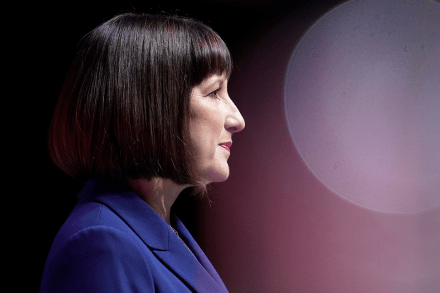
As the world discovered when she was caught lifting other people’s work for her book on women in economics, Rachel Reeves is not the most original of thinkers. But she has political talents. She has cultivated her image as an uninspiring technocrat in order to present herself as someone who will not spring surprises or take risks as chancellor. She thinks the state is inefficient and taxes are too high. She believes in ‘securonomics’, which sounds like a pleasing contrast to years of Tory policies. It is easy to preach fiscal discipline, but in office Labour would find it very difficult to contain spending Polls show that voters now think Labour are more likely to lower taxes than the Conservatives, so Reeves has already achieved something significant.

Why we don’t need another vote on euthanasia

Ethical issues such as abortion and euthanasia are rightly considered matters of personal conscience for MPs at Westminster, so Keir Starmer’s promise of a vote on assisted dying does not automatically mean that Britain will follow Belgium, the Netherlands and Canada in legalising euthanasia, no matter how large a majority Labour might win. When the House of Commons held a similar vote in 2015, it was heavily defeated by 330 votes to 118, though Starmer himself voted in favour. Nevertheless, we should be concerned about this development. The campaign for assisted dying has recently been energised by the intervention of Esther Rantzen, who is herself terminally ill with lung cancer. She is considering ending her life by travelling to the Swiss clinic Dignitas.

What do voters have to thank the Tories for?

Last November Jeremy Hunt announced what he proclaimed was ‘the biggest tax cut on work since the 1980s’. He cut employee National Insurance from 12 per cent to 10 per cent, yet to his great disappointment, the polls didn’t budge. This week he decided to double down, lowering NI again, to 8 per cent. ‘The UK now has the lowest effective personal tax rate since 1975,’ he said. It’s likely the public will still be unimpressed, because taxes are rising further. Hunt’s policies will in fact leave the UK with the highest overall tax burden since 1948. The headline rate may be falling, but the proportion of income subject to taxes has gone up, primarily because tax thresholds have been frozen.

Parliament and the press

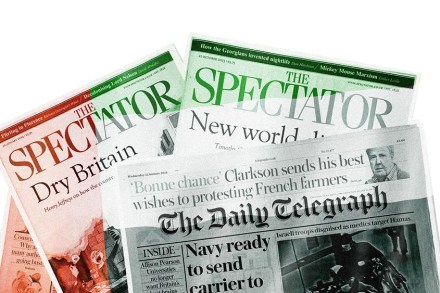
Attempts by the Emirati government to buy The Spectator and the Telegraph through RedBird IMI, one of its state investment vehicles, pose a conundrum. There is no existing law against such a deal because until this point safeguards have not been needed. No autocracy has ever before attempted to buy a leading national newspaper in a democratic country. The Prime Minister may feel powerless to stop the deal, given the lack of legal tools available, but Baroness Stowell, a Tory peer, has now proposed an amendment to the Digital Markets Bill. This would require that any foreign power which wishes to buy a national publication must first secure parliament’s approval. No one in the House of Commons or Lords has raised a serious objection to this common sense principle.

Net-zero targets have hamstrung British prosperity

Britain’s ‘net-zero economy’ is booming, creating more better-paid jobs than any other sector, but it is all being put at risk by the government’s reversal on policies on electric vehicles and heat pumps. That, at any rate, is what the Confederation of British Industry (CBI) and the Energy and Climate Intelligence Unit (ECIU) wants us to believe. In a report this week, these groups claim that the net-zero target has spawned an industry worth £74 billion, up 9 per cent in just a year. It has created 765,000 jobs which are 1.6 times as productive as the average UK job and which offer average wages of £44,600, compared with £35,400 for the rest of the economy.

Citizens’ assemblies are a dreadful idea

Sir Keir Starmer’s Labour party is a government-in-waiting desperately searching for ideas. It says much about the leader of the opposition that arguably the biggest proposal he’s put forward comes not from him but from his chief of staff, Sue Gray. She, it seems, is enthused about the idea of citizens’ assemblies, and wants more of them to look into issues such as constitutional reform, devolution and housing. That is one step on from Tony Blair’s focus groups, with randomly selected members of the public placed one step closer to power and adopting the role of government advisers.

The Tories are too weak to capitalise on Labour’s failings

The polls suggest that Labour is in line for a general election victory later this year which could match or even exceed Tony Blair’s landslide of 1997. Yet the party exudes none of the confidence and maintains none of the self-discipline which it did 27 years ago. On the contrary, were the Conservatives not in an even worse state themselves, Keir Starmer’s party could well be in deep trouble. For Labour to contrive to lose a safe seat in the current circumstances is remarkable. But that is exactly what the party has done with its failure to vet properly Azhar Ali, the candidate chosen to fight the Rochdale by-election following the death of the sitting MP Tony Lloyd. Comments made by Ali shortly after the atrocities committed by Hamas against Israel last year were indefensible.

The need for the monarchy has never been greater

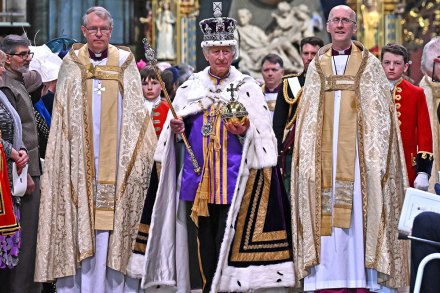
The natural reaction to this week’s news that King Charles III is suffering from cancer has been one of concern and compassion. As the Prime Minister said, consolation can be drawn from the fact that the illness has been caught early and that Charles is continuing with his duties – albeit stepping aside from public-facing engagements for the time being. But it hasn’t taken long for conversation to stray on to other questions: might it be better for him to step back from all duties? And perhaps at some point he should give way to Prince William? Such an idea is to be resisted. Charles III is the oldest monarch to take the throne in British history, and there are obvious health implications.

Who’s afraid of population growth?

In ten years’ time, there’s a good chance that the main concern in the western world will be the threat of population collapse. Fertility rates are falling everywhere and no government has found a way of reversing the trend. Plenty have tried. South Korea has so far spent $200 billion on tax breaks and lowering childcare costs and has succeeded only in beating its own record for the world’s lowest birth rate, year after year. In Italy, the situation is close to a crisis, and in France it’s not much better. If this continues, the welfare state model, which depends on a decent worker-to-pensioner ratio, will collapse. There will not be enough tax revenue to finance pensions.