Leading article

Why an EU summit will never solve the Ukraine crisis

[audioplayer src="http://traffic.libsyn.com/spectator/Untitled_2_AAC_audio.mp3" title="Anne Applebaum, Matthew Parris and John O'Sullivan discuss Ukraine"] Listen [/audioplayer]For the first time in many years, the eyes of the world are on Crimea. As Russian troops violated Ukrainian sovereignty, the question swiftly became, ‘What can we do?’ If the answer is ‘not very much’, then we ought at least to consider why that is the case. Part of the answer is our diminished military capabilities and ambitions, the inevitable result of reducing the defence budget. But this week our diplomatic tools seem to have failed us. We urgently need to ask: what has gone wrong?
Stop bribing Ukraine – and start helping

The last time Viktor Yanukovych was removed from power in Ukraine, following a corrupt election nearly a decade ago, it was called the Orange Revolution. This time around it should be called the Golden Revolution. Never has an episode of political upheaval been followed quite so sharply by offers of riches from abroad. The past few days have resembled one of those charity auctions where high-net-worth individuals, tanked up after a good dinner, whip out their chequebooks and try to outdo each other’s generosity. The only differences are that in this case it is our money that they are brandishing, and that instead of going to a children’s hospital or a donkey sanctuary, the money will be going into the black hole of one of the most kleptocratic countries on earth.

Why America’s ivory ban won’t help elephants

The Duke of Cambridge deserves credit for bringing his influence to bear on the growing tragedy of the elephant, whose population is being decimated by poaching. But his advisers should have been quicker to dissuade him from one aspect of his campaign: the threat to dispose of his grandmother’s ivory collection. That Africa’s elephant population is in peril from poachers is not in doubt. Of a total of 400,000 living in the wild, around 50,000 were illegally killed last year, way beyond the numbers which the population could naturally withstand. The future is looking bleak, too, for wild rhino, 1,000 of which were poached in Africa last year out of an estimated total of 25,000.

Britain needs small government, not weak government. That means strong flood defences

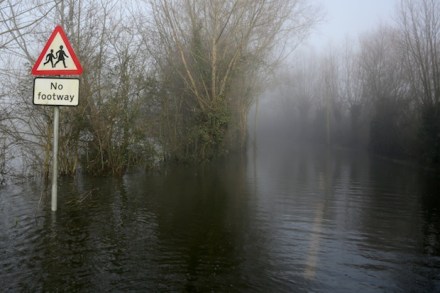
[audioplayer src="http://traffic.libsyn.com/spectator/TheViewFrom22_13_February_2014_v4.mp3" title="Christopher Booker discusses the failures behind the floods" startat=61] Listen [/audioplayer]There is nothing inevitable about the by now familiar sight of residents being towed away from flooded homes, of shops and businesses submerged, and all the misery and economic turmoil which follows. A short hop across the North Sea is a country which has been having much the same weather as we have recently and has even more low-lying land vulnerable to flooding. Yet there has been a remarkable lack of footage of Dutch homeowners being forced to gather their possessions and flee their homes. Why?

Floods of incompetence – why Chris Smith should resign from the Environment Agency

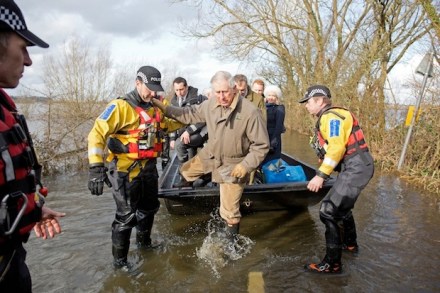
[audioplayer src='http://traffic.libsyn.com/spectator/TheViewFrom22_6_February_2014_v4.mp3' title='Fraser Nelson discusses the Environment Agency:' startat=1350] Listen [/audioplayer]When Prince Charles arrived in Somerset to meet some of those caught up in the disaster which in five weeks has drowned 50 square miles of that county in floodwater, a reporter asked him whether he blamed the Environment Agency. Judiciously, he replied, ‘You may well think that — I couldn’t possibly comment.’ Later, having spoken to several of those intimately involved in this crisis, he hinted rather more plainly at his own view by saying, ‘The tragedy is that nothing happened for so long.

The Tory rebels have two choices: shut up or lose the election

[audioplayer src='http://traffic.libsyn.com/spectator/TheViewFrom22_30_January_2014_v4.mp3' title='Douglas Carswell MP explain why he now agrees with this article' startat=518] Listen [/audioplayer]Things could scarcely be going better for the Conservatives. Every week seems to bring more news of the recovery. High street tills are ringing, employment is at an all-time high and Britain’s economy is growing faster than that of any major country. No wonder the Labour party’s opinion poll lead has been reduced to one vulnerable point. Two years ago, the Conservatives had almost given up hope of winning the next election. Now, it looks within their grasp — if they keep it together. And therein lies the problem. Two groups of people are working hard to deny Cameron victory.

Why is the Church of England so obsessed with sex?

Four bishops and a retired civil servant shut away in a palace, talking about human sexuality — it sounds like the beginning of a bad joke. But the resulting Pilling Report is, in spite of 200 pages’ worth of double entendres, neither funny nor enlightening. It has been clear ever since the Lambeth conference in 1998, which contained the ponderous resolution that ‘we commit ourselves to listen to the experience of homosexual persons’, that the Anglican church’s position has been to agree not to agree on the issue. From the Jeffrey John affair to the debate over gay marriage, the church has handled the question like a whoopee cushion at a vicar’s tea party — with a mixture of bemusement and embarrassment.

Forget Wall St. The Wolves of Whitehall caused the crash – and could do so again

This week, Martin Scorsese’s film The Wolf of Wall Street opened and the Office of National Statistics reported that house prices are up by 12 per cent in London and by 5 per cent across the UK as a whole. While the former represents the cocaine-fuelled greed of bankers, which many like to think caused the financial crisis in the first place, the latter represents a wider form of greed which has even more to do with the problems that have afflicted the world from 2007 onwards. The Wolf of Wall Street is no fantasy.  While the behaviour of the antihero, Jordan Belfort, has been ratcheted up for the purposes of Hollywood, the story reflects a genuine sickness at the heart of high finance: its tendency to attract, and tolerate, psychopaths.

Welfare wars

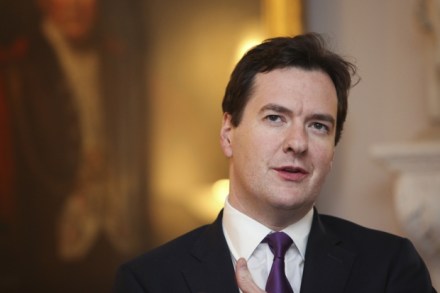
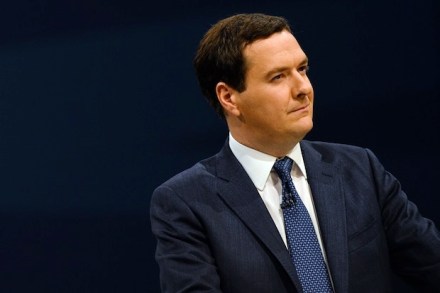
George Osborne is refreshingly uninterested in his public image, believing that he will be judged by the success (or otherwise) of his economic policies. So when the Chancellor pops up to give a speech, he spends little time trying to mask his underlying aim — which is usually to sock it to Ed Balls, his opposite number. He is a Chancellor-cum-strategist who weighs every policy for the damage it could inflict upon his opponents. And on the issue of welfare, he sees an opportunity to strike. Introducing a benefits cap has been the single toughest policy introduced by this coalition government. It is also the most popular with the public, and the Chancellor seems to find this intoxicating.

The big idea that can win the Tories the next election

In one sense David Cameron is lucky that the Conservatives do not enter 2014 with a lead in the polls. If they did, the Prime Minister would be under pressure for stitching up the Fixed Term Parliaments Act with Nick Clegg, thereby denying himself the chance of doing what all strong governments have done over the past 35 years, with unfailing success: going to the country after four years. Barring a vote of no confidence, we already know the date of the next election: 7 May 2015. With the exception of John Major in 1992, no Prime Minister who waited five years has won re-election since Clement Attlee in 1950 — and he only clung to power with a miserable five-seat majority.

Joy to the world | 12 December 2013

Pessimism sells. It shifts books and newspapers, sends ratings soaring. It fills lecture halls, wins research grants, makes political careers. We are fed this constant diet of doom, predicting anything from meteorological Armageddon to a tyranny of austerity, and so it is little wonder that we tend to miss the bigger story. A cold, dispassionate look at the facts reveals that we are living in a golden era. and that, if you use objective measures, 2013 has been the best year in human history. As a public service - and one which is rarely provided in broadcast or print - The Spectator will below provide evidence for these assertions. We can start from crude figures: $73.5 trillion, the world’s economic output this year.

George Osborne has seen the light on tax cuts. Now he needs to implement some more

George Osborne has not been a complete disappointment as Chancellor. He has, it is depressing to note, ended up giving Britain a leisurely ten years to get back in the black while the national debt soars. He has a worrying enthusiasm for finding new ways of hawking underpriced debt to business and homebuyers. But the British recovery is now gathering pace, Britain has more jobs than ever, and if you trawl the small print of his Budget statements, you can find a number of things that Osborne is getting right. He has stuck to his plan to shed hundreds of thousands of public sector jobs. And what Ed Balls dismissed as a right-wing fantasy has come true: two private sector jobs have been created for every public sector job lost.

Our enemy is not global warming. In Britain, people are dying of the cold

Fanciful predictions of all the deaths that will result from climate change, decades into the future, are regularly thrown into public debate. Less attention has been given to a real statistic from the here and now, released by the Office of National Statistics this week, which shows the effects of one of the policies designed to tackle climate change: high energy prices. It emerged this week that there were 31,000 ‘excess’ deaths in England and Wales last winter, almost a third more than the previous year. Almost all were, in effect, British pensioners who died of the cold. It’s odd: Britain is a rich country with a massive welfare state — and we know how to heat and insulate houses. We also send millions away in overseas aid.

Alex Salmond’s economic policies would drive an independent Scotland into the ground

Within the white paper on economic policy in an independent Scotland that was published by Alex Salmond’s government this week there is a liberal economic manifesto trying to get out. The First Minister speaks about using new ‘levers and instruments’ to revive Scotland and that, freed from Westminster control, he might lure businesses by slashing corporation tax, reducing national insurance contributions and cutting air passenger duty. Unfortunately, none of these ideas is likely to get off the page because the SNP has a much more prominent agenda which could not have been better designed to promote economic stagnation.

Vive la France! Everyone else, led by Obama, is capitulating to Iran

President Obama’s flagship foreign policy of ‘leading from behind’ has had some surprising consequences. Not least among them is that France now appears to be leading the free world. During the current set of negotiations in Geneva between Iran and the P5+1 countries, America, Russia, Britain, China and Germany seem eager to declare a breakthrough. Iran is seeking an alleviation of the tough international sanctions against it and the right to continue what it calls its ‘peaceful’ nuclear programme. The Israeli prime minister, Benjamin Netanyahu, has warned of Iran benefiting from ‘the deal of the century’. Last weekend it took the government of François Hollande to call time on this.

We are not ‘tired of war’. We are tired of lack of leadership to win one

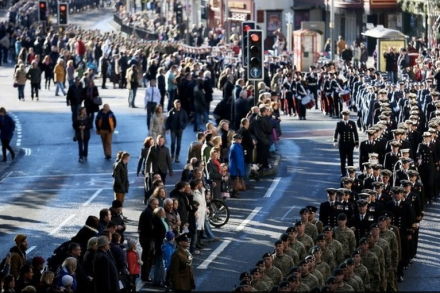
One remarkable fact of recent years is that even as the veterans of the first world war have died and as those who served in the second world war have headed through their eighties and beyond, the memory of the 20th century’s two most devastating wars has continued to be honoured with thoughtfulness and devotion. The idea of commemorating those who defended and saved this country has lost none of its potency. This year, as we head towards the 100th anniversary of the start of what was meant to be the war to end all wars, there are more British poppies in evidence than ever. Our part in the Allied victory over Nazi Germany in particular has become one of the few indisputable moments of our history about which all British people can feel legitimate and unalloyed pride.

High-speed fail

A year ago the electoral strategies of the two main parties seemed set. The Conservatives would stand as the party of prudence, claiming to have saved Britain from a Greek-style meltdown through austerity measures which, though painful at the time, had eventually borne fruit in the shape of a private sector-led recovery. Labour, meanwhile, would stand as the party for public investment, promising to repair what it saw as the damage wrought by cuts. Since then, things have got better for the Tories than they could have imagined. Not only did a threatened triple-dip recession fail to materialise, but revisions to economic data concluded that Britain did not even suffer a double dip.

How the Spectator helped blow the whistle on health tourism

In February, an NHS surgeon came to The Spectator’s offices to discuss a piece he felt it was time to write. He wanted to blow the whistle on health tourism. Professor J. Meirion Thomas knew he was taking a tough decision, given the hostile reaction of the doctors’ unions and civil servants to anyone who makes the slightest criticism of the NHS. But the Francis Report into the Stafford Hospital scandal had just come out, reminding GPs of their ‘statutory duty of candour’. The professor said that he would like to expose what he regarded as the systematic abuse of the NHS. His Spectator article was read at the highest levels of government.

Global race? Lack of air routes means we’re already on the slow boat to China

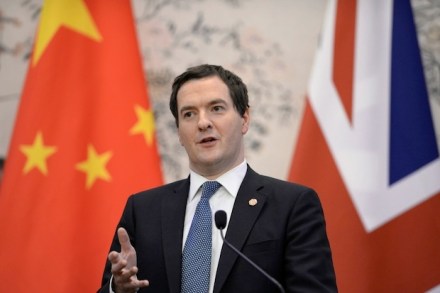
Trade missions are almost comically pointless nowadays, as George Osborne’s visit demonstrated this week in Beijing. He is right that there are serious problems in our trade relations with China — an emerging economic superpower that buys more from Switzerland than it does from Britain. In fact, we export depressingly little to any major emerging market. It’s a matter of real concern — but flying off to China won’t fix it. There’s no evidence that trade missions make a blind bit of difference. When Richard Nixon made his historic visit to China in 1972, it did represent an economic breakthrough. It was far harder, back then, for companies to break into well-protected markets — especially if trade was curtailed for political reasons.

George Osborne is blowing bubbles

In opposition, George Osborne said that you cannot borrow your way out of a debt crisis. In government, he has proved it. Since entering No. 11 Downing Street, his strategy has been to talk sternly about austerity while borrowing more than anyone else in Europe. With every budget he has presented, the deadline for balancing the books has slipped further forward — now it’s 2020. Britain’s AAA credit rating has gone, we’re paying billions more in debt interest payments as a result. The Chancellor has brilliantly spun all this as the problems of austerity rather than his own profligacy, but for three years he has had no good news to report. Until now. The British economy seems to be springing back to life in a way no one predicted.