Leading article

Why do the Liberal Democrats see the over-65s as a “time bomb”?

We are living longer, healthier and more prosperous lives than ever — it’s one of the greatest advances of our time, and yet our politicians prefer to see it as a disaster. ‘We are facing a time bomb,’ says the Liberal Democrat Norman Lamb, a health minister. He presents the numbers as if we are supposed to be appalled: 'by 2030 England will have double the number of over-85s. The number of over-65s will have increased by 50 per cent.’  In other words: oh my God, we're all going to live. It's odd that the Liberal Democrats should be so alarmed by the fact that there will be half a million of us who have celebrated 90 or more Christmases — three times as many as there were in the 1980s.
George Osborne’s ambition deficit

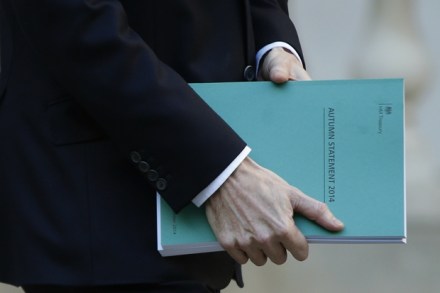
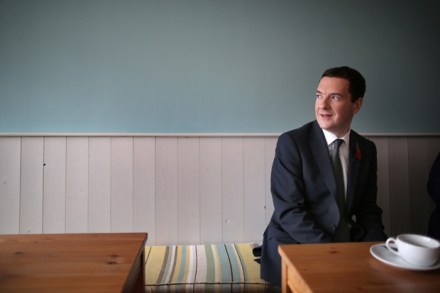
When George Osborne first became Chancellor, he asked to be judged on his ability to reduce the deficit. He does not make that request any more. This year’s deficit is almost three times higher than the £37 billion he originally planned, but he understandably glossed over this point when delivering his Autumn Statement. He has other interests now: pension reform, building motorways, or spending more on GPs. The mission to balance the books has been delayed until the end of the decade — or, perhaps, the start of the next. He said this week that his extra spending was made possible by ‘the hard decisions that we have taken’.

Playing chicken with Vladimir Putin

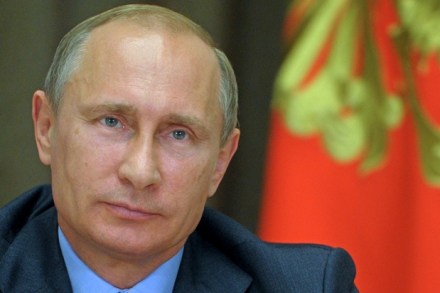
An official end to the Cold War was declared at a summit between President George H. Bush and Mikhail Gorbachev on a Soviet cruise ship moored at Malta on 2 December 1989. It is only a matter of time before western governments will have to admit that it has recommenced. While the rhetoric against Islamic State has been at full volume for the past few months, a soft and diminishing response has greeted Vladimir Putin’s escalating aggression. It is as if, Crimea having been ceded, western governments want their citizens to think that the rest of Ukraine is settling down into a mere domestic disagreement. The truth is very different: Putin’s ambitions have not retreated an inch since March.

Spare us a Bob?

Anyone listening to the BBC this week could be forgiven for thinking that the musician Bob Geldof had just emerged from Africa, like a latter-day Dr Livingstone, the first westerner with news of a deadly new virus. He and his makeshift band of celebrities have adopted Ebola, their song blazing from the radio while Geldof himself has been in every studio exhorting people, with his usual stream of expletives, to buy it. Unless you have been in isolation for the past six months, the Band Aid single will not have raised your awareness of the disease one bit. Since the outbreak was first confirmed in Guinea on 22 March, many hours of news coverage had been broadcast and many millions raised to help the aid effort.

Thank heavens for Justin Welby!

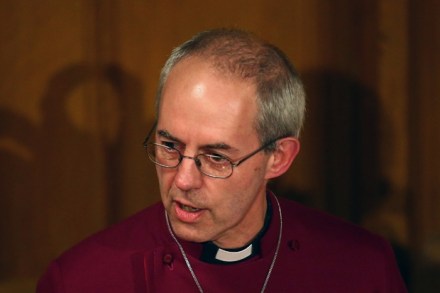
For decades, interventions of the Archbishop of Canterbury in national debate were like a sporadic bombardment of small pebbles against the door of Downing Street. Justin Welby has changed all that. This week, payday loan companies are facing reform (or in some cases oblivion) as new caps on interest payments come into effect. That the industry finds itself in this position is thanks, in no small part, to it having been hooked around the neck by the Archbishop’s crosier. Welby has inspired reform of the industry not by trying to set himself up as the leader of the opposition in a cassock, but by acting as an effective leader of the Church of England.

Say no to devolution without democracy

Imagine if, in one of her first acts as First Minister of Scotland, Nicola Sturgeon announced that, in spite of the result of September’s independence vote, Scotland was to declare independence anyway, on the basis that opinion polls now showed a majority of people in favour of independence and therefore there was no need for the decision to be approved in a referendum. David Cameron and his government would surely treat it as an outrage. Why, then, has the Chancellor this week seen fit to announce that the people of Greater Manchester are to have a directly elected mayor? Two years ago the very same question was put to the people of the City of Manchester in a referendum and the answer was a resounding ‘no’.

How to fight Ukip

In the 2005 general election this magazine supported the Conservatives, with one exception — we urged voters in Medway not to vote for a deeply unimpressive Tory candidate by the name of Mark Reckless. Our then political editor, Peter Oborne, went so far as to write a pamphlet in support of the Labour rival, Bob Marshall Andrews, who had a commendable record of sticking it to Tony Blair. Reckless, by contrast, had nothing to commend him. He lost by just 213 votes — suggesting that The Spectator’s intervention had been decisive. But nothing, it seems, will prevent Reckless from being elected as Ukip’s second MP in two weeks’ time. The Ukip momentum in Rochester & Strood now looks unstoppable.

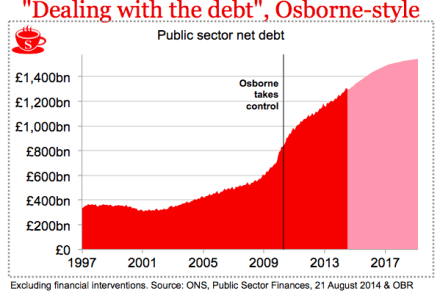
Deal with the debt, George Osborne? You’ve hardly started

George Osborne has declared victory over Ed Balls, the IMF and all the others who warned that his austerity measures would throw Britain back into recession. But his triumphalism obscures a huge failure: his inability to contain the national debt. While the UK economy has been growing strongly (it is currently the fastest-growing of any developed country) the public finances have taken a dramatic and sudden turn for the worse. It emerged this week that, between April and September, the Chancellor borrowed £58 billion — £5.4 billion more than during the same period last year. Osborne’s original plan to eliminate the structural deficit by the election has been off course for a long time, but it is now going backwards.

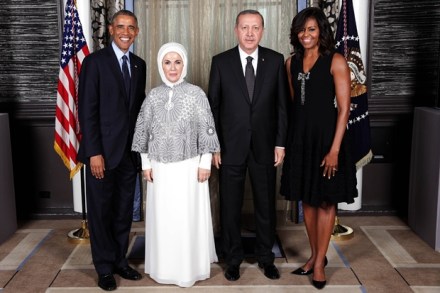
If Turkey turns on the West, what hope is there for Syria and Iraq?

Turkey has long been a bridge between the West and the Middle East. Its record on free speech may be lamentable and it treats its Kurdish minority shoddily, but against that stands a genuine will to improve its human rights record and an ambition to become a modern, free and prosperous state. This has long been the basis of Britain’s support for Turkey joining the European Union. But this week we have seen a reminder of how far the priorities of Turkey’s political establishment are from those of Europe. Its parliament recently consented to the use of an airbase at Incirlik by US forces launching airstrikes against the Islamic State, a move that could dramatically increase the number and effectiveness of such missions.

There is a way to beat Ebola (and we’re already doing it)

There is something depressing about the fact that it has taken a sick Spanish nurse to put Ebola back on the front pages. Since the summer, some 3,400 West Africans have died, but interest in the story here had waned. So long as the disease did not make the nine-mile leap across the Straits of Gibraltar, the moat which keeps all nasty things from Africa at bay from fortress Europe, a sense developed that it could quietly be forgotten — or left to the aid charities. No longer. Spain’s public health authorities are investigating how a nurse who treated two missionaries in a Madrid hospital — who had contracted the disease in Liberia and Sierra Leone — became infected in spite of the protective clothing she was wearing.

Britain doesn’t need hateful laws to defeat hate preachers

If the Labour party conference in Manchester felt like a funeral, the Conservatives’ gathering in Birmingham had the air of a wedding. It had jazz bands, champagne bars and a near-universal mood of celebration — which is odd, given that every opinion poll and bookmaker reckons the Tories are on course to lose power next year. Almost every speech delivered from the floor was more substantial, forceful and credible than any delivered at the Labour party conference. And one of the highlights was the tour de force delivered by Theresa May. For almost two decades the job of Home Secretary has been a political graveyard. Theresa May has made it into a power base. Several home secretaries tried to deport Abu Qatada; she succeeded.

The good fight

It is a mark of the uncertainty of our policy in the Middle East that just over a year ago Parliament was recalled to debate whether to launch military strikes in aid of rebels in Syria. This year, it has been recalled to discuss whether the RAF should join the strikes against the rebels in Syria — or, at least, the section of them that now call themselves ‘the Islamic State’. It is a sobering thought that, had last year’s vote succeeded, Damascus might have joined Raqqa, Mosul and Tikrit among the cities now being run by this pitiless band of barbarians. Michael Fallon, the Defence Secretary, tells James Forsyth on page 29 that Parliament should have the ‘courage’ to support military action.

Alex Salmond’s success is just a symptom of our age of rage

In his short and infrequent visits to Scotland this year, the Prime Minister should have found time to speak to those supporting the ‘yes’ campaign. He would have seen and heard precisely the same complaints and exasperation that are driving his other great foe, Ukip. For years, politicians have laughed about voters who are ‘mad as hell, and not going to take it any more’. That joke is no longer funny. People have derided, lamented or lampooned the death of the Tory party’s grass roots. But the independence debate revealed that in Scotland the Labour party has suffered the same fate. The Better Together campaign against Scottish independence was meant to be largely powered by Labour party operatives.

One week to save Britain

[audioplayer src="http://traffic.libsyn.com/spectator/TheViewFrom22_11_Sept_2014_v4.mp3" title="Fraser Nelson, Tom Holland and Leah McLaren discuss how we can still save the Union" startat=50] Listen [/audioplayer]Next week, the most important vote in recent British history will be held. Indeed, it may well turn out to be one of the last ballots in British history. Seven months ago, this magazine devoted its front page to warning that the United Kingdom was at grave risk of dissolution. The unionist apparatus had decayed, argued Alex Massie, and Alex Salmond was the best late-stage campaigner in Europe. The SNP deployed the language of nationhood and destiny, while the ‘no’ campaign droned on about the Barnett Formula. The conditions for calamity were in place.

Nato must rediscover its purpose, or it will end up losing a war

This week’s Nato summit was originally intended to look back on lessons learned from Afghanistan and reflect on the notion that (as Barack Obama put it) a ‘decade of war is now ending’. How naively optimistic that seems now. In the past week a second American journalist has been beheaded in Iraq and the Sunni insurgents who call themselves Islamic State say that a British hostage will be next. So far, their war has claimed more than 25,000 lives. Meanwhile Russia is intensifying its war with Ukraine in a conflict that has seen the loss of at least 2,000 lives.

Who will be held to account for the horror in Rotherham?

If Rotherham council were a family, its children would have been removed by social services long ago, and Ma and Pa Rotherham would be safely behind bars. Professor Alexis Jay’s report, which was published this week, reveals depravity on an industrial scale in the South Yorkshire town. At least 1,400 children, Prof. Jay estimates, were subjected to sexual exploitation between 1997 and 2013. Many were raped multiple times by members of gangs whose activities either were or should have been known about. Children were trafficked around the country to be abused. Those who put up resistance were beaten. And when they complained they were treated with contempt by the people who were employed to protect them.

Asylum seekers are dying in British ports. It’s time we looked after them properly.

The tale is now familiar: shouts are heard from inside a freight container and police are called. A cargo of human beings is discovered, some gravely ill. This happened last Sunday along the Thames at Tilbury docks. Thirty-five Afghans were discovered. One of them, Meet Kapoor, was already dead. Days later, 15 Kashmiris and Eritreans were found on a lorry pulled over in Somerset, dehydrated but alive. Dozens of people are now being found each week in these kinds of circumstances. It is not just economic migration: the Afghans found in Essex were Sikhs, for example, a group singled out for repression under the Taleban. Once they must have hoped that a stable government would emerge in Kabul, allowing for the return of the 1.4 million Afghans still in exile.

Violence, fear, confusion: this is what comes into a leadership vacuum

The old cliché that ‘nothing happens in August’ has again been brutally disproved. From the centenary of the outbreak of the first world war to the Russian invasion of Georgia six years ago, August is a month often packed with violence — but rarely more so than this year. In Syria, Christians are being crucified for refusing to convert to Islam. In northern Iraq, there are reports of mothers throwing their children from mountains rather than leaving them to the jihadis who are parading the severed heads of their victims. Russian convoys are rolling towards the Ukrainian border as Vladimir Putin tests the resolve of the West. Barack Obama has watched this unfold from his holiday spot in Martha’s Vineyard; David Cameron from the Portuguese coast.

Sorry, but trains can’t really replace welfare lines

George Osborne proposed an attractive idea this week: that spending on state benefits should be diverted into new infrastructure in the North. His conceit was that while welfare spending produces no economic return, spending public money on new high-speed railways and the like will inevitably boost the economy. We can’t fault the former assertion: that paying people to be idle is a drain on the public purse. But we take issue with the notion that infrastructure will always serve to boost the economy.

Stricter benefits limits shouldn’t stop with immigrants

With Ukip snapping at the Conservatives’ heels, it is not difficult to see why David Cameron has hit upon the idea of limiting the entitlement of EU migrants to working-age benefits in the UK, so that they can claim only for three months, not six, as before. But it is a little harder to work out how the Prime Minister and his party will benefit politically from the change. No sooner had Cameron made his announcement than two obvious questions arose: if this proposal is legal, why didn’t he do something like it earlier? And if it is possible to limit eligibility to benefits to three months is there any reason he can’t go further and prevent EU migrants claiming benefits in Britain at all?