Leading article

Miliband’s la-la lurch to the left has revived the right

Every opposition leader sometimes needs to act as a saboteur. Ed Miliband showed his wrecking skills this week, picking a fight with the Daily Mail about an article it had published saying that his Marxist father ‘hated Britain’. The row overshadowed the Conservative party conference and sparked a debate which informed those who did not previously know (or care) that Ralph Miliband was an asylum seeker who arrived in Britain as a teenager and repaid his adopted country by fighting Nazis while serving in the Royal Navy. Miliband’s absurd overreaction upstaged what little the Tories had to say that day. Of the four main political parties, Labour had the most successful conference.
The death of Aids

In a week in which the world is once again invited to consider the prospect of climatic Armageddon, it would be easy to miss the news of remarkable progress against one of the greatest killers known to mankind. UNAIDS, the United Nations agency responsible for the global battle against Aids, forecast that the epidemic will very likely be over by 2030. That does not mean that the disease will be declared extinct by then — as smallpox was in 1979 and rinderpest in 2011 — but that the incidence of transmission of HIV and death from Aids will have fallen to levels low enough to constitute a chronic public health problem rather than an epidemic. Already, worldwide deaths from the disease have fallen by a third since a peak of 2.3 million in 2005.

Finally, the IPCC has toned down its climate change alarm. Can rational discussion now begin?

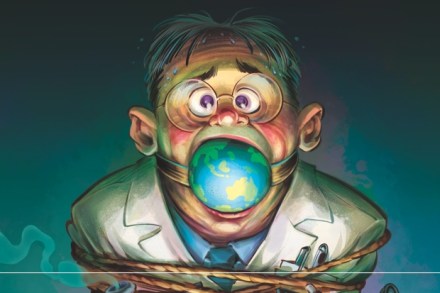
Next week, those who made dire predictions of ruinous climate change face their own inconvenient truth.  The summary of the fifth assessment report by the Intergovernmental Panel on Climate Change (IPCC) will be published, showing that global temperatures are refusing to follow the path which was predicted for them by almost all climatic models. Since its first report in 1990, the IPCC has been predicting that global temperatures would be rising at an average of 0.2° Celsius per decade. Now, the IPCC acknowledges that there has been no statistically significant rise at all over the past 16 years. It is difficult to over-emphasise the significance of this report. The IPCC is not simply a research body making reports and declarations which are merely absorbed into political debate.

How to save the BBC? Privatise it

Three years ago, our columnist and former editor Charles Moore was summoned to Hastings Magistrates’ Court to pay £807 for refusing to pay his television licence. He was protesting against the BBC’s ‘gross violation of its charter’ by broadcasting obscene phone calls made by Jonathan Ross and Russell Brand to the former Fawlty Towers actor Andrew Sachs. The court did not have much time to hear his case, or anyone else’s. That day, 560 others would have been prosecuted for not paying their dues to the BBC. Now it has risen to 700 a day, accounting for an extraordinary one in ten of English court cases. We now know why the Beeb needs the money: it has paid some £60 million in severance payments to various senior managers in the last eight years.

How Australia’s Tony Abbott pulled off a great conservative victory

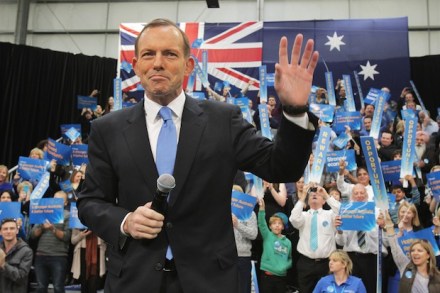
By conventional wisdom, Tony Abbott should not become Prime Minister of Australia this weekend. He ought to be too conservative, a throwback to a bygone age. He is sceptical about global warming, and proposed to abolish a carbon tax on the grounds of its expense and uselessness. He is a churchgoer who is against abortion and is sceptical about gay marriage. He is a former boxer, who tends to back America in foreign policy disputes. He is an Anglophile and an enthusiastic monarchist. He ticks almost every unfashionable box in modern politics. His victory is not inevitable, but those wishing to place money on his rival, Kevin Rudd, can find bookmakers willing to give odds of 26-1.

Syria: A war without a purpose

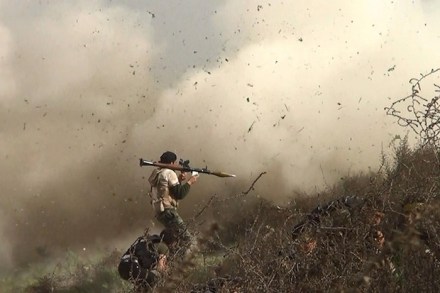
There is something deeply disturbing about switching on the television and finding Jack Straw talking about the need to take military action against a Ba’athist dictator who is using weapons of mass destruction against his own people. Tony Blair has also popped up to urge moral purpose. And all this before the UN weapons inspectors have put pen to paper. The decision-making over Syria is following the same skewed logic, making the same wrong turns as last time. Except that with Iraq there was at least a clear preliminary plan: invasion, followed by regime change and the introduction of democracy. The plan for Syria offers no such clarity. Reports of up to 1,800 people killed by sarin gas by Bashar al-Assad’s regime are chillingly credible.

Let Osborne finish the job

Upon taking office, David Cameron promised himself that he would resist the temptation to sack ministers in response to every scandal. He would have a major reshuffle halfway through his government and another one before the election. That would be all. He is now understood to be weeks away from deciding who should go where, and Labour-supporting newspapers are commissioning opinion polls to help the Prime Minister in his deliberations. The main verdict: sack George Osborne. Some Tory MPs agree. If there is to be a new Chancellor, now would be the time, because any new economic strategy would take three years to have much effect. This argument is as misleading as it is simplistic.

The Guardian didn’t care when Murdoch’s journalists were arrested. So why the hysteria now?

It is good to see the Guardian suddenly rediscover its interest in the sanctity of a free press.  Just five months ago, the paper seemed to have given up on the idea, when it backed the statutory regulation of newspapers. It did not show any particular alarm when Rupert Murdoch’s journalists were hauled out of bed at 6a.m. and had their computers confiscated while police tried to identify their sources. But when the Guardian is visited by a civil servant to discuss its possession of secret material concerning British and American intelligence and the partner of one of its journalists is questioned and then released at Heathrow airport, it reacts as if it is the victim of a constitutional outrage.

This is no way to run a railway

We would not want to return to the days when the transport secretary was actively engaged in the running of the railways, down to what the last wheel-tapper was paid. Nevertheless, Patrick McLoughlin’s answer when invited to condemn the £5 million bonuses which could be on offer to Network Rail directors over the next three years is a depressing comment on everything that is wrong with the railway industry. ‘It is not something I have interfered with because it is a private company,’ he said. Network Rail is a private company of sorts, but it is one which is 100 per cent owned by the taxpayer. If the Transport Secretary is not prepared to speak up on behalf of its 60 million shareholders, then who is?

Causes and effects

When spending money is declared to be a good in itself, it is certain that much of it will be wasted. If that was not obvious already, it was proven by experiment when Gordon Brown announced 13 years ago that he wished to increase healthcare spending in Britain to the European average without much of a plan as to what he wanted to achieve with the money. There followed years of plenty for NHS staff, whose pay packets bulged. Patients found it harder to discern an improvement. Indeed, Brown’s great NHS spending splurge coincided with the Mid Staffs scandal. It should come as little surprise, then, that the same is happening in the charitable sector. The government’s target of pumping 0.

The only way the Tories can show they care about the North is to permit fracking in Sussex

David Howell never really succeeded as energy and then transport secretary in Mrs Thatcher’s governments. After she sacked him in 1983, Thatcher wrote that ‘he lacked the mixture of creative political imagination and practical drive to be a first-class cabinet minister’. If she were still alive and writing now, she might have added that he has the sensibilities of a rhinoceros on Valium. His remark this week that fracking is more acceptable in the north-east because that part of the country is ‘desolate’ has rightly been condemned. No politician should go about insulting parts of his own country, least of all a part of the country that his party is widely thought to disdain.

Google is part of the free press. So hands off, Prime Minister

It is not quite clear what Google did to David Cameron, but the Prime Minister seems to be exacting some sort of revenge. First, he wanted them to keep records of their customers’ emails just in case his officials wanted to snoop later. Now he wants the British government to be the first in the free world to censor internet search results. The causes he invokes are undoubtedly popular ones: confronting terrorists, for example, and thwarting pornographers. But it is precisely in moments of populist outrage that liberties are sacrificed — and only later do we realise what we have lost. The digital age is bewildering for governments, especially those not constrained by a constitution. How to respond to the explosion of ways in which citizens can express themselves?

Leader: Ring-fencing the NHS is only making matters worse

According to popular wisdom on the left — and even among some in the Conservative party — this ought to have been a tough week for the government. On Monday, the new £26,000 cap on benefits came into effect and with it a new principle: that no one on welfare should receive more than the average working family. Such a move, it was said, would expose the Conservatives to what is supposed to be their weak point: that they are the ‘nasty party’ who care about money, not people. Yet something remarkable has happened. Iain Duncan Smith’s welfare cap is turning out to be not just the boldest but the most popular reform undertaken by this government.

Why Ed Miliband should stop paying his union dues

Ed Miliband’s relationship with Len McCluskey was defined in a brief camera shot at the Labour party conference in 2010. After praising trade unions, Miliband added that he would have no patience with ‘waves of irresponsible strikes’. Several rows back, McCluskey, who three days earlier had helped Ed defeat his brother David in the leadership election, was filmed shaking his head and shouting ‘Rubbish!’ Given that McCluskey’s Unite union pays most of Labour’s bills, his word was seen as a veto. This was the new deal. McCluskey and his colleagues bestowed their patronage upon Ed not because they thought he would be a strong leader, but for rather the opposite reason: they expected acquiescence. In many ways, Ed has justified their faith.

Egypt shows us that elections aren’t enough

Democracy and holding elections are not the same thing. There could be no better demonstration of this than the experience of Egypt. Protesters who two years ago gathered in Cairo to force a dictator out of office, and to win the right to replace him with an elected governmentS, are back — this time to demand the resignation of the president whom they elected. The likely result is, by popular demand, a return to what preceded the Arab spring of 2011: a military dictatorship, for a period at least. From a western perspective this is inexplicable: why would people want to risk their lives to overthrow a military-backed president, only to come back two years later to reverse what they seemed to have achieved?

Spending Review: Has George Osborne’s caution condemned Britain to a lost decade?

The Labour party used to joke that the Tories would act as their cleaners: win, take the political pain, abolish the deficit by 2015 and then hand over a balanced budget when they lost the election. George Osborne has, at the very least, put paid to that. His Spending Review this week made it clear how painfully little progress is being made. Whoever wins the next election could close every school, open every prison, cede Northern Ireland, close every embassy and sack every soldier, sailor and airman — and it would still not be enough to put the government back in the black. Britain is a terrifyingly long way from fiscal sanity. If the Chancellor had actually cut the government machine when voters expected him to, the pain would be almost over by now.

Lesson of Afghanistan? That you can, after all, bomb your way to the negotiating table

It’s not just soldiers who risk their lives in Afghanistan. Anyone who enters the country’s judicial service becomes an assassination target. Only last week, six Afghan judges were killed by a suicide bomb outside Kabul’s Supreme Court. A Taleban spokesman said they had been ‘sentenced to death’ for playing an ‘important role’ in ‘legalising the infidels’. Such attacks have killed over 3,000 civilians in Afghanistan so far this year, according to the United Nations. Of these, some 600 were children. Barack Obama’s administration invites us this week to welcome the prospect of peace talks between the Taleban and Hamid Karzai’s government as a sign of progress.

Top secrets

This week’s exposé of the US National Security Agency has been heralded as the greatest intelligence leak since the Pentagon Papers. It is nothing of the sort. Far from revealing some institutional outrage, the whistleblower Edward Snowden merely appears to have found what any low-level intelligence source might find. Intelligence agencies try to find things out about certain people. Spies spy, and can be innovative in their techniques. Rapid technological advances mean that the amount of snooping is growing at a faster rate than laws and regulations have been able keep up. But where is the scandal?

We need to talk about Syria

There can be little doubt that Britain is edging towards intervening in Syria. President Bashar Assad’s bloody ruthlessness seems to be paying off: his forces are retaking former rebel strongholds (the strategic town of Qusair was reclaimed this week) and the more he believes he can win, the less likely he is to negotiate. From a distance, there seems to be a case for the West to move quickly to help the rebels, and create a more level playing field. The aim would not be to prolong the conflict, but to make a negotiated peace settlement more likely. The Prime Minister made the case in the Commons this week.

The madness of ring-fencing government spending.

As ministers trooped one by one into George Osborne’s office last week for negotiations over the Spending Review, most looked pretty grim, steeling themselves against news of cuts to come. But three more cheerful figures stood out: the Secretaries of State for Health, Education and International Development. Their budgets, which between them account for more than a third of public spending, have been ring-fenced, with the result that the Chancellor is left scratching around elsewhere to hit his target of reducing spending by £11.5 billion. And although £11.5 billion sounds like a lot of money, in the context of what’s needed, it is a pitifully small gesture. Three years after an ‘austerity budget’, the government is not overspending by just £11.