Leading article

The democratic deficit at the heart of the Human Rights Act

Dominic Grieve was a worthy attorney-general whose career was helped by this magazine: nine years ago, he was named Spectator Parliamentarian of the Year, beneath the nose of David Cameron, then nearing the end of his successful campaign for the Conservative leadership. But Grieve’s remarks this week, in which he suggested that the Prime Minister would be seen to be as bad as Putin if he pursues proposals to give Parliament ultimate authority over laws in this country, underline why his position as a member of the government had become untenable. One of the few redeeming features of David Cameron’s reshuffle is that it added a certain clarity to our position with the European Court of Human Rights.

Have David Cameron’s Etonians just given up on state school reform?

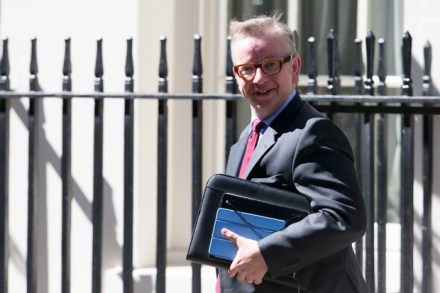
During his time as Education Secretary, Michael Gove would often have occasion to quote a passage of Machiavelli: ‘There is nothing more difficult, more doubtful of success or more dangerous than to initiate a new order of things. For the reformer has enemies in all those who profit by the old order, and only lukewarm defenders in all those who would profit by the new order.’ In the end, it seems, Gove’s enemies triumphed. They shouted more loudly than those who benefited from the new schools, and persuaded the Prime Minister that his Education Secretary was losing an argument — so he should walk the plank. The teachers’ unions succeeded in posing as the voice of teachers, even though only a fraction of teachers voted for the strikes earlier this month.

In apologising for having Nigel Lawson on to discuss climate change, the BBC has breached its charter

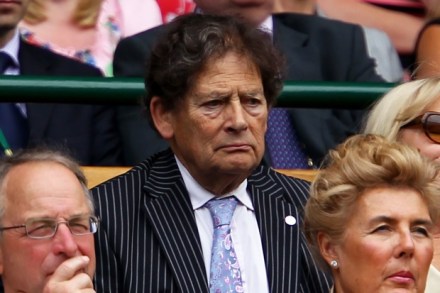
Listen to ‘Is climate change a factor in the recent extreme weather?’ on Audioboo It is only a matter of time before Nigel Lawson — if he is allowed on the BBC at all — has to have his words spoken by an actor in the manner of Gerry Adams at the height of the IRA’s bombing campaign during the 1980s. In the case of Mr Adams, whose voice was banned from the airwaves by the government, the BBC stood up for free speech. But it is quite a different story with Lord Lawson. The BBC has effectively banned the former chancellor (and former editor of this magazine) from appearing on its programmes to debate climate change, unless he is introduced with a statement discrediting his views.

It’s time for Britain to abolish slavery – again

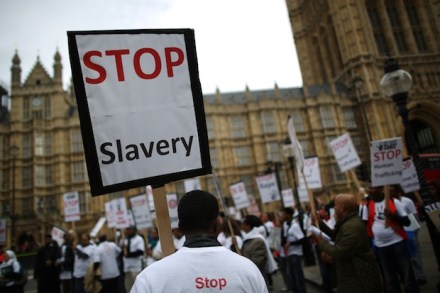
[audioplayer src="http://traffic.libsyn.com/spectator/TheViewFrom22_3_July_2014_v4.mp3" title="Frank Field and Isabel Hardman discuss the Modern Slavery Bill" startat=1865] Listen [/audioplayer]Who would have expected to find slavery on the outskirts of Cardiff? Not the locals, who were shocked when police carried out a raid while investigating the case of two men understood to have been held in captivity for 26 years. ‘Human trafficking is becoming more prevalent across the United Kingdom,’ said Gwent Police. That’s one way of putting it. Another is to say it has been prevalent for years, but the authorities are only now beginning to take notice. The last government was more interested in apologising for the old form of slavery than recognising the new one.

Phone hacking – the silence of the censors

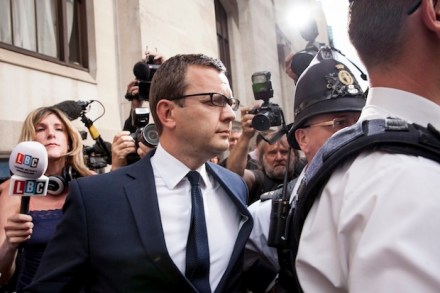
We have not heard much from Hugh Grant this week. Nor from Max Mosley, Steve Coogan or any of the other bizarre array of celebrities and moguls who wanted to use the phone-acking scandal as an excuse to end British press freedom. For some time, they argued that the press had become a law unto itself, and it was time for politicians to regulate it. We have just seen why such a draconian step is not necessary. Hacking is already against the law, which is why £100 million has just been spent trying former executives of Rupert Murdoch’s News International. The woman who used to run the company, Rebekah Brooks, has been acquitted of all charges — after being investigated and scrutinised for three years solidly. Andy Coulson, a former News of the World editor, was convicted.

We won the Cold War – and then lost our way

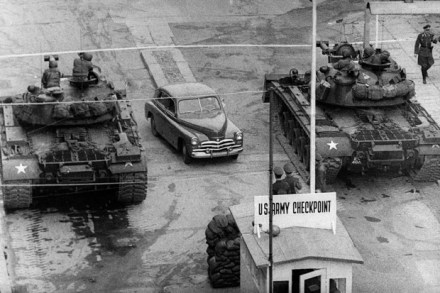
It would have been easy enough to imagine the 25th anniversary of the Eastern European revolutions being marked with a conference on liberty held in honour of Lady Thatcher — a conference which was held this week. But that is just about the only thing which could possibly have been foreseen from the vantage point of a quarter of a century ago. Who could have predicted then that the stream of Eastern European migrants flooding westwards in the hope of a better life, so welcomed then in their Trabants, would come to be seen so negatively that the desire to keep them out caused the rise of a fourth party in British politics? Even harder to foresee from the month of Tiananmen Square was the economic rise of China.

The new Iraq war

[audioplayer src="http://traffic.libsyn.com/spectator/TheViewFrom22_12_June_2014_v4.mp3" title="Former solider Tom Tugendhat and Fraser Nelson discuss ISIS in Iraq" startat=1758] Listen [/audioplayer]Seven weeks ago, Barack Obama proclaimed that ‘it’s time to turn the page on more than a decade of war’. The people of Iraq do not have this option. They’ve seen, in Basra, Iran-backed militias take on and defeat the British military. They’ve seen highly effective jihadis, disowned by al-Qa’eda for their brutality, take control of a major city, Fallujah, just 40 miles from Baghdad. This week they have seen their second city, Mosul, fall to that same band of psychopaths.

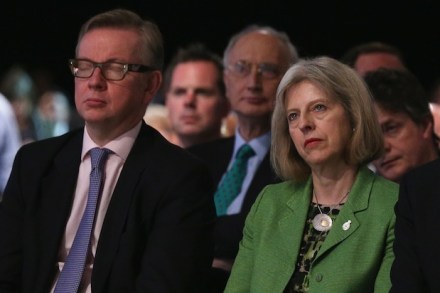
Now it’s Gove vs May – will Tory wars ever stop?

[audioplayer src="http://traffic.libsyn.com/spectator/TheViewFrom22_5_June_2014_v4.mp3" title="Zac Goldsmith, Chris Skidmore and Fraser Nelson discuss the latest Tory wars" startat=40] Listen [/audioplayer]Modern Conservatives seem to be allergic to success. Every time things are going right, the party spasms. Sir John Major’s government nurtured a remarkable economic recovery, yet was beaten after its infighting appalled voters. In opposition, David Cameron acquired a habit of blowing opinion poll leads — a habit he did not, alas, shake off in time for the general election. And now, just as a Conservative victory at the next election looks likely, the party has decided to lose its head again.

Europe’s extremists aren’t really on the right

This week, the European parliament took a strong lurch to the left. That is not quite the story that you may have read elsewhere — with most headlines stating that Europe has taken a lurch to the right — but it is the inevitable conclusion if you analyse the results from Sunday’s election from the perspective of what most people in Britain understand to be the left-right divide. Take any political issue in Britain, from schools to public spending, and the left-wing position is generally taken to mean one of greater state intervention, greater command of the economy by government. The right-wing position is taken to mean one of smaller government, freer markets, less regulation.

The slow death of Nato

The Cold War was won by 26 words contained within article five of the Treaty of Washington, which founded Nato in 1949: ‘The Parties agree that an armed attack against one or more of them in Europe or North America shall be considered an attack against them all.’ There was no wriggling and no qualification. The message to Stalin was perfectly clear: you nibble at one inch of Western Europe and you won’t just get an ad hoc response from war-weary Europeans; you will have to face a nuclear-armed Uncle Sam. The last time Britain held a Nato summit, in 1990, the organisation was triumphant.

Why does Britain’s fight for religious freedom stop at Dover?

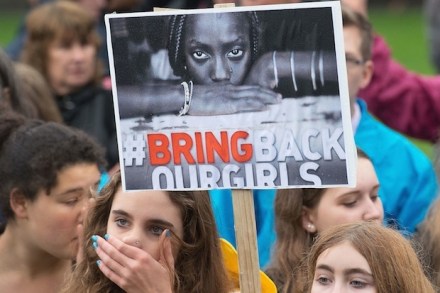
‘We don’t do God,’ was Alastair Campbell’s put-down when his charge, Tony Blair, was tempted to raise the issue of his faith. Unfortunately, it seems to have become the motto of David Cameron’s government. It is a month now since 276 girls were kidnapped from a school near the town of Chibok in northern Nigeria, and still the Foreign Office’s statements on the crisis read like a deliberate exercise in missing the point. ‘Continuing murders and abductions of schoolchildren, particularly girls in Nigeria by Boko Haram, are a stark reminder of the threat faced by women and girls in conflict-prone areas,’ Mark Simmonds, minister for Africa, said this week. ‘Young children are being denied universal freedoms such as an education.

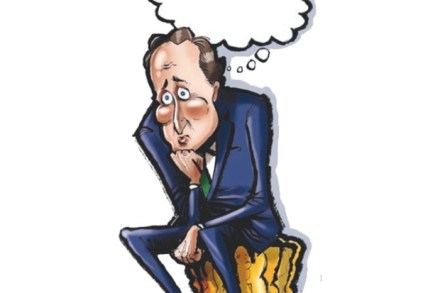
What is David Cameron’s big idea?

[audioplayer src="http://traffic.libsyn.com/spectator/TheViewFrom22_8_May_2014_v4.mp3" title="James Forsyth and Isabel Hardman look forward to the general election next year" startat=766] Listen [/audioplayer]In almost a decade as Conservative leader, David Cameron has tended to avoid talking about his political philosophy. He has presented himself as a pragmatist, suspicious of anything ending in ‘-ism’ — and the very opposite of a swivel-eyed ideologue. There is something to be said for this, but it raises the great question: what is a Conservative government for? There was no clear answer at the last election and so no clear result from that election. Voters had turned away from Labour, but were not quite sure how their lives would be better under the Conservatives.

A shameful U-turn at the National Trust

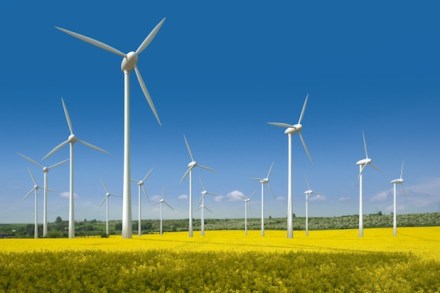
What has happened to Dame Helen Ghosh? Last October the director-general of the National Trust seemed prepared to stand against the green orthodoxy which exists in the public and voluntary sectors. She declared that she had an ‘open mind’ on fracking, while she rejected the case for wind farms on the Trust’s land. Her approach was entirely logical. The Trust’s job is to guard the aesthetic integrity of the landscapes which it has bought with its donors’ money, or been gifted, in order to preserve. Not to deface this land with 300 ft-high wind turbines that generate pitifully little electricity. This week, however, Dame Helen and the National Trust appear to have done a double backflip.

How to lose Scotland

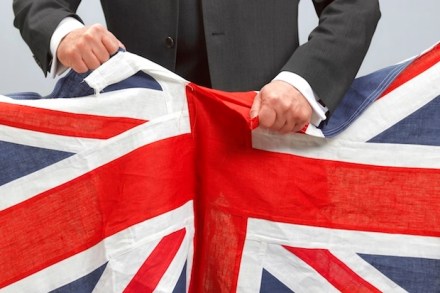
[audioplayer src="http://traffic.libsyn.com/spectator/TheViewFrom22_24_April_2014_v4.mp3" title="James Forsyth and Alex Massie explain why we need more optimism in Scotland and Westminster" startat=1538] Listen [/audioplayer]For centuries, the possibility of Scottish independence seemed so remote as to be laughable. Until recently the nationalists seemed quixotic, rather than menacing. Now, however, we are facing the very real prospect of a ‘yes’ vote in the Scottish referendum in September, which would in all probability result in the resignation of David Cameron as Prime Minister. An ICM survey published at the weekend found that 48 per cent of voters who have made up their minds intend to vote for separation. The stakes are terribly high.

Vladimir Putin knows what he stands for. Do we?

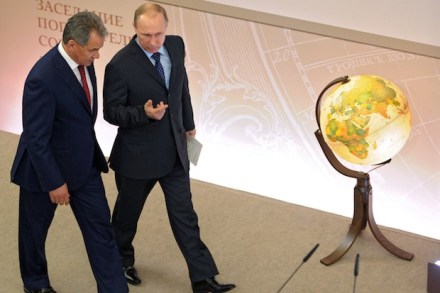
Possibly because his oratory is no match for his much-displayed pectoral muscles, the speeches of Vladimir Putin are seldom reported at length in the West. But as a means of understanding the manoeuvres in eastern Ukraine this week, there is no better starting point than the speech he made to the Duma when the Russian parliament annexed Crimea. Lest anyone thinks his words have been enriched by an over-imaginative reporter, the translation is provided by the Kremlin itself.

It’s time to stop the omnishambles – and send Lynton Crosby to No. 10

[audioplayer src="http://traffic.libsyn.com/spectator/TheViewFrom22_10_April_2014_v4.mp3" title="James Forsyth and Isabel Hardman on Maria Miller's resignation" startat=1057] Listen [/audioplayer]Yet again, the Conservative party has reminded us that it is quite capable of losing the next election. The events leading up to Maria Miller’s resignation are entirely consistent with a party that is so gauche, so accident-prone, so surprised by basic news events that it can make Ed Miliband seem positively presidential. The government had intended this week’s political news to be about its success on welfare reform. Instead, the theme has been one of Tory chaos, as MPs publicly debated the survival of the Culture Secretary before she eventually chose to walk the plank.

François Hollande’s France is a preview of Ed Miliband’s Britain. And it’s terrifying

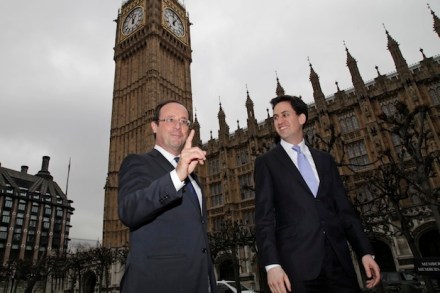
François Hollande and Ed Miliband could be political blood brothers. Neither has held down a job outside politics for any serious length of time. Both have been political bag carriers, graduating to apparatchiks. Both have tried to compensate for their essential blandness by adopting radical left-wing policies. Both now pose as socialists, and tout genuinely big (if dangerous) ideas about capital, labour and society. The biggest difference between them is that Hollande won an election, and has been able to put his politics into practice. So we can look to France to see the kind of future which may await Britain if, as the pollsters and bookmakers believe, Miliband is just over a year away from 10 Downing Street. It is frightening.

Putin’s aggression is the price of western weakness

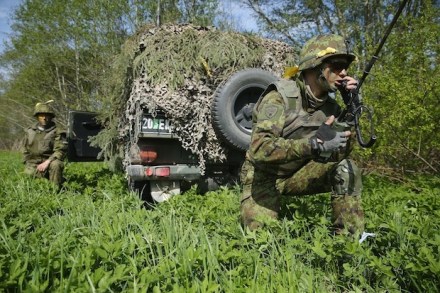
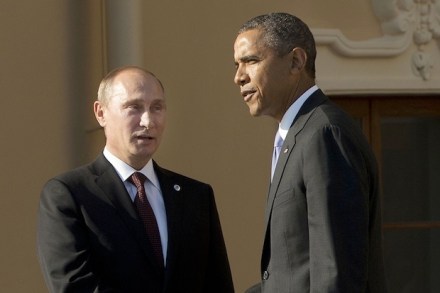
One cannot legislate for a quiet world. When a former Princeton University college professor was elected president of the United States, he joked before his inauguration that ‘it would be the irony of fate if my administration had to deal chiefly with foreign affairs’. That was Woodrow Wilson, speaking in March 1913. Similarly, the Hawaiian-born Barack Obama came to office with little interest in what lay over the Atlantic. He wanted to be the Pacific president, more concerned with Asia than the squabbles of the old world. Fate, it turned out, had other plans. This week Obama has found his visit to Europe dominated by talk of Russian militarism — and has ended up almost begging his Nato allies to do more to address the problem on their doorstep in Ukraine. Fat chance.

George Osborne’s pensions revolution

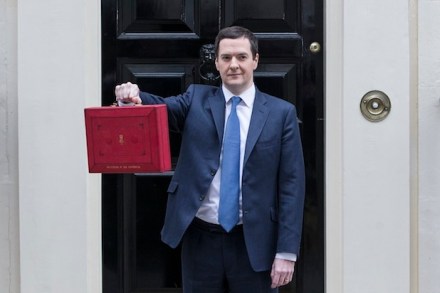
[audioplayer src="http://traffic.libsyn.com/spectator/TheViewFrom22_20_March_2014_v4.mp3" title="Fraser Nelson, James Forsyth and Isabel Hardman discuss the 2014 budget" startat=749] Listen [/audioplayer]It is easy to see why George Osborne seemed so confident ahead of the Budget. His radical reform of the pension system, allowing people far easier access to their pension pots, will not only help the retired (in the short term) but will raise money for the government, as it taxes what they spend. The Chancellor boasted that this was the biggest single reform to the pension system since the 1920s, and he has a point. Until now, the system had operated on the premise that people should save, and that banks normally offer reasonable rates of interest.

Why British mothers need a tax break

Next week’s Budget marks George Osborne’s last chance to make a game-changing reform before the next election. The Chancellor will have his boasts ready: he’ll say that Britain has the fastest growth of any developed country. What he won’t say is that no developed country has needed to pile so much debt onto its citizens to buy this growth. Statistics about GDP are not much use if the average British breadwinner can put less food on the table than five years ago. To make a proper recovery, something fundamental needs to change in the way the British economy is run. Where Osborne has had the courage to change the Labour system he inherited, it has worked.