Leading article

Good on you, Google – in praise of tax avoiders

Anyone who googled ‘tax avoidance’ this week will have been confronted (between adverts for accountancy firms) with endless stories about Google’s own tax avoidance schemes. If the company’s reputational management team was striving to stem the flood of bad publicity, it was not succeeding. Salvation for -Google arrived only when Apple’s tax avoidance became the big story instead. That is what the internet has created: a sometimes frightening, uncontrollable world in which information flows from place to place almost instantly and (mostly) unimpeded. Few would deny, however that the internet has had a benign and enriching influence on our lives overall.

Why can’t Ed Miliband accept that Labour voters want welfare reform?

David Cameron, it has been argued this week, has become detached from the views of Conservative voters on Europe. Amid the noise on the EU referendum, however, comes more evidence that it is Ed Miliband who has the greater problem of detachment from the views of his party’s supporters. While the Labour leader continues to battle on against welfare reform, a report from the Joseph Rowntree Foundation reveals just how far his voters have moved away from the idea of a redistributive welfare system as a force for good. Miliband’s problem is that he seems to believe he will be facing Mrs Thatcher at the next election. His strategy is built around fighting a Conservative party that is perceived to be harsh on the poor.

Lord Lawson’s exit

Lord Lawson’s announcement that he intends to vote for Britain to leave the European Union has been interpreted by some as reinforcing demands that David Cameron holds his referendum this year or next, rather than 2017. But it does no such thing. Follow Lawson’s arguments and the logical conclusion is that the best chance of securing a British exit from the EU is for a vote to be held as planned, in four years’ time. As the Prime Minister has said in a letter to MPs, he is powerless to bring in a vote while in coalition because the Liberal Democrats are so vehemently against it. Nick Clegg’s commitment to the Euro project is such that he would not allow it to be threatened by giving the public a say.

The hidden shame of Britain’s crime statistics

The press, declared Lord Leveson, must not be allowed to mark its own homework. There is one profession, however, which the government seems quite happy to allow to judge its own success. Every few months we are presented with the latest set of crime statistics and invited to believe that crime is falling, clear-up rates are improving and so on. It would be much more convincing if the figures for recorded crime were not themselves compiled by the police — a group with a rather obvious vested interest in presenting those figures in the best possible light. A set of figures teased out of the police this week presents a different picture of police clear-up rates. Constabularies appear to have decided that now even a caution is too harsh a punishment for thugs.

Scotland is an ingenious country saddled with the most witless politicians in Europe. Why give them more power?

It would be all too easy this week to argue that the case for Scottish independence is falling apart. Alex Salmond is an able politician and a peerless mischief-maker, but he tends to fall mute when confronted with the myriad contradictions of his own policies. It happened this week, when George Osborne said that it is ‘unlikely’ that the rest of the UK would enter into a formal currency pact with an independent Scotland. No matter, says Mr Salmond, an independent Scotland would use sterling anyway. This would be a strange form of independence. It would reduce Scotland to the status of Panama, which uses the US dollar without the approval of the US government. It is not proving a happy arrangement for the Panamanians.

Britain and America face a new terror threat: the lone wolf bomber

The runners who will gather for the London Marathon this weekend will converge on the greatest target in the world. Winston Churchill was the first to see the problem. ‘With our enormous metropolis here… [we are] a kind of tremendous fat cow, a valuable cow tied up to attract the beasts of prey,’ he told the Commons in 1934. But ‘we cannot possibly retreat, we cannot move London.’ New enemies, from the IRA to al-Qa’eda, have come to do their worst — but since the London Underground bombing of 7 July 2005 none has succeeded. The average British urbanite would be forgiven for thinking the threat has subsided. It has not. The atrocity at the Boston Marathon this week is a reminder that such threats never vanish — they just get intercepted.

Mrs T’s unfinished business

Soon after Margaret Thatcher was elected leader of the Conservative party she came for lunch at The Spectator and our then proprietor, Henry Keswick, wanted to offer his congratulations — and his advice. It was time to crush the trades unions, he told her. ‘Mr Keswick,’ she replied. ‘You have spent the past 14 years in Hong Kong, where such things may be doable. I have spent them in Britain, where things are very different.’ She was advocating a simple principle: practicality comes before ideology. The only point in fighting battles is to win them. Her victories were so decisive and spectacular that it is possible — as we have seen in the last few days — to dwell almost entirely on them (and those who didn’t like them).

George Osborne’s relish over welfare reform risks recontaminating the Tory brand

For the past few weeks Ed Miliband has repeated the words ‘bedroom tax’ ad nauseum. The average voter may think that such a thing exists. His obsession makes little sense without historic context. The last time a Labour opposition succeeded in attaching the word ‘tax’ to something which a Conservative government preferred to call something else was in 1990 when the Community Charge became almost universally known as the Poll Tax. Labour’s strategy then, depicting the Conservatives as taking sadistic pleasure in trampling upon the poor and weak, had a devastating effect. In those days, Labour posed as the party of compassion — and portrayed the Tories as economic obsessives who would crush the poor through the blackness of their hearts.

Twitter vs Easter

‘Distracted from distraction by distraction’ was one way in which T.S. Eliot described the inhabitants of ‘this twittering world’ in his Four Quartets. Eliot’s words seem more accurate today than even he might have expected. With the apparently ceaseless intrusion into our lives of permanent media feeds, gossip reported as news and news reported as gossip, it has never been easier to become lost by, and in, distraction. Not to mention the twittering. Easter briefly quietens the babble. Unlike Christmas, it’s a story that doesn’t lend itself to much commercial fuss: no kings or presents. Easter is a story of sacrifice, torture, abandonment and death — and, through it all, triumph over that death.

The empty Budget

Dangerous, unfair, verging on kleptomania: the bailout deal proposed by the EU at the weekend and rejected by Cyprus MPs on Tuesday is everything it has been described as over the past few days, and worse. Now it has been established that the EU views bank depositors as a potential piggy bank to be raided at whim, it is hard to see why anyone would keep significant quantities of cash on deposit in European banks. We are back where we started in 2007, with the threat of Northern Rock-style bank runs across the Continent. Yet the proposed raid in Cyprus is really only different in perception from what is being imposed by stealth on British savers. In his Budget, George Osborne admitted how badly his plans are going: he’s spending far more than he intended and receiving far less.

Justin Welby and the welfare state

From Robert Runcie’s attack on Tory Pharisees to Rowan Williams’s missives on the Iraq war, the ecclesiastical opposition housed in Lambeth Palace has in recent times been a frequent source of unease to the government of the day. If any ministers were hoping Justin Welby would be a quieter presence than his predecessor, they were disabused of this notion last weekend when, before even waiting for his enthronement, he backed a letter signed by 43 bishops attacking welfare cuts. The letter claimed that the proposed changes would throw 200,000 children into poverty. It is understandable that the new archbishop felt obliged to sign the letter: this peculiar way of viewing child poverty has been woven into the Lambeth creed under Rowan Williams. It is an old trick.

If David Cameron wants to save the NHS, he should sack David Nicholson

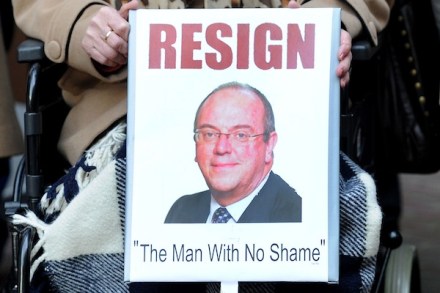
Twenty-five years ago, when he had left the Communist party and taken over as chief executive at Doncaster Royal Infirmary, Sir David Nicholson made a point of promising his staff a ‘job for life’. He has certainly stuck to his ideology. This week he admitted his part in the Mid Staffordshire hospitals scandal, in which up to 1,200 patients died from poor care and neglect. He confessed that as chief executive of the Shropshire and Staffordshire Strategic Health Authority — the body which was supposed to oversee Stafford Hospital — he had failed to notice its high death rates. And yet still he appears to believe that he has the right to stay as NHS chief executive for as long as he likes.

Little Britain

The foreign news pages read increasingly like some terrible satire on western military decline. Two years ago French and British forces, with the help of the US Navy, managed to help Libyan rebels topple Colonel Gaddafi. This year, the French needed British support to go to war against some tribesmen in Mali. It was a successful operation, but the ‘Timbuktu Freed’ headline rather summed up the extent of European military power today. The French have only two drone aircraft (the Americans have hundreds) and had to drop concrete bombs on Tripoli when they ran low on real ones. As the foreign policy rhetoric of our media and political leadership grows, the contrast with the resources grows starker.

Taxes, taxes, everywhere

What have obesity, misbehaving banks, unaffordable London housing and farting cows all got in common? They are all problems which, according to various campaigners over the past week or so, can be cured through the imposition of new taxes. Those calling for fiscal therapy included the Academy of Medical Royal Colleges, which suggested a 20 per cent levy on sugary drinks, the Liberal Democrats, who want wealthy home-owners to be subjected to a new mansion tax, and the Swedish Board of Agriculture, which wants a levy on meat to reduce methane production from livestock.

Bonfire of the Establishment

In September 1955 The Spectator’s political commentator, Henry Fairlie, coined a term to describe the way in which Britain works which has been used ever since. The ‘Establishment’, he said, was the real mechanism through which power was exercised in this country. The elites of the business, political and media worlds wielded power via a ‘matrix of official and social relations’, which varied from the banks to the director-general of the BBC to ‘divinities’ such as Violet Bonham Carter (Baroness Asquith of Yarnbury). The social and economic upheavals of the following decades only caused this Establishment to regenerate. But it has never faced an existential threat — until now. The Establishment is in chaos.

The defender of faith

If the secret of success is to follow failure, then Justin Welby has had the perfect start as Archbishop of Canterbury. He was appointed at a time when the Church of England’s efforts to reach a conclusion on women bishops have collapsed and when its pews were emptying at the fastest rate in recorded history. It has fallen to a former oil company executive, a softly spoken Old Etonian with an unusual appetite for danger, to move to Lambeth Palace. His mission is not to run the church, but to save it. By some measures, Britain is the least religious country in the developed world. Some 64 per cent of us do not set foot in any place of worship in a year, according to the British Social Attitudes survey, a higher proportion than anywhere else in the world.

Bad care

When the letters ‘NHS’ appeared to the world above the dancing nurses at the Olympic opening ceremony, many in Britain will have imagined two darker words hovering alongside: ‘Mid Staffs’. Few of those affected will have been able to forget what now seems to be one of the greatest scandals in the history of British health care. Its horrific details will be laid out in full next week when Robert Francis QC publishes his report into Mid Staffordshire NHS Foundation Trust. What we already know about the level of care at the Trust is shocking — and goes far beyond patients left in soiled bedclothes.

Cameron speaks

It was almost worth the wait. The substance of David Cameron’s speech on Europe was disclosed in this magazine a fortnight ago, but his delivery was excellent. He offered a clear-headed and almost touchingly optimistic vision of the type of union that the British public would find acceptable: one based on free trade, not bureaucratic diktat. One where power can flow back to countries, not be leached from them. And one founded on genuine popular consent, rather than broken promises and dodged referenda. Such a settlement would be nothing more than what the British signed up to when last consulted. The Prime Minister based his speech on the most important point: that the Europe question is no longer about political factions. It is about the people.

Just the tickets

Kingsley Amis was never a fan of the Arts Council. Writing in this magazine almost 30 years ago, he described it as a ‘detestable and destructive body’ whose grants and bursaries ‘in effect pay producers, painters, writers and such in advance’. This, he wrote, ‘is a straight invitation to them to sod the public, whose ticket money they are no longer obliged to attract, and to seek the more immediate approval of their colleagues and friends instead.’ Thus state funding ends up strangling the very culture it purports to foster, leaving the country poorer artistically as well as financially.

Troubles ahead

If the Belfast riots were happening in any other city in the United Kingdom, there would be uproar. For almost five weeks there have been violent clashes each night. Live rounds have been fired on city streets, politicians’ houses set ablaze, petrol bombs thrown at police and over 60 officers hurt. David Cameron seems to be doing his best to pretend that nothing is happening. The Prime Minister, like most in Britain, appears to be clinging to the lie that the 1998 Good Friday agreement somehow brought peace to Northern Ireland. There is sadly nothing anachronistic about the loyalist riots and they are only tangentially related to the alleged cause — the number of days in which the Union flag is flown over City Hall.