Leading article

Cameron’s new mission

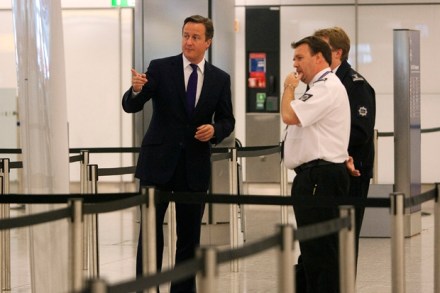
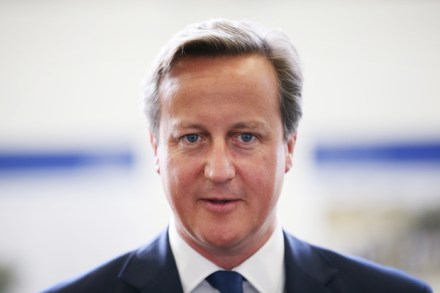
As David Cameron lined up beside Nick Clegg and Ed Miliband at the Cenotaph on the day after the general election, he said that he had thought he would be the one writing a resignation statement that day. He may also have imagined how history would have judged him: as a so-so Tory leader who didn’t quite manage to win an election against the reviled Gordon Brown and was booted out after one term. A leader who was good at balancing a coalition but who didn’t stand for (or achieve) very much himself. It would have been a miserable legacy. Luckily he now has the chance to reshape it. The political landscape he surveys has changed utterly. Of all the political parties, only the Conservatives and Scottish Nationalists are intact. The Labour party is settling down for a long civil war.
Bond villains

After working for Bill Clinton, the political strategist James Carville said he had changed his mind about where power really lies. ‘I used to think that if there was reincarnation, I wanted to come back as the President or the Pope,’ he said. ‘But now I would like to come back as the bond market. You can intimidate everybody.’ By this he meant that every political leader, no matter how powerful or radical, lived in fear of going too far into debt, lest the market hiked up interest rates, tipping the government into collapse. Alas, that’s no longer the case. This magazine ridiculed Gordon Brown for claiming to have ‘put an end to boom and bust’.

The right choice

When election day dawns, it’s worth bearing in mind that two million more people will be going to work than when David Cameron came to power. On an average day in Britain, there are 1,500 fewer reported crimes than there were before Theresa May was made Home Secretary. Some 2.2 million pupils now attend independent schools within the state system — schools given freedom through Michael Gove’s reforms. There is nothing theoretical about the advantages of Conservatism: they can be seen in classrooms, workplaces and streets all over Britain. But all this progress could be brought to a halt within the next week. If Ed Miliband is elected, it will not be the richest who suffer most. They may pay more in tax — but, on the whole, they can afford to.

The other union

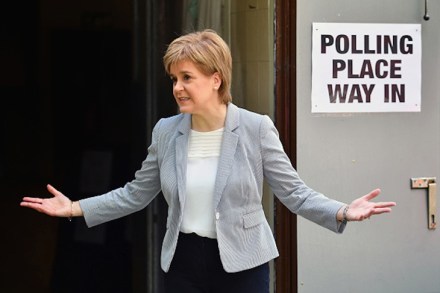
The election campaign is becoming increasingly dominated by a small party whose raison d’être is to preach independence from membership of a union it claims is hindering national ambition. But the party is not Ukip, which had been expected to play a big role in this election. It is the Scottish National Party, which seems ever more likely to hold the balance of power after 7 May and is determined to use it ruthlessly to its own advantage and to the furtherance of its sole objective: the dissolution of the United Kingdom. Nicola Sturgeon has been the only party leader talking about the virtues of national self-government, and she has met with reasonable success. No one else seems to be trying it. Nigel Farage is fighting the campaign as if it were a by-election in South Thanet.

A deadly silence

One Friday, 28 people were rescued by the Italian coastguard when the boat on which they were fleeing Libya capsized in the Mediterranean. Arriving homeless and without prospects in a strange land, these were — relatively speaking — the lucky ones. As many as 700 are thought to have drowned. Add them to the tally. On Monday, another boat capsized with 400 souls feared lost. Last year more than 3,000 died in the Mediterranean trying to get to the West. It has become a phenomenon of our times. We do not hear much about life in the supposedly liberated Libya, but the fact that even immigrants into Libya would rather risk death than stay there gives a fair idea.

Swing time

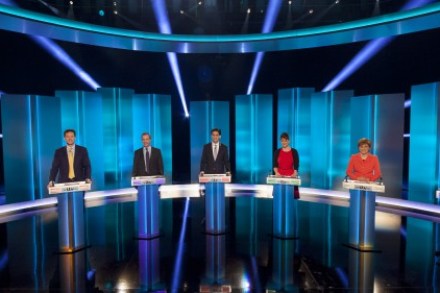
The age of two-party politics is over: we know that because everyone keeps saying so. We are entering an era of coalitions, apparently, where compromise is king and a wider variety of views will be represented in parliament. These barely comprehensible seven-way television debates are the future, we are assured, and decisive general election results a thing of the past. Look deeper and this analysis falls apart. Even now, Labour and the Conservatives between them have about two thirds of the vote, just as they did at the last general election. What we are witnessing is the collapse of the Liberal Democrats, who have been reduced — on a bad day — to being the UK’s sixth most popular party.

Why aren’t the Tories winning?

When launching the Conservatives’ campaign this week, David Cameron told party activists that the general election was ‘on a knife edge’. He is right. His chances are little better than 50/50, which is terrifying given the calibre of his opponent. The Prime Minister is entering this election with a list of achievements matched by almost no other leader in Europe. Yet he’s struggling to beat one of the least popular opposition leaders in modern times. What has gone wrong? It’s not the economy. Employment stands at a record high, and most voters will never have lived through such low inflation as we have today. The price of food is actually falling, as is the price of petrol; it costs £18 less to fill up an average car than it did 18 months ago.

How to fix our defence budget mess

With the exception of 1983, when Michael Foot promised unilateral nuclear disarmament, defence has played little role in modern election campaigns. This is not least because the two main parties appear to have developed a non-aggression pact. They have agreed to heap praise upon the armed forces and commit them to ever more frequent foreign campaigns — while simultaneously nibbling away at the defence budget to fund programmes which offer more instant gratification to the electorate. This week, as the news emerged of Russia’s plan to lease 12 long-range bombers to Argentina, the Defence Secretary, Michael Fallon, announced the results of the latest review into how we protect the Falkland Islands.

The Conservatives should be the party of immigrants — and here’s how they can be

For a long while, the Conservatives have been puzzled about their lack of popularity among immigrants. In theory, the Conservative party should be the natural home of new voters who are ambitious, entrepreneurial, hard-working and family-orientated. The immigrant vote — to the extent it can be considered a coherent block at all — ought to be fertile Tory territory. By and large, these are families who have moved to Britain to get ahead and to avail themselves of what Michael Howard called ‘the British dream’. Yet at the last election fewer than one in five ethnic minority voters endorsed Conservative candidates and the party is unlikely to fare much better in May.

James McAvoy is wrong – the arts are better off without subsidy

The season of cringe-making acceptance speeches at arts awards ceremonies is nearly over, thank heavens. But it hasn’t passed without a most fatuous contribution from James McAvoy as he accepted a nomination for best actor at the Olivier Awards this week. He should have stuck to sobbing and thanking his agent. Instead, he launched a feeble and trite attack on the government for supposedly thwarting social mobility by failing to fund the arts. According to McAvoy’s thesis, ‘Art is one the first things you take away from society if you want to keep [people] down.

If you really love the NHS, you know it needs to change

To adapt Aeschylus’s aphorism on war and truth, the first casualty in a general election campaign is objectivity. Over the next eight weeks NHS staff can expect nothing but saccharine praise from politicians who are falling over themselves to say how wonderful the health service is, how committed they are to it. The Conservatives may revive their ‘NH-yes’ slogan, promising to safeguard its budget. Labour proposes to protect it from what few reforms the Conservatives promise and even Ukip is posing as ‘the party of the NHS’. A true friend of the NHS, however, would accept that all is not well, and that ‘protecting’ its current structure is an act of cruelty rather than kindness.

The real problem with our MPs: they’re obsessed with the super-rich

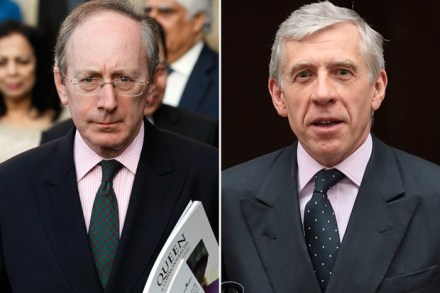
Had the public been asked, before Monday morning, to identify two MPs who stood for honesty and decency, the names Jack Straw and Sir Malcolm Rifkind would have been prominent among their replies. Both have served as foreign secretary, Straw also as home secretary and justice secretary. Neither seemed unduly driven by personal ambition, nor were they the worst offenders in the expenses scandal. Both are probably right in saying that they have not broken any rules when discussing work opportunities with employees of a Chinese company who turned out to be undercover Daily Telegraph reporters. But it is astonishing that both seemed to believe this sufficient to let them off the hook.

Let Greece leave the eurozone

To listen to Greek government ministers addressing the outside world during their breaks from negotiations with eurozone leaders this week, it would be easy to form the impression that Greece had a mighty economy upon which all other eurozone countries were pathetically dependent. ‘Europe is going through the difficult process of understanding that Greece has a new government committed to changing a programme that has failed in the eyes of everyone who doesn’t have a vested interest,’ said finance minister Yanis Varoufakis. The reality is that Greece is the dependent country, propped up by its creditors, and it is Greek government ministers who are having trouble in understanding the situation in which they find themselves.

In this election, won’t someone please weaponise defence?

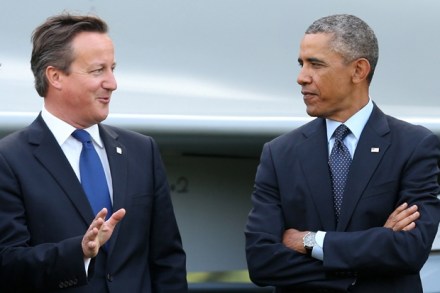
Britain is forfeiting its position on the world stage. With no national debate, we are surrendering our claim to be a major player in international affairs and undermining the Atlantic alliance that has kept Britain and Europe secure for 65 years. In these circumstances, it is easy to understand why Barack Obama has felt obliged to warn David Cameron of the damage he would be doing to the special relationship and to Nato if he failed to commit Britain to spending the bare minimum on defence. The Prime Minister has given several spending pledges — on education, health and overseas aid — so his silence on defence speaks volumes.

Proof that the schools revolution isn’t over

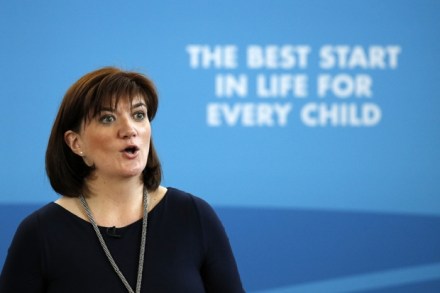
[audioplayer src="http://traffic.libsyn.com/spectator/TheViewFrom22_5_Feb_2015_v4.mp3" title="Isabel Hardman and Fraser Nelson discuss the plans for 50+ new free schools" startat=1694] Listen [/audioplayer]For those who assumed that the removal of Michael Gove as Education Secretary marked the end of the Conservatives’ scholastic reforms, this month may hold a surprise. More free schools are coming, The Spectator understands: at least 50 of them. Gove’s successor, Nicky Morgan, is due to announce the first of three waves this year. If the Tories win the election, Britain might have 150 more free schools by the end of the year. That means thousands more pupils enjoying independent education within the state system.

Calling the Green party socialist is an insult to socialists

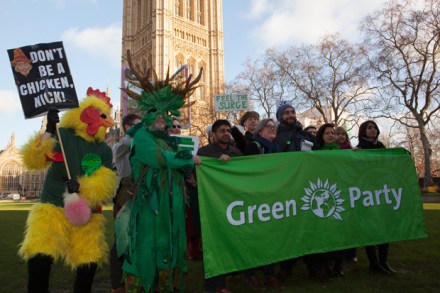
The Green party has been likened to a watermelon: green on the outside and red on the inside. But that is to do a huge injustice to generations of socialists and communists. Misguided though they were in many of their ideas, nobody could accuse them of actively seeking to make society poorer. That, however, is the unashamed aspiration of Natalie Bennett and what has become the fastest-growing political party in Britain. It is quite possible that a good proportion of the 9 per cent of the electorate who say they are planning to vote Green in May are unaware of this, but it is there in black and white (‘policy EC201’) on the party’s website.

Don’t believe the gloom-mongers: deflation will be good for Britain

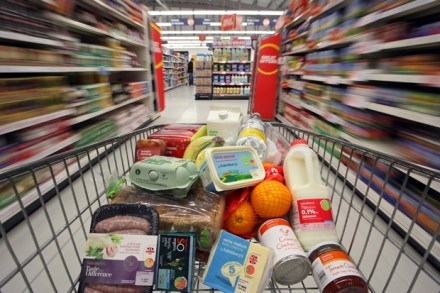
Campaigning in Putney in 1978, Mrs Thatcher famously took out a pair of scissors and cut a pound note down the middle, telling her audience that the remaining stump represented what was left of the pound in your pocket after four years of Labour and high inflation. David Cameron may soon be able to repeat the stunt — except rather than cutting a note in half he will be able to stick a bit on the end to represent the extra buying power being granted to consumers courtesy of deflation. Inflation on the government’s preferred measure, the Consumer Prices Index (CPI), has fallen to 0.5 per cent. With the price of crude oil slumping and a supermarket price war in full cry, it may well dip below zero in coming months. That is to say: the cost of living is about to fall.

David Cameron has a very strange idea of freedom

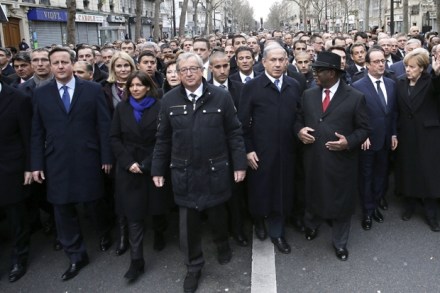
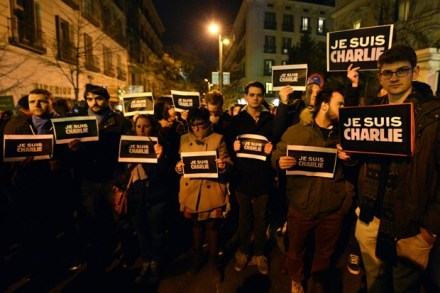
Last Sunday, David Cameron marched through Paris in solidarity, so it seemed, with those who stand up for free speech. Anyone who thought he meant it must now be crying out, ‘Je suis un right Charlie!’ Hardly had the march finished than the Prime Minister had rediscovered his other side: the one which reacts to terror by threatening yet more surveillance, more state control. He has promised to revive, in the Conservative manifesto, the ‘-snooper’s charter’ which would allow the state to retain indefinitely information about every email we ever send, every telephone call we ever make. Not only that. He added a further measure: he wants to ban all kinds of encrypted communications which the security forces struggle to decipher.

The attack on Charlie Hebdo is an attack on freedom

The French satirical magazine Charlie Hebdo lambasts, attacks and lampoons absolutely everybody. Its targets include all religions, all identity groups, minorities and majorities. In recent years it has been most prominent for its refusal to apply different treatment to Islam. It knew that carrying on with satire, in the name of free expression, carried a real danger — its office in Paris was firebombed three years ago on account of this, and it still carried on with its irreverence. On Wednesday morning, two gunmen went into the magazine’s office wielding Kalashnikovs and rocket-propelled grenades. Within minutes, 12 people were reported killed. The gunmen’s identity was unknown when The Spectator went to press, but there was not much doubt about what had happened.

What David Cameron must do to win (properly this time)

Almost exactly five years ago, the Conservatives fired the starting gun for a general election — and shot themselves in the foot. ‘We can’t go on like this,’ said the poster, next to a picture of an airbrushed David Cameron. ‘I’ll cut the deficit, not the NHS.’ What on earth did it mean? No one seemed sure. As early as January 2010, it was horribly clear: here was a muddled party, preparing to fight an election campaign with a muddled message. Little wonder it ended in a muddled election result. This time, it should be different. The Tories have a professional, Lynton Crosby, running their campaign. He should be able to point out the basics: a clear message is required, and it needs to be repeated.