Leading article

Britain’s jobs miracle proves there is no reason to fear technology

Another week, another set of economic figures that suggest the country is showing remarkable resilience while politics implodes. Rather than fall into recession, as so many predicted, the economy leapt forward in July. We now have the lowest unemployment for 45 years, an extraordinary figure. Income inequality is near a 30-year low. The confidence crisis that politicians are experiencing is not reflected outside of Westminster. There is little evidence to suggest that machines are taking people’s jobs. Instead, they are being used to do low-end tasks, freeing up humans to work in more complex, better-paid roles. We now have machines taking restaurant orders, checking people in at airports and fulfilling other functions inside various businesses.
The next election will be a referendum – on Corbynism

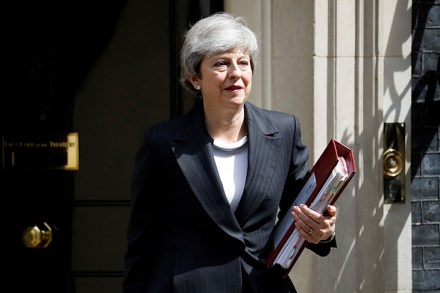
The next general election will have been precipitated by, and will inevitably be fought over, Brexit. Yet it will also be the fiercest battle of ideas for more than a generation. Britain must choose between economic liberalism and a command economy, between a smallish state and a domineering one. This would be a crucial choice at any time, but the implications of Brexit make it more so. Jeremy Corbyn supported leaving the EU in 1975 for the same reason he can’t quite denounce Brexit now: a parliament that takes back control can be far more radical. And his Labour party has plenty of radicalism in mind. Even though Labour occupies a lowly position in the polls, Corbyn remains overwhelmingly the main challenger to Boris Johnson and his warring Conservatives.

The G7’s doomed effort to preserve the hegemony of white power

When the G7 was first convened in 1976 it made sense for those countries to gather. In a world divided between democratic capitalism and authoritarian socialism, as well as between industrialised countries in the West and an almost universally poor ‘developing world’, the US, Japan, UK, Germany, France, Italy and Canada were the wealthy nations who could best solve problems. After the age of imperialism, a summit of the powerful seemed to symbolise a more enlightened way of doing things. More than four decades later, a meeting of the same seven countries is an anachronism. What right have Italy and Canada (respectively the world’s eighth and tenth largest economies) to be at the top table when China (second), India (seventh) and Brazil (ninth) are excluded?

To get a deal Boris needs to show (or fake) some humility

There were many Brexiteers who were urging Boris Johnson to travel to Washington before he went anywhere else, to underline that Britain’s most important relationship is with the United States. And if the EU felt nervous seeing the UK cosy up to America, so much the better. But the Prime Minister’s first visit was to Berlin, and then to Paris, to see if a Brexit deal can be negotiated and the needless disruption of a no-deal exit avoided. It seems, at present, a rather long shot. Theresa May famously said little in one-to-one meetings with European leaders. Boris Johnson can be a lot more forthright, and should speak with candour about his own lack of room for manoeuvre.

Where’s Boris?

Before Boris Johnson became Prime Minister there was widespread expectation that his government would be chaotic. It was thought that he would be good at articulating the broad sweep of government policy, but that his administration would quickly sink into turmoil. In the event, the opposite has happened. Three weeks on, the government appears to be running with almost military precision. Preparations for no-deal Brexit seem to be well under control, to the alarm of Philip Hammond, who had thought the task impossible. Yet the Prime Minister himself seems to have gone underground. He is not on holiday — his government is working all hours. But he has not been as big a feature of it as many expected.

Trading places | 8 August 2019

Comments by the former US Treasury Secretary Larry Summers this week, claiming that Britain will come off poorly in negotiations for a trade deal with the US, should not be surprising. He has previously declared that Britain’s vote for Brexit was ‘the worst self-inflicted policy wound that a country has done since the second world war’ so he would not want to be proved wrong by Britain doing well out of leaving the EU. But the reaction to his intervention has emphasised a peculiarity in attitudes towards free trade, from both Brexiteers and Remainers. Many of those who are keenest to assert the importance of free trade with the EU tend to retreat in fright whenever the prospect of a trade deal with the US is raised.

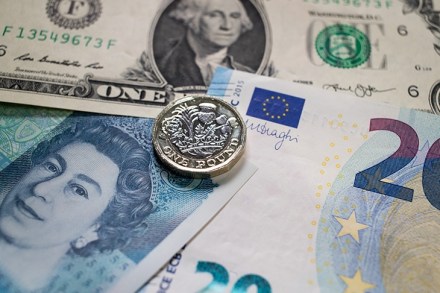
Sterling effort

In his first week as Prime Minister, Boris Johnson has shocked those who had assumed that he is a joker incapable of making any more progress than his predecessor. During his leadership campaign, he said that he would not settle for a modified version of the Brexit deal that Theresa May agreed and Parliament rejected three times. In office, he has been as good as his word and is refusing to start negotiations until the EU says it is willing to compromise. If it doesn’t, then we leave without a deal on 31 October. If many politicians are still in denial about this, the currency markets are not. A no-deal Brexit would put the UK economy in transition from being part of a European bloc into one governed by yet-to-be-signed free trade agreements, under World Trade Organisation rules.

Boris begins

It’s hard to think of a prime minister who has reached No. 10 with lower expectations. Boris Johnson has been dismissed as a philandering clown, a joker calamitously miscast as prime minister in a moment of national crisis. Obloquy has been hurled at him every time he has taken a new job — from mayor of London to foreign secretary. When he became editor of this magazine, his critics said putting The Spectator into the hands of such an oaf was like asking an ape to look after a Ming vase. At every stage, however, Boris’s critics have been confounded. His jobs change, but his style remains. His belief is that achievements speak for themselves, and voters understand that. He has been happy to be judged on his time as London mayor and on the Vote Leave campaign.

Wasted lives

Twenty years ago, the Scottish parliament was reconvened after a lapse of almost three centuries. The logic for devolution was clear enough: that Scotland has discrete issues, and ones that were not always solved by London government. Devolution would allow ‘Scottish solutions for Scottish problems’. There was, in Westminster, a feeling that MPs could worry less about these problems. Public health in Glasgow, previously one of the biggest problems in the UK, would be someone else’s problem. Let the MSPs see if they could do any better. The news this week should shock people on both sides of the border. Scotland has the worst rate of deaths from drugs in Europe, with numbers up by a shocking 27 per cent since 2017.

For the few

In some alternative universe the Labour party, as under Tony Blair in the mid 1990s, is busily preparing for government, its confidence boosted by a massive lead in the polls over a shambolic Tory administration. Back in this one, however, Labour is crumbling even faster than the divided and unpopular Conservatives. Remarkably, while the Tories have seen a collapse in their share of the vote to just 22 per cent, according to one poll this week, Labour has sunk to just 20 per cent. Just how it succeeded in throwing away such a remarkable opportunity to seize power is going to trouble its remaining members for decades to come.

A question of liberty

When the tanks were rolling into Tiananmen Square and the Cold War hadn’t yet formally come to an end, it seemed obvious: freedom and democracy were prerequisites for economic success. Yet over the past three decades, China has challenged that notion by creating a model previously unknown to the world: consumer capitalism combined with autocratic government. Under Xi Jinping’s rule, China’s new middle class now enjoys near-western living standards. So long, that is, as it does not question the legitimacy of its leaders. The success of the Chinese model has presented a conundrum for western governments: how to deal with a country that continues to have little regard for human rights and yet nevertheless offers lucrative opportunities for investors.

Ignoring Iran

Crises in the Gulf and Conservative leadership elections come around with unnerving regularity. It is not unknown for both to coincide — that happened in 1990, when Margaret Thatcher was overthrown in the lead-up to the first Gulf War. On that occasion, drama on the domestic front did not smother Britain’s response to the international crisis — unlike now. It is bizarre to have a US president threatening to ‘obliterate’ Iran while our Foreign Secretary hardly bothers to respond, preferring to pose with fish and chips and Irn Bru on the campaign trail.

Plan B | 20 June 2019

When Boris Johnson was appointed editor of this magazine two decades ago, an unkind soul said it was like ‘entrusting a Ming vase in the hands of an ape’. The remark encapsulated many people’s worst fears about the man who will almost certainly be Britain’s prime minister in four weeks’ time, if not before: that Boris is an irresponsible joker. Similar warnings were made when he was elected London mayor. His refusal to conform to type encourages a constant expectation of imminent disaster. What if Boris flops in No. 10? Even his supporters can’t be sure he won’t fail: his election as leader is a gamble from a party that believes its very survival is at stake.

Hard sums

‘Choice’ is a word that is used liberally in Conservative thinking — whether it be about schools, hospitals or consumer goods. It is when consumers have choice, goes the argument, that providers of goods and services are forced to up their game. Choice brings diversity, inspiring new ideas and allowing for their success. It is not clear that the same rule applies to Conservative leadership elections. Never before have Conservative MPs been presented with such a broad array of candidates. Ten made it to the first ballot, rather than the more usual four or five. It is hard to argue that the quality of the contest has improved as a result. On two of the most substantial issues — Brexit and the economy — there is a worrying paucity of ideas.

Playing chicken | 6 June 2019

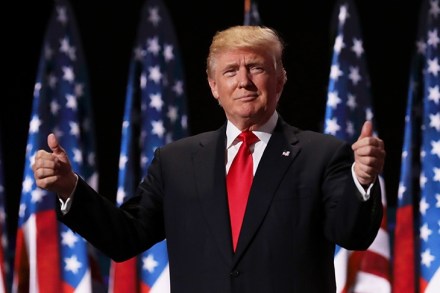
Why is it that free trade, which almost everyone agrees is good when conducted with other European countries, suddenly becomes something to be feared when it is proposed with the United States? What is it about American chicken which means that Britons who eat it happily enough when they are on holiday are supposed to fear it when it is imported? And if Americans can offer world-class, well-priced medical services to Britain through the National Health Service, how is that a threat to our social fabric? On his state visit to Britain this week, President Donald Trump reiterated his desire to do a ‘comprehensive’ trade deal with Britain. Given that we are leaving the EU in order to make our own way in the world, this is a prospect that ought to be welcomed.

The Trump card

The day after Britain voted to leave the European Union, Donald Trump arrived by helicopter at Turnberry, his golf course in Scotland. The financial markets were in crisis and David Cameron had resigned in a panic. The Dutch Prime Minister, Mark Rutte, said that Britain had ‘collapsed: politically, monetarily, constitutionally and economically’. The then candidate (still not even party nominee) Trump put it differently. ‘You just have to embrace it,’ he said. ‘It’s the will of the people. I love to see people take their countries back.’ Perhaps his advice should have been taken more seriously. Huge numbers of people, including many Americans, think that Trump is unfit for the office of president. But why do so many support him?

The end of May

This week’s European election was always going to be pointless, at least from a British perspective. It is possible that the elected candidates will never even take up their seats. In one important sense, however, the election campaign has been useful: as a reminder of where public opinion stands on Brexit. A few weeks ago, many believed that Change UK, the party founded by Labour and Conservative dissidents spoiling for a revocation of Article 50, would capture the public mood. Instead, another new political party would appear to have triumphed — a party set up with the sole purpose of expressing anger at the failure of Parliament to effect Britain’s departure from the EU on the date which had been set into law.

Mind the gap | 16 May 2019

This week the Institute for Fiscal Studies announced a five-year study into inequality in Britain, to be led by the economist Sir Angus Deaton, a Scottish academic who recently won the Nobel prize for economics. It is to be welcomed, because it will widen the scope of a debate that has been too narrow for too long. Britain’s problems with inequality stem not from an unfair distribution of income but from patchy provision of public services, which are often far better in wealthier areas than in poorer ones. As the IFS makes clear in a report to launch its initiative, income inequality in Britain is not rising — how-ever much the Labour party would like to tell us it is.

Monarchy matters

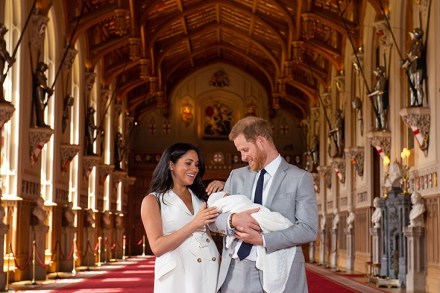
Strictly in terms of its implications for the succession, the arrival of the Duke and Duchess of Sussex’s son this week was not the most important of royal births. The boy has been born seventh in line to the throne, but that position can be expected to fall rapidly once the Cambridge children begin to marry. He is not born to be king, and may never even be granted the title of prince. Nevertheless, the birth has attracted wide attention and celebration, inspiring front-page headlines on foreign newspapers and eliciting interest in Britain from types of people who don’t normally care about royal events. Partly this is down to the new baby’s parentage.

How to lose elections

When a political party is in trouble, we see infighting, leak inquiries, resignations, mass loss of council seats, dismissals and botched attempts to depose the leader. But when a party implodes, something different happens: it loses the ability to defend or explain itself. An imploding party can and will lose any argument, no matter how strong its track record. The Tories entered this terminal stage under John Major after the disastrous local elections of 1995, which were followed by their landslide defeat of 1997. With the party now having had its worst set of election since 1995, it looks very much like they might be entering it again.