Leading article

With Sajid Javid gone, will Boris now start a Gordon Brown-style spending splurge?

The nature of the Johnson government is still not clear, but has become more so with the announcement this week that HS2 is to go ahead in its entirety. Until recently, it had seemed that the project would be, if not dropped altogether, cut back in order to rein in its ever-accelerating budget. This is what most Tory MPs,cabinet members and even the Chancellor had wanted. But instead, the Prime Minister has decided that it will be built in its full £106 billion form. Not only that, he threw in £5 billion for buses and cycleways, as well as the promise of a £39 billion high-speed line from Manchester to Leeds. And, perhaps, a £20 billion road bridge connecting Dumfriesshire with Northern Ireland. The ability to think big is generally a positive trait.

Boris must have the courage to spell out the true cost of ‘net zero’

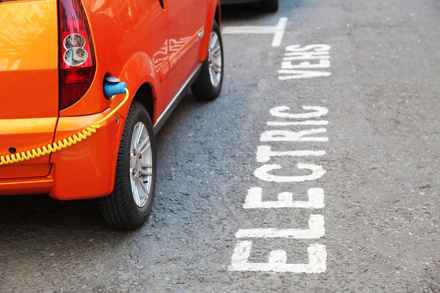
After being sacked as the chairman of the COP26, the UN climate conference which is to take place in Glasgow later this year, Claire Perry O’Neill did not lose any time in settling scores. Boris Johnson, she said, does not ‘get’ climate change. In a sense she is right — but not in the way she thinks. The once-sceptical Prime Minister has been acting with the zeal of the converted on climate change and is all set to achieve ‘net zero’ UK climate emissions by 2050. Whether he ‘gets’ what this promise will require is another matter. This week, for example, he posed with Sir David Attenborough in the Science Museum to announce plans for the coming COP26 summit, pledging that Britain will take global ‘leadership’ in cutting carbon.

Brexit is the start, not the end

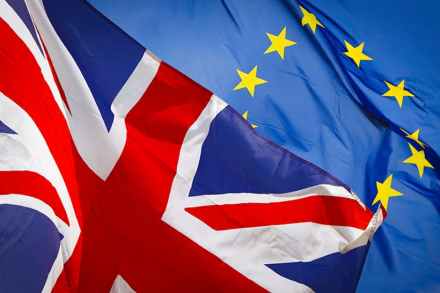
The moment of Britain’s departure from the EU was always likely to be an anticlimax, both for those who expect great things from Brexit and for those who had been braced for disaster. Departure day is not much of an event in itself, merely a moment at which new economic policies become possible. Thanks to the transition period and the Withdrawal Act, there is no cliff edge — at least not for now. Tough negotiations will begin again, but the Prime Minister has a chance to handle all this in a better, less divisive way than his predecessor. After leaving, Britain now takes on a new role: as the European Union’s strongest ally. Although the UK has opted out of the EU’s bureaucratic hierarchy, we remain part of Europe in terms of geography, culture, trade and outlook.

Britain’s misguided approach to asylum is threatening lives

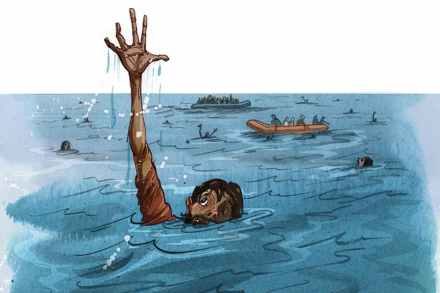
The news this week could easily have led with the deaths of 14 Afghan and Iraqi migrants in the English Channel, drowned as they attempted to reach Britain. In the event this didn’t happen, but only because their boat proved to be so unseaworthy that it capsized before they made it out of sight of the Belgian coast. All were able to swim back to the beach. This is the reality of people-trafficking: it is a callous industry whose operators care little for the lives of the migrants to whom they charge large sums for the promise of a new life. It is only three months since 39 Vietnamese migrants were discovered dead in the back of a refrigerated lorry at Tilbury. It is luck that has so far prevented a seaborne version of that disaster, but luck will not hold.

Treating oil companies as pariahs will kill off any green revolution

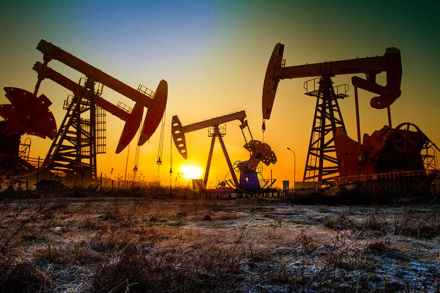
When fossil fuel divestment was merely a gesture by universities, the Church of England and the Prince of Wales it was easy to ignore; it is rather less so when the head of the world’s largest fund management company says that he is going to start ‘exiting investments’ in coal producers and other companies he claims represent a ‘high sustainability--related risk’. That is what Larry Fink of Blackrock, which manages £5 trillion worth of investors’ money, did in a letter to business leaders this week, citing last year’s climate change protests as evidence that attitudes were changing.

A big Tory majority. So where are the Conservative policies?

What is the point of a Conservative majority? The answer might once have been to implement Conservative policies. But now it’s not so clear. Budgets are normally the way to judge a government, but we didn’t have one last year. On 11 March, we will learn how Sajid Javid intends to govern the public finances and just how far the Tory government is able to take advantage of the unprecedented political opportunity. It will become clear whether the government sees this moment as a time for boldness, or caution. Leaving the European Union is a radical act, but its effect is mainly political. It will remove a constraint, but will not — in and of itself — make much of a difference. Whether Britain dives or thrives will depend on the decisions made in Downing Street.

Democracy redux: the lessons of 2019

Britain’s parliamentary democracy is easily mocked: the medievalisms, the men in tights, the ayes to the right. But it has been preserved because it tends to work. It focuses minds and makes order out of chaos. Yet again we have a general election result that almost no one predicted — and one that offers plenty of lessons for those with an eye to see them. The communities so often patronised as ‘left behind’, typically in northern and coastal towns, have now demonstrated that they are powerful enough to decide elections. During the Blair and Cameron eras they were written off as a declining demographic: older, poorer, less educated and often stuck in the past. The ‘modernising’ politicians, it was argued, needn’t worry too much about them.

Politics has fractured along new fault lines – those elected must repair the cracks

Boris Johnson stood for party leader as a One Nation Tory, he fought the campaign as a One Nation Tory and this is the agenda that has given him the largest Tory majority since 1987. Much is being made of the collapse of the Labour party’s vote, but something more profound is under way. The Tories are changing, and they have a message that was directed at – and understood by – a new cohort of voters. It has the potential to transform British politics. It’s wrong to say – as many do – that the phrase ‘One Nation Tory’ is senseless. Its meaning comes from Disraeli’s dictum, in Sybil, that Britain was divided into two nations: the rich and the poor.

This is the most important election in modern history – so vote, and vote Tory

Next week, voters will decide the future of the government, of Brexit, and perhaps of the Union. Jeremy Corbyn has been admirably clear on what he offers: a radical experiment in far-left economics, going after the wealthy to fund the biggest expansion of government ever attempted in this country. Boris Johnson proposes to complete Brexit and restore much-needed stability to government. But given that about half of voters still oppose Brexit, the race is close. Corbyn offers a new referendum on Brexit. It is easy to snigger at his declaration that he would be neutral during this campaign. But his pledge to be an ‘honest broker’ conceals the deceit that his referendum represents.

Does safety-first Boris Johnson have any ambitions on the world stage?

There is a large vacuum at the heart of this general election campaign. Aside from the topic of our relations with the EU, and Nicola Sturgeon’s statement that she would decline to press a nuclear button which is never going to be hers to press in any case, no leader has had anything of interest to say on foreign policy. This is not for want of matters to discuss. The elections in Hong Kong at the weekend presented an ideal opportunity to bring up foreign policy. A small political earthquake occurred in a former British colony, with reformers triumphing at the polls just as they had drawn huge support on the streets.

The Tories must be careful not to pave the way for Corbynism

To say one thing for John McDonnell, he shows a refreshing preparedness to use a general election to lay out big ideas. While so many candidates for high office will retreat into platitudes rather than risk upsetting some target group of voters, the man who could be Chancellor of the Exchequer in three weeks’ time made a speech on Tuesday signalling what would amount to an even sharper change in Britain’s economic direction than that brought about by Mrs Thatcher’s first election victory in 1979. It is the most striking contribution to the election campaign — and one which the Conservatives need to challenge far better than they have done so far.

Our flood defences aren’t fit for the climate we have now

This week’s political fuss over whether the floods in Yorkshire constitute a ‘national emergency’ misses the point. It is too easy to declare an emergency for political purposes, to give the impression that the government is taking an issue seriously. It’s quite obvious that the scenes we have seen this week represent an emergency — the question is whether, once the helicopter visits and photo opportunities have ceased, all is forgotten and the political world moves on to the next emergency. What has happened in Yorkshire over the past week is a symptom of chronic failure to manage the threat of flooding. We keep suffering these events. In 2015, it was Cumbria; a year earlier it was Somerset.

The case for amnesty: why it’s time to offer citizenship to illegal immigrants

There is an unspoken truth about British life: we have two classes of citizen. The first are those born or formally settled here, who have all the rights and protections of the law. Then there are perhaps a million others who may have lived here with their families for years but without the proper documents. They can be our neighbours, work in our shops, contribute to our economy — yet they do not have the same basic protections and are far more vulnerable to exploitation. These are the so-called illegal immigrants, and it is past time to offer them amnesty. Britain has become the most successful melting pot in Europe, absorbing 2.5 million people over this decade without the far-right backlash seen in much of the continent.

Boris is taking a huge gamble with an election – but it could pay off

Contrasting Boris Johnson’s enthusiasm for a general election with Jeremy Corbyn’s reluctance, it would be easy to assume that the result was pretty well assured: the Conservatives will win a majority. The pollsters and the bookmakers seem to concur — as they have done before misjudging the result of virtually every major election on either side of the Atlantic in the past few years. But make no mistake: the Prime Minister is taking a huge gamble in pushing for an election now. In the Conservatives’ favour is the prospect that the resurgent Lib Dems could split the Remain vote, and that Jeremy Corbyn’s popularity seems to have reached depths seldom seen in democratic politics.

The rise of democrophobia

It has become perceived wisdom that we are heading for a ‘people vs parliament’ election. But that is a false construct. Who gets to sit in parliament is the one matter in our political system over which the people have almost total control. The battle currently underway is to limit the powers that parliament has - putting certain issues beyond the reach of democratically-elected politicians. At its heart lies a fear of democracy, a fear of the decisions that people might make when more of UK life is under the control of those sent to parliament by UK voters. It is worth looking at this democrophobia in some detail, as it is an ailment that afflicts both Labour and Tory MPs and lies behind much of current political debate.

The vindication of Boris Johnson’s Brexit strategy

The Brexit deal agreed with the EU is a spectacular vindication of the Prime Minister’s approach: to go back to Brussels with the genuine prospect that Britain would leave with no deal on 31 October. The EU started off by saying it would never reopen the withdrawal agreement, but with a no-deal Brexit back in prospect, compromise — and thus a deal — has been possible. And yes, parliament has said it would force the Prime Minister to ask for an extension of EU membership; but No. 10 said it would find a way to not do so. It seems that this was enough to focus minds in Brussels. Boris Johnson's deal is the opposite to that struck by Theresa May in that the more you look at it, the better it seems.

The last Brexit heave

The past few months have been characterised by high drama which, for all the excitement, has resolved nothing. We are back in a familiar cycle: posturing, bluster and a last-minute burst of Brexit talks. It's possible that Boris Johnson will emerge with a deal and declare triumph by 31 October: he has always regarded this as possible, even likely, no matter how high the odds are stacked against it. But it's just as likely that this will all end in failure. If Britain does end up leaving the EU without a deal, the moment when such an outcome became inevitable will be traced back to Tuesday’s telephone call between Boris Johnson and Angela Merkel. In that call, according to No.

The Conservatives have become the true workers’ party

The party conference season has showcased two very different visions of Britain. Jeremy Corbyn speaks of the country as one giant Victorian-style workhouse. We are living in zero-hours Britain, apparently — a land where workers subsist on starvation wages and cannot even rely on those. So this is why Labour proposes a great upheaval, mass nationalisation, the confiscation of private property and — as of last month — the abolition of private schools. Corbyn would plunge Britain into a socialist experiment more radical than any seen since the 1970s — but the abject failure of the free enterprise system, he says, demands no less.

The balance of power in our constitution has been lost

Until recently, we used to comfort ourselves with the thought that the United Kingdom’s uncodified constitution was a great national strength. We didn’t need guidance laid down in one document because precedence, compromise and common sense were enough to ensure the smooth operation of power. As soon as a document is written, power passes from democratic institutions to courts where activist judges can interpret these documents in a political way. In Britain, this is not meant to happen. Our legal system has been seen, world over, as politically neutral, one of the most trustworthy in the world. So what are we to make of a Supreme Court granting itself powers over the government? The courts used to refuse to adjudicate political squabbles, so why have they started now?

Why would Britain want to be a member of a club like the EU?

The past three years of agonising non-progress on Brexit have damaged Britain in many ways. Our political institutions have looked ridiculous and, through endless uncertainty, unnerved markets. But we have also learned much about the EU. Its behaviour, and that of its officials, has served to reassure those who were uncertain about their Brexit vote that the UK could never be happy as part of this club. Better to be the EU’s greatest ally than its most reluctant and disruptive member. But post-Brexit relations will be shaped, in no small part, by the process of leaving. The Prime Minister’s trip this week to Luxembourg was a good example of what can go wrong.