Leading article

The danger of the Facebook boycotts

The printed press is not a natural ally of Facebook. Silicon Valley publishers have hoovered up so much advertising that they are seen by newspapers as a mortal enemy. Facebook chief Mark Zuckerberg has ended up with more power over people’s attention than any press mogul. A slight change in his algorithms can direct millions towards any publication or argument. Facebook might not want to be seen as a publisher (especially one that did so much to enable Donald Trump, for instance) but it has ended up becoming the biggest player in the information wars. So when certain advertisers started to pull out of the social media platform — citing the ‘divisive’ content it hosts — newspapers were thrilled. The reaction is understandable, but misguided.
Britain is reopening. Now it needs rebuilding

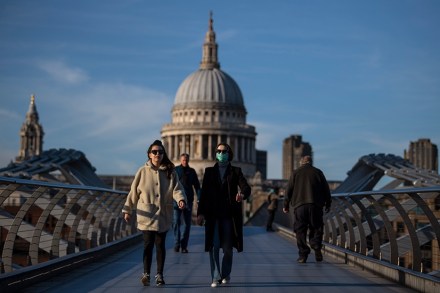
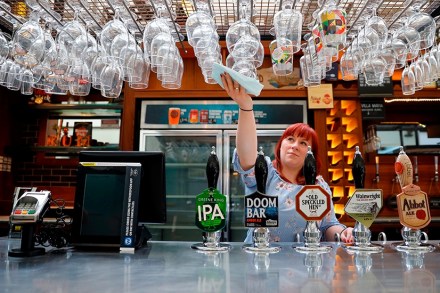
The Prime Minister’s announcement that pubs, restaurants and many other facilities will be able to re-open on 4 July amounts to a significant and welcome easing of lockdown. As this magazine hoped, the Prime Minister has taken back control from the scientific advisers — who have been unable to resolve their lively disagreements — and put his faith in the British public. This includes moving towards a voluntary system, rather than asking police to enforce edicts. A recent study found only three countries have been more reluctant to leave lockdown than Britain: Nicaragua, Algeria and iran. It's a sad state of affairs - but reflects the failures of recent months.

Britain must begin its recovery – before more damage is done

The discovery in Britain that a £5 steroid, dexamethasone, can be effective in treating Covid marks a potential breakthrough in our understanding of the virus. Much remains to be learned about the wider potential of the drug but the claims made about its success are striking: that it reduces deaths by a third in patients on ventilators and by a fifth in patients receiving oxygen only. It has not been shown to benefit Covid patients who do not require oxygen. But this can still, in a global pandemic, mean thousands of lives saved. There are two further points to be made. With Covid-19, there is a better chance of finding a treatment for the virus than of finding a vaccine.

It’s time for the PM to take back control from the scientists

There is a grim inevitability to the trickle of round-robin letters from scientists who feel aggrieved at the government’s handling of the Covid-19 crisis. Right from the beginning, the Prime Minister gave scientific advisers a very public platform at the heart of government. He realised that if it became necessary to impose the most severe restrictions on personal freedom any government has had to introduce in peacetime, it would help if the public could see policy was being shaped by experts who understood the threat. But as time has gone on it has become increasingly clear that there is no such thing as ‘the science’ — a mythical set of incontrovertible truths. Scientists are as divided as politicians and the general public on how to tackle Covid-19.

American police should not be above the law

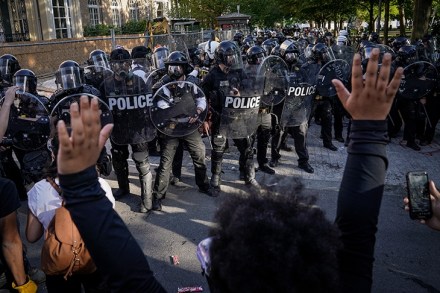
In Minneapolis, where George Floyd was killed, a black entrepreneur had his bar destroyed before he even had a chance to open its doors for the first time. In Richmond, Virginia, a mob set light to a building, then blocked firefighters who were trying to save a child from the flames (-thankfully the child survived). These actions, repeated in cities all over America, are harmful in two ways: night after night, rioters are trashing their own backyard, destroying private property and putting innocent lives at risk. They are also diverting attention away from the legitimate grievances of peaceful protestors, whose efforts are far more laudable than looting.

It’s time to end lockdown – and switch to voluntary social distancing

Who occupies the post of chief adviser to the prime minister is not generally an issue of great interest to the public. That Dominic Cummings has come to dominate the news for several days is partly explained by the long shadow of Brexit and his role in the referendum campaign. But it is no use attributing to that alone the furore over his decision to travel from London to Durham at the height of lockdown. People are genuinely aggrieved that when they have made personal sacrifices to conform to the ‘stay at home’ edict, a man who helped devise those rules appears not to have done the same. In vain might Mr Cummings argue that the Health Protection (Coronavirus, Restrictions) (England) Regulations 2020 gives leeway for his journey. He acted as a responsible husband and father.

It’s time for ministers to stop hiding behind unpublished ‘scientific advice’

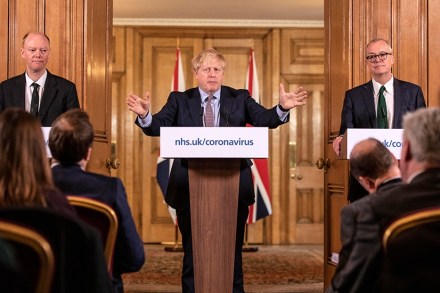
From the outset of the Covid-19 crisis, the government was determined that scientists would play a central and highly visible role. The Prime Minister set the tone in his first daily press briefing, when he addressed the nation flanked by the chief medical officer and the chief scientific adviser. The message was clear: this was a government that cherished, not rejected, experts. They were not going to be kept in a back room, but would be there to explain the reasoning behind all policy-making. But this new relationship between government and scientific establishment risks going sour. Professor Neil Ferguson of Imperial College advised the government that Covid-19, if left unconfronted, could take 500,000 lives: almost as many as are killed each year by all other causes put together.

Reopening schools must be our first priority

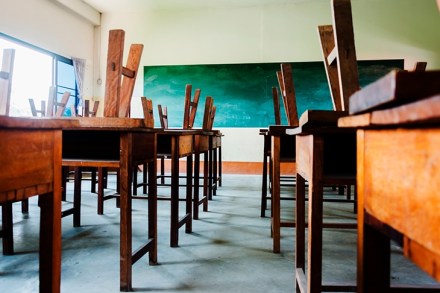
It would be a tragedy if one of the legacies of Covid-19 — a disease which hardly affects children physically — was a widening of the already broad gap in educational attainment between rich and poor. But sadly, the damage is already well under way. Back in March, Britain was the European country most keen to keep its schools open in the face of the then-burgeoning number of Covid-19 cases. Now it is the other way around. In Denmark, primary schools have been open for a month. This week, children began to return to class in Germany, France and the Netherlands. Next week, schools will start to reopen in Belgium. Yet in Britain, the earliest date we have been given for reopening schools is 1 June, and then only for some children in primary schools.

Track and trace should not be our only exit strategy

The concept of the state tracking our every movement is anathema to this magazine and, we assume, to its liberal former editor now resident in Downing Street. Nevertheless, such is the impasse over coronavirus that it is right the government should attempt to exit lockdown via the application of a voluntary ‘track and trace’ on mobile phones, trials of which began on the Isle of Wight this week. Track and trace appears to have worked for Asia so, given what’s at stake, it’s reasonable to try it here. South Korea, Taiwan, Vietnam — the countries which employed tracking and tracing from an early date — appear to have dealt with Covid-19 the most effectively, minimising the impact on their economics and societies.

The NHS has been protected – care homes have not

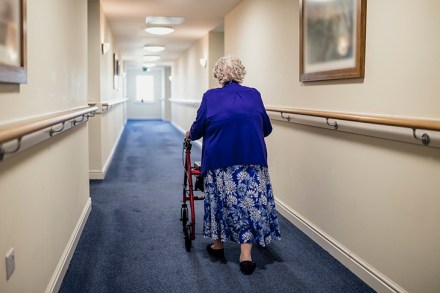
As the NHS was preparing for the Covid onslaught, thousands of hospital patients were discharged to care homes in an attempt to free up beds. This worked: about 40,000 NHS beds are now unoccupied, four times the normal amount for this time of year. Attendance at A&E has halved. Almost half of all intensive care beds with mechanical ventilators lie unused. This is before the seven pop-up Nightingale hospitals, most of which are also empty, are factored in. The NHS was effectively protected in this crisis. Care homes were not. While those in hospital were being given the care one would expect from one of the world’s best-resourced health services, most care home residents who fell sick with symptoms of Covid-19 were not even being tested for the disease.

The case for trusting the public is stronger than ever

Our Plan is entirely new, comprising – 1. The whole News of the Week: selected, sifted, condensed and arranged as to be readable throughout. 2. A full and impartial exhibition of all the leading Politics of the Day. 3. A separate Discussion of Interesting Topics of a general nature, with a view to instruction and entertainment at the same time. 4. A Department devoted to Literatures… 5. Dramatic and Musical Criticism. 6. Scientific and Miscellaneous information. — R.S. Rintoul’s announcement of a new weekly, July 1828 In the history of publishing, no magazine has ever printed a 10,000th issue. Until now. The Spectator is unusual not only in that it is the world’s oldest weekly, but that it still follows the formula that R.S.

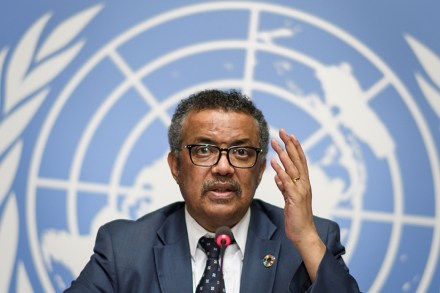
Trump has a point – the WHO has failed

The United States has long regarded itself as better prepared for a pandemic than any other country in the world, but it assumed the disease would be flu, rather than a coronavirus. This was a failure of imagination. The Sars epidemic showed the world that coronaviruses can lead to acute and fatal respiratory diseases. The Asian countries that suffered most from Sars updated their pandemic response kits accordingly, with mass testing and patient-tracing technology. Neither Britain nor America thought to do likewise. In Britain, we’re starting to admit to flaws in our pandemic response. Donald Trump is less inclined to do so, and is instead directing his fury at China and promising to remove funding from the World Health Organisation.

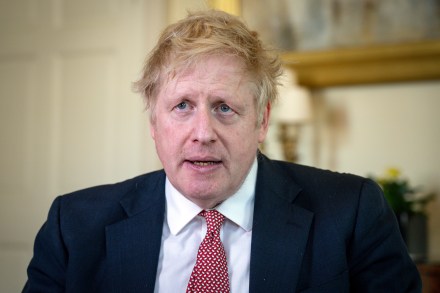
Only Boris can end the lockdown

Events make a mockery of predictions. And events of recent days have borne that truth out most starkly. Nobody could have predicted where our nation stands today. We have gone from being a supposedly divided country into one united in response to an unprecedented crisis. The news that the Prime Minister has been admitted to intensive care has united the country in shock — and in hope for his recovery. From the beginning of the coronavirus crisis, Boris Johnson led in the way he always has. He threw himself into efforts to counter the virus. He dispensed optimism and hope where there was understandable fear.

One thing is missing from the government’s coronavirus response: an endgame

The failures of Britain’s pandemic planning have been brutally exposed in the past few weeks. The scandalous lack of protective equipment for NHS workers, the failure to prepare for mass testing: there will be plenty of time, when this is over, to apportion blame for all this. But what is even more striking is the achievements of those in the military, the health service and public service who have — in a matter of days — done the seemingly impossible in preparing the NHS to cope with the virus. A few weeks ago, the world was admiring the ability of the Chinese government to rapidly build a 1,000-bed hospital in Wuhan. Since then the NHS, the British Army and their partners in the private sector have made arrangements for 4,000 beds in a London exhibition centre.

The government must be as ready to remove restrictions as it was to impose them

For days, the Prime Minister had been resisting the kind of measures which have placed many other countries into lockdown, confining their citizens largely to their homes. Civil servants had pointed to studies saying that many ‘social distancing’ strategies might do more harm than good. In the end, the trajectory of the virus — and the global response — meant the restrictions now in place were inevitable. But at every stage, the Prime Minister has made it clear he was acting with reluctance. While he has been criticised by those seeking a heavier-handed approach, opinion polls suggest most of the country is with him. Yet public opinion can be fickle.

The cure to this crisis can be found in our communities

For the Chancellor to produce an emergency bailout package just six days after delivering his Budget is an extraordinary state of affairs, but such is the fast-moving nature of the coronavirus crisis. The virus itself is growing along the expected trajectory, testing the limits of the NHS — but no one could have modelled the economic response. The decision by the government to shut down large tracts of the economy and ask workers to stay at home — with the prospect of this lasting for months — will deliver a shock far greater than the economic crash of 2008. Its effects can already be seen everywhere. This week Capital Economics said the economy could shrink by 15 per cent over the space of a few weeks. That would be a contraction without parallel in modern times.

Is Boris about to abandon his own debt rules?

It’s always tempting for governments to respond to economic trouble with a debt-fuelled spending splurge, but it’s a notoriously blunt tool. The root of the current problem is not financial panic but a rational response to the coronavirus. People are travelling less, staying away from shops and the workplace, delaying various projects, and they will keep doing so while the uncertainty remains. This disruption is painful but temporary. It is not symptomatic of financial malaise. It would be a mistake for the Conservatives to use this as a pretext to abandon their five-year plan to control the public finances. The £30 billion stimulus to address jitters over coronavirus was quite a figure, especially as the extent of the economic impact of Covid-19 is far from clear.

The Tories cannot afford a war with the civil service

Thirteen years ago, when John Reid became Home Secretary, he declared the ministry he presided over ‘not fit for purpose’. He was talking about border control but he might well have been referring to the department in general. When Theresa May became PM, things at the Home Office went from bad to worse. Her paranoid style as PM, developed as a survival mechanism when she was Home Secretary, was disastrous. The Windrush debacle, the most shameful example of government dysfunction in recent times, was a sign that change was long overdue. And yet this chaotic department, riven with internal feuds and a lack of accountability, now has a gargantuan task ahead of it.

The ‘Westminster paedophile ring’ is a lesson in how not to carry out a police investigation

A cornerstone of any -functioning democracy is the separation of police and the courts on one hand, and government and parliament on the other. Where the latter are charged with making the law, they should never, ever be allowed to interfere with the enforcement of that law. Politicians have no power to tell the police what to investigate. As Lord Denning once observed, no policeman is subject to orders of the Secretary of State: ‘No minister of the Crown can tell him that he must, or must not, keep observation on this place or that. Or that he must prosecute this man or that one… He is answerable to the law, and to the law alone.’ In Britain, for most of the time, that separation has been respected.

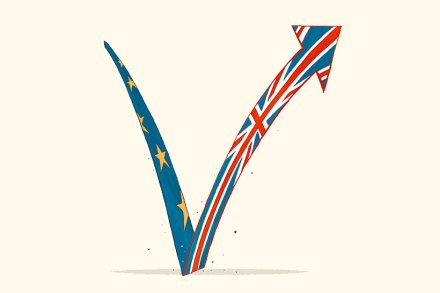
Britain is booming – despite Brexit

After the vote for Brexit, it was often said that our departure from the EU was most likely to harm the very people who voted for it: the industrial workers of the Midlands and North. Didn’t they know that a vote for Brexit would, in itself, lead to 500,000 more job losses? Couldn’t they see that Nissan was bound to wind down its operations in Sunderland and move business to mainland Europe? Almost four years on, it’s safe to say that most of the economic doom-mongering was nonsense. This week’s figures on jobs and earnings show that, since the referendum, employment is up by one million — and it is rising still. Unemployment in the UK is at its lowest since 1974. Unemployment in Wales is at its lowest since records began.