Leading article

What Scholz should bear in mind on his trip to Beijing

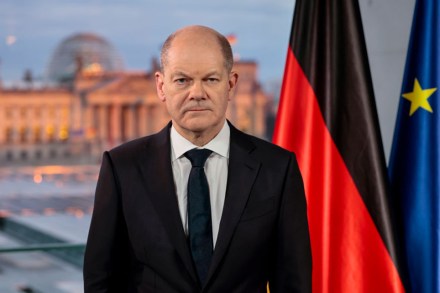
Olaf Scholz will be in Beijing this weekend, making the first visit of a western leader to China since the start of the Covid-19 pandemic. What might at any other time be regarded as a routine piece of diplomatic outreach is instead a matter of deep concern. China’s leader, Xi Jinping, has just cemented his position as dictator-for-life at the Chinese Communist party’s 20th congress. Beijing has followed this up with a series of high-profile visits from countries taking Chinese money for major infrastructure projects. The President of Vietnam arrived on Monday, the Presidents of Tanzania and Pakistan on Wednesday. This will culminate in Scholz’s arrival, the first G7 leader to accept Xi’s invitation. China’s sphere of influence is truly global.
The economic storm ahead is losing some of its power

When Russia invaded Ukraine in February, German protesters lined the streets holding placards saying ‘Better a cold shower than Putin’s gas’. Their resolve was soon to be tested: energy costs surged and Berlin’s longstanding policy of relying on Russian gas started to cost the country dear. Germany set itself the hugely ambitious target of having its gas stores 95 per cent full by November, a policy that remained even after Moscow turned off the Nord Stream pipeline. It seemed a near-impossible target. But this target has now been met ahead of schedule. German gas usage is down by about a third after major changes to industry. With the panic over, the price of commercial gas contracts – in Germany and Britain – has now fallen to levels last seen in the spring.

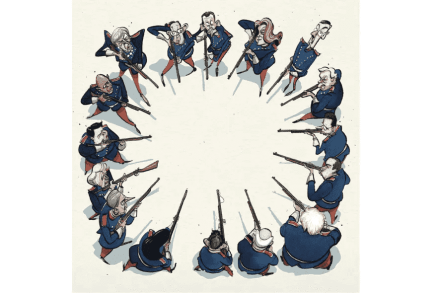
Divided they fall: can the Tories save themselves?

Seldom has support for a government fallen so far, so fast. Polls show that 24 per cent of the public would vote for the Conservatives if there was an election now, vs 52 per cent for Labour: figures that make 1997 look like a good result for the Tories. This is not just a one-off rogue poll, but the sustained average of six. It reflects what Tory MPs hear from voters appalled at the disgraceful shambles of the past few weeks. It won’t be forgotten in a hurry. This magazine gave its verdict on the Liz Truss agenda in August: ‘To attempt reform without a proper plan is to guarantee failure,’ we argued. She lost no time in proving this point. But others are drawing wider and deeper – and rather dangerous – conclusions.

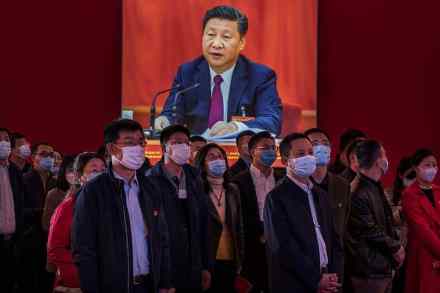
China’s great leap backward

This month should have marked the end of Xi Jinping’s time as leader of the Chinese Communist party. The twice-a-decade party congress is being staged in Beijing. It is a grand event at which a new General Secretary is meant to be either nominated (five years in advance) or given power. But Xi has changed all that. He has sidelined all opposition and is now settling down to his 11th year in office – fully intent on ruling for life. The world’s second-largest economy will therefore this weekend be reconfirmed as an outright dictatorship. Ten years ago there was a fatal car crash in Beijing involving a Ferrari driven by the son of Ling Jihua, chief of staff to the then president Hu Jintao.

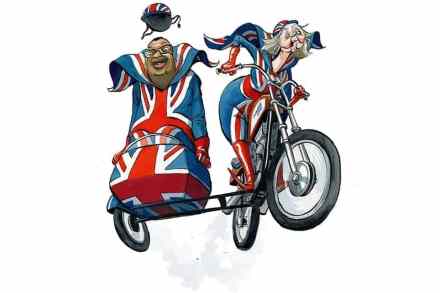
Give Liz Truss a chance

Conservative governments have a habit of self-destructing: they die not in battle with political enemies but as a result of vicious infighting. It’s been less than three years since Boris Johnson’s triumphant 80-seat election victory, which seemed at the time to come close to condemning Labour to oblivion. Yet this week in Birmingham it was the Conservatives who have looked doomed, posing a far greater threat to each other than to Keir Starmer. In her conference speech, Liz Truss laid out a confident and coherent agenda. She is correct about the need to harness the power of free enterprise to kickstart growth, but she failed to prepare the ground for her agenda. Since entering No.

Rupa Huq and the politics of prejudice

The Labour party’s contribution to the national debate this week has included the idea that someone can be ‘superficially’ black. Rupa Huq, a Labour MP, used this phrase to describe Chancellor Kwasi Kwarteng. ‘If you hear him on the Today programme,’ she said, ‘you wouldn’t know he’s black.’ It was a daft yet revealing comment. In her moment of unintended (and perhaps career-destroying) candour, Huq exposed a prejudice that remains pervasive in British politics. Any such suggestion is, of course, racist, and Labour could not deny it. Huq has been suspended. But she was articulating an attitude that has become widespread. She probably thought that her comments were uncontroversial for the audience at a Labour party conference debate.

In search of Trussonomics

When Liz Truss entered the leadership race there was no such thing as ‘Trussonomics’. She began her campaign with no real expectation of winning and without any serious guiding philosophy. Rishi Sunak did her a great service by portraying her throughout the leadership campaign as a crazed tax-cutter, a disciple of Ronald Reagan. But in truth, her economic policy was nowhere near as coherent as Sunak made out. Truss just about scraped through the soundbite war of the debates, but without any real pro-growth, tax-cutting agenda. All she pledged to do during her campaign was to freeze forthcoming corporation tax rises and shave 1 per cent off National Insurance. This she did mainly because the 2019 Tory manifesto promised not to raise tax.

The Queen’s act of Union

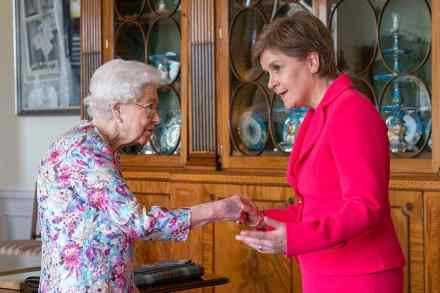
In death, as in life, Elizabeth II has been a unifying force for her country. For all the political rancour of recent years, this week has revealed a country at ease with itself. People of all political persuasions have come together to show their respect – in Scotland just as much as in England. It has been a reminder of what a force for good a monarch can be when he or she devotes their life to service. After the Queen’s coffin was transferred from Balmoral Castle to Holyroodhouse, up the Royal Mile to St Giles’ Cathedral, members of the public lined up to see it as it lay in state. Nicola Sturgeon was as effusive in her tributes as any Westminster politician. The new King was heard by the Scottish parliament with respect.

Liz Truss can’t ignore the issue of NHS reform

It’s hard to think of any Prime Minister who has entered office surrounded by such low expectations. Liz Truss was backed by just over half of Conservative party members and secured barely an eighth of MPs in the first ballot. Her critics dismiss her as a lightweight, wholly unsuited to tackling the problems now facing the country. The presumption is not just for trouble, but calamity: the fastest drop in living standards in living memory, followed by prolonged recession and worse. So if Truss manages to send inflation into reverse and makes a noticeable cut to taxes by Easter, it will be seen as quite an achievement. She has also been helped by Rishi Sunak’s somewhat wild exaggeration of the risk her tax cuts posed to the public finances.

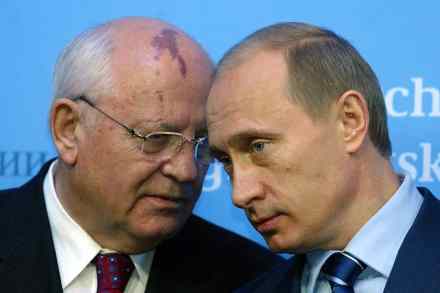
Russia, Ukraine and the legacy of Gorbachev

In her memoirs, Raisa Gorbacheva recalls the moment when her husband turned from bureaucrat into reformer. ‘I’m in my seventh year of working in Moscow,’ he told her as they were walking together one evening. ‘Yet it’s been impossible to do anything important, large-scale, properly prepared. It’s like a brick wall – but life demands action. No, we can’t go on living like this any more.’ It was the first time, she wrote, she heard him say such words. ‘That night, a new stage began that brought big changes.’ Mikhail Gorbachev’s death this week has led to much analysis of his legacy. He is admired more in the West than in Russia.

What the Tory leadership rivals haven’t discussed

In just over a week, Britain will have a new prime minister. No one can say that the 160,000 or so Conservative party members who will have made the choice have been deprived of exposure to the two candidates. The leadership race has dragged on for longer than a general election campaign, with endless televised hustings and public appearances. The process is supposed to be a training ground, testing candidates on their answers to all the toughest questions that will confront them in government. But in this respect it has failed. High tax is a symptom of a wider problem: big spending. Unless spending changes, any tax cut will be temporary. Yet there has been very little acknowledgment from the candidates that government has grown out of all proportion to its usefulness.

Don’t blame Brexit for our lack of workers

It has become received wisdom that Brexit has condemned Britain to chronic labour shortages. Many of the migrant workers who used to staff our hotels and restaurants, install our bathrooms and look after our children, returned home during lockdown and never returned. Sometimes that is blamed on the end of free movement, other times more generally on Brexit Britain somehow having become less attractive in the global competition for people. It is a notion which is easily disproved, however, by a simple figure published this week by the Office for National Statistics which went woefully under-reported. There has been no drop in migrant workers in Britain. On the contrary, there were 6.3 million foreign-born workers at the last count – a record high.

A-level results: has government reversed grade inflation?

As A-level results come out today, we will find out if the government has made any progress in stemming exam grade inflation. As always, some candidates will celebrate while others will be disappointed. This year, though, the latter group is expected to be more numerous because exam boards are supposed to be clamping down on the implausibly high grades awarded during the two years when school exams were suspended due to lockdowns. Anyone looking solely at exam grades without other information to hand might wonder: what was it about Covid that appeared to boost the educational attainment of so many 18-year-olds? In 2019, the last normal year, 76 per cent of A-level entries were awarded grades A* to C.

Can Liz Truss be trusted?

Liz Truss has taken the lead in the Tory leadership race with an agenda that seems radical and ambitious, whereas Rishi Sunak appears to offer only elegantly managed decline. Truss promises instant relief from the rising cost of government; Sunak offers to reverse barely half of his own tax rises – and over the course of the rest of the decade. To promise more, he says, is to sell ‘fairytales’. Truss says a better future is possible with enough vision, ideas and, perhaps most importantly, resolve. Ms Truss came up with a promising idea this week: regional pay boards, so that civil service salaries could be set relative to the local cost of living.

Germany’s energy crisis is a warning to Britain

During the eurozone crisis, southern European states had to go cap in hand to Germany to stave off national bankruptcy. A decade on and it is Berlin doing the begging. Europe has reluctantly agreed a 15 per cent cut in gas use this winter in the hope that German factories can stay open and German citizens can keep from freezing. Meanwhile, Russia’s state-controlled energy giant Gazprom threatened to reduce the gas flowing through the Nord Stream 1 pipeline yet again so that Germany would receive only a fifth of the amount it did before the Ukrainian invasion. While Berlin has said it plans to wean itself off Russian gas over the next few years, Vladimir Putin is taunting Europe by cutting supplies faster than Germany can cut its dependence.

The heatwave shows the lockdown instinct is still alive

Trains were running even more slowly than usual. Schools were closed again. Offices were empty. No one would deny that Monday and Tuesday were on the warm side, at least by British standards. Even so, there was something more alarming than the temperature: how quickly the authorities started to close down society – and showed that the lockdown instinct is still very much alive. The Met Office, a body that has turned from fairly comical to slightly sinister in recent times, started advising everyone to stay at home. The unions asked for schools, offices and transport systems to be closed down. There were no trains north out of King’s Cross or Euston, and Luton airport closed completely. Sadiq Khan lost no time in asking people not to have barbecues.

The Uber scandal highlights big tech’s big failure

A few years ago the Conservatives were excited about the march of the tech giants. Uber was offering an alternative to black cabs at a far lower cost, and Airbnb enabled homeowners to rent out a spare room to tourists at a fraction of the rate charged by hotels. Politicians were no longer dependent on traditional media but could reach the public via social networks, and there seemed to be an explosion of entrepreneurs, empowered by the new tech, taking on vested interests. The Tories intended to be part of this revolution. Their enthusiasm for people power was not to last. The government now plans to give regional mayors the power to curb Airbnb to protect the hotel industry (and the government tax base).

A Tory implosion

What is the purpose of a Conservative government? It’s a reasonable question for voters to ask. In 2019 Boris Johnson gave us a clear answer: he was a different type of politician. He would get Brexit done, then protect the public from the rising costs of government by freezing taxes. The public, he said, had had enough of weasel words and broken politics. He stood as an unconventional prime minister who would sweep away Westminster’s failing conventions. Instead, he is in danger of sweeping away the conventions that actually worked. The country is now being deprived of a functional government: one that is capable of planning longer than a fortnight ahead. For Johnson, survival is victory.

Nicola Sturgeon’s referendum stunt

Nicola Sturgeon presents Scotland as a country outraged by Brexit and straining at the leash of the United Kingdom. She said she wants a second referendum on 19 October next year. But she has no powers to call one and has already referred herself to the Supreme Court, which is likely to confirm that only the UK parliament can bring into being a referendum on the future of the UK. So her call for a referendum date is, to all intents and purposes, a stunt. The SNP and their Green allies stood on pro-referendum manifestos last year and between them captured a majority of Holyrood seats. Sturgeon feels that justifies another vote. But that logic has already been rejected by the UK government, which says that now is not the time.

Cutting the cost of government is the only solution to this crisis

A little over a year ago, The Spectator printed a cover story about the risk of inflation. Britain, we argued, was hugely vulnerable: the national debt was structured in such a way that even a small uptick in inflation followed by a rise in interest rates would inflict immense damage on public finances. The conventional wisdom was that there was no such risk, that rates would be ‘low for long’. But what if this consensus was wrong? The Financial Times took the unusual step of writing a story about our story. ‘The Spectator joins the inflation doom-mongers,’ it announced. ‘Doom’ was pushing it a bit: we simply sought to underline the complacency with which governments, central banks and many analysts viewed the economic horizon.