Leading article

The legacy of Nigel Lawson

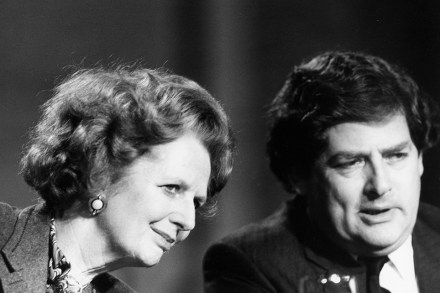
Nigel Lawson was the most consequential chancellor in modern British history. He gave the world a case study in how to overturn a failed consensus. He was guided throughout his political career by the political principles articulated when he was editor of this magazine. His legacy is so rich that it offers a wide choice of lessons, three of which stand out for Rishi Sunak today. The first is one that the Prime Minister himself writes about in his article – the importance of preparing for battles. Lawson wanted lasting change and realised that radicalism is pointless without strategy. Tax can only ever be a reflection of the spending rate: to cut tax revenue without spending restraint will only ever lead to the restoration of high taxes.
The lessons of the trans debate

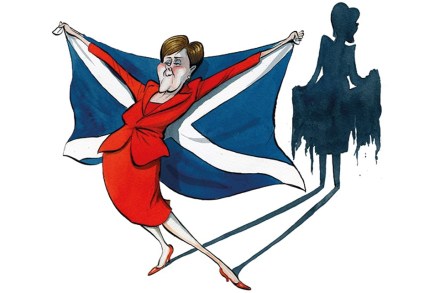
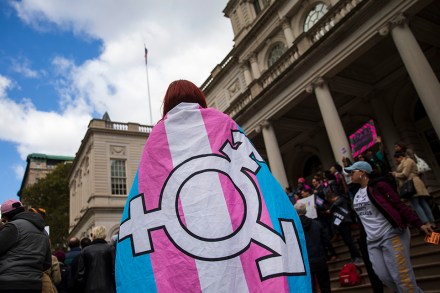
The World Athletics Council has taken the decisive step of announcing that transgender women who underwent male puberty before their transition will henceforth be excluded from female events. The decision has been made, according to the council, to ‘protect the future of the female category’. World rugby has already made a similar ruling and other sports are expected to follow suit. It has been a long and heated debate, but a consensus is emerging on the side of common sense. Those who overreached on this issue are counting the cost. Nicola Sturgeon’s bizarre gender self-ID law that would have granted women’s rights to anyone who wanted to claim them went on to sink her premiership.

The Boris distraction

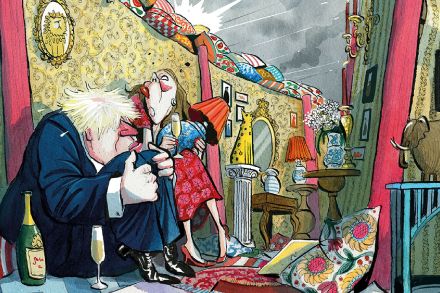
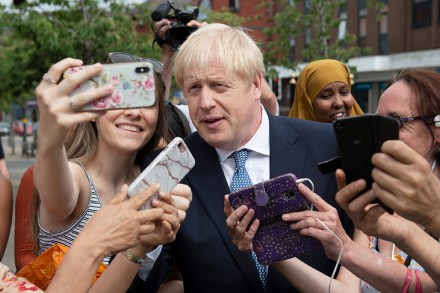
Boris Johnson should not be forgiven for his handling of lockdown. He needlessly criminalised everyday behaviour when voluntary guidelines would have sufficed. Nannies were prosecuted for delivering birthday cards to children; friends were apprehended for meeting up in the park. Meanwhile, the officials who had created these rules flouted them regularly. Johnson wrongly denied that his staff were having parties. But compared with everything else that went wrong during that period, his false denial is trivial. It is surprising, then, that the House of Commons seems obsessed by it, rather than by the collapse of the democratic apparatus during lockdown, or the fact that the government was allowed to deploy emergency powers long after the crisis had passed.

Unemployment and Britain’s missing million

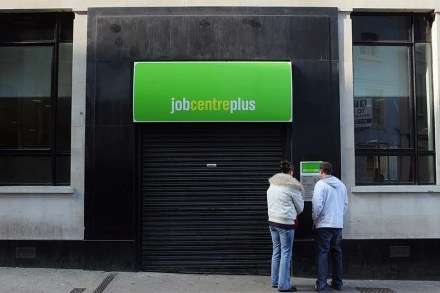
There was plenty of miserable economic news in this week’s Budget: the highest taxes imposed by any peacetime government, the worst post-pandemic recovery in the G7, the most painful cost-of-living squeeze since records began. But there was also a statistic which, on the face of it, seems to herald a remarkable success. The official unemployment rate stands at just 3.7 per cent – less than half the rate of a decade ago, as low as it has been in half a century. In his Budget, Jeremy Hunt boasted that ‘Conservatives believe that work is virtue’. Sadly, as this magazine revealed several months ago, there is rather more to the figures than meets the eye. There may be only 1.

Our duty to refugees

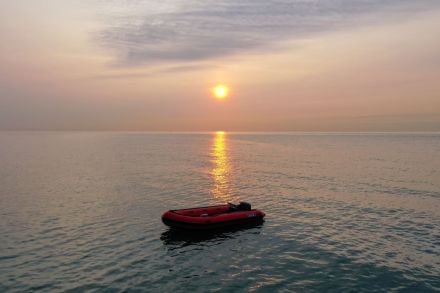
It is hard to deny that the government must take tough action on the issue of migrants arriving in Britain by small boats. A large proportion of those entering the country are not refugees fleeing danger but young men in search of better economic opportunities. Indeed, the largest increase in arrivals comes from Albania, an EU accession state that is neither at war nor under malign dictatorship. Ferrying such people to Britain is a criminal racket that should not be tolerated. If all ‘irregular’ arrivals are to be classed as illegal, genuine refugees will be unable to apply for asylum But under Home Secretary Suella Braverman’s plan, the Illegal Migration Bill will deport every person who enters the country by what the Home Office used to call ‘irregular’ methods.

Matt Hancock and the anatomy of a scandal

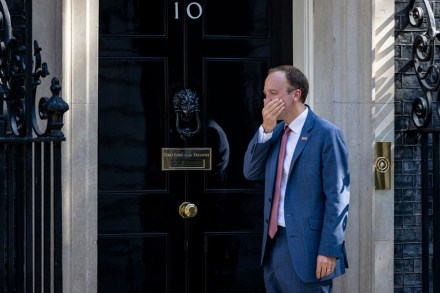
Last summer, Rishi Sunak told this magazine about what happened inside government during lockdown. The policy, he said, had been pursued with little consideration of the drawbacks. To even discuss the impact of lockdown – to acknowledge the damage being done to schools or NHS waiting lists – was seen as treachery. At the time, Sunak’s testimony was said to be an exaggerated ploy at the end of a bruising Tory leadership campaign. This week, documents have emerged that prove that government lockdown discussions were even worse than Sunak said. The health secretary created a record of the modus operandi of a government in crisis Seldom do journalists come into possession of such rich material as the texts that are now in the hands of the Daily Telegraph.

The SNP’s purity test

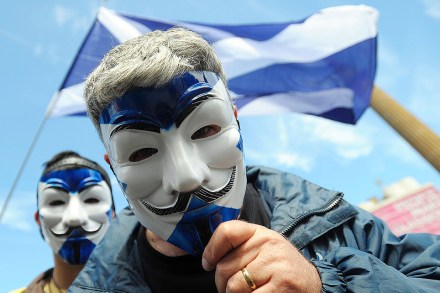
It seems as if Kate Forbes is about to achieve the remarkable distinction of losing an election as a result of a policy which she has not advanced and has no intention of enacting. It wasn’t she who raised the issue of gay marriage this week, but those who interviewed her after she announced her intention to stand in the Scottish National party leadership contest. Would she disavow the views of her church on sex, marriage and abortion? She would not. Her supporters peeled away. In succumbing to cancel culture, the SNP has weakened itself, perhaps fatally Just like the old Test Act, where Scots in public life had to swear they held no Catholic beliefs, a new test is emerging for would-be party leaders.

Sturgeon, Sunak and the state of the Union

Nicola Sturgeon’s resignation as First Minister of Scotland comes at a critical moment for the Union, since the question of Scottish independence has inevitably been tied to the ongoing dilemmas over Brexit. It seems that, over the next week or two, the UK and the EU will announce a potential agreement over the revision of the Northern Ireland Protocol. Goods travelling from mainland Britain for consumption in Northern Ireland will no longer be subject to automatic checks; a trusted trader scheme will allow most shipments to be waved through. In return, it appears that the UK government has dropped its opposition to the role of the European Court of Justice as the ultimate arbiter in disputes involving trade between Britain and the island of Ireland.

What Turkey needs

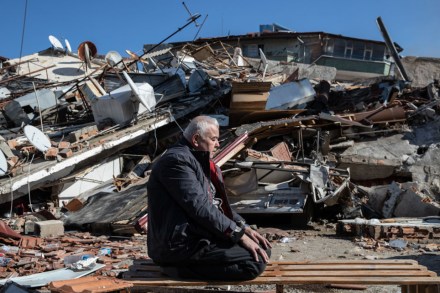
This week’s earthquake in Turkey and northern Syria is a reminder that in spite of civilisation’s advance and human ingenuity, there are natural disasters we can do little to prevent or to protect ourselves from. Though the death toll from floods, drought and storms has fallen dramatically over the past century, the toll from tsunamis, earthquakes and volcanos has remained the same. We have little defence against shifting tectonic plates. Poorly conceived aid projects can perpetuate rather than tackle poverty After an earthquake, what matters is the speed at which aid arrives. Every minute counts in the effort to find people buried under the debris, to distribute food and to rebuild infrastructure.

Britain is becoming a greener and more pleasant land

To listen to many environmental campaigners, you would think that Britain was a toxic wasteland. They tell us that our wildlife is depleted, that our green spaces are endangered and that 40,000 people a year are dying from air pollution. This week, the Wildlife Trusts came up with another figure: that it would cost £1.2 billion a year to repair the industrial despoliation of Britain. Everyone wants clean air and water and to live surrounded by healthy green spaces, and there are places that could be a lot cleaner than they are. Yet in many ways Britain has become a far greener and more pleasant land over the past few decades thanks not so much to state subsidy but to business.

Britain’s asylum crisis

Lawangeen Abdulrahimzai, 21, an Afghan convicted this week of murdering a man in Bournemouth last year, had previously murdered two men in Serbia. He had also been caught drug-dealing in Italy. He had been allowed to stay in the UK despite doubts about his claim to be 14 years old (he was then 18) and was placed with a foster carer and enrolled in a secondary school. When his foster carer caught him carrying a knife, a social worker was sent to his home to give him a talk about the dangers of knives.  The case of Abdulrahimzai shows just how easy it is to outwit our authorities. It tells the world that Britain no longer has the will to guard its borders and that encourages more dangerous criminals to take advantage of the system.

The Boris delusion

Loyalty, it used to be said, was the secret weapon of the Conservative party. That hasn’t been true for some time. Back in 2006, the then MP for Henley wrote of the Tory party having succumbed to ‘Papua New Guinea-style orgies of cannibalism and chief-killing’. Boris Johnson later had to apologise to Papua New Guinea for the insensitivity of that observation. But he wasn’t wrong about the new Tory tendency to kill the chief, as he discovered so painfully last year. Still, until recently a new party leader could expect a year or two of relative stability, when enemies would stay their spears and doubters would do their best to lend support. No longer. Rishi Sunak has been Conservative leader and Prime Minister for just three months.

Why Britain’s space industry should be celebrated

The attempted launch of a rocket via a Boeing 747 from Spaceport Cornwall – the first such attempt in Europe – was not a giant leap so much as a giant plunge. While the plane took off and landed successfully, the rocket released from beneath its wing at 35,000 feet crashed and burned, taking with it the nine satellites it was supposed to launch into orbit. There is a lesson for the government in what happened at Spaceport Cornwall this week It is easy to imagine Vladimir Putin chortling at the news that Britain has failed to do something the USSR managed 66 years ago. Satellite launches have become routine, with 14,000 put into space since the Soviet Union’s first Sputnik in 1957.

Harry’s losing game

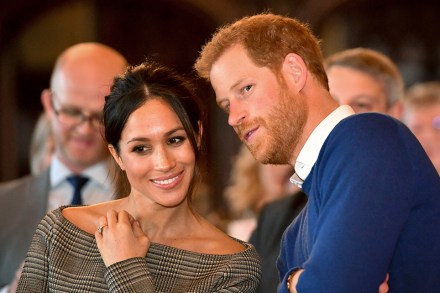
Four months into his reign, King Charles has seen his fair share of drama: two prime ministers and a wave of public attacks from his second son. ‘I would like to get my father back,’ says the Duke of Sussex, in part of a television interview to promote Spare, his book, which is released next week. The book is, of course, not exactly a sincere appeal for familial unity. It is yet another broadside against Harry’s family, the House of Windsor. The main revelation is a story about how an argument with his brother once escalated into a fight: one in which he says his necklace was ripped. The public are by now familiar with Prince Harry’s story: the royal family’s ‘never complain, never explain’ motto is a deception, he says, as he explains his complaints.

A Christmas hope for Ukraine – and the world

This year, for the first time, millions of Ukrainians will celebrate Christmas on 25 December. The Orthodox Church had used the Julian calendar and marked the nativity on 7 January – but parishes are moving to a new ecclesiastical hierarchy, dropping ties with Moscow. The invasion has accelerated the forging of a distinct Ukrainian identity: a people united by spending winter without power or running water due to the Russian strategy of firing missiles at power stations and using the cold as a weapon against the general population. Moscow’s aim is to erode morale – and the will to fight. Like much of Vladimir Putin’s strategy, though, this isn’t working. Ukraine has spent months preparing for this winter and the ordeal has, if anything, stiffened public resolve.

The devolution fallacy

It is easy to see why Labour leader Keir Starmer should find himself tempted into the idea of greater devolution. Electoral geometry indicates that he might end up having to negotiate with the SNP after the next election. It is harder to see why Gordon Brown’s advice should be sought, given how badly his own attempts at devolution have backfired. As Tony Blair’s shadow chancellor, Brown argued that a new parliament in Edinburgh would scotch the snake of independence. It was a view widely held by Labour at the time. In the words of the then shadow Scotland secretary, devolution would kill the SNP ‘stone dead’. This has not, to put it mildly, gone according to plan.

What the census misses about Christianity in Britain

When asked about their religion in a census, many British people have the same response: that it’s none of the government’s business. For a while, as a joke, tens of thousands stated their faith as ‘Jedi’, a fictional order of knights from Star Wars. Nevertheless, this year’s figure marks an important trend: just 46 per cent identified as Christian, down from 72 per cent two decades ago. Muslims are growing in number, but slowly: from 5 per cent of the population ten years ago to 6.5 per cent now. By the next census, those who profess any religion may be outnumbered by those who do not.

In defence of Brexit

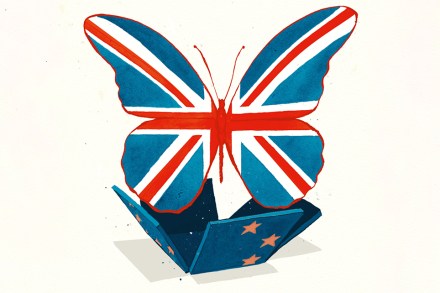
Opponents of Brexit have been given plenty of ammunition in recent weeks. Trade with the European Union has taken a big knock. Many British exporters say that owing to the excessive bureaucracy they can no longer sell to the Continent. The United Kingdom’s new trade deals have promised a lot but delivered little. There is worldwide inflation, but Britain is still expected to be the worst economic performer in Europe next year, by some margin. Opinion polls suggest an ever-growing number of voters think it was a mistake to leave. This magazine is the only publication to have backed British independence in both the 1975 and 2016 referendums – arguing on both occasions that it was time to go ‘Out, and into the world’. That remains our view.

Will Sunak continue with the censor’s charter?

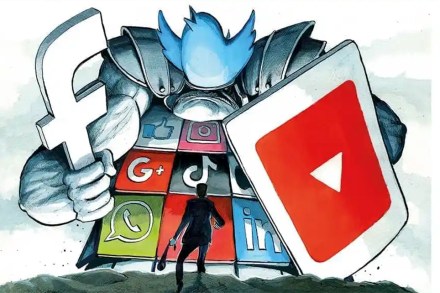
Had it not been for the Tory leadership contest over the summer, a new censorship law would have been passed in Britain by now. The Online Safety Bill included a clause banning content regarded as ‘legal but harmful’ – a dangerously vague phrase that could mean anything that ministers wanted. It would, in effect, have been the end of free speech in the UK. Rishi Sunak said that, if elected, he’d amend the legislation. But this may be only a partial reprieve. The new text of the Bill has yet to be published. But one mooted compromise is that ‘legal but harmful’ would be removed for adults but still apply to under 18s. The trouble is that this would be almost impossible to implement.

The new era of austerity

It’s the Chancellor who will deliver next week’s Autumn Statement, but every-one knows it will have been ghost-written by Rishi Sunak. When Jeremy Hunt ran for party leader, his own proposal was to take corporation tax from 19 per cent to 15 per cent. Now, he wishes to raise it to 25 per cent. When Hunt speaks next week, we should imagine Sunak’s voice. Liz Truss spooked the markets by combining unexpected tax cuts with a spending splurge bigger than Sunak’s furlough scheme: a £10 billion-a-month subsidy on energy prices, going even to the richest. This was a shock, sprung on markets at a time when interest rates were rising globally. About two-thirds of the interest rate rises that emerged under Truss would probably have happened anyway, but politically this is irrelevant.