Norman Stone

Norman Stone: From Syria to Iraq, the mess of the first world war is with us still

From our UK edition

The European statesmen who went to war in 1914 were extremely well-educated men. Churchill staggered Roosevelt as he could quote reams of quite obscure poetry; the secretary of state for war translated German philosophy; the French president’s brother was a revered mathematician; General von Hindenburg read Faust on campaign (even Corporal Hitler had his Schopenhauer). The only exceptions were probably the aristocrats of the Vienna cabinet, whose definition of scholarship was that it was what one Jew copied down from another. But that world gave us 1914, and a whole set of amazingly bad judgments. No war in modern times has been launched with such a vast failure of cognition.
A letter from Turkey

From our UK edition

My Turkish never having got beyond intermediate, I always have the same conversation with taxi drivers. ‘Where are you from?’ ‘England, actually I’m a Scotsman,’ I say. Cue suppressed giggles about skirts and whisky from the driver, perhaps a mention of Braveheart. I ask: ‘Where are you from?’ Most taxi drivers in Istanbul are from the Black Sea and they repeat the clichés about Black Sea types: ‘Oh everyone likes you, you’re hard-working with sense of humour.’ True, but Trabzon, the main Black Sea port, is now a minor hellhole of hideous concrete, Islamic nationalist triumphalism, and black-clad women trotting behind hubby. And you cannot find a restaurant with a bottle of wine for five miles.

What’s eating Turkey

From our UK edition

  Ankara ‘Islam, politics, economics — choose two’ is a great line, said by one of my Turkish students, and it would make a good exam question. Tayyip (the name means ‘very clean’ in Arabic — cf. ritual washing) Erdogan (meaning ‘strong hawk’, a Turkish nationalist reference) came to power in 2002 with a very good press. This was to be what the world wanted — a Muslim version of German or Italian Christian Democracy — and for years he gave it that. The rival parties destroyed themselves in silly bickering and corruption, and Erdogan’s party was very successful, with reforms in health and housing that improved the lives of ordinary Turks no end.

Blackmail, bribery and bullying

From our UK edition

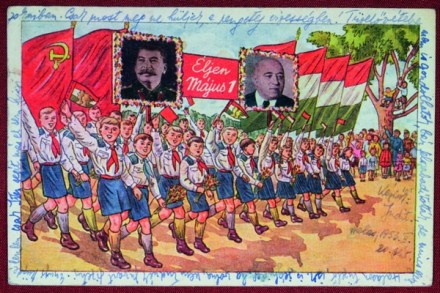
You can always tease Hungarians if you say that they have more Nobel Prize-winners than the Japanese, and that that really remarkable statistic is the abnormally high percentage of non-Jews among them, namely 17½. In 1900 Jews made up about 25 per cent of the Budapest population, and once abroad they hit the world with great force, whether in Hollywood or in nuclear physics (the memoirs of Arthur Koestler are a testimony to their drive and adaptability, as well as to their sense of humour). There is a black story involved, just the same: their role in the Communist takeover between 1945 and 1948. Anne Applebaum does not evade this question, nasty as it is: the four leading figures were Jews, chief among them, Mátyás Rákosi.

Diary – 22 May 2010

From our UK edition

The last election in which I voted was that of 1997. On Blair’s brave glad morning I flew to Edinburgh for something, and as we touched down the intercom said, ‘Welcome to Scotland, a Tory-free zone.’ I thought — not a good thing for the national airline to be taking sides. On the way back I ran into Jacob Rees-Mogg, who was looking bloodily unbowed from an attempt to wrest Kirkcaldy from Lewis Moonie. Now he has made the House, and good luck to him. When he was an undergraduate at Oxford he was very good at organising Thatcherite events, which was where we met.

My dream for Turkey, by Boris’s great-grandfather

From our UK edition

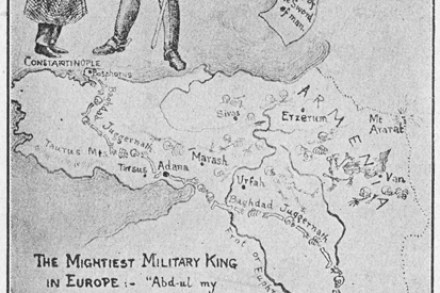
Norman Stone on the dramatic life and death of Ali Kemal, one-time interior minister of Turkey and our mayoral candidate’s forebear Boris Johnson is one eighth Turkish. His great-grandfather (there is, if you abstract the fez and the moustache, a family resemblance) was a well-known writer, Ali Kemal (1868–1922) who came, because of his politics, to a tragic end. He knew England very well, and when the British occupied Constantinople for four years at the end of the first world war, he collaborated with them. They had left the Sultan on his throne, and there was a puppet government which controlled a few back-streets. Poor Ali Kemal made the awful mistake of becoming its minister of the interior for some three months.

Diary – 17 November 2007

From our UK edition

Istanbul I had a medical in Ankara not long ago. The doctor was a good sort, looked over her spectacles and read out the list: blood pressure all right, weight OK, cholesterol a little high, heart no problem, kidneys no problem Liver? No, nothing — but, Professor Stone, the lungs. Ah, I thought, at 66, and after nearly 50 years of heavy smoking. She told me that I have less lung capacity than would be usual for a man of my age. What is it? I asked. Seventy per cent. What is normal for a man of my age? A twinkle: 73. Thank the Lord for sensible doctors. Obviously if I smoke, there is a problem, but it will not be dispelled by finger-wagging.

Turkey is right to fight for an end to the PKK

From our UK edition

Istanbul Turkey at the moment is being swept by a great wave of patriotic rage. In the past several weeks a dozen or more young soldiers have been killed in the borderlands of Iraq, and even the most sober television channels again and again show their faces, their funerals, their weeping mothers and sisters. There have been vast demonstrations in Ankara and even in provincial towns, bringing the traffic to a stop for hours on end, and there is enormous pressure on the government for something to be done. The problem is a Kurdish terrorist organisation, the PKK, which had been dormant for several years.

What has this ‘genocide’ to do with Congress?

From our UK edition

Istanbul Two elderly shoe-shiners were shouting with rage outside my local in Istanbul. The subject was America, and they ranted on and on — first about the disaster in Iraq, then about the stirring up of the Kurds, and then about the latest effort in Congress to ‘recognise the Armenian genocide’. What is so very strange about all of this is that American relations with Turkey have generally been very good. In a sense, modern Turkey belongs with Germany and Japan as the most successful creation of the United States after the second world war. In any year, there are 25,000 Turks at American universities, some of them sprigs of the Istanbul rich, many on scholarships, with which the Americans have been generous.

A man, a plan, a canal . . .

From our UK edition

Said Aburish, a Palestinian with excellent English who worked for years in Iraq, wrote a very good biography of Saddam four years ago. He brought out the full horror of the regime, and showed how Saddam’s hero was Stalin, even to the point that Stalin’s works were Saddam’s bedtime reading (such, at any rate, was the theory: porn magazines were probably the reality). Killing off Shias, clearing the Kurds out of the oil towns in northern Iraq, and launching himself as hero of the down-trodden Arabs, Saddam clearly had Stalin in mind. Aburish’s book was a good one, but it was also inspired by animosity — ‘from vigilance of grief compell’d/ To hate from having loved too well’, in the words of the old song.