From the archives

Conscription and democracy

From ‘The will of the majority’, The Spectator, 18 September 1915: The minority may declare, as have some of the trade union leaders, that they are the people—though in reality they are only a twentieth part of the community—and have a right to say what shall and what shall not be done in this country. In the last resort they will find that nineteen-twentieths are stronger than one-twentieth. This country is a crowned democratic republic in which ‘the people’ means ‘the people’, and not a junta of Jacobins… If the State decides that it must have compulsory military service, just as it has decided that it must take some 35 per cent of the incomes of the rich, there can be no tolerance of resistance to either decree.
Time to tax

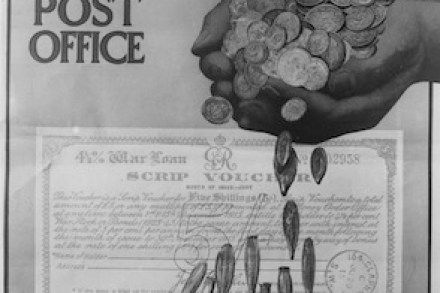
From ‘The coming budget’, The Spectator, 18 September 1915: At present the large majority of householders and electors pay no direct taxation of any kind. They know nothing of the Income Tax collector’s demand-note, and they never receive a call from the rate collector. This system is not only fiscally but politically unsound, and a Cabinet which includes both parties in the State ought to take advantage of the present opportunity to remedy one of the worst features of our Constitution. The simplest method of dealing with the problem is to require employers to collect the Income Tax on wage-earners at the source, exactly in the same way that bankers collect at the source the Income Tax on dividend-owners.

A Russian revolution

From ‘The situation in Russia’, The Spectator, 11 September 1915: A new Russia has been arising within the old while the war has been going on. We have heard little of it, but we believe that the changes are deep and wide. A people cannot fight for liberty and justice without discovering that those ideas daily react upon their own practice. We read in fragmentary messages of the parties in the Duma calling a truce to their old differences, of political indulgence to the Jews, of more freedom to workmen to organise themselves, and so forth. This new heart in the nation knows that it must cease to beat if Germany should win the war. The rising Russia looks for a leader, and the Tsar is there at the very right moment.

Muscular economics

From ‘War bonuses’, The Spectator, 4 September 1915: War means a demand for human muscle… At the moment the brain-worker is at a discount. The demand for lawyers, for writers, for musicians, for painters has declined. The only brain-workers who are much wanted are the comparatively small number of people necessary to direct industrial and war operations. Therefore it is inevitable that the wages of manual workers should rise, and it is useless to oppose that upward movement even when it is based on excuses which will not bear examination.

Discovering Europe

From ‘A Converted Peace-Man’, The Spectator, 28 August 1915: We have brought the present war upon ourselves in a great measure by the obstinate refusal of the great mass of English politicians to recognise that Europe is a fact, and a very momentous fact, and that to ignore it as they did was a piece of extraordinary folly. We have been cured of that folly now — by a very rough exercise of political surgery, and all that is left for us to do is to take care that we never blind our eyes in the same fashion again.

Field studies

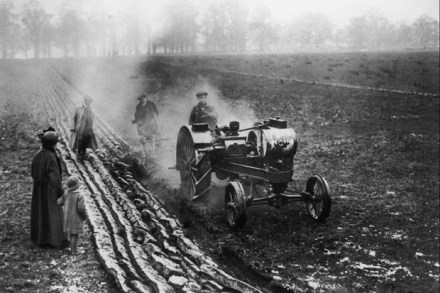
From ‘Education and the War’, The Spectator, 21 August 1915: War is a time in which a shortage of labourers can least be borne with. The land must not go untilled, the seed must not remain unsown, or the crops unharvested. Many of these services can be rendered by children whose schooling is not yet over. Care must be taken that the teachers do not lose sight of them, and that days, or parts of days, shall still be spent in the old way. But if this is secured, the child of twelve will not be wholly a loser by the change. He will gain in health by being more in the open air, and in skill by being early taught the elements of the industry by which in most cases he will eventually have to live.

Boy soldiers

From ‘What will they do with it?’, The Spectator, 14 August 1915: It is true that in a good many cases boys of 17 ought not to be sent to the trenches. Such boys would, however, be quite serviceable for home defence purposes, and it is obvious that we must in any case keep a quarter of a million, and perhaps half a million, soldiers in these islands to resist a raid. Not only do boys of 17 learn very quickly, but six months of good food and military drill and of life in the open would enormously improve their physique and make them the better able to bear the trials with which the nation will be confronted at the close of the war.

One year on

From ‘The End of the First Year’, The Spectator, 7 August 1915: Terrible as have been the sufferings caused by the war—the agonies of the body for those who have fought and fallen wounded, and the agonies of the mind for those who have seen husbands, fathers, and sons go to their deaths or return maimed or ruined in health—the present writer cannot feel that sense of overmastering horror which the war seems to have inspired in certain minds. Some have been carried away so far by such thoughts that they tell us they wish their eyes had been closed for ever before the national tragedy began. The present writer can take up no such attitude as regards the war.

Out of service

From ‘The new standard’, The Spectator, 24 July 1915: If a change must be made at all, it is worthwhile to make a great change, to put right our mistakes, to get any happiness that a rearrangement can give us. We fear that at first a new way of life may come rather hard upon the more prosperous and highly skilled of the servant class, many of whom must be turned out of place. But, on the other hand, we hear constant complaints that servants are scarce because new careers are opening before women, and if the race of indoor manservants died out altogether we do not imagine that anyone would seriously regret the loss.

Profiteering in the pits

From ‘Coal and its problems’, The Spectator, 24 July 1915: Instead of attempting to regulate prices, the government ought to have contented themselves with taxing profits, and by that phrase we mean not only the extra profits of the coalowner, but also the extra wages of the coalminer. The assumption that the coalminer is morally justified in obtaining an extra wage for himself out of the nation’s needs, and that the coalowner is not justified in obtaining an extra profit, cannot possibly be defended.

Answering the call of duty

From ‘Education and Honour’, The Spectator, 17 July 1915: The young man who has been to a Public School or to one of the Universities and who remains at home without adequate excuse doing nothing is so rare as to be very conspicuous. In other classes it is otherwise. Among the so-called lowest class men have responded pretty freely to the call. The so-called lower middle class, though in this there are of course brilliant exceptions, has perhaps answered less freely than any other class. In this class may be found, we fancy, most of the smug complacency which assumes that the fighting has necessarily to be done by other people, and that the Empire and the home will somehow be saved by efforts in which it is not necessary to take any part.

Heroism at Gallipoli

From ‘Sir Ian Hamilton’s dispatch’, The Spectator, 3 July 1915: The Dardanelles affair is a war in itself — much more exacting and complicated than many wars in the past which have made the names of British generals and regiments immortal. If the policy which has governed this war is not creditable to our foresight and sagacity, the tale of devoted bravery and unfailing resource which Sir Ian Hamilton unfolds makes us forget much that is disquieting in sheer wonder and admiration.

Secret weapons

From ‘Bogy-Mongering’, The Spectator, 3 July 1915: Of late there have been all sorts of dark hints and rumours as to wonderful new German devices by air, land, and water. No doubt such devices will be tried, and no doubt they will give us some anxious moments, just as did the poison-gas. It is not, however, by such sensational devices that battles are won. The shell, the bayonet, and the rifle still remain masters of the field. Once again, the danger for us is not in fancy inventions… It is in want of preparation, want of activity, want of men and munitions. It is to procuring these that we must bend our minds and our energies.

The Russians are coming

From ‘The Inexpugnability of Russia’, The Spectator, 26 June 1915: At this moment, after nearly a year’s fighting, Russia is only just beginning to be mistress of her resources in men and munitions. The hardy soldiers of her Far Eastern provinces are in many cases only just beginning to be got ready for the firing line. But though Russia is slow ‘she gets there just the same’. Her hundred and seventy millions of population have not yet really begun to make their presence felt in Poland, though we may be sure that they will do so before many months have passed. The giant limbs are stirring, even though the giant is not yet properly awake.

Birdsong

From ‘Literature and Soldiers’, The Spectator, 19 June 1915: In this war some of the most moving poetry has been written by young soldiers. The most vivid accounts of fighting have been extracted from soldiers’ letters. These were certainly not written without a close companionship with letters. We wonder how many torn and thumbed copies of Shakespeare, Milton, Homer, or Virgil are in trenches and dug-outs at this moment. We wonder how many officers have added an entirely non-military zest to their movements by studying domestic Gothic architecture, or the buildings bearing the more grandiose imprint of Louis XIV’s days, as they passed through the interesting towns of Flanders.

Against profiteering

From ‘The Essential Need’, The Spectator, 12 June 1915: Just as wages must be ‘stabilised’ for the men at existing rates, so all additional profits due to war contracts must be credited, not to the individual employer, but to the state. The principle of no war rise in wages must be strictly applied to profits. Upon this foundation we could build up a sound organisation for the increased production of shell and other munitions, and build it up without unfairness either to masters or men. Both would become the agents of the government, and both would be fairly remunerated, but during the war neither would be able to take advantage of the needs of the state to increase that remuneration unduly.

National mood

From ‘Depression and its Causes’, The Spectator, 6 June 1915: The British nation have still great possessions in the way of liberty of action, of liberty not to fight for their country, of liberty to spend their money in the sedative of drink, the sedative which slows down the pace and energy of the human machine — liberty to go on money-making as usual, liberty to spend time in amusements which might be spent in putting energy into the war, liberty to grumble and to criticise those who put us to shame by their cheerful self-sacrifice. All these seem ‘great possessions’ to the popular mind.

A new coalition

From ‘The National Government’, The Spectator, 29 May 1915: We do not suppose that the war, or the need for patriotic effort, has suddenly turned all the men on the new Cabinet list from very human human beings into angels. We do believe, however, that the war has changed them from politicians into fighting men… To put it plainly, they know that there is nothing behind them, that the reserves have been brought up, and that they must either hold the trench or die in it. This thought will keep the Cabinet together till success crowns their effort.

National government

From ‘A National Government’, Spectator, 22 May 1915: When we wrote last week there seemed little possibility that our hopes for the formation of a National Government would be fulfilled. Yet on Tuesday a National Government was in process of construction… We have followed the Roman example. We have named a Dictator — but we have put the Dictatorship in commission. Till the war is over there must be, and will be, no thought of who is a Liberal and who a Unionist, or of what the elements in the Cabinet desire. The Administration will have but one thought and one aim — the saving of the nation and the destruction of our enemies. spectator.co.

A war crime – and a president’s dilemma

From ‘Germany and the United States’, The Spectator, 15 May 1915: The text of President Wilson’s Note to Germany on the sinking of the Lusitania has not been published at the time when we write, but there is no doubt that the unofficial summaries convey its sense accurately enough. It asks that some assurance shall be given that in future unarmed merchantmen carrying noncombatants shall be searched by the German Navy, and that the passengers and crew shall be transferred to a place of safety, before the prize is destroyed… After his earlier declaration that Germany would be held to ‘strict accountability’ for the loss of American lives, Mr Wilson could not have done less than send such a Note. If he had acted literally on his words he would have done much more.