From the archives

Never again

From ‘Terms of peace’, The Spectator, 15 July 1916: As the man in the street might say, ‘The Allies are not going to give the Germans a chance to come at us a second time. Never again! is our motto.’ And if this is the object of the war, it will also be the object of the peace. We shall not dictate peace terms which will lead to the destruction of the German people or any section of them, or to any annexations of true German provinces; but we shall, as far as lies in our power, see to it that such a structure of government as that presented by militarist Germany is an impossibility for the future.
The meaning of the Somme

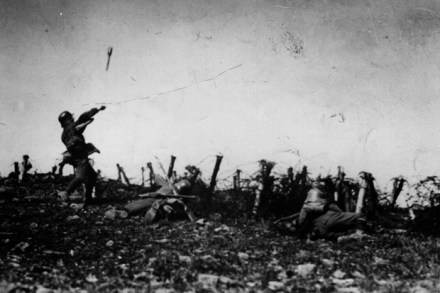
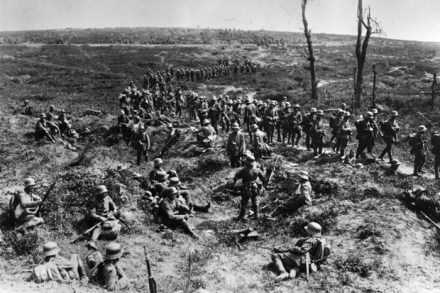
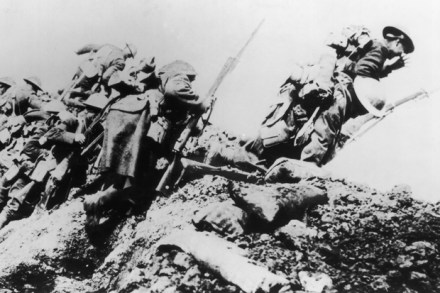
From ‘News of the week’, The Spectator, 8 July 1916: On the surface of London life there is hardly a ripple, and yet not a hundred and fifty miles from our shores is being waged the first stage of what in all probability will prove not only one of the greatest and momentous battles in all history, but a battle fraught with consequences that must make or mar us as a nation. All that we hold dear as men and women and as a race, all that makes life worth living, all that goes with home and liberty and independence, all the things that matter, depend upon the issue of the operations which have begun at the Somme. Though there may be, and indeed must be, pauses in the battle, this, for good or evil, is the beginning of the end.

Preparing for peacetime

From ‘Preparation for peace’, The Spectator, 1 July 1916: All industrial development relies in the last resort upon human energy, and the amount of human energy existing in this country has been enormously stimulated by the war. The country is awake, and will remain awake. But this readiness of every man and every woman to ‘do their bit’ in the battle of peace (if we may be allowed so mixed a metaphor) will not save us from great suffering in the first few months that will follow the cessation of hostilities and the return of the troops, if we have not tackled the problem beforehand, but have lulled ourselves with the belief that it will be all right ‘on the night’.

Who is this again?

From ‘English or British?’, The Spectator, 25 June 1916: We wish that this question of ‘England’ or ‘Britain’ could be settled satisfactorily, for the outbursts of the touchy champions of ‘Britain’ rather overwhelm us at times. Besides, it is always disagreeable to find that one has offended friends when no offence was intended. Peace and security might be attained, people tell us, by making an absolute rule never to say ‘England’ and ‘English’ (except, of course, when we are talking of England as a geographical area distinct from Scotland, Wales, and Ireland) when we mean ‘Britain’ and ‘British’…  But an absolute rule is not practicable.

After the breakthrough

From ‘Verdun’, The Spectator, 16 June 1916: As has been proved again and again in this war, if you are willing to pay the price you can always break the enemy’s line, and break it on a considerable front; but when you have broken it you are no better off than you were before. If you push on too far, you have only made a dangerous salient, from which you will probably be driven later by counter-attacks. Further, if, as in this case, it has taken some four months’ hard fighting to make your gap, you will discover that the enemy have had ample time to prepare fresh lines in front of you, and that your business, instead of being ended, is only just beginning.

The Kitchener effect

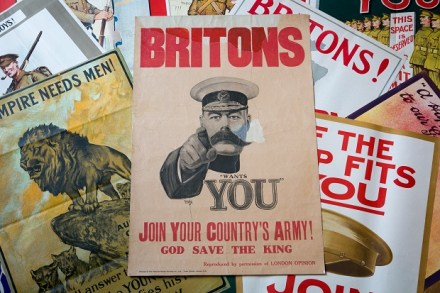
From ‘Lord Kitchener’, The Spectator, 9 June 1916: The central fact in Kitchener’s administration of the War Office is that he both invented and created the New Armies, and that he did it of his own motion, alone bearing the responsibility of the idea, and almost alone stubbornly asserting and reasserting the belief that this miracle was possible. Beside this everything else that Kitchener did seems of small account.

Against armistice

From ‘President Wilson and the Lessons of History’, 2 June 1916: Emphatically it is not a war of what we may call the old eighteenth-century pattern, where any one could step in and say, as if speaking to a couple of duellists: ‘You have had a good honest fight. Honour is satisfied. Now don’t you think the sensible and the humane plan would be to shake hands and try to forget all about your unfortunate quarrel?’ There is nothing whatever of that nature about the present struggle. The peoples of Europe are not arrayed upon what used to be called the field of honour, but engaged in a death-struggle in which one side is fighting for domination, and the other for security that peace, justice, and national independence shall continue on the earth.

The dogs of peace

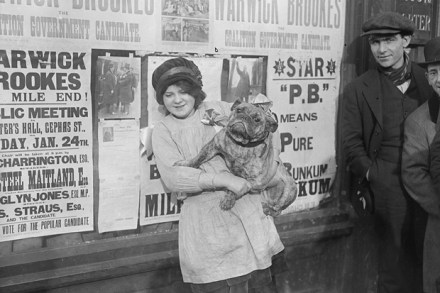
From ‘Food dictatorship’, The Spectator, 27 May 1916: Nobody would like to see the whole race of dogs exterminated, but there are undoubtedly more dogs maintained in this country than can reasonably be justified, and a substantial addition to the Dog Tax would diminish the number, and pro tanto economise the consumption of food.

Bus battles

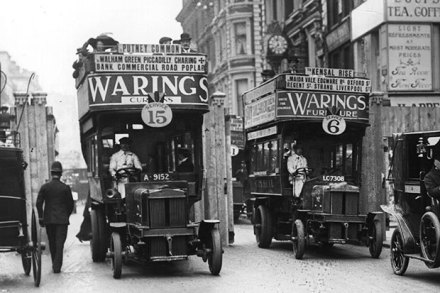
From ‘The softening of street manners’, The Spectator, 20 May 1916: Generally the public opinion of the ’bus entirely upholds the conductor. The influence of the tyrant is too strong to allow of protest, but now and then cases of rebellion occur, and bold females who consider themselves slighted vow that they will write to the company. But an ordinary ’bus-load contains no such heroines…. Sometimes, however, the will of the passengers prevails by reason of unanimity. A few nights ago a drunken soldier got, late at night, into a West End ’bus. The conductor civilly asked him to get out. The man began to argue, and a number of elderly women took his part. ‘Let him stop,’ they begged, one after another.

Churchill’s return

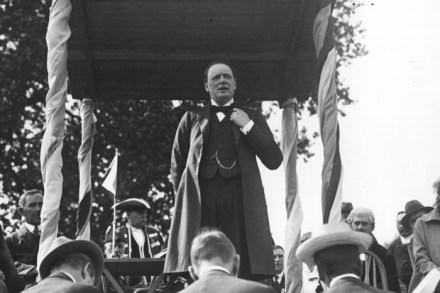
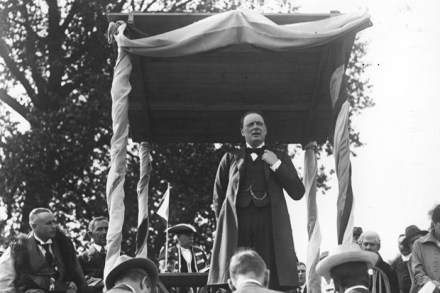
From ‘Colonel Winston Churchill’, The Spectator, 13 May 1916: The return of Colonel Churchill to the House of Commons, which we are told is to be permanent, has set going a number of rumours as to the future of the most audacious and brilliant figure in our public life. Colonel Churchill, it is alleged, is to come back into the Cabinet, and to come back as Irish Secretary… What is wanted in the Ministry just now is a man who can he trusted. But who dare say that Colonel Churchill has the quality of political trustworthiness? Be his political genius what it may, he is above all things a mauvais coucheur.

What to do in Ireland

From ‘Reconstruction’, The Spectator, 5 May 1916: What Ireland wants just now is firm and judicious military government. The rebellion of last week has been put down, but undoubtedly the embers of the fire are still red-hot, and a very little might fan them into flame again. All students of Irish history know that rebellions in Ireland do not run the course that they run in other countries. The fact that they have become hopeless seems, indeed, sometimes to act as a stimulus to the race which specialises in lost cases. Unless, therefore, a very firm hand is kept in Ireland, and kept till the end of the war, there is a possibility of a recrudescence of trouble.

The Easter rising

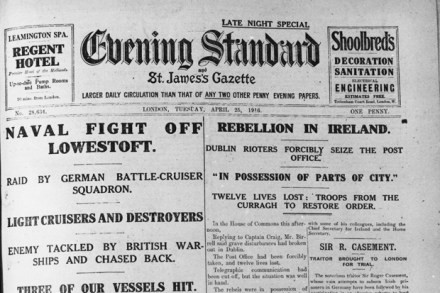
From ‘The Dublin Revolt’, The Spectator, 29 April 1916: If we are to do what will most disappoint the Germans, and that surely is a thing worth doing, we must pick up the pieces in Ireland with as little fuss as possible, and show the minimum of annoyance and disturbance… The insurrection in Ireland, seen in its true proportions, is not a great military event.

Duty calls

From ‘The Volunteer Training Corps’, The Spectator, 8 April 1916: If we were the Government, we would state plainly that in the opinion of His Majesty’s advisers no man over military age of good physique will be doing his duty to the nation who does not join a Volunteer battalion… it should be clearly understood that he was not performing his proper duties as a citizen, and that even if the state did not think it worth while to compel him to perform them, he would be a proper object of public censure and contempt.

All quiet on the Western Front

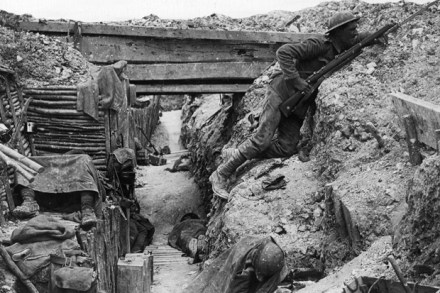
From ‘Observing: an average day’, The Spectator, 15 April 1916: 5.10 a.m. The signaller on duty at the telephone has just said cheerfully, ‘5.30, Sir.’ I agree, and ask him if the wires are all right. They are! 5.50 a.m. Unroll the mufflers round my head and the blankets and kick off the sandbags. Then get off the bed sideways into the water. 8.30 a.m. They have begun. Four ‘whizz-bangs’ have just burst very prettily over a communication trench to our right. Then silence again. 10.25 a.m. We have just had a little excitement. I suddenly saw a German — a rare thing — through the telescope. 2.15 p.m. They are shelling a trench on our left rather persistently, and the batteries behind have begun to retaliate.

Zeppelin raids

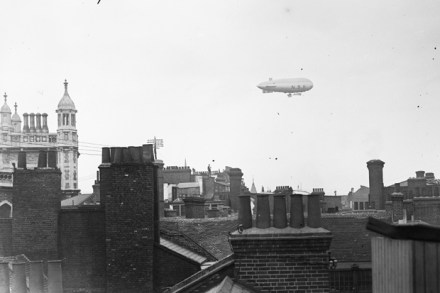
From ‘Per Mare, Per Terras, Per Coelum’, The Spectator, 8 April 1916: The very worst the Germans can do in the way of Zeppelin attacks is negligible from the military point of view. They are a great and grim annoyance, but nothing more… A scientific betting man, if asked what were the odds on John Smith or Mary Brown being killed in the next raid, would put it, we presume, at something like a million to one.

The road to remembrance

From ‘The “Via Sacra”’, The Spectator, 1 April 1916: When the war is over, France, Belgium, and Britain will be faced with the problem of finding some form of war memorial adequate to the greatest and longest battle of which the world has any record… We propose that a wide Memorial Road should be laid out in the no-man’s-land, the dead ground, between the two trench lines… from the sea to the Alps — a great road with monuments to the fallen, and to the deeds of heroism done by this or that individual company, regiment, brigade, division, and army, scattered along it.

Flying start

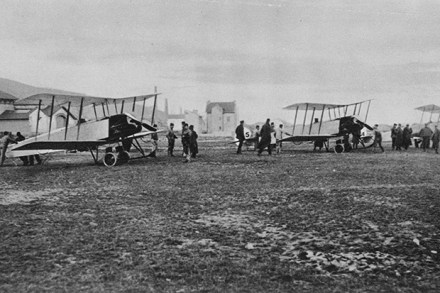
From ‘Common-sense and the command of the air’, The Spectator, 25 March 1916: The Air Service will be the great fighting Service, the Service which will seal the fate of nations. We say this, not because the Air Service is a novelty, but because of a plain, undeniable physical fact — the universality of the air… No nation can ever be excluded from the air. Therefore in the last resort the right to live freely and independently will be won and secured by nations in the air.

Portugal’s choice

From ‘Portugal and the war’, The Spectator, 18 March 1916: Portugal in coming into the war may seem to have taken a bold step, but she has really taken the only line of safety.  Our alliance with Portugal has been in existence since 1373. When German merchant vessels sought shelter in the Tagus it was known to the whole world that at any moment Britain — if the event did not come about in any other way — might call upon Portugal to fulfil the terms of one of the most ancient and best known treaties in existence and support her actively in the war.

Against Churchill

From ‘Colonel Churchill’, The Spectator, 11 March 1916: Colonel Churchill is being found out. The charm, once universal, no longer works, or works only occasionally and on a limited number of those exposed to it… To watch this fevered, this agonised struggle to regain the political fortune which the arch-gambler threw away by his own acts is to witness one of the tragedies of life. But we dare not be compassionate.

The last of Henry James

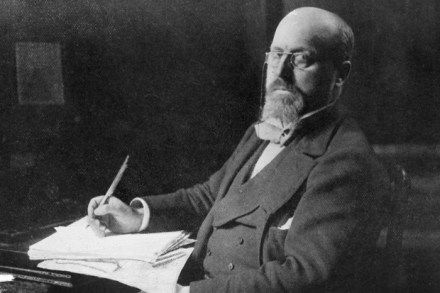
From ‘Henry James’, The Spectator, 4 March 1916: Englishmen are not likely ever to forget the generous thought which inspired the late Henry James to become a naturalised Englishman at the moment of England’s greatest distress… Henry James was good enough to say in substance that he was proud of England and her cause, and that he wished to stand with her in her trial. And now on the sorrowful occasion of his death every Englishman, care he much or little for the great art which the dead man cultivated, will wish to say that he is proud of Henry James.