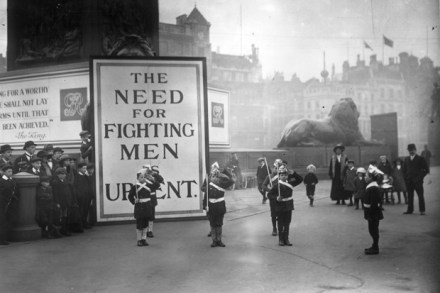
From the archives

From the archives | 4 December 2014

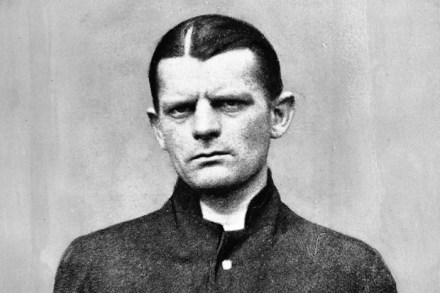
From ‘The Honourable Spy’, The Spectator, 5 December 1914: Decency is violated by the military spy when he becomes, for instance, a naturalised subject of a foreign power only to betray his adopted country. No such charge of dishonour can be brought against the German spy Lody who was shot at the Tower. He spied, he was discovered, and he paid the penalty without repining. In his last letter he compared his fate with that of the soldier on the field, modestly claiming a slightly lower place, and with admirable fairness he did not forget to pay a tribute to the justice of his judges. He took his chances and lost the game, but he played it intrepidly and within the rules to the last.
From the archives | 27 November 2014

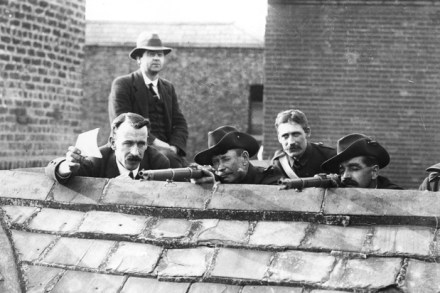
From ‘Sedition in Ireland’, The Spectator, 28 November 1914: If the press is to be muzzled, why do not the muzzling laws hold good in Ireland? It is against all common-sense to place Ireland in a privileged position — to give roving licences to any Irishmen who care to kill recruiting. Men have been arrested in England for spreading foolish false reports, which were not very much worse than the gossip of idiots. Why have the deliberate, callous preachers of sedition been allowed for so long to go untouched in Ireland?

From the archives | 20 November 2014

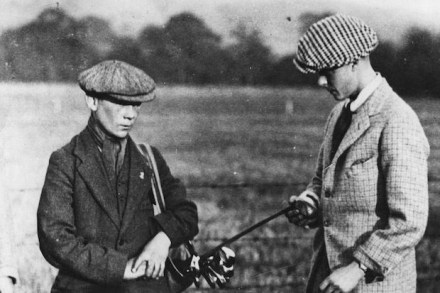
From ‘News of the Week’, The Spectator, 21 November 1914: We are glad to learn that the laudable persistence of the Prince of Wales has been rewarded, and that he has been allowed to go to the front, where he is now an A.D.C. to Sir John French. We can well believe the statement that the Prince is at the present moment the happiest young man in the world. He has got his way, and it is the way of honour, but it would have been a bad example if he had been allowed to go a day before his military superiors reported him sufficiently trained to take his place at the front.

From the archives | 13 November 2014

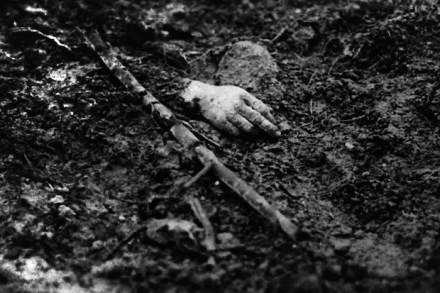
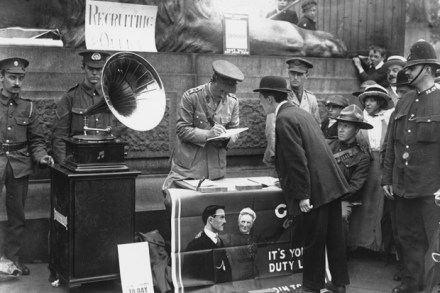
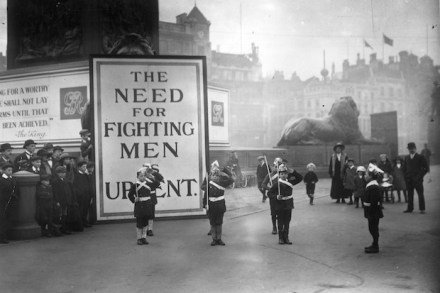
From ‘News of the Week’, The Spectator, 14 November 1914: We must make no attempt to conceal the terrible character of our losses. It is true that the German losses have been probably twice, or possibly even three times, as heavy, but that does not make our own losses the less awful. That we shall be able to make them good is no doubt true, but, unfortunately, we have not an inexhaustible human reservoir to draw upon, or, at any rate, not yet. Here, in fact, as in every other direction, we are brought back to the imperative need of more men. Here is the essential, and on this the nation must fix its heart and mind with unwavering determination.

From the archives | 6 November 2014

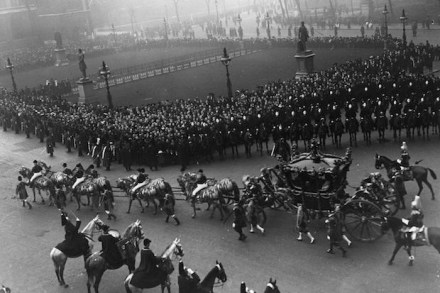
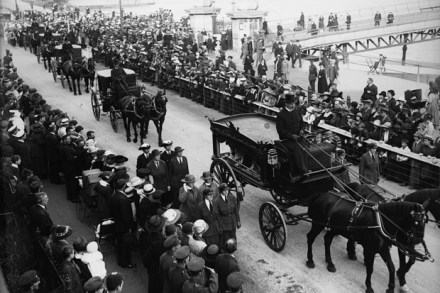
From ‘News of the Week’, The Spectator, 7 November 1914: On Wednesday next the King will open Parliament in state, the only alteration in the prescribed ceremonial being the temporary disuse of the glass coach. This alteration is due to a cause which, it is interesting to note, is reflected in every large household in the kingdom. So many members of the King’s servants have gone to the front as soldiers that it is difficult to find a sufficient number of the men trained to the ceremonial work. Otherwise, and most properly, the state will be full state.

From the archives | 30 October 2014

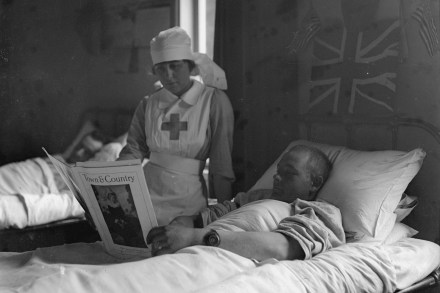
From ‘A Probationer’s Diary’, by a Red Cross volunteer, from The Spectator, 31 October 1914: Friday. The wounded are coming to-morrow. Twenty of them. They are to be drafts from a military hospital, and will be convalescent. Such a flutter in the dovecote, with a cleaning of sinks and of brass, and a preparation of dressings, and a replenishing of medicine bottles! Jane, who is in the women’s ward, affects a great superiority. Turns up her nose, and remarks that she for one is not going to run after the military. She supposes that we shall entirely neglect the old patients now. I conveyed a suitable reply to her. To our great relief, No. 8 is a little better.

From the archives | 23 October 2014

From ‘Topics of the day’, The Spectator, 24 October 1914: That spies are a great danger at the present time, and that espionage is being carried on on a gigantic scale, we do not doubt. It has been shown again and again that reports of the movements of our ships and of our troops, and every form of information useful to the enemy, are rapidly and secretly dispatched from this country day by day and hour by hour. It must not be supposed, however, that the men who betray our secrets to the enemy are necessarily Germans. Unfortunately there is every reason to believe that they are not only British subjects, but men of British birth. There is a percentage of bad men, of desperate men, and of bribable men in all countries.

From the archives | 16 October 2014

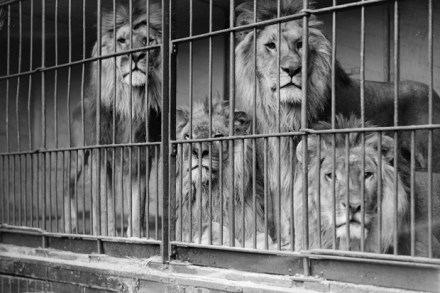
From ‘War and wild life’, The Spectator, 17 October 1914: The siege of Antwerp has been a minor tragedy in a quarter to which few probably gave a thought. The authorities of the Antwerp Zoological Gardens, before the bombardment began, felt compelled to destroy all the dangerous animals in their cages. They could not contemplate the possibility of beasts of prey loose in the streets; a stray shell would break the bars of the strongest enclosure, and the Zoological Gardens are situated near one of the important railway stations, which would naturally attract the fire of cannon.

From the archives | 9 October 2014

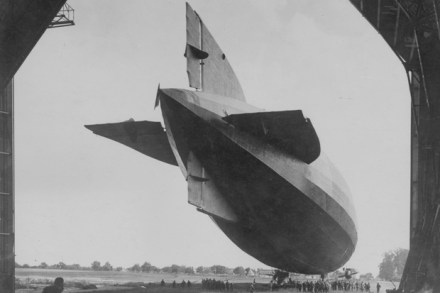
From ‘News of the Week’, The Spectator, 10 October 1914: The Germans must really be in very desperate straits if, as is alleged, they are straining every nerve to prepare a hundred Zeppelins and other aircraft to hover over London and bombard our capital from the clouds.

From the archives | 2 October 2014

From ‘Voluntary and compulsory service’, The Spectator, 3 October 1914: We do not suggest that the voluntary principle should be abandoned during this war. The system is being worked for all it is worth; it is answering well, thanks to the splendid spirit of the country; and it would be absurd to change it mid-way for another system.

From the archives | 18 September 2014

From ‘A review of the war’, The Spectator, 19 September 1914: It is the duty of all English publicists to make people here understand the splendid heroism with which the Servians have fought. They have contributed very greatly to the overthrow of Austria, and their brave Army and nation deserve all the help and encouragement that the Allies can give. We and the French very properly guaranteed a loan to Belgium. We, France, and the Russians ought to do the same by Servia, for the little nation’s finances must by this time be very nearly exhausted.

From the archives | 11 September 2014

‘An apology’, from The Spectator, 12 September 1914: We are informed that a story told in a letter from a correspondent signing herself ‘A Country District Visitor’, and published on August 22nd, 1914, has had an injurious effect upon Mr C.H. Schuhmacher, Chemist, of Heswall, Cheshire. In contradiction of the statements quoted in that letter, we are now informed that Mr Schuhmacher is a natural-born British subject of English parentage on his mother’s side, and that his only son, Mr Cyril Schuhmacher, is serving this country with the Liverpool Scottish.

From the archives | 4 September 2014

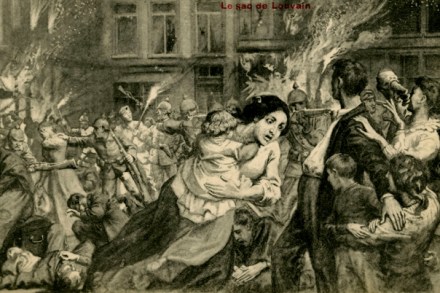
From ‘The giving up of Louvain to “Military Execution”,’ The Spectator, 5 September 1914: Germany has dealt herself the hardest blow which she has yet suffered in the war. By burning Louvain, killing we know not how many of its inhabitants, and turning the rest (say nearly 40,000 men, women, and children) adrift in the fields and on the pillaged countryside, she has forfeited the consideration of decent men. She has committed a deed which two centuries of exemplary conduct could scarcely efface… Germany must henceforth occupy a place with the Vandals and the Huns.

From the archives | 28 August 2014

From ‘Left behind’, The Spectator, 29 August 1914: In the poorer streets a kind of holiday atmosphere prevails, and a sort of excitement which is in a measure pleasurable fills the air… All the children are intensely excited. Many fathers have ‘gone to the war’, but not quite so many as are said to have gone by little boys and girls who cannot bear to be behind their friends and neighbours in importance. It is a tremendous step up in the world to have relations ‘at the front’, and ‘the front’ has a very wide meaning to children. Indeed, it seems to include the whole of England, except London.

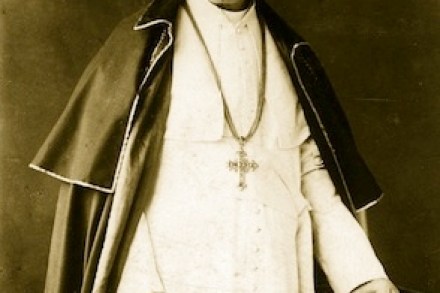
The death of Pope Pius X

From ‘News of the Week’, The Spectator, 22 August 1914: Pope Pius X died at 20 minutes past one on Thursday morning. In a moment of lucidity, just before his death, his Holiness is reported to have said: ‘Now I begin to think the end is approaching. The Almighty in His inexhaustible goodness wishes to spare me the horrors which Europe is undergoing.’ It is stated that since the outbreak of the war the Pope showed very deep feeling, and again and again repeated ‘Poor children!’ — alluding to the soldiers killed in action. The Pope was a man of great personal charm of character as well as of great goodness of heart, but no one but a flatterer could suggest that he had the intellectual qualities requisite for his great office.

From the archives

From ‘The Call to Arms’, The Spectator, 15 August 1914: At this moment it is the duty of all employers, rich or poor, to discharge no man but this does not apply to men of military age — i.e., those between 19 and 30, who are sound in wind and limb. In our opinion, employers not only have a moral right to discharge such men if they will not go into the fighting line, but in many cases also have a positive duty to do so. Rich men who are over military age need not to continue keeping soft billets for footmen, under-gardeners, stable boys, or young gamekeepers merely because the occupants of these pleasant places may not care to learn the prime duty of defending their country.