From the archives

What we’re fighting for

From ‘Justice and Security’, The Spectator, 26 February 1916: If the conditions upon which we are willing to make peace are to be summarised, they cannot be summarised better than by the words Justice and Security. It is for these that we and our Allies are fighting. These are the signs in which we shall win. We do not believe, and never have believed, in the talk about the nation coming out of the war ruined and crippled, and with no capacity left in us to rebuild our civilisation. On the contrary, we are convinced that when the war is over the nation will go forward with renewed energy, not only on the moral and intellectual but on the economic plane.
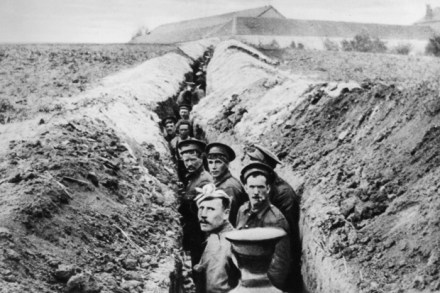
Equality in the trenches

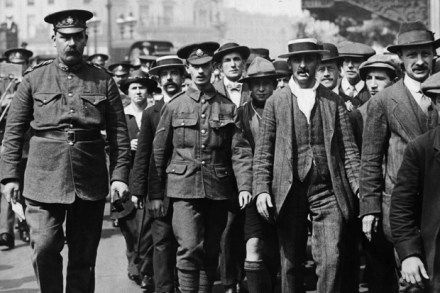
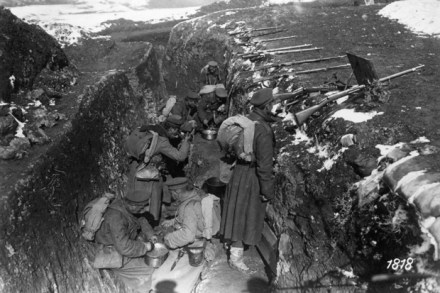
From ‘War the leveller’, The Spectator, 12 February 1916: Strange as it may appear to the pacificist, war has levelled up, not down, as the Socialists aim at doing… In presence of a common peril the private and his officer have learned to understand one another better, and have discovered the good qualities which each possesses.

France in ruins

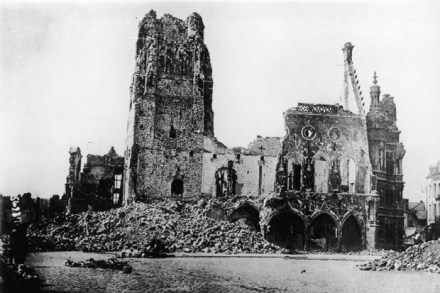
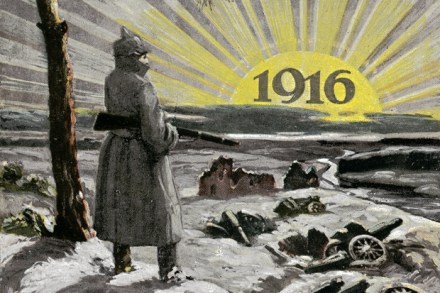
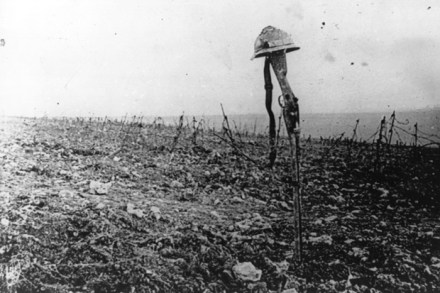
From ‘Marching through France’, The Spectator, 12 February 1916: Finally we came to the trenches themselves, and all around was desolation and ruin. There are few more mournful spectacles than a town or village lately reduced to ruins. To what purpose were all these homes sacrificed? Why are all these good people scattered and beggared and fugitive? Cui bono? On the Day of Judgment someone will have to answer. As we thought of the pleasant towns and villages that we had left behind, with their honest, kindly inhabitants, we set our teeth and resolved that, if we could prevent it, the receding tide should never return over the fair lands of France.

What to do with Syria?

From ‘The future of Syria’, The Spectator, 5 February 1916: We say with all the emphasis at our command, and without the slightest fear of contradiction, official or otherwise, not only that we do not want Syria for ourselves, but that nothing would induce us to take it. Englishmen of all parties; or political schools of thought — as we ought now perhaps to call them — are agreed that the British Empire is quite big enough already, and that at the close of the war the danger will be, not of our getting too little, but of our getting too much — of getting, that is, more territory than we shall have the man-power or financial strength to manage and develop properly.

Disciplined brutality

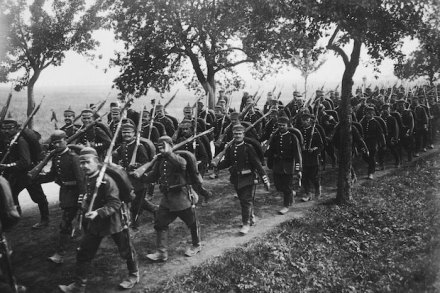
From ‘The Crimes of Germany’, The Spectator, 29 January 1916: It would be a relief, a partial solution, if only one could say that the Germans broke loose from their officers and their habits in a lust of blood and violence. But the terrible fact is that throughout the war we have heard no word of any German regiment being out of hand, or doing otherwise than their officers or the highest authorities desired. They have been a perfectly disciplined army — disciplined to spread red ruin, to oppress, and to bully with a mechanical docility.

Bad driving

From ‘The Conscription of Wealth’, The Spectator, 22 January 1916: At recent race meetings streams of motor-cars have proceeded from London carrying down persons engaged solely in the pursuit of their own amusement, wasting petrol, wasting the labour of chauffeurs, and diverting in hundreds of detailed ways energy which ought to have been devoted to the carrying on of the war. A heavy tax on petrol and heavier duties on motor-cars, except where they are used for public work, would prevent this scandal. More generally, it is notorious that in all classes, with the possible exception of the very rich, the scale of expenditure is as high as, or higher than, before the war, and the only way of effectively dealing with the problem is to increase taxation heavily.

Compelling evidence

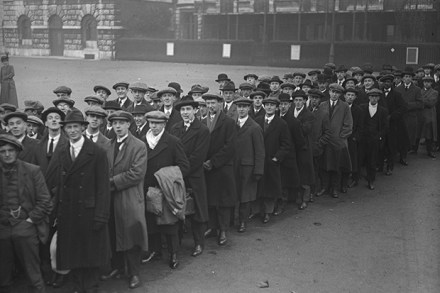
From ‘The Position of the Government’, The Spectator, 15 January 1916: Any man who knew the nature of Englishmen, or rather, let us say, of the English-speaking race, during war, would have been able to foretell that an enactment to compel shirkers to do their duty would be certain of something like universal acceptance… Our people is a brave people in deeds, if not in words. It is, however, the disconcerting way of Englishmen to be perfectly illogical at times of crisis. For example, they feel not the slightest difficulty in telling you that they are dead against ‘conscription’ and will never agree to it, but that they are quite determined to compel men by law to serve their country in arms if they show any signs of shirking their duty in that respect.

Church service

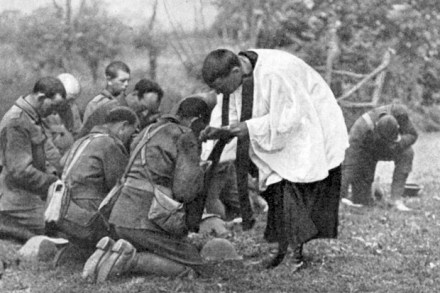
From ‘A Mobilisation of the Church’, The Spectator, 8 January 1916: Suppose the Church were mobilised so that the majority of the younger clergy and all the ordinands were set free for service in the Army, the situation at the end of the war might be very different from that which we have been anticipating. There is no life more intimate than that of the barrack-room. There is no life where the essential characters of men are so fully revealed as the life of the trench. Those of the combatant clergy who returned from the war would know all that was worth knowing of the characters of ordinary men…With such men as clergy a new era might dawn for the Church in this land, and the Kingdom of Heaven be brought very nigh.

Next year’s war

From ‘The Military Situation’, The Spectator, 1 January 1916: The opening of a new year is a time for taking stock of our situation. When we look back upon the beliefs and predictions of a year ago, we have to admit that there have been many disappointments and that unforeseen things have happened; but war would not be war if it were not full of surprises. We have as much to be thankful for as to deplore, and on the whole we think there is a good balance to our credit. We are a visibly winning people. If we were a losing people, we should be lamenting by this time all sorts of disintegrating movements and crumbling processes.

Communion in the trenches

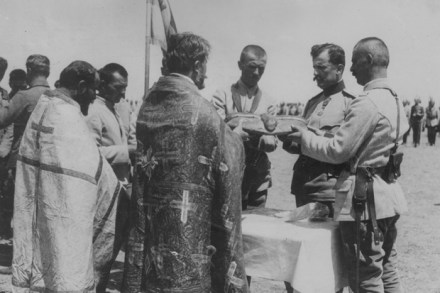
From ‘The Sacrament’, The Spectator, 25 December 1915: We were fairly fagged out, all of us, after a heavy day of it. One by one we scraped the thick, clinging mud off our boots as best we could and took our places at the mess-table. It was a door resting on biscuit-boxes, but we ate what lay on it ready for us as thankfully as if it had been polished mahogany covered with the whitest damask cloth. It was frightfully draughty, and through a shell-hole in one wall came the fitful, silent gleams of the Verey lights as they rose and fell over the trenches. There was an extraordinary silence, broken by nothing louder than the crack of a rifle now and then and the fitful noises of the wind. The guns had stopped their barking and roaring after 50 hours of ceaseless shelling.

Let unions pay MPs

From ‘Payment of members’, The Spectator, 4 December 1915: If the country could be polled at the present time, there is probably no subject upon which greater unanimity could be secured, apart from the general question of prosecuting the war, than that of payment of Members of Parliament. Barring Members themselves and the political agents whom they employ, it may be safely said that the whole country condemns the continuance of the salary of £400 a year… The excuse that some of these men make is that they draw the £400 in order to save poorer men from the odium of being alone in accepting pay.

Capitalism for all

From ‘Public loans and private savings’, The Spectator, 27 November 1915: In the nature of things there is no reason for the permanent maintenance of the existing gulf between capitalists and wage-earners. Every wage-earner ought to be to some extent himself a capitalist, and every capitalist certainly ought to be in one way or another a worker.

The French way of war

From ‘The Example of France’, The Spectator, 20 November 1915: France is an example to the world and to posterity of how a nation can bend itself to the work in hand, and labour with its whole body, its whole mind, and its whole soul. The more we know of the splendid details of this devotion the better. We think that we Englishmen know a good deal more of the ways of devotion than we are generally credited with, and we are learning daily in a geometrical progression. But even so, we cannot fail to help ourselves by watching and admiring the wonderful performance of a people whose circumstances brought them more quickly and more really into contact with war than we ourselves were brought… Beyond the rampart which we defend lie the barbarians yearning to advance.

From the archives: the liberty of the battlefield

From ‘Soldiers for the land’, The Spectator, 13 November 1915: It is certain that, when the war is over, tens of thousands of soldiers will not want to return to their former urban occupations. No man who has enjoyed the liberty of a greater world and a freer life will be reconciled easily to resuming his job of, say, working a lift, or enduring stuffy hours in a shop, or addressing envelopes in an office. The nearest reproduction of the campaigner’s life which will be normally possible for him will be settlement on the land.

The fall of a king

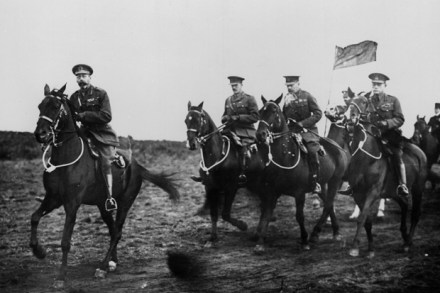
From ‘News of the week’, The Spectator, 6 November 1915: We greatly regret to record a serious accident to the King. When His Majesty was reviewing troops of the First Army on the Western front the cheers of the men startled the mare he was riding. She reared up so far that, she fell and partly rolled on the King. His Majesty was at once taken away in a motor-car, and though he bravely tried to respond to the recognition of his troops as he passed, it was evident that he was in very great pain. As soon as possible the King was conveyed home. Thus in a wholly unforeseen manner the King has suffered like any of his soldiers from the risks of the campaign.

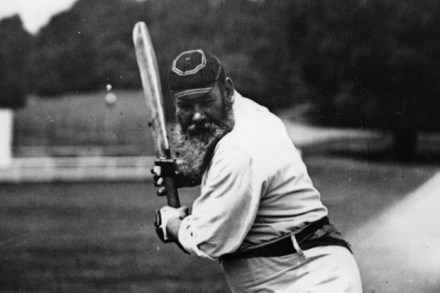
From the archives: W.G. Grace’s legacy on the Western Front

From ‘W.G.’, The Spectator, 30 October 1915: The late Dr. W.G. Grace had become in his lifetime a legend, and he is likely to remain a legend as long as Englishmen play games. Never was such a cricketer; and it is almost safe to say that there will never be such a cricketer again, for the perfection of pitches and the high organisation of the game have left less scope than there used to be for a man to achieve so great a mastery over his fellows. In this respect cricket is like war; in first-class cricket, as in war among first-class Powers, there is the same human material for personal ascendancy, but there is less opportunity for ascendancy to be practised… It is not stretching the fancy too far to trace the effects of ‘W. G.

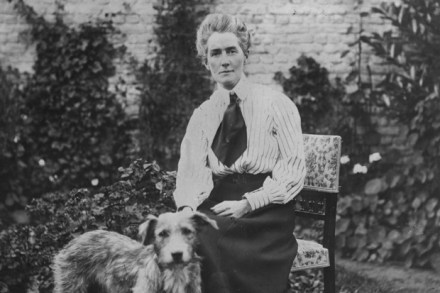
Revenge and Edith Cavell

From ‘Reprisals’, The Spectator, 23 October 1915: The Germans lately executed Miss Cavell, a good and brave English hospital nurse, on a charge of harbouring fugitives. Are Englishmen prepared for such reprisals as this execution suggests? … Is there a single Englishman, no matter how many public meetings he has attended in support of reprisals, and no matter how many letters he has written to the papers demonstrating the infallible success that would attend reprisals, who is willing to make that horrible and criminal retort? We cannot believe that there is one.

Our debt to Serbia

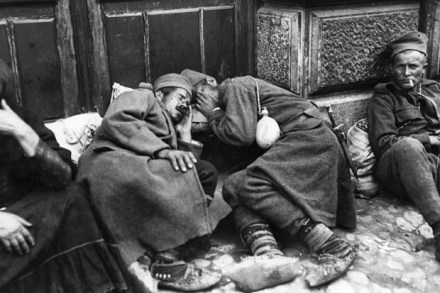
From ‘Boldness, Boldness and Again Boldness’, The Spectator, 16 October 1915: There are considerations of faith and honour which must in any case control the action of the allies. Serbia has been our ally from the beginning of the war, and it is now absolutely impossible for us to leave her to her fate. We must stand by her at all costs. The Bulgarians are preparing to stab her in the back. If Greece and Roumania quail, we must not do so. How can we expect them to play the part of honour in this respect unless we set the example? We cannot desert the Serbians — even though to help them will require a gigantic effort, and one which students of war in the abstract tell us may cause a loss of energy and involve us in great risks.

Bulgarian tragedy

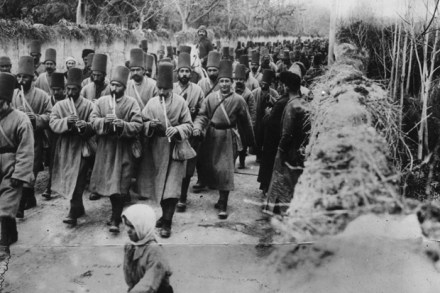
From ‘Bulgaria and Greece’, The Spectator, 9 October 1915: The fact that the British people will in all probability soon be at war with Bulgaria is a matter of very deep regret, for this nation has always watched the development of the peasant state with strong sympathy… But though we can and do sympathise with the Bulgarian people, it will be quite impossible to prevent the consequences of their king’s evil deeds from falling upon them. War is a stern business, and the allies cannot alter their course of action even though they understand Bulgaria’s difficulties. Regret it as we may, the Bulgarian people will have to reap the harvest they have sown, or allowed to be sown.

Slow march to victory

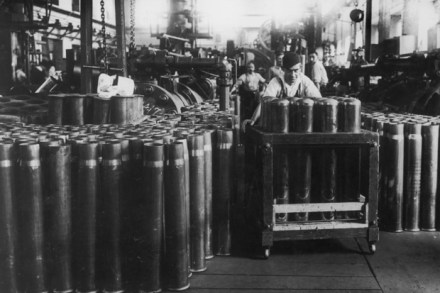
From ‘The western victories’, The Spectator, 2 October 1915: As this is a war of heavy artillery, masses of slow-moving guns and ammunition have to be brought to fresh positions, and there installed with all the exacting formalities which are foreign to the handling of field-guns and horse artillery. Patience is as valuable as determination. There are times to go fast and times to go slow… If the Hohenzollern and Kaiser Wilhelm Redoubts can be captured in spite of all the lavish care on their construction which is implied in their proud names, there is no redoubt yet invented that will ultimately survive the combined assault of hurricane artillery and well-trained infantry — provided only that we go on feeding our Army with the necessary drafts.