From the archives

Russia’s revolutionary soul

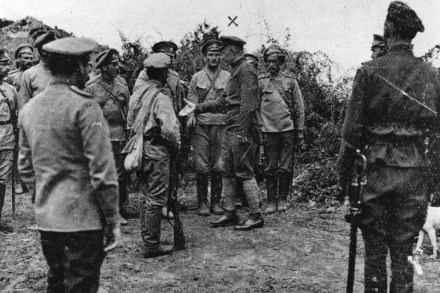
From ‘The Russian awakening’, 6 July 1917: M. Kerensky, the Russian Minister of War, has kept his word. He promised his Western Allies an early military Offensive and on Monday he was able to telegraph to his Prime Minister, Prince Lvoff: ‘On July 1st the Army of Revolutionary Russia took the offensive with great enthusiasm.’ … We wish our Eastern Allies the best of good fortune in the military sense, but whether their offensive succeeds or fails, for the present its significance is not to be measured merely by a military rule laid upon the map.
The potato’s finest hour

From ‘Our friends the vegetables’, 9 June 1917. The food shortage, and the consequent necessity of planting every available space with vegetables, have multiplied the amateur gardener many times over… If the spirit that inspires them is utilitarian, it is not surprising, for the kitchen garden is regarded by most people as above all things prosaic. Can one grow enthusiastic over a potato-patch or ecstatic about rows of turnips? True, the potato at the moment is having a devotion bestowed upon it that it can never have experienced before, but it is an attention founded on the most matter-of-fact motives.

Our flying machines

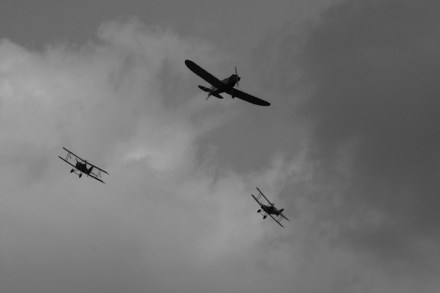
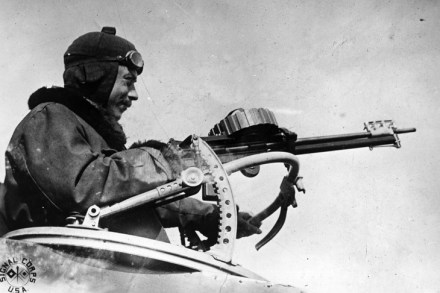
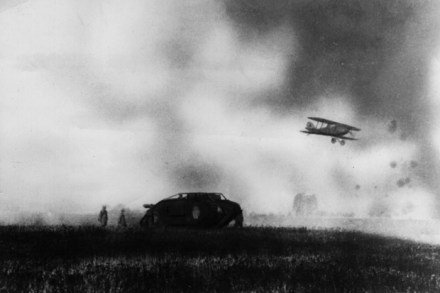
From ‘News of the week’, The Spectator, 2 June 1917: There has been a lull on the Western front. It is sure to be succeeded by another storm, but this week there is little to record measured by the standards with which the titanic fighting in France has made us familiar. One fact, however, must be mentioned. Our flying men have done exceedingly well. Last Sunday, for instance, the Germans lost 13 aeroplanes and ten others were driven down out of control. Only three of our machines did not return that day.

A brave new world

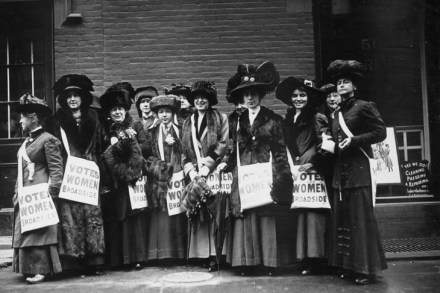
From ‘The New Reform Bill’, The Spectator, 19 May 1917: Though we used to be opposed to the suffrage for women, and have only accepted it in view of the great upheaval of the war, we feel most strongly that it had better be ‘a clean cut’ and a generous cut. Just as we opposed it on the ground not of the incompetency of women, but because we held that the suffrage had better be confined to one sex, so, now this view is untenable, we hold it is very much better that women should be put upon an entire electoral equality with men. The women who will be excluded … at the poll will probably be those who will need the franchise most — the unmarried women earning their own livelihood. There are a great number who do not marry till they are over 30.

The lay of the land

From ‘Schoolboy labour’, The Spectator, 12 May 1917: Work on the land, even though the time be stolen from books, will have a distinct educative value, because Public School boys are less handy than boys of the same age in a poorer class. Take boys of 15 in an agricultural district who work regularly on the land… They have an aptitude and appearance of physical maturity, which are almost unknown in the well-to-do classes. Their physical strength is not greater than that of Public School boys, but it is applied more cunningly, and their general competence is remarkable. To have even a short experience of how labourers work on the land will be an unforgettable experience.

Let them eat hay

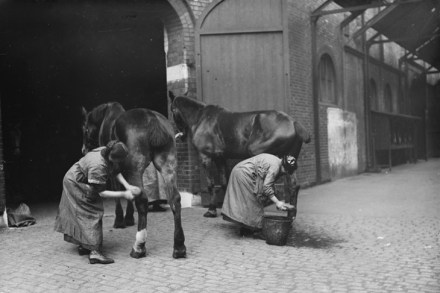
From ‘What ails the House of Commons?’, 21 April 1917: Theoretically no horses kept for pleasure or sport ought to be allowed to be fed with oats at the present time. Such food as can be spared should be kept for ploughhorses and horses used for necessary transport. We are told, of course, that the best racehorses, mares and stallions, must be kept alive to maintain the breed. We agree… There are, however, a great many racing geldings … consuming quantities of oats. There are also a large number of inferior thoroughbreds of all kinds whose only object is the winning of second-rate events. These could either be turned out as it becomes a little warmer, or else put out of training and condition and fed on hay.

Ballots and bullets

From ‘The golden opportunity’, 31 March 1917: The proposal not to give women votes till they are 26 might well be modified by making all persons come of age politically at 26, but with the proviso that any man who had served in His Majesty’s Forces, naval or military, during the war should be given a vote whatever his age. There can be no better basis for a vote than such service for the state. Those male persons who from the impediment of ill-health or engagement in a special trade failed to join the combatant forces should not enjoy the suffrage till 26. Those who have gone through the fire of war or prepared themselves to go through it deserve to come of age politically at 21.

Up the revolution!

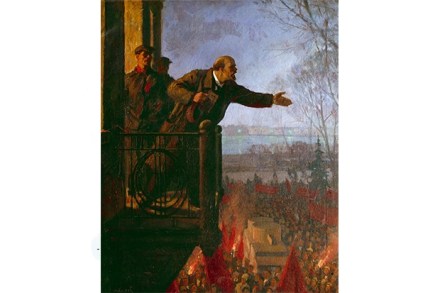
From ‘The Russian revolution’, 24 March 1917: Even now, though the Revolution is young, the Russians have proved that they are fit and worthy to exercise the full benefits of self-government. In the highest spheres of government they had hitherto been always thwarted, but no one who has watched the progress and expanding influence of the Zemstvos and the Municipalities can deny that Russians have long displayed the capacity for local self-government. Such a Revolution as has just occurred was inevitably born in violence, but the violence was much less than might have been expected.

Disaster in the Dardanelles

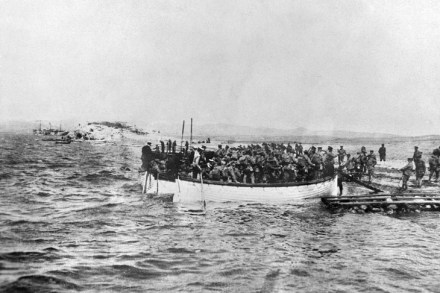
From ‘The Dardanelles report’, 17 March 1917: The plan of the government in the case of the Dardanelles Expedition had the worst fault which any naval or military plan, or naval and military plan combined, can have. It had no real objective… or rather, to put it in another way, it only had a vague and general objective, not one which was clear and specific and could be carried through by a series of definite acts… To say vaguely that Constantinople was its objective was nonsense. A tourist, a mere sightseer, might have Constantinople as his objective, but not a fleet or an army, or even a commercial traveller.

America confronts Germany

From ‘The revelation of Germany to the United States’, 10 March 1917: Even if Mr Wilson stops short at his present stage, he has undeniably pulled the tiger’s tail. It cannot be expected that the tiger will forget this… if we were Americans we should be very much alarmed. We think we should want to make sure of killing the man-eater while the chances are good.

A model village

From ‘Sir Thomas Acland’s example’, The Spectator, 3 March 1917: In 1912 we discussed the idea — a favourite dream of ours — that some characteristic English village, perfect of its kind but likely to lose its quality in the hugger-mugger expansions of modern enterprise, might be acquired by the National Trust to be kept forever as a specimen, in a changing world, of what used to be… Men freely give pictures and collections of china and plate and furniture to the nation. Why not the grouped architectural works of man? Why, too, should not open pieces of country be given as often as pictures and bronzes and statues?

The Americans are coming

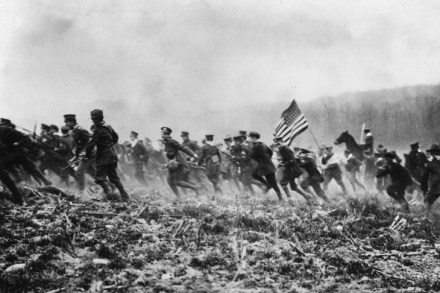
From ‘What will the United States do?’, The Spectator, 24 February 1917: It may be that the congestion of American shipping may force Mr Wilson’s hand, for a partial paralysis in the docks is temporary evidence that Germany can intimidate the greatest of neutrals. But, on the whole, we expect that some more sudden and violent demonstration of German violence will cause Mr Wilson to summon the American nation to action. When that happens we shall be able to say that Germany, among her other diplomatic achievements, has reunited the Anglo-Saxon world.

War and law

From ‘The confiscation of enemy property’, The Spectator, 17 February 1917: It is perfectly possible to remove German influences without confiscating German property. This, as far as can be gathered, is the policy which the French have followed, and in their interest as well as in our own we ought also to follow it. The Germans, to give them in this matter the full credit which is due to them, have been very slow to take any steps against British property held in Germany… We do not wish to give them an excuse for fresh crimes. Our business is to punish them as a nation for the crimes they have already committed. In order to effect this object we have to concentrate all our energies upon beating our enemy in the field and on the sea.

A special relationship

From ‘The United States and Britain’, The Spectator, 10 February 1917: It would be easy to write down a hundred reasons why unclouded friendship and moral co-operation between the United States and Britain are a benefit to the world, and why an interruption of such relations is a detriment to progress and a disease world-wide in its effects. But when we had written down all those reasons we should not have expressed the instinctive sentiments which go below and beyond them all. To our way of feeling, quarrelling and misunderstanding between the British and American peoples are like a thing contrary to Nature.

Tax demand

From ‘Lenders and taxpayers’, The Spectator, 3 February 1917: As to the general financial soundness of the country there can be no question… Indeed, one of our worst economic troubles at the present moment is that many classes of people are in possession of more money than they have ever handled before, and cannot resist the temptation of spending it lavishly. Somehow or other their expenditure on their personal gratification has to be controlled in the interests of the state. A considerable amount of control is being exercised through the power which the government possess of regulating our imports. That power, as we shall presently urge, must be more extensively used as regards certain commodities.

Who commands the sea?

From ‘Raiders, submarines and some naval problems’, The Spectator, 20 January 1917: At the moment the enemy’s fleet is compelled to remain in its own ports and to challenge us from safe retreats, sometimes behind lock-gates and always behind well-sown minefields. Still, the fact remains that the enemy can come out if they like, though we cannot make them do so when we like, and further that with good luck they can actually smuggle out a raider or two. We are top-dog, but up till now we have not been able to get a good bite at the under-dog, and he remains, though in a humiliating position, quite fit for work and mischief.

Bonds of friendship

From ‘The Rome conference and bonds of alliance’, The Spectator, 13 January 1917: There may be the greatest possible good, nay, even salvation, in partnership or alliance; but the fact that partnerships and alliances do involve loss of free will, and that a man cannot when he is in partnership be wholly master in his own house or office, must never be forgotten. Yet, strangely enough, this is a fact which is constantly ignored even by our experts in foreign affairs, with results which are often not only exceedingly unfair to the British nation as a whole, but grossly unfair to individuals.

A killing to celebrate

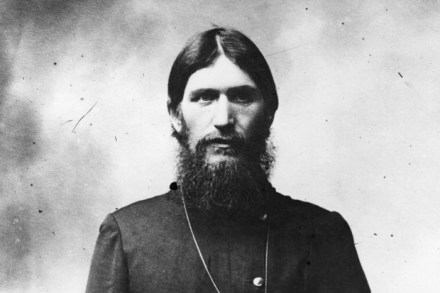
From ‘News of the Week’, The Spectator, 6 January 1917: The war has been crowded with romantic adventures by sea and land in every part of the world, but perhaps nothing is more sensational, more reminiscent of blue lights and the accents of warning and suspense from the orchestra, than the murder of the monk Rasputin in Petrograd… Whether those who took his life did so on the grounds of private revenge or of patriotism remains to be seen. In any case, we agree with Reuter’s correspondent that the disappearance of this sinister figure is a subject for congratulation for all true friends of Russia.

These little islands

From ‘Engage the enemy more closely!’, The Spectator, 30 December 1916: Britain was never more vigorous than she is now: She has renewed her youth, and we may look forward to many years, possibly to many generations, of potent life. Still, we cannot conceal from ourselves that the destiny of these little islands in the Northern Sea must in the last resort be to lose their relative importance… To us the thought of our decline, inevitable, though it may be long postponed, brings no sense of hopelessness or misery as it did to the Roman.

Faith in the trenches

From a letter published under the heading ‘The religion of the ordinary soldier’, The Spectator, 23 December 1916: During a discharge of gas at the beginning of July along our front, one of the cylinders was displaced by the near bursting of an enemy shell. It turned the nozzle round, and the gas began to pour into our own trench. One of my lads, who was acting as orderly, heard from the communication trench that something was happening and ran into the front line… He ran forward unprotected, tugged at the cylinder, and pointed its nozzle outwards again before he fell unconscious. He died a few minutes afterwards. Those who saw it told me it was a quite spontaneous action. This boy would have told you that if his name was on a shell, it was no use running away.