From the archives

Giving thanks

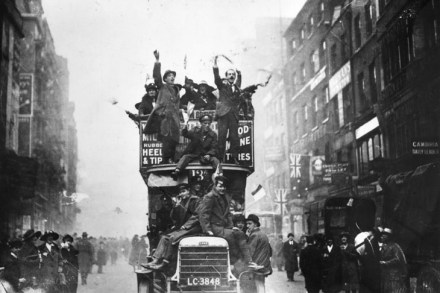
From ‘Thanks be to God’, 16 November 1918: The thought that filled the mind of the nation on Monday, and has possessed it ever since, is the thought, Thanks be to God. Under a thousand names and forms, consciously and unconsciously, realized fully or only half realized, this has given unity to the nation and made the moment mighty. Not to have recorded this fact, and to have left unsaid what we have just said, would have been impossible. But it is equally impossible to say more. If it is true that the greatest truths demand the greatest care in their statement, it is also true that the greatest and most moving thoughts entertainable by man can only find the simplest expression… We profess deep gratitude, and we feel it.
The decisive moment

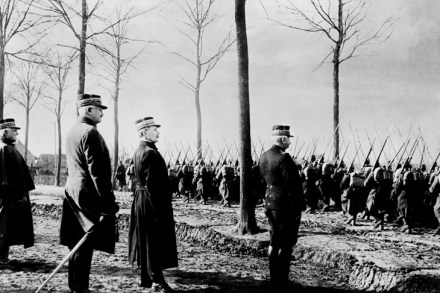
From ‘News of the week’, 5 October 1918: The Western Front is now aflame from the sea to Verdun. This week has seen the hardest fighting of the war. Marshal Foch has launched not one offensive but a whole series, in one sector after another, so that now the battle is joined along a front of over two hundred miles. The enemy is thus hotly engaged at almost every point, and can no longer weaken one part of his line to strengthen another, since a breach at any place would be disastrous. The decisive moment has come.

Allenby’s triumph

From ‘The Eastern successes’, 28 September 1918: The glorious news from Palestine and Macedonia has exceeded all expectations. The annihilating victory of Sir Edmund Allenby in Palestine, and the rapid advance of the Allies against the apparently demoralised Bulgarian Army, will help very powerfully towards weakening the unity and breaking the heart of our enemies. Though it would be impossible to praise too highly these splendid achievements, it is necessary to judge them in their proper relation to the strategy of the whole war...

Victory is nigh

From ‘The fifth year of war’, 3 August 1918: There are those who think that Germany will try to regain the initiative, and may very likely succeed. They point to the large unexhausted reserves under the command of Prince Rupprecht, and remind us that we have an unpleasantly narrow slit of territory to manoeuvre in between the Flanders front and the Channel coast. We are more sanguine. The recent rains have re-created the bogs of Flanders, and though the ground is drying, the autumn is not far distant. The ‘greatest effort’ of Germany lies in the past.

Hitting home

From ‘The munitions strike’, 27 July 1918: It is necessary for the Government to make it clear that the present strike of munition workers is unlike all previous strikes in that it is a direct challenge to the authority of the State. Such a challenge in time of war is in the nature of sedition and treason, and must be treated accordingly… If this is not made plain, the authority of the Government will disappear, and we may as well all say good-bye to the glorious prospect of handsomely winning the war. If the production of the munitions of war is to be held up, there is no political principle…which can be retained if dispensing with it would help the prosecution of the war.

The future of Scandinavia

From ‘The Baltic question’, 15 June 1918: The future of Scandinavia and the Baltic must depend on the outcome of the war. If indeed Germany were to emerge victorious, then all the evils on which the pessimists delight to ponder would come to pass… The Baltic would be a German lake, and its commerce would be a German monopoly. Swedes and Danes and Norwegians would gradually be converted by Prussian schoolmasters and Prussian police into docile Germans, and their distinctive civilisations and literatures would disappear. Such is the prospect if the Allies were to fail in their task. But, fortunately for Scandinavia and for the rest of the world, the Allies will not fail.

Inverted Tsarism

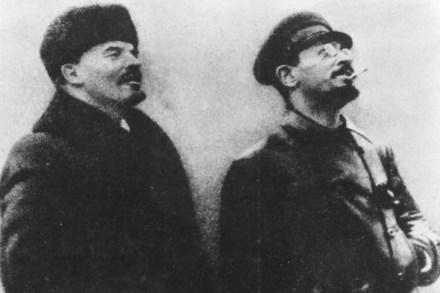
From ‘News of the week’, 1 June 1918: Bolshevism is the negation of democratic government. There is no pretence on the part of M. Lenin and M. Trotsky that they wish the will of the people to prevail. What they say is that the proletariat must rule, and must crush both capitalism and the bourgeoisie. They are opposed to the existence of everybody who does not agree with them… Even the Russian peasants in the mass are not Bolshevik by conviction. Bolshevism, now that its principles are thoroughly understood, turns out to be nothing but an autocracy ‘by the proletariat’ — and not even by the proletariat, but by that part of the proletariat which believes in Bolshevism.

Brothers-in-arms

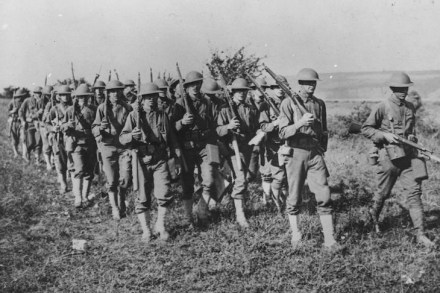
From ‘The new crusade’, 25 May 1918: It is curious to think how great must soon have been the spiritual gulf between the new generation in Great Britain and the United States if the latter had remained in prosperous isolation. In five years we should have ceased to understand each other’s jokes, in ten we should scarcely have spoken the same language. But now the tide is setting just as mightily towards a complete and perfect sympathy. A whole generation of Americans will have been our brothers-in-arms… The possibilities of the new brotherhood are almost boundless.

All peril on the Western Front

From ‘The situation on the Western Front in light of the Paris speech’, 11 May 1918: Instead of the Western Front proving impenetrable, the enemy has penetrated it, and brought us nearer a position of peril than we have been in since the retreat from Mons. There has been ‘real unity in the war direction of the Allied countries,’ but even if it may be an advantage per se, which we are not going to deny, it has proved a very poor substitute for Brigades and Divisions… Our line has been broken in, not from any want of so-called good Staff work, or from any failure on the part of our men, or from bad generalship, but simply and solely because if in modern war 14 Divisions are opposed by 50, the 14 must sooner or later succumb.

The staple of our strength

From ‘News of the week’, 27 April 1918: The Navy has come altogether into its own again. The details of the gloriously daring naval enterprise at Zeebrugge and Ostend have taught the nation to remember that the Navy is not only the staple of our strength, but has a very positive power of aggression even under the conditions of this war. Ultimately our victory will depend upon the exercise of this power… The spirit of the Navy has always been true to the Nelson legend, and it was not the fault of the Fleet that sometimes the opportunities have been withheld from it of acting in accordance with its traditions.

Our future queen

From The Spectator, 15 April 1943: Princess Elizabeth will be 17 next Wednesday, which means she is ceasing to be a child. Her life has so far, most rightly, been spent in her home rather than in the public eye, and her future subjects know little of her, apart from the admirable broadcast talk she gave three years ago, to the children of the Empire, at home and overseas, when she was only 14. Now that the Princess stands on the threshold of public life, they may feel some natural desire to know something of how she is being prepared for the high office that will one day be hers, and the Queen has shown a gracious readiness to make available such information as is relevant for that purpose.

German manoeuvres

From ‘The great battle’, 30 March 1918: Since our last issue by far the greatest battle of the war has developed — a battle to which, for significance and size, history affords no parallel. It is being fought with such intensity and with such an exhausting use of men and munitions that we cannot suppose that there will be a prolonged crisis… When the battle is over the military situation will be radically changed… We shall know either that Germany has lost her gambler’s throw and that we can deal with her during the rest of the war with confidence and deliberation, or we shall know that we have got to begin the war, as it were, all over again.

Triumph of the spirit

From ‘A moral test’, 2 March 1918: The nation, in spite of all the silly talk about our war aims not having been stated, is more united now as to the minimum principles for which we have to fight than at any moment during the war. In spite, again, of most of the talk about revolution, the mind and spirit of the working men are sound… Whatever suffering there may be, it cannot last indefinitely. Right will certainly triumph, and when that glorious day comes we shall recognise that what was grievous to endure is sweet to remember.

Trotsky’s audacity

From ‘News of the week’, 16 February 1918: Last Sunday M. Trotsky announced at Brest-Litovsk that Russia would fight no longer, and would demobilize her armies without signing a peace. In a wireless message issued that day he had the audacity to impute the blame for his miserable surrender to ‘the silent co-operation of the English and French “bourgeoisie”’ with the German capitalists, bankers, and landlords. That, of course, is the very reverse of the truth. The Allies would have supported any Russian Government which would fight, but the Anarchists destroyed the Army, and made an armistice without consulting us. They are now reaping the fruits of their folly.

Bolshevik mischief

From ‘The Bolshevik negotiations with Germany’, 19 January 1918: We think that the fact is fairly emerging from the negotiations that the Bolsheviks are not, as some people supposed, the pliable tools or even the agents of Germany, but are idealists genuinely inspired by their mania. Of course, a great deal of harm may be done by a mania, however intellectually sincere it may be, and we can set no precise limits to the mischief that may be done by the Bolshevik leaders before they have finished. The habit of preferring the shadow to the substance, and rating the sound of words as more important than the realities implied by words, commonly ends in a terrible disillusionment.

Nothing new at New Year

From The Spectator, 2 January 1847: The New Year opens for England with heavy clouds in the sky, but with no sunless horizon. Never did the country enter upon a year with more work to be done. Ireland alone presents a task without precedent: England has there to reorganize an old country... The progress of the new free-trade policy has to be looked after. The public law of Europe is unsettled, and an eye must be kept on that. But with all this Herculean amount of work, the country never had better means of performance. The very urgency and momentous importance of the tasks compel earnest zeal. The decay of party-spirit releases the ablest man from smaller services to cooperate in serving the largest interests of the country.

Never alone

From ‘Comrades of the great war’, The Spectator, 1 December 1917: Eventually all will be over, even the shouting; and some five million heroes will become to the general eye merely plain men with their living to earn… The real force, we are convinced, that will carry the ex-sailor and ex-soldier with ease and content back to civil life is possessed by the men themselves, in that bond of comradeship which, even more than discipline and esprit de corps, has brought them through ordeals endured only, endurable only, because no man was in that pit alone; which has prompted glorious deeds by land and sea, because each dared not for himself only but for all.

Revenues past

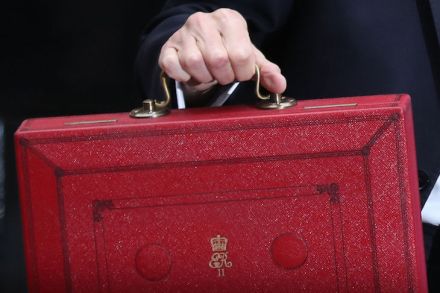
From 12 July 1828: The Chancellor made his financial statement on Friday, in a style of candour and clearness which pleased all men. Its substance was this: that the state of the revenue is flourishing; that there will neither be new taxes imposed nor old ones reduced; and that the sinking-fund shall be limited to three millions: not the real, but the desired actual surplus of revenue, which it is not in future years to exceed. The expenditure of 1828 is, in round numbers, 32 millions for the permanent charges, and 18 millions for the military establishments, the latter being one million less than the amount of last year.

Always a dull moment

From ‘Perfect peace’ by Christopher Hollis, 21 October 1960: In Mr Terence Rattigan’s The Final Test, an English spectator of the match is asked by an impatient American: ‘Is anything going to happen?’ ‘Good Lord, I hope not,’ replies the Englishman. He must, I fancy, have been in professional life an organiser of a Conservative Party conference. For a Conservative Party conference is intended to be, and is, the dullest thing that ever happens.

The nerves of the enemy

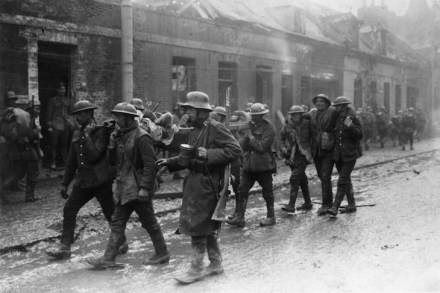
From ‘The progress in Flanders’, 29 September 1917: The fighting has reached a degree of intensity never before known. There is no leisure or rest for any one. The instruments of destruction which fly through the air by day and night are more numerous and more various than before… The strain to which the enemy, even more than ourselves, is subjected is terrific beyond words. We imagine that for one shell that the Germans send over we throw across four, five, or perhaps six. There is also what may be called a kind of camouflage in artillery work, when the drum-fire which the Germans regard as the sure herald of a coming attack culminates in no attack. The nerves of the enemy are, in fact, kept at the breaking-point the whole time.