From the archives

From the archive: the nature of Japan

From ‘The rule of taste’, Anthony Thwaite, 6 March 1959: The society of aristocrats, connoisseurs, wise men and heroes which was the Japan of Yeats’s imagination did exist. It was capable of moments which combine, in the true spirit of Zen, extraordinary aesthetic perception with what looks like plain flippancy. This is revealed, for example, in the anecdote which Sir George [Sansom] tells about the Emperor Shirakawa, who had summoned a stricken old campaigner to the Palace to tell the story of his campaigns. ‘The old soldier began, “Once when Yoshiiye had left the Defence Headquarters for the fortress at Akita, a light snow was falling and the men…” at which point His Majesty broke in and said: “Stop there!

From the archive: With the Benedictines

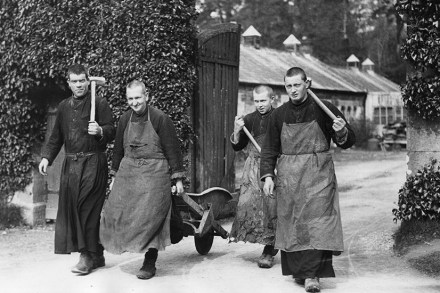
From 18 October 1946: Their whole aim and object is to exemplify in their lives and corporate activity their sense of participation in the mystical Body of Christ; and they believe that prayer in common and, above all, the maintenance of a spirit of prayerfulness throughout the day brings them nearer to it than the excessive individualism of such Renaissance mystics as St Theresa and St John of the Cross. Consequently, little or no time is allotted to private prayer, the stress being put upon group-loyalty after the pattern of the early Christians. The whole life hangs together as by a gossamer-thread; but to realise it, to feel its full message and intensity, one has, of course, to live it oneself.

And end to decent dying

From 22 March 1986: They used to say that war is the ruin of serious soldiering. Too much disorder, too many accidents. So it could be said of the bubonic plague: it spoilt dying completely. There was so much to fear. Not merely a sudden, unexplained and incurable form of disease, since brevity of life and mysterious illness were commonplace; besides, there was no lack of plague-theories and official nostrums. What was truly dreadful was the subversion and mockery of all that was usually done to dignify the final moment, of the pains taken to celebrate death, and prevent him from doing irreparable harm to the community. So plague gave death a bad name, and for more than 300 years no Englishman could grow up without expecting to witness or suffer one outbreak or more before he died.

Objects of desire

‘Homosexuality without the cant’, by Simon Raven, 14 June 1968: ‘All virile societies,’ writes Mary McCarthy à propos the Florentines, ‘see boys as objects of desire.’ And there you have it in one. Men will find younger men physically pleasing, not because of some terrible occurrence years ago in the woodshed, but because young males, like young females, are physically pleasing… They are a pleasure to look at, as everyone admits; they are also a pleasure to touch, when legitimate occasion presents; presumably, therefore, they are a pleasure to take to bed. The above is a straightforward statement of an attitude that has been common to many young males in many times and places. (It was certainly my own.

Mr Pooter goes to Europe

By Leo McKinstry, The Spectator, 17 August 2002: The modern MEP is a titan of tedium, a figure whose every action spreads ennui through our civic life. Only a hardline bore would want to handle the pettifogging bureaucratic activities of the European parliament, and only a true bore could possibly think that the pontificating and prattling of MEPs could be of the slightest interest to anyone outside their number… ‘A period of silence from you would be welcome,’ Clement Attlee once told the garrulous socialist and Labour executive member Harold Laski. The same remark could be directed today at our overpaid, publicity fixated MEPs.

A coalowner on coal

From 16 June 1866: Mr Stanley Jevons, Mr Mill, and the Chancellor of the Exchequer are all agreed that there is imminent danger of exhausting the British store of coal, are almost willing to legislate upon that annoying datum… The philosopher may of course argue that it is all a question of time, that the coal must be exhausted some day, and that a few hundred years make no difference to his argument, but this is not a political view.

Koo detat

From 16 October 1982: Prince Andrew’s Caribbean holiday with Miss Koo Stark (following, perhaps prompted by, months of all-male company in the Falklands) has reassured the nation that its royal family is ‘normal’.The Prince’s conduct is hallowed by tradition. Indeed, the difficulty is in finding a single heterosexual prince… who confined himself to the woman he married. Over the past centuries, only King George VI seems to qualify with anything approaching certainty. Like Andrew, King William IV was a sailor… he visited the West Indies, where he unluckily contracted venereal disease. Mrs Jordan, an actress, bore him ten children. Similar examples are too numerous, or too shameful, to mention. We have seen it all before.

A paradise of postcards

From The Spectator, 15 July 1922:   It is true that things so small as postcards cannot give one the splendour and glory of a great statue or a great canvas; but, all the same, their smallness is one of their virtues. A man fond of such things, riding across the Syrian Desert, on the camel tracks in the Sudan, or in Mesopotamia, or making some journey in West or East Africa, in Rhodesia, or on the North-West Frontier of India, or wherever there are wastes to pass and duties to be done, might easily thrust two or three of these little packets into his pocket or his saddle-bags.

A poll of the people

The Need For A Poll Of The People, 2 August 1919: ‘It is not to be wondered at that during the anxious public discussions about nationalisation, proposals should have been made that the great issue should be decided by means of a Referendum or, as we prefer to call it, a Poll of the People. It is noticeable that this suggestion has received support in quarters where the Poll of the People has not hitherto been favourably considered. The idea seems to be that an exceptional and very grave problem might be solved by exceptional means.

A way with words

From ‘Low talk’ by John Daniel, 19 July 1963: Everybody has heard of Dr Johnson’s dictionary, which is now not much more than a curiosity piece, while few know Grose’s dictionary, which provides a unique anthology of 18th-century underworld slang… He collected words he remembered from his reading and his night-time excursions about Drury Lane and Covent Garden, and although he suggests in a preface that his work will be useful to foreigners and provincials, there is more of the wit than the pedagogue in his glosses. For example: ‘Whore-monger: a man that keeps more than one mistress.

An absurd craze

From ‘Keeping fat’ by Geoffrey Wheatcroft, 7 October 1978: The running craze is a symptom of our deplorable age, in particular of our obsession with health, slimness, fitness and, above all, longevity. Jogging is not only undignified but absurd. It is a confession that people feel that they lead displeasingly unhealthy lives, but are not prepared to do anything preventative, rather than remedial, about it. The answer for someone who thinks that he is overweight is to eat less for a while, not to leap around at unseemly exercises. And the way to eat less is, simply, to eat less.

How to fight Bolshevism

From 10 May 1919: The heart of the country is always for moderation. Nothing could show this more plainly than the recent by-elections. It was felt that the Prime Minister had been given too clean a sheet of paper to write his policy on, and that it would be good for him to feel that the country had criticism to offer, and was, moreover, able to put on the curb. But this balancing process was not, and never is, a violent swoop towards pulling down everything that exists. There was certainly nothing revolutionary in it.

Backing Mrs Thatcher

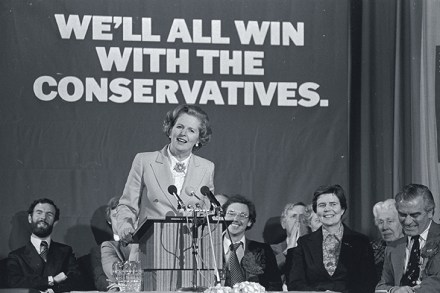
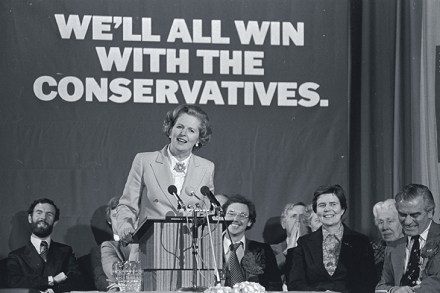
From ‘Be brave’, 28 April 1979: We can think of a number of reasons why voters might feel reluctant to vote for Mrs Thatcher. But this reluctance should be set aside. We must be brave. Only time can tell whether the Tories possess the necessary qualities of resolution and ability which are needed to deal with the nation’s problems. What we do know is that Labour entirely lacks them… The problems are familiar: a State which spends an ever-increasing proportion of ever diminishing national wealth; the atrophy of those traditions and mores which have supported British social life, resulting in growing lawlessness; a deplorable industrial record which may reasonably be blamed on a trade union movement that positively exults in maintaining low productivity.

Israel and the UN

From ‘Israel’s Candidature’, The Spectator, 22 April 1949: Israel’s application for UN membership received a chillier reception than had been expected. There was a widespread feeling more needs to be known about Israel’s intentions on certain points before the final seal is given to her international position. Does she propose to do anything about the Arab refugees except quibble ? Was the round-up of the Stern Gang which followed Count Bernadotte’s assassination a piece of window-dressing, or is there a serious intention to bring the murderers of the UN mediator to book? Does Israel mean to block or to co-operate with plans for the internationalisation of Jerusalem?

Supreme but not respected

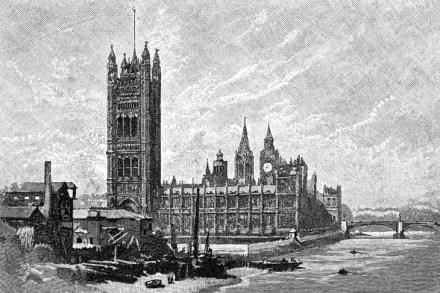
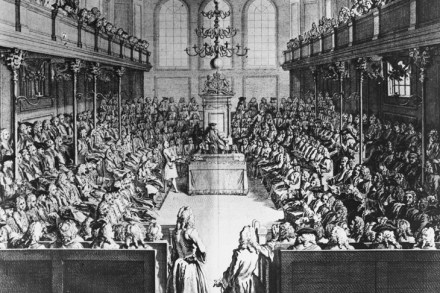
From ‘The disconsideration of the House of Commons’, 5 April 1919: The House of Commons is legally supreme in the land; it has eaten up and destroyed all competitors and become the sole depository of political power under the Constitution; and yet, instead of earning the respect which one might imagine would belong to such absolutism, it is, as we have said, suffering from a disconsideration such as has never before attached to it in its history. How has this come about? What is it that has, as it were, robbed the House of Commons of the complete authority at which it grasped? Why has its supremacy made it less, not more, respected by the nation at large?

Dangerous liaison

From ‘She was a child and I was a child’ by Kingsley Amis, 6 November 1959: The only success of the book is the portrait of Lolita herself. I have rarely seen the external ambience of a character so marvellously realised, and yet there is seldom more than necessary for the undertone of sensuality… She is a ‘portrait’… devotedly watched and listened to but never conversed with, the object of desire but never of curiosity. What else did she do in Humbert’s presence but play tennis and eat sundaes and go to bed with him? What did they talk about? What did they actually get up to? Apart from a few sentences of elegant hot-book euphemism, we are not even told that.

On political tribalism

From The Spectator, No. 152, 24 July 1711: There cannot a greater judgment befall a country than such a dreadful spirit of vision that rends a government into two distinct people, and makes them greater strangers to one another, than if they were actually two different nations… A furious party-spirit, when it rages in its full violence, exerts itself in civil war and bloodshed; and when it is under its greatest restraints naturally breaks out in falsehood, detraction, calumny, and a partial administration of justice. In a word, it fills a nation with spleen and rancour, and extinguishes all the seeds of good-nature, compassion and humanity.

A model president

From The Spectator, 4 January 1919: President Wilson arrived in London on Thursday week, and was greeted with full expression of the heartiest goodwill. The welcome began at Dover; and when the visitors drove through the streets of London, they passed through a heavy barrage of cheering, which was renewed when the President appeared with the King on a balcony of Buckingham Palace.

The Spectator’s original verdict

Wuthering Heights by Emily Brontë,  reviewed 18 December 1847 An attempt to give novelty and interest to fiction, by resorting to those singular ‘characters’ that used to exist everywhere… the incidents and persons are too coarse and disagreeable to be attractive, the very best being improbable, with a moral taint about them, and the villainy not leading to results sufficient to justify the elaborate pains taken in depicting it. Bleak House by Charles Dickens, reviewed 24 September 1853 Bleak House is chargeable with not simply faults, but absolute want of construction.

Trial and punishment

From ‘The Kaiser’, 16 November 1918: What is to be done with the Kaiser? For the question must certainly be answered. If we may venture to judge the feelings of our countrymen, we should say that, though there is no trace of a vindictive hostility towards any of the Germans who may seriously be trying to enter upon a better way of life, there is a very strong feeling that the Kaiser must be brought to trial. This is a perfectly logical conclusion. The British government have announced that all persons proved guilty of offences against the laws of humanity during the war shall be duly punished. It is unthinkable, therefore, that the Kaiser himself should be exempt.