Features

The hard choices that face the Father of the Mayor

Stanley Johnson is adjusting to his new constitutional position in the life of London: not least deciding which clubs to avoid at lunchtime in order to dodge Boris’s journalist foes Last July, soon after Boris had announced he would be a candidate for the post of mayor of London, the editor of The Spectator very kindly invited me to give my reaction in the columns of this magazine. In the article I wrote then, I described the circumstances of Boris’s arrival in this world, in a hospital on New York’s East Side, around 70th Street. I recalled that, as a modern man, I was perfectly ready to be present at the birth but that unfortunately I missed it, having slipped outside for a moment to buy a pizza.
Don’t expect the cyclone in Burma to have benign political side-effects

In the dark early hours of 12 November 1970 a tropical cyclone swung in from the Indian Ocean and made its way, to devastating effect, up the course of the world’s largest delta — the confluence of two huge river courses, the Ganges and the Brahmaputra — in what was then East Pakistan. The delta was heavily populated with subsistence farmers and, further, the overwhelming majority of East Pakistan lay on land less than 20 metres above sea level and was thus vulnerable to even a gentle breeze lapping the waters of the Indian Ocean. If you were asked to design the perfect country to be all but wiped out by a weather-driven natural disaster, this would be it: low-lying, densely populated, little or no preventative infrastructure, mired in poverty.

Balls wants a 100 per cent tax on inherited brains

Irwin Stelzer admires the Schools Secretary, and so regrets that his admissions policy prevents schools from taking account of a pupil’s prospects of success. Bad news all round Seemingly alone among my acquaintances, I see virtues in Ed Balls. He certainly is not media-friendly, partly because he has the Brownian habit of trying to bury questioners under a barrage of verbiage, only some small portion of which is relevant to their questions. He does have the annoying habit of believing that facts can be the enemy of truth, and therefore need, er, adjustment before they can be made available to the less skilled at their interpretation. Still, it is impossible not to admire his quick intelligence, his ability to translate complicated economic ideas into policy.

Sorry, but family history really is bunk

When I visited the National Archives at Kew last week the place was full of them, scurrying about with their plastic wallets in hand, a look of eager concentration on their faces. It was impossible to escape their busy presence as they whispered noisily to relatives or whooped over the discovery of some new piece of information. These were the followers of one of Britain’s fastest-growing craze, the mania for researching family history. Studying bloodlines and tracing ancestral roots was once the preserve of the aristocracy. Today, as I saw at the National Archives, it has become a favourite activity of the British public. We are becoming a nation of obsessive genealogists.

Not even science fiction foresaw the end of fathers

The Human Fertilisation and Embryology Bill seeks to end the child’s right to a father figure, writes John Patten, ignoring all sound research in its obsession with ‘discrimination’ ‘Down with Clause 14(2)(b)’ is hardly a snappy slogan. It is not even as succinct as ‘Abolish Clause 28 now!’, the phrase that so resonated back in the days of the furore over the teaching of alternative lifestyles. But this dense little bit of the parliamentary counsel’s art, buried deep away in the Human Fertilisation and Embryology Bill soon to go to the House of Commons, contains the only attempt anywhere in the world by a government to abolish fatherhood. A first for Gordon Brown, then.

Strip clubs are a City girl’s sanctuary

Venetia Thompson, until recently a broker, says that the feminist Fawcett Society should not campaign to outlaw City outings to strip joints: they are harmless after-hour crèches It appears that women’s rights activists have hijacked the credit crunch. There could be no better time for the Fawcett Society, led by their director, Katherine Rake, to launch an attack cannily entitled ‘Sexism and the City’ — complete with a handy online, easy-access PDF of its ‘manifesto’. After all, it is those pesky banks and their irresponsible, sexist, strip-club-dwelling employees that are to blame for all our financial worries. The society’s solution?

This Austrian horror gnaws at our fears about how we treat our own children

Josef Fritzl’s unspeakable crimes against his daughter not only sicken us, says Rod Liddle. They sharpen our confusion about day-to-day parenting in the modern world You may, by now, be losing track of Austrian nutters who lock women in basements. The latest is Josef Fritzl, who kept his daughter Elisabeth imprisoned in a dungeon for more than 20 years and fathered a total of seven children with her. The last nutter you read about, meanwhile, was Wolfgang Priklopil, who abducted a young woman, Natascha Kampusch, and kept her beneath a manhole cover in his garage for eight years. Both crimes are, of course, beyond appalling: it takes a lot to get Austria on to our front pages, usually either something with Nazi overtones or, failing that, paedophilia.

Why I’m standing to be a local councillor

It was a strange place for the red mist to descend. A railway car park in the snooty Surrey town of Weybridge. I was putting my £3.50 into the ticket machine when I spotted a notice from Elmbridge Borough Council which told those of us who had the temerity to pay for our parking spot rather than leave our car for free in the street that there was to be an increase from 1 April. My bet was that a 10 per cent rise would be the top whack. In a climate where customers were lending money to banks to keep them solvent and where new-builds in Bury could be bought for the price of a pomegranate, anything else would be scandalous. I was quite wrong. As I worked my way down the notice I saw in 2pt type (this article is in 9pt) the number they had in mind.

Joking apart: why Boris is the man for the job

Boris Johnson has confounded his critics, says Matthew d’Ancona. The contest will go to the wire, but our man has proved himself to be both shrewd enough and serious enough to take charge ‘Ladies and gentlemen, please welcome the next Mayor of London...’ A January dinner at the Dorchester in honour of Boris Johnson, and it falls to me, as one of the hosts, to introduce the Tory candidate. I look across the room at the high-rollers, hacks, friends and acquaintances who have come along to toast the candidate and, in some cases, to see if he is for real. Many are already Boris-positive; others merely Boris-curious. Not for the first time, I appreciate the predicament that confronted Boris when he decided to run for mayor last July.

The truth is that the house price crash is, overall, good news

If you take that excellent map showing negative equity ‘hot-spots’ produced by George Bridges for The Spectator a couple of weeks back, and overlay it across a map of cancer ‘hot-spots’ for the UK, you will find that those baleful dark areas, the bad places on each map, tally almost exactly. You might have expected as much: falling house prices cause cancer. Or maybe cancer causes house prices to fall — one of the two. Anyway, those areas where hundreds of tumours pop up like jack-in-the-boxes throughout your body while you are eating your breakfast are also the areas where your house is now worth less than a month’s chemotherapy. I’d move, if I were you, get the hell out.

The Beeb behaved like a Da Vinci Code villain

The last time Opus Dei was portrayed as a murderous, self-flagellating, power-hungry secret society of monstrous hypocrites was — you may remember — in The Da Vinci Code, first in the novel, then in the film starring Tom Hanks. Millions read the book, millions saw the film, millions decided that we were the personification of evil. On the upside, for a few weeks the world’s media camped on our doorsteps, so we had a chance to respond. We invited the press in, gave them tea, and pointed out that we had nothing to do with the death in 1982 of Roberto Calvi (an Italian banker who died under suspicious circumstances), and that we don’t murder people or beat ourselves to a pulp with whips in orgies of unexpiated guilt.

Obama needs to knock Hillary out — and quick

Hillary Clinton did not have to wait until 3 a.m. for the call telling her that she had won the Pennsylvania primary. Within an hour of the polls closing, the news networks had declared her the winner and by the end of the night she had secured a double-digit lead, handily beating the spread set for her by the media. Pennsylvania was always going to be Hillary’s kind of state; its demographics play to her strengths. There are a smaller percentage of the groups with whom Barack Obama is strongest — blacks and college graduates — and an above average number of over 65s, with whom Clinton generally does well. On top of that, the median household income is only a little more than $46,000 a year, making the state receptive to Clinton’s economic message.

So what is England?

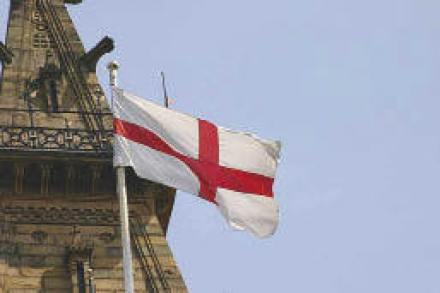
To celebrate St George’s Day and Shakespeare’s birthday, The Spectator asked some leading public figures for their answers to this vexing question. Here are their sometimes uplifting, sometimes nostalgic replies Joan Collins It’s the politeness that I miss — the civility that was at one time the Englishman’s (and woman’s) global trademark. I took it for granted as a child that men tipped their hats, stepped aside and held open doors for ladies. English people shook hands when they met (gently, not with the enthusiastic bone-crushing squeeze of today) and certainly never hugged or kissed on the cheeks someone they had just met.

The French Left has much to learn from the English

Blairism may have had its day on this side of the Channel, but Bernard-Henri Lévy says that the English Third Way should be a model to his Gallic comrades French Socialists are extraordinary. For the past ten years, they have made ‘Blairism’ their foil, even declaring that it embodies exactly what the Left — and in particular, their Left — must not be. They see in Blairism the quasi-diabolical incarnation of the betrayal of the very ideals they claim to embody. They disavow former English Prime Minister Tony Blair and call his domestic policies ‘Thatcherism with a human face’. They insult his foreign policy, which they believe was driven by a servility to US President George W.

We need the English music that the Arts Council hates

Roger Scruton hails the glorious achievements of the English composers, and their role in idealising the gentleness of the English arcadia — so loathed by our liberal elite The English have always loved music, joining chamber groups, orchestras, operas and choirs just as soon as they can put two notes together. But it was not until Elgar that a distinctive national voice was heard in the concert hall. The Enigma Variations and Sea Pictures marked a turning-point in our musical culture: complete mastery of romantic polyphony, without the teutonic stodge of Parry and Stanford. This, at last, was the sound of modern England: gentle, nostalgic, an organic growth from a deeply settled landscape where many generations had been quietly at home.

‘It’s the most English thing you could imagine!’

Shakespeare’s birthday celebrations in Stratford-upon-Avon may be a small-town affair, but it is one of the very few non-London dates that involves the diplomatic corps. On Saturday 26 April no fewer than 18 ambassadors will attend the occasion, the world’s nations joining sundry Warwickshire dignitaries, Stratford’s mayoral chain gang, various Shakespearean bodies, the band of the Corps of Royal Engineers, the Coventry Corps of Drums, sweet little local schoolchildren in boaters, Morris men and some 20,000 delighted onlookers. You never hear much about this terribly English event because it’s been going on for so long (since 1824) it is taken for granted.

Here in Transylvania, it feels okay to be proudly English

As nationalities proliferate, the English want their turn, says Rod Liddle — who considers himself British first. St George’s Day and ‘Englishness’ have been partially decontaminated, but we are no closer to a definition of what ‘England’ is — and quite right too Miklosvar, Transylvania It is very easy for the majority Hungarian population in this most wild and beautiful quarter of Europe to define their essential Hungarian-ness: they are defined, principally, by what they are not. They are not Romanian, for a start — a rather backward people, they feel, a confused, hysterical, limping hybrid of two mutually exclusive racial types, the Slav and the Latin.

Hands off Jerusalem, my family heirloom

George Bridges on the part played by his great-grandfather, Robert Bridges, in the composition of Parry’s music to Blake’s lyric: too precious, he says, to be hijacked by separatists I suspect you had better things to do last Friday evening than stay in to watch the English Democrats’ party political broadcast. I missed it. In fact, I didn’t know the party existed until I was throwing out the newspapers at the weekend, and happened to see the broadcast listed on the TV page. Intrigued, I looked them up online. ‘England: we have a right to be angry. THE ENGLISH HAVE HAD ENOUGH.’ I began to feel as if I had just hitched a ride with White Van Man, raging on about Gordon! Ken! Tax! Immigration! Europe! Everything in capitals, with lots of !!!!!s.