Features

The real scandal is that we always, always end up paying

The Jacqui Smith case and the grotesque sight of her husband apologising for watching porn films at the taxpayer’s expense are just the latest symptoms of a well-advanced political disease, says Rod Liddle. They take the voters for a bunch of mugs At last the politicians have done the decent thing and called in the police over an issue which has enraged and outraged the public these last six months or so: the leaking of MPs’ expenses details to the press. One hopes that there will be a prosecution soon. Like you, I have been appalled at the regularity with which these selfless public servants have seen their privacy transgressed and have demanded something be done about it.

What I heard at J.D. Salinger’s doorstep

J.D. Salinger is in the kitchen when I turn the corner of his farmhouse, his reported deafness probably explaining why he doesn’t hear me until I am a few feet from him and ringing the doorbell. His wife correctly guesses the identity of the caller and, apprised of the information out of my hearing, the author shouts something that sounds like ‘Oh, no!’ It may be succinct but it is the most he has said to the media for years. A tall but stooped figure in a blue tanktop, Salinger won’t even look at me as he sidles crab-like out of his small kitchen with his back to the window. His wife soon appears at the same window and opens it to talk, but the great man — who was 90 in January — has gone.

Brussels Notebook

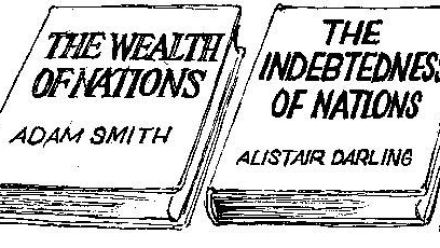
It’s dawning on me that the Prime Minister can’t listen to criticism. It’s dawning on me that the Prime Minister can’t listen to criticism. I don’t just mean that he can’t respond to criticism; I mean that he literally can’t listen to it. When he came to the European Parliament to drum up support for his spending plans, I made a three-minute speech in favour of balanced budgets. As I talked, he pulled his face into what I think was meant to be a disdainful smirk, then ostentatiously chatted to his officials, then pretended to doodle on a piece of paper. I’ve never doubted Gordon Brown’s convictions: he seems genuinely actuated by a desire to help the poor.

Our society must be equal to the threats ahead

There seems to have been a view developing in recent years that defines peace simply as the absence of war. If only we can avoid armed conflict, the argument seems to say, then we will live in a more peaceful world. But peace is not simply the absence of war. Real peace is accompanied by an unavoidable set of values. Freedom from tyranny, freedom from oppression and freedom from fear are essential for real peace, and unfortunately we sometimes have to fight and even to die to defend these freedoms. This is where our social attitudes, our political direction and our national security converge — in the crucial question about the state of our national resilience.

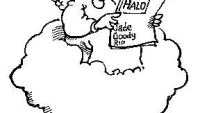
The response to Jade’s death reminded me how puzzled I was by Diana mania

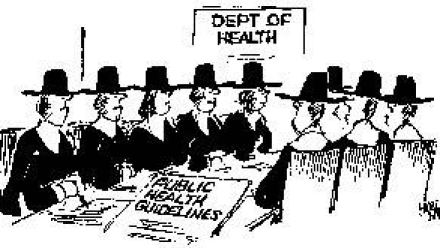
It was a badly timed death, a departure which, ironically, scorned the important press deadlines. The best time to die, if you are a celebrity, is at three o’clock in the afternoon of a weekday — in time for the early evening news bulletins and the next morning’s papers. This, however, was a Saturday into a Sunday, a time when even Christ might have died and there’d be nobody sentient around to pick up the story. I was a bit drunk, having spent the evening out drinking with my then girlfriend and a bunch of friends whose names I cannot subsequently recall. Temporary drink friends, I suppose. There had been loads of drink, gallons of the stuff, enough units to make the present chief medical officer Liam Donaldson suffer a sudden and possibly fatal embolism.

Meet Gordon’s Pet Shop persecutors

Mary Wakefield meets the successful pop duo the Pet Shop Boys, and finds them eloquent critics of New Labour, staunch defenders of civil liberties — and fans of Vince Cable Through the woods, the trees And further on the sea We lived in the shadow of the war Sand in the sandwiches Wasps in the tea It was a free country In a West End town in a dead end world — OK, no: in a nice Georgian townhouse in central London, on the top floor where once boot boys bedded down, the Pet Shop Boys are revisiting their past. ‘The Britain of my childhood?’ Neil Tennant, the singing half of the most successful pop duo of all time reclines on a chaise longue and thinks his way back to North Shields (near Newcastle) in the late Fifties.

The real reason I had to join The Spectator

Over the past four decades I have received many reviews in The Spectator, all of them mixed (in the technical theatrical sense of ‘extremely bad’). For example, in 1976 The Spectator wrote about Fawlty Towers: I’ve been bellyaching, ever since I started writing this column, about the low standard of the programmes. I have been told by friends and acquaintances, ‘Ah! But have you seen Fawlty Towers? You’ll enjoy that!’... Well, last Sunday I finally watched the bally thing and I am gratified to report that I didn’t laugh once. What is more I found Fawlty Towers, like its predecessor Monty Python, rather nasty... When Cleese is involved I detect traces of sadism.

‘In a global era, we need our roots more than ever’

Gordon Brown tells Matthew d’Ancona why he is so preoccupied with national identity. In the modern world, he says, we must be explicit about what being a Briton means ‘The problems will arise if you cannot say to a young person that there’s going to be a job after the training. We’ve got to make sure that we never return to the 1980s, when young people lost hope of ever getting jobs, and you had three-generation unemployment that created a situation where many people did become unemployable.

Leave capitalism to the Chinese and relax

Venetia Thompson and Rory Sutherland say that the era in which all graduates want to work in the financial sector is at a close: a splendid time to rebrand inactivity as ‘travel’ University careers fairs have always been a complete waste of time. In the old days students came away armed with nothing more than ABN-Amro highlighters and miniature alarm clocks (probably now collectable), some unusable minute RBS Post-it notes, and perhaps the odd snow-shaker. Goldman Sachs, Morgan Stanley and their cohorts quickly ran out of all paraphernalia — but no matter because everyone wanted to be a banker anyway.

The smoking ban was always going to be the thin end of the wedge

Rod Liddle is appalled by Sir Liam Donaldson’s deployment of statistics in the hope of making it harder to have a drink. A surrealist would struggle to keep up with such campaigns against our human pleasures Iatrogenesis accounts for the deaths of an estimated 72,000 British people every year — or slightly more than the combined numbers of those feckless people dying from smoking, drinking and being very fat. I suppose you could call it the silent killer; there are no government campaigns to educate the public about its lethality. When lists are published showing the top killer diseases it is never present, although it is the third most common cause of death.

It is not enough for Labour to lose this election

‘Sit back, keep quiet, let the government unravel and you will be in Number 10.’ If I had a pound for every time these words of advice have been uttered to me over the last year or so, I’d be able to make a sizeable contribution towards easing the pain of Labour’s debt crisis. But the advice — however well meaning — is plain wrong. The election is far from won and I still hold to the belief that governments don’t just lose elections; oppositions must deserve to win them with a positive mandate for change. And there is one central idea which shows clearly that we are not sitting back waiting for Labour to lose, nor backing off the changes that have been instrumental in the Conservative revival of recent years.

The G20 summit is lousy value for money. Cancel it

Ross Clark looks ahead to Gordon Brown’s summit at which he will try to revive his own political fortunes, found a new global economic order and stage a Bretton Woods for our times. No chance: the whole thing is an expensive sham It is difficult to look at the photographs of the world’s finance ministers, bank chiefs and assorted hangers-on assembled at a hotel in West Sussex last weekend without thinking of those old BT ads with the slogan, ‘Why not change the way we work?’ Has anything come out of the meeting of G20 finance minsters in Horsham, or will come out of the follow-up heads-of-government summit in Docklands on 2 April, which could not have been achieved by phone, email or video-conference?

Church of England Inter-Faith Relations

Guy Wilkinson responds to Melanie Philips' recent article in The Spectator We have seen in recent days in Northern Ireland just how deep antagonisms go and how long their poisonous roots remain in the ground, ready to spring to life like nettles to sting. And to continue the metaphor, we have seen in Luton how some kinds of words can be the means by which such roots are strengthened and enabled to spread. Anything that matters deeply to people – religion, politics, football, patriotism – gives rise to passion and to passionate words. And passionate words can make for good or for ill, for peace or for violence.

How to put the nation’s pupils off great art for ever

‘Bathers at Asnières’ is a dreamily double-edged impressionist painting: an idyll as tricksy as the tiny dots, instead of brushstrokes, that Seurat used to paint. Young Parisian workers are stretched out like cats in the sun, or swimming in water so cool that you can almost feel it, and yet in the background the chimneys puff away, calling them back to work. At the National Gallery the other day, I overheard an official gallery guide addressing a heap of near-comatose teenagers: ‘This is a very large painting,’ she said, ‘and it was painted about 100 years ago.

Julie and Jonathan Myerson personify the worst generation in history

This family’s very public angst is all about making cash, says Rod Liddle. And the parents were not showing ‘tough love’ when they kicked out their son, but washing their hands of a problem Not my vegetarian dinner, not my lime juice minus gin, Quite can drown a faint conviction that we may be born in Sin. — John Betjeman, ‘Huxley Hall’ It’s the perpetual adolescent in me, I suppose, but I’ve always rather had a thing for public enemies — people whom the entire British public wish to see flayed alive, hanged or deported.

Nato has serious supply problems in Afghanistan

Kabul Every morning, on Kandahar Air Field, the British, US, Canadian and Dutch troops like to start the day with a cappuccino from Green Beans, the US army’s answer to Starbucks. But a few weeks ago the soldiers had a nasty shock: a sign on the Green Beans door saying there would be no frothy coffee for the lads because of a ‘supply problem’ in Pakistan. War is hell, isn’t it? But the sign wasn’t just bad news for coffee-loving squaddies, it also revealed the Achilles’ heel for the entire international mission in Afghanistan: Nato’s supply roots, which are being steadily throttled by the Taleban.