Drink

Drinking to the glories of Burns and follies of Boris

At least in London, midwinter spring has not been entirely vanquished, and the trees are still a couple of strong winds away from losing their autumn glory. This will give the government some undeserved help. People can sit outside, and the view from windows is not too depressing. Before long, though, those indoors are likely be cursing the PM and his close associates: ‘sic a parcel of rogues in a nation’. Burns and the onset of seasonal bleakness makes one think of the dark. In earlier times in Scotland, Hallowe’en was a characteristic festivity: an attempt to embrace the oncoming winter. Its theme was ghouls and witchcraft. Children, dressed as witches or warlocks, would go from house to house making sepulchral noises.

A toast to Tim Beardson

I am in an Eliot mood, not a Keatsian one. ‘Season of mists and mellow fruitfulness’ is a surprisingly… mellow poem. There must have been a brief ceasefire between poor Keats and the advancing forces of premature mortality. But I have just heard of the appallingly premature death — by today’s standards — of a fascinating fellow. So it is more a matter of ‘Under the brown fog of a winter dawn… I had not thought death had undone so many’. At 69, Tim Beardson died of the ultimate effect of a tick bite, which compounds the sadness. At the beginning of the 1970s, he read history at the House.

Perry Worsthorne: a man incapable of dullness

I had known Perry Worsthorne for several years before I went to work for him in 1986 (horrifying how time passes). Then again, everybody knew Perry. He was one of the most colourful figures in London. Elegant, silver-haired, always amusing, regularly original and frequently provocative, he was a triumphant refutation of the idea that conservatism is a dull creed, based on worship of the Gods of the Copybook Headings. Perry was incapable of dullness. He also felt ambivalent about Margaret Thatcher. At moments, he would acknowledge that she had saved the country from decline. But on one famous occasion, he accused her of ‘bourgeois triumphalism’.

The finest Rioja in all of Spain

It had been a long and no doubt fractious sea voyage. The crew would have signed up for a variety of reasons: pay, adventure, escape from domestic ties — in some cases, no doubt, escape from the authorities. After ten weeks at sea, some of them would have doubted their judgment, if not indeed their very sanity. Then came the lookout’s cry: the Spanish for ‘Land ho’. Christopher Columbus had set forth to find a passage to China. Instead, he had discovered America, a new world, large parts of which would soon be known as New Spain. The 12th of October 1492, when that forgotten sailor announced that the world had moved on its axis, was one of the most important days in history.

With good wine, it’s all in the timing

Three bottles, three questions that delivered three different answers. I was in Dorset — cannot keep away — enjoying the Indian summer while cursing the government’s ineptitude. As always, we ate well. I believe that those of us said to be at risk are supposed to bulk up. I did so with the aid of La Ratte potatoes, outstanding waxy spuds, even if they are French. Although many Frogs affect to despise the potato as an Anglo-American interloper, they do know how to grow it when they try. But the pièce de résistance, among several rivals, was carpaccio of halibut. I would aver that there is no finer fish to prepare in that way. Young Arthur, not quite five, tucked in with relish.

A perfect luncheon wine

I suspect, though this may be romanticising, that if a French lorry driver with hitherto suppressed culinary tastes won France’s national lottery, and booked a table at the local much-rosetted restaurant, he would know what to expect. A great chain of culinary being would connect him to the heights of gourmandisme. In the UK, we lack a gastronomic tradition. As a result, when it comes to assessing food, inspissated snobbery often takes the place of inspired gluttony. There are superb chefs: Gordon Ramsay, Marco Pierre White, the Roux family. But there are also instances of pretentiousness: no names, no pack drill. These characters forget that the glory of a good cook is to make ingredients sing, however humble in origin.

Soave, an original sin-free wine

‘The Lord God walking in the garden in the cool of the day’: surely one of the most beautiful images in all writing. One might have thought that it would have softened the Almighty’s mood, so that He would have given Adam and Eve a mere ticking-off for scrumping. But no: that stroll ended in the doctrine of original sin. For those who suffer under it, there is one aesthetic relief from stifling, humid heat: stucco seen through green-leaved branches. That combination refreshes the soul. It works even better, of course, if lesser regions have a less aesthetic form of refreshment: the cool of the glass. In pursuit of garden wines, I have been drinking a lot of Soave and trying to learn more about it. My ignorance extended to the very name.

The difference between American and French wine-drinkers

Is it safe to visit the continent? On the one hand, abroad is likely to be less crowded this August than in normal years. As for the virus, if one miscalculated, could that lead to lockdown in France profonde, or dolce far niente Tuscany? Hardly the worst outcome. Or would it mean cancelled flights, hours in airports, and then house arrest back in London? As government ministers do not appear to know the answer, how should the rest of us decide? While considering the options, I have consoled myself by remembering previous trips, stimulated by some recent tastings. When it comes to claret, I am very much on the left — of the Gironde, that is. Cabernet sauvignon stimulates the intellect as well as making demands on the palate.

The hunt for a Test-class claret

In one respect, there has been a reassertion of normality, though this is nothing to do with the virus. Although the recovery was almost sabotaged by young Mr Archer’s bêtise, the problem long antedates Covid-19. But it now seems that once again, the West Indians are a formidable Test side. This is wonderful news, for world cricket has not been the same without them. Cricket is a game of paradoxes, a symphony of beauty and brutality: a cross between a vicarage tea party and Hemingway’s Death in the Afternoon. Facing a fighting bull or the fearsome West Indian fast bowlers of yesteryear — they are both supreme tests of manhood, in which a balletic athleticism has to conquer fear in order to be transfigured into courage.

The best wine since incarceration

The woodpecker jinked across the lawn like an especially cunning partridge. Its goal was a skilfully constructed bird table with wire surrounds, to provide safe feeding for finches, tits, woodpeckers and other small birds, while denying access to corvids, grey squirrels and raptors. A sparrow hawk regularly sweeps across the garden. The ‘sparrow’ element is misleading. This is an avian pocket-battleship, with not a molecule wasted in the pursuit of lethality. Sparrows? I have seen it feasting on a pigeon. It is a pity that real-life nature offers so little scope for sentimentality. Magpies are handsome creatures, but if you want songbirds, you will need a Larsen trap to control numbers. Cats seem at least as worthy of sentiment as dogs or children.

Two bottles to help eradicate cabin fever

The virus is in retreat, the lock-down is crumbling, the sherbet dispensaries will shortly reopen and there is a second spike of summer. Every prospect pleases, and only demonstrating man is vile. In London, we have been subjected to the most ridiculous public protests since the Gordon riots or the agitation in favour of Queen Caroline. During the latter follies, Wellington, riding back to Stratfield Saye, found his way blocked by a crowd of yokels who declared that they would not let him pass until he had toasted the Queen. ‘Very well, sirs, if you will have it so, God bless Queen Caroline and may all your wives be like her.’ He then spurred away, leaving open mouths in his wake. In recent weeks, it has been less about open mouths, more a matter of empty minds.

Recollections of Burgundy

More than two months: who would have thought it possible? Before the great closure, I had been trying to decide between a foray to the West Country over Easter or a trip to Brittany. Suddenly everything had to be cancelled, with the hope that life would have returned to normal by the early May bank holiday. Early July now looks cautiously feasible: Insh’Allah. Yet there is one group of creatures which is revelling in the lock-down: dogs lucky enough to have a male owner unable to leave a rural dwelling with plenty of space. My friend Professor Branestawm, the well-known feminist and oenophile who has been praised in this column for the …oenophilia, owns a cocker spaniel.

Bitter memories: my craving for a pint

It is enough to drive a man to drink. The most glorious weather, so suitable for white Burgundy on a picnic in a meadow-full of wild flowers, for rosé almost anywhere: above all, for beer. A few weeks ago, I wrote longingly about the thought of a pint of beer. Time has passed; the craving has intensified. Nor am I alone. Chatting to a friend about fine vintages being used as palliatives — these bottles I have shored against my lockdown — we agreed that there are moments when a foaming beaker of English wallop would hit the spot more satisfyingly than the most awe-inspiring bottle from Bordeaux or Burgundy. In my youth, there was a jingle about a pub with no beer. We little thought that it would turn into a prophecy.

The best New Zealand wine I’ve come across

I was once invited to the Cheltenham races and found the experience underwhelming. Everything was too respectable: not nearly Hibernian enough. I had expected to see Blazes Boylan, Flurry Knox, the Joxer and Christy Mahon, propping each other up in a determined attempt to drink the west of England out of Guinness. The reality was much tamer. But there was one source of amusement. By halfway through the afternoon, undeterred by their skill in dispensing losing tips, a lot of my journalistic colleagues had become equine experts. The previous day, these chaps would not have known the difference between a foal and a fetlock. Yet here they were, insisting that there was not enough stamina in the dam’s bloodline, and so forth. Just as well that they did not run into Flurry Knox.

Clarets to see in the summer

This April was indeed the cruellest month, at least for those of us banged up in cities. From the country came reports of overflowing asparagus beds, the elfin splendour of the bluebell woods, precocious roses: the drinking of rosé, in England, at Easter. Now that we have the prospect of an end to the most onerous restrictions, what is going to happen to the weather? The British approach summer in the same way as the English approach cricket: with mistrust. Glorious days may occur, but there is no faith that they will endure. English cricket and the British climate could share a motto: sic transit. Yet there are ways of coping with April’s taunting sunshine. The great Falkland used to say that he pitied unlearned men on a rainy day.

I’m drinking half as much as usual – with no ill-effects

I cannot remember a prettier Easter, or a more frustrating one. This was no time to be in town. But there is a way of strangling self-pity at birth: military history. That brings a sense of perspective. Better to be locked-down in a London flat than charging across a D-Day beach. Bulletins from those lucky enough to be rusticated all make the same point: how well everyone is behaving. Over most of the countryside, there seem to be more volunteers than there are duties to perform. When the call came in Dorset, one mildly octogenarian Brigadier sprang into action. Appointing himself GOC North Dorset, he chose his battalion commanders and staff officers while instructing his wife to repair any ravages his uniform had suffered from the young at fancy dress parties.

Drinking in isolation is far less appealing

Spring sense, caressing sunshine: last week, London enjoyed village cricket weather. Even in normal circumstances, the season would not have begun; the anticipation would. Soon, one would be watching the run-stealers flicker to and fro, a pint of beer at hand. ‘A pint of beer’, four simple words, but in these times my tastebuds were flooded with memory. Où sont les boissons d’antan? Friends of different strategems were fighting off that lowering virus, cabin-fever. I am re-reading Macaulay — there is no more joyous prose in English — and alternating him with Gibbon, whom I am ashamed to have never read all the way through, at a ratio of four Macaulay to one Gibbon.

If we can’t go to the Veneto, we’ll drink to it

We live in a world where yesterday’s inconceivable becomes today’s commonplace, but even so. I never thought that the day would come when I took a political problem less seriously than Boris Johnson. The PM is having a good pandemic: the tone just right. Yet as the streets of London empty faster than the supermarket shelves, and a chap finds it harder and harder to stumble across a social drink, I remain a closet heretic. I do not accept that the position is anything like as serious as the authorities would have us believe, and as for the notion that anyone over three score and ten has suddenly become a contagious invalid — in that famous phrase of Sir Bernard Ingham’s, ‘bunkum and balderdash’.

The Spanish winemakers with a missionary zeal

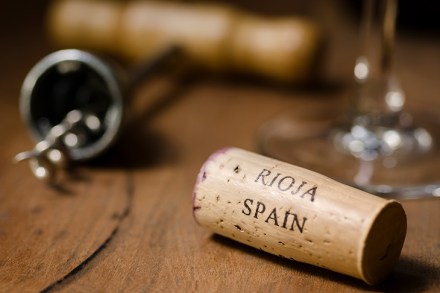
It is time to begin with an apology, and hope. In the course of these columns, I have already admitted to a deplorable ignorance of Spanish wine, including sherry. The finest sherries are subtle, complex, powerful — and excellent value. The same is increasingly true of other Spanish wines and there again, I am lament-ably ill-informed. There have always been serious Riojas. But a couple of decades ago, the late Bron Waugh lamented the fact that most Riojas left a hint of eggshell on the palate. In those days, he had a point. The principal Spanish grape is Tempranillo, which also produces excellent reds from the Ribera del Duero. There, the climate is harsher than in the rest of the Rioja vineyards.

Which water goes best with whisky?

Peaty water ought to be classed as a luxury. You have spent a day on the hill, a’chasing the deer. This means coping with the rigours of topography, the cunning of the quarry and the vindictiveness of the elements, though that has its compensations. Rain keeps away the midges. You arrive back damp and knackered, but there is an instant restorative: a bathful of broiling peaty water, with a glass of peaty whisky as a chaser. Suddenly, all the day’s hardships are sublimated into pure pleasure (especially if you have killed a beast). Naturally, the water is brown. This can give rise to misunderstandings among the ignorant. A girl I know owns a shooting lodge. Once, towards the end of breakfast, someone from the kitchen team informed her that there was no hot water.