Columns

Brexiteers need ladders to climb down

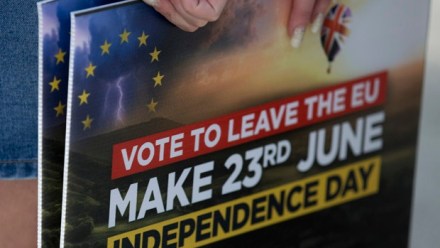
I am worried about the mental state of many Brexiteers. The author of The Spectator’s weekly Notes, Charles Moore, always a sharp observer of the passing scene, noticed my worry almost before I noticed it myself. He complained here a few weeks ago that I’m citing among my reasons for distrusting the Leave case the fact that so many of its adherents strike me as headbangers. He went on to suggest I’ve become psychologically incapable of even listening to their argument. Personality traits displayed by Brexit-eers do indeed worry me and help inform my response to their case. To help me weigh an argument, I’m in the habit of taking a long and careful look at the person making it.

A wake-up call for Parliament

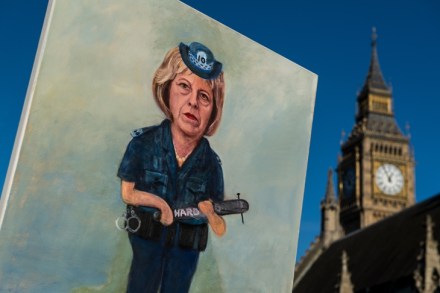
Parliament is the cockpit of the nation, but MPs have been on autopilot rather a lot in the past 40-odd years. Ever since the United Kingdom joined the European Economic Community, more and more powers have been passed away from Parliament to Brussels and its institutions. Brexit will see these powers come flowing back to Westminster. So it was appropriate that the Supreme Court has decided that Parliament must legislate for the triggering of Article 50, the two-year process by which this country will leave the EU. For MPs to vote against Article 50 would be to vote against the referendum result itself; it says nothing about the terms on which Britain will leave the EU.

A Berlin Wall moment for political correctness

Because we’re all so obsessed with what it was that made the Nazis tick, we tend to overlook the bigger mystery of how hundreds of millions of people, for a period considerably longer than the lifespan of Hitler’s Germany, remained under the spell of communism. This is a question that Czeslaw Milosz set out to answer in his 1953 classic The Captive Mind. Milosz was a Polish poet, prominent in the underground during the Nazi occupation, who served as a cultural attaché with Poland’s post-war communist regime before quitting in disgust and fleeing to the US, where he taught at Berkeley and achieved eminence as a Nobel-prize-winning dissident exile.

Brexit’s biggest political victims: Ukip

Perversity is a much undervalued British trait, much more redolent of our real psyche than queuing, drinking tea or being tolerant of foreigners and homosexuals — all things for which we are better renowned. Seeing Dunkirk as a victory was magnificently perverse. So, too, was electing a Labour government in 2005 shortly after we had invaded a sovereign country and created a civil war. For ‘perversity’ I suppose you could read ‘complexity’, although the two often amount to the same thing. Our reactions to stuff are never as straightforward as they should be — they are complex and therefore can seem perverse. And so it is right now.

May has taken back control

‘No negotiation without notification’ has been the EU’s mantra since 24 June last year. Its leaders have been determined that there’ll be no talks before Britain has formally submitted its Article 50 letter, starting the two-year countdown to this country leaving the union. Even now, after Theresa May has set out her Brexit plans with a decent amount of detail, the EU is sticking to this line. Why? Because it wants Britain to be negotiating against the clock. Despite this, there have been informal conversations over the past six months that have helped forge the Brexit strategy that May set out on Tuesday.

Stupidity takes hold of another students’ union

I had never heard the acronym Soas before I started work at the BBC, almost 30 years ago. But as a very young producer at the corporation I was asked to fix up a story about something appalling happening in Africa — I can’t remember exactly what. Famine or cannibalism maybe. Or perhaps one mitigated by the other. The senior producer told me to get someone from Soas to explain it all. What’s Soas, I asked? ‘The School of Oriental and African Studies,’ I was informed. ‘It’s in London. It’s basically a place where we try to work out what on earth the natives are up to now.’ It was a different BBC back then. I was based in the old Broadcasting House, at the top of Regent Street.

Piers Morgan is a shameless brown-noser. But maybe he’s on the right track

A few weeks ago I was having an argument with Piers Morgan on Twitter. Oh God, is that really how I’m going to start this column? What have I become? I was, though, and it started because he was brown-nosing Donald Trump. We’re talking a real nasal frottage here. I expressed derision, and he expressed fury at my derision, and on it went. At one point he called me ‘tough guy’. It was all very manly. Although it wasn’t a one-off, because he’s been at it — I mean the brown-nosing — ever since, including in this very magazine. A column here, a TV appearance there. Last weekend, he was bickering about Trump with Alastair Campbell on Peston. And I’ve been wondering what’s going on. Morgan is not Farage.

What really drives us in the big game of life?

When were you last in a game reserve? Perhaps most Spectator readers will be familiar with the experience and if you’re anything like me it’s a happy one. Where would I rather be than in an open-topped Land Rover as the sun rises over the African bush, wandering on wheels through the savannah, pausing unhurried to look around: switching off the engine, listening, watching, drinking it all in? But do I care if I spot a hyena to tick off on my list? Do I seriously fret about whether that graceful creature is an oryx or an eland, whether that glittering and iridescent bird is a greater blue-eared starling or a red-tufted malachite, or whether this giraffe we’ve just startled is reticulated or Rothschild’s?

Theresa May, left-wing Tory

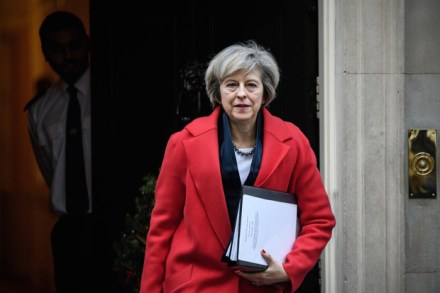
Curbs on executive pay, restrictions on foreign takeovers and workers on boards. Not Jeremy Corbyn’s plan for Britain, but ideas raised by Theresa May and put forward for discussion at her cabinet committee on the economy and industrial strategy. Not for 40 years have the Tories had a Prime Minister so firmly on the left of the party. May joined the Tories before Margaret Thatcher became leader and in many ways she represents a bridge back to the pre-Thatcher era. That is why comparisons between Britain’s two female prime ministers don’t reveal much — they come from very different traditions. Since Thatcherism took over the party, many Tories have looked to the United States for intellectual inspiration. But May is more of a continental-style Christian Democrat.

As the cab doors locked, I wanted to get out

I meant to get the bus, but by the time I arrived at the stop at 5 p.m. last Tuesday, I was running late. I was relieved to see a Tic Tac of orange light floating towards me through the evening. The taxi stopped, I climbed in and said: ‘Just north of Angel please.’ Then: ‘I’m afraid I only have £25 so we’ll probably have to stop at a cashpoint.’ The driver had a flat cap, and in the paler oblong of the rearview mirror, I could see he was wearing sunglasses. I didn’t think to think this strange even though it was dark. ‘Oh don’t worry. I’ll take you for £25,’ said the driver. ‘One of my girlfriends lives up there.

The lies we tell ourselves about the NHS

The language of the left is a truly transformative grammar, so I suppose Noam Chomsky would heartily approve. There are words which, when uttered by a leftie, lose all sense of themselves — such as ‘diverse’ and ‘vibrant’ and ‘racist’. It is not simply that these words can mean different things to different people — it is that when the left uses them they are at best a euphemism and at worst a downright lie. And from that you have to draw the conclusion that their whole political edifice is built upon a perpetually shifting succession of imaginative falsehoods. Such as when they tell you you’re a ‘denier’ of something — child sexual abuse or climate change, for example.

How the Donald will beat the Green Blob

Just before Christmas I popped over to Washington DC to test the waters of the Trump administration. I spoke to key members of his transition teams; I hung out with thinktankers, journalists, scientists, conservative activists; I wangled an invitation to a top-secret lunch hosted by card-carrying members of the Vast Right-Wing Conspiracy; I drank cocktails, lots of cocktails, from the Four Seasons in Georgetown to the new Trump Hotel in the Old Post Office; I went to that Americans for Tax Reform meeting that Grover Norquist hosts every Tuesday. And I came back feeling very positive indeed. Why? The fact that I even have to ask this question in a conservative publication speaks volumes about anti-Trump prejudice, even from many right-wing commentators who ought to know better.

May’s big chance

It is the fate of all new prime ministers to be compared with their recent predecessors. Theresa May has already been accused of being the heir to the micro-managing Gordon Brown. Her allies, meanwhile, see a new Margaret Thatcher, an uncompromising Boadicea destined to retrieve sovereignty from Europe. But perhaps a more fitting model for May would be a less recent Labour prime minister: Clement Attlee. When Labourites reminisce about Attlee, it isn’t so much the man himself who makes them misty-eyed. It is the achievements of those who worked for him — Nye Bevan, Ernest Bevin and the rest. Attlee’s government created the welfare state and the National Health Service, and built a million houses. It had lots of excuses not do any of these things.

In our virtual future, why would anyone work?

A flash of the future, over the holidays, that felt like a flash of the past. It happened on Christmas Day, just after lunch, when my father-in-law gave me a virtual reality headset. It looks like a pair of ski goggles. They used to be fearsomely expensive, but recently some bright spark came up with the idea of replacing the screen and the computing power with a slot into which you pop your phone. All you need now is a frame and a couple of lenses, and you’re off into a virtual world. You can get a cardboard one for a tenner. They’re amazing. We all had a go. First, I went up Mount Everest. Then I put my mother into a shark tank. My wife went on a rollercoaster.

Markets start the year strong while Italy totters towards the next crisis

The headline business story of the holiday season was the latest bailout of Banca Monte dei Paschi di Siena. This is Italy’s third largest bank and, according to recent ECB ‘stress tests’, Europe’s weakest — regarded by pessimists both as a potential catalyst for systemic collapse and a symptom of deeper Italian problems that could kick off another euro crisis this year. Monte dei Paschi is also of special interest to me as the world’s oldest bank, having been founded by the magistrates of Siena in 1472 to provide loans at non--usurious rates to ‘poor or miserable or needy persons’, underpinned by wealth from local agriculture.

An age of bright new lights on ugly new estates

‘Trying to determine what is going on in the world by reading newspapers,’ remarked the journalist and screenwriter Ben Hecht, ‘is like trying to tell the time by watching the second hand of a clock.’ He was right, but the fault lies not with the newspapers. The problem arises from the idea of news. ‘News’ cannot see so much of what’s happening that matters. As the new year begins I’d ask you to consider a small example: the most visible change to the built environment in Britain. I’ve yet to read anything you could call a ‘splash’ on the subject, but gradually, steadily, and in time no doubt universally, we’re losing our yellow-orange ‘sodium’ streetlights, in favour of blue-white LED ones.

Why I was ashamed to love Status Quo

I bought a record in a second-hand shop in the summer of 1981. A double album. I made sure nobody was looking when I handed over my money, and kept the purchase hidden in its brown paper bag all the way home. Back in my room, I locked the door to make sure my house-mates couldn’t surprise me — and plugged in my headphones. What followed was more than an hour of dirty bliss, a guilty pleasure before the term had been invented. What I was listening to was a compilation album of Status Quo’s singles and most popular album tracks. I can’t remember what it was called — ‘Again and Again and Again and Again and Again’ would have been fitting, but too arch for the Quo.

2017 will be one long vampire scream from the liberal elite

I’ve been looking at my predictions for 2016 made this time last year. It’s extraordinary — don’t check, just trust me — all 12 of them came true. If you had placed a £1 accumulator bet on my forecasts that Britain would vote Brexit, Trump would be elected US President, and that Scarlett Moffatt off Gogglebox would win I’m a Celebrity… Get Me Out of Here, you wouldn’t need to read The Spectator any more — just the Forbes Rich List, where you’d come just between Warren Buffett and Carlos Slim. 1. 2017 will be one long vampire scream from the liberal elite.

Rock’s quiet right-wingers

They will be sitting there right now, listening tearfully to the song for one last time on their dinky little iPods, before deleting it for ever. ‘-Heathcliff — it’s me, Cathy, I’ve come home, so co-wo-wo-wold, let me into your window.’ No, Kate. You are never coming in through our windows again. What about the cuts? What about the refugees? What about Brexit? How could you? The window is closed, double-glazed and with a mortice lock. ‘Wuth-ering Heights’ — which once I loved — is dead to me. Also that one about going up a hill or something. That’s gone too. Die, Bush, die.