Columns

Hell is other people’s dogs

I’ve now just about reached that delightful stage in life where you’re no longer exposed to the horrors of other people’s children. This is because my friends’ offspring are mostly either safely away at university or virtually invisible in some far-off room staring at a screen, appearing only briefly to grunt some cursory greeting as they collect their food or drink before retiring once more to their virtual teenworld. But just when I thought it was safe to go back into the water, I’ve discovered that it isn’t, actually, because my friends have started to replace their vanishing children with something much, much worse: their stupid bloody annoying dogs. Like children, dogs are the litmus test for all your friends’ worst weaknesses.


How Pete Burns helped to create our fatuous modern world

So RIP Pete Burns, transgendered Scouse popstar. His indescribably awful song ‘You Spin Me Round (Like a Record)’ — clever allusion, no? — reached number one in 1985 and, as part of the band Dead Or Alive, he had a couple of minor follow-up hits. When David Bowie died in January of this year, a lot was made of his supposed pioneering androgyny. I said here at the time that Bowie was deservedly famous for having written many melodically clever songs, rather than being at the forefront of the LGBT liberation movement, which he emphatically was not. Bowie may have been fashionably androgynous — so were Mick Jagger and even Marc Bolan before him. But one always knew that Bowie was a man and he did not pretend otherwise.

The absent opposition

Oppositions don’t win elections — governments lose them. This has long been the Westminster wisdom. But the truth is that oppositions can lose elections, too: they must pass a basic competency test to be considered for office. Today, however, no party resembles a credible opposition to the Tories, let alone a government in waiting. What makes this absence so striking is that the government is in such a perilous position. It must somehow implement Brexit. Leaving the EU will crowd out Theresa May’s domestic priorities and reveal all the divisions in the Tory party over what kind of relationship with the EU the UK should seek. As one Tory with good links to No.

Free speech and the right not to bake a cake

Let us consider the case of the Ashers family bakery in Belfast which, in 2014, refused to make a cake. Or as some would have it, a ‘gay cake’, although that’s obviously ridiculous because all cakes are quite gay. This one, though, was requested by Gareth Lee, a local gay rights activist, who wanted it to have a picture of Bert and Ernie from Sesame Street on it, under the slogan ‘SUPPORT GAY MARRIAGE’, as the centrepiece of an event organised to do just that. On the basis that they were devout Christians, however, the family running this family bakery refused. And so, sore affronted, Lee sued.

Why didn’t I celebrate Oscar Wilde’s birthday?

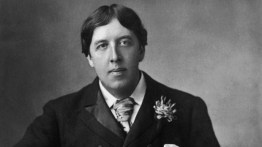
On Wednesday 19 October at the Grosvenor House Hotel on Park Lane in London, a reception was held to celebrate Oscar Wilde’s birthday. Invited by the excellent Gyles Brandreth, I arrived in good time. But as I approached the doors of the reception room, something stopped me. These are the facts. But what is the explanation? A few months ago Boris Johnson wrote two newspaper columns, one in favour of a proposition, one against. As an exercise in clearing one’s mind, the approach has much to commend it. So, to clear my own mind, let me try the same plan. There follow two alternative submissions of the diary item that could follow the first two paragraphs above. Version One [CONTINUES] [NEW PAR] I struggle to explain.

Order, order! It’s up to May to stop this ministerial bickering

Even by the accelerated standards of modern politics, this is fast. Three months after the Chancellor was appointed, the Treasury has had to deny that he has threatened to resign. No. 10, for its part, has had to declare that the Prime Minister has ‘full confidence’ in Philip Hammond. It is telling that neither felt that they could just laugh off the reports. So what is going on? The most innocent explanation is that Westminster is still adjusting to the return of normal relations between Downing Street and the Treasury. David Cameron and George Osborne did everything but actually merge the two. Indeed, until the coalition came along, they planned to work out of the same office in No. 10.

The most persecuted minority at universities

A few columns ago, I told the mortifying story of how I totally died at the Oxford Union. Today I’m going to tell you how I managed to avoid the same fate on a more recent trip to the Cambridge Union, where I spoke in a debate and opposed the motion: ‘This house would open its doors to refugees.’ Partly, I was just better prepared. One of the benefits of a public-speaking disaster is that it makes you particularly loath ever to repeat the horror. I can’t say I spent any longer on my speech. What I did do, though, was co-ordinate much more with the rest of my team beforehand (ex-MEP Godfrey Bloom, current MEP Roger Helmer, economist Alasdair Macleod) so that we knew what we were all going to say and didn’t repeat one another’s arguments.

How clever are ravens? I asked at the Tower

On Tower Hill, by the east wall of Beauchamp Tower where Robert Dudley was imprisoned for a year, a raven called Merlin hides behind a yucca plant. I know she’s there because the Ravenmaster told me. He knows she’s there because Merlin (a female) and he are bonded and they keep tabs on each other throughout the day. As he walks across Tower Green, he whistles to her, and in reply, from the shadows, comes a low, metallic, caw. Ravens pair up for life, for the most part, and Merlin, who dislikes the other ravens, has chosen Chris, the Tower of London’s Yeoman Warder Ravenmaster, as her mate. As he draws near, a beak protrudes slowly from behind the yucca.

Will Brexit butcher the banks?

The financial crisis defines our age. It helps explain everything from the presidential nomination of Donald Trump to Jeremy Corbyn’s leadership of the Labour party after 30 years on the political fringe. Certainly, the Brexit vote wouldn’t have happened without it. The crash of 2008 created a sense of unfairness that is still roiling our politics, as well as calling into question the competence of the West’s ruling class. The soi disant ‘experts’ were easily dismissed during the EU referendum campaign because nearly all of them had got the economic crisis so wrong. The Brexiteers asked: why should the public listen to the arguments of organisations and businesses that had made such disastrous misjudgments?

Tory Theresa is Blue Labour at heart

I never really agreed with the central-thesis of The Hitchhiker’s Guide to the Galaxy — that ‘42’ is the answer to life, the universe and everything. I have no great animus against the number — it does its job, filling that yawning gap between 41 and 43. But I had never thought it actually-special until the beginning of this week. That’s when I read that the Conservative Party was 17 points ahead in the latest opinion polls, on 42 per cent. A remarkable figure. I suppose you can argue that it says more about the current state of the Labour party than it does about Theresa May’s stewardship of the country.

Is that a bomb in your pocket? Or a spy? Or both?

Remember how much fun it used to be getting a new phone? I think of a friend a few years ago who was getting his first iPhone. He’d been on a waiting list, and he found out it was coming in on a Saturday when his newish girlfriend was coming to stay. She’d want to spend the weekend having wild and inventive twenty-something sex, he realised with a sinking heart, and perhaps going to the local farmers’ market. Whereas he’d want to spend it playing with his new iPhone. So he told her he was sick, and she accused him of having an affair. Which in a way I suppose he was. It’s not like that now. You get a new phone and it’s basically the same as your old phone, albeit perhaps half a millimetre thinner. Dullsville.

At all three party conferences, I felt cut adrift

Perhaps it’s age, perhaps disillusion, or perhaps party conferences really aren’t what they used to be, but I have struggled this autumn against something that has seemed to be carrying me away. As with a swimmer drawn from the shore by a strong current he cannot see, I’m trying not to leave but the people on the beach seem to be getting smaller, and the holiday noise, the shouts and laughter, grows faint. I knew my duty on arriving on the south coast for the Liberal Democrats’ annual gathering. It was to sit through conference debates in the vile windowless warehouse that is the Brighton Centre, scarring the waterfront with a great slab of concrete that’s blind to the sea, and take the temperature of a party in sharply reduced circumstances.

Theresa’s Tory love-in

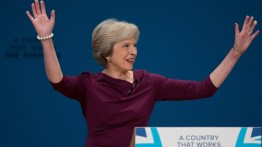
Theresa May doesn’t use an autocue for her speeches. She feels that reading off a screen at the back of the hall makes it far harder to connect with the audience. But the Prime Minister had no need to worry about her connection with the audience at this conference. Tory activists love her; they regard her as one of their own and are rejoicing at her leadership. ‘The grown ups are back in charge’ was a refrain heard frequently in Birmingham this week. The mood of Tory activists has been further improved by what Mrs May has said about Brexit.

The new reality on immigration

The good people of Hungary went to the polls on Sunday and voted by more than 98 per cent against accepting even a few hundred migrants, as per the European Union’s insistence. That poll result must have been gravid with nostalgia for Magyars over the age of about 35. They will remember that sort of election result being de rigueur, rather than astonishing. Indeed, in 1985 the Hungarian Socialist Workers Party succeeded in capturing 98.8 per cent of the popular vote — and even this was a bit of a disappointment, because in 1980 it had pulled in 99.3 per cent. On both occasions the ruling party was aided, of course, by the lack of an alternative on the ballot paper.

The parenting trap

Out of the fog of rumour and accusation surrounding the melancholy break-up of Brad Pitt and Angelina Jolie, one source of contention seems distinctly modern: the couple rowed most fiercely, apparently, over ‘parenting styles’. Where once the public divided into ‘Team Aniston’ and ‘Team Jolie’ on loyalties in love, it’s now ‘Team Jolie’ and ‘Team Pitt’ on parenting. According to ‘friends’ and ‘ex--nannies’, it appears that Jolie dealt with their six children in an easy-going, continent-hopping manner which aspired to their graduation as ‘children of the world’. Pitt, it seems, yelled more and tried to enforce bedtimes, manners and chores.

I want my Brexit good and strong

What you really should have done if you were in Birmingham on Monday this week was skip the not notably riveting Philip Hammond speech, and head instead for the fringe event run by the Bruges Group starring me, Professor David Myddelton and Charles Moore. I can’t speak for my performance (modesty forbids me) but my fellow panellists were brilliant: funny, incisive and as optimistic as you’d expect of a pair of ardent Brexiteers addressing the victorious home crowd for probably the first time since that happy day in June. ‘Which of us here could ever have imagined that we’re actually part of the majority: the 52 per cent?’ I asked. And lots of people clapped at the wonderful warm feeling this gave them. But then I introduced a worm into their apple.

In search of Mayism

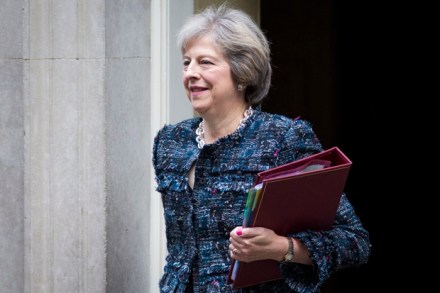
What does Theresa May believe? The new Prime Minister has had the summer to settle into her job and has a chance next week to tell us more about her plans for government. Had she come to power after a general election, or even a proper leadership race, we’d know more about her. Instead, she has the Tory party conference to introduce voters to their new government. We know already that her focus is on those who are ‘just managing’, a phrase that trips off the tongue far more lightly than ‘the squeezed middle’ (Ed Miliband) or ‘alarm-clock Britain’ (Nick Clegg).

Let the metropolitan elite lead the way

How does one join the Liberal Metro-politan Elite? What should be the qualifications? I must be an LME member because literally thousands of my readers have (over the years) told me so. They don’t mean it kindly, but I take it kindly. ‘Elite’ means ‘the best’, I should hate to be called illiberal, and I have a nice flat near central London. How, though, do we LMEs maintain the exclusivity of our club? The 48 per cent of voters who voted Remain will soon be hammering on our door for admission, plus (I’ll bet) a fair few repentant former Leavers too.

We know who Theresa May is against. But who is she for?

One of the professional drawbacks of coming from Scotland and then moving to London is that I don’t really know an awful lot about England. True, I spent a few years in East Anglia on my way south, but it was a particular part of East Anglia that possibly has rather more dreaming Gothic spires, rusted bicycles and robotics labs than the norm, so I’m not sure it was wholly representative. Still, I know the cities. I have spent enough time in Birmingham, Manchester, Newcastle, Nottingham and Sheffield, say, to know that they are not so terribly different from Glasgow, Aberdeen, Inverness or even the bits of Edinburgh without the cobbles.

Let’s bring the wolves back into Britain

A year ago there was a confirmed sighting, and even film, of a wild wolf in the Netherlands for the first time in perhaps 150 years. It was hanging out near a farm, a few kilometres from the German border in the north-east of the country, looking bored. A couple of years previously a dead wolf was found 40 miles to the west, well inside the Netherlands, but the locals thought it was probably a hoax. Almost certainly it wasn’t. Wolves are doing well in western Europe — there have been plenty of sightings in neighbouring Belgium, for example. France, Italy, Switzerland, Portugal, Spain and Germany have reasonably healthy populations and there are a few score in Scandinavia, too. Mostly they are isolated packs, though, some of them the consequence of reintroductions (i.e.