Columns

A year of revolution

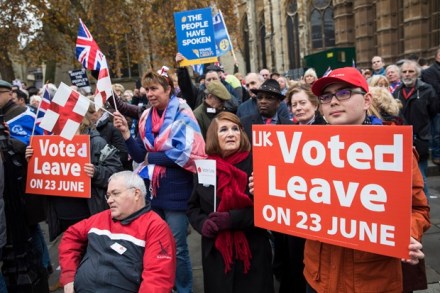
Few years will live as long in the memory as 2016. Historians will ponder the meaning and consequences of the past 12 months for decades to come. In the future, 180-odd years from now, some Zhou Enlai will remark that ‘it is too soon to say’ when asked about the significance of Brexit. The referendum result shocked Westminster. Michael Gove was so sure it would be Remain that he had retreated to bed on the evening of 23 June and only found out Leave had won when one of his aides telephoned in the early hours of the morning. Theresa May admits in her interview with us on p. 26 that she was ‘surprised’ by the result and had been expecting a Remain vote, based on both the polls and the mood in her own constituency.
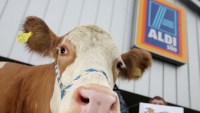
Don’t try to be liked, and buy your steak at Aldi – the lessons I’ve learned in 2016

Merry Christmas everyone. Here are some things I learned — or relearned — in 2016.   1. That which does not kill you makes you still alive. It’s weird to think that less than 12 months ago I was in hospital, dosed up with morphine, battered and bruised with a broken clavicle, numerous cracked ribs and a pulmonary embolism which can actually kill you, don’t you know. And now it’s as if the whole thing never happened. Well, apart from the hideous titanium plate, like a giant centipede, which I can still feel all stiff across my collar bone. And the bastard hunting ban my family has imposed on me…   2. Hunting is the only thing.

The one thing that really gets better with age

On the London Underground last week the carriage was crowded. No seat. No problem. I’m only 67 and content to stand. But a younger man offered his seat, and, having some way to travel and a book to read, I accepted with the appropriate grunt and nod of gratitude. Later, approaching my station, I noticed he was still there. Should I thank him properly before alighting? But he was in another part of the carriage. It might look silly to elbow my way over. Let it pass. Then a voice in my head spoke, a voice that over the decades has become so familiar. Don’t misunderstand me: this was not my conscience. My conscience was clear. It was definitely not necessary to thank this chap again.

Why I’m telling my son about the sky fairy

After we were married, my husband and I went on honeymoon to Mexico. We drove across country east to west, then north to Mexico City, to the Basilica of Our Lady of Guadalupe where I prayed for a baby. My husband, the least judgmental of atheists, sat happy in the babble of ladies all talking loudly, conversationally, to God. In April this year, with a vomity newborn on my shoulder, I made a nightlight out of a picture of Our Lady of Guadalupe and some fairy lights. Now, eight months later, as we begin each evening’s slow, hopeful descent towards bed, I take the stout and opinionated baby to say goodnight to her. Goodnight Virgin Mary I whisper, and he leans forward, rips the battery pack out of the fairy lights and lets it fall, clattering on its wires.

Can this sweet little girl get out of Aleppo alive?

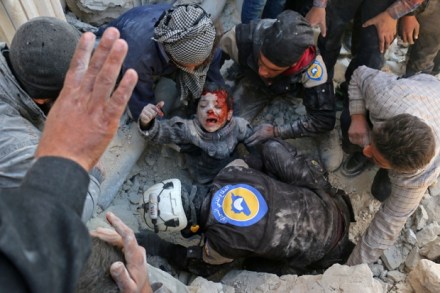
Every morning, after the children go to school, I turn on my computer to check that Bana Alabed is alive and unharmed. I do the same at night. I have never met Bana. She is a sweet-faced, skinny seven-year-old girl who tweets from rebel-held east Aleppo with the help of her mother, Fatemah, an English teacher. Last weekend, as the Syrian government, Russian and Hezbollah forces took over north-eastern Aleppo amid heavy bombardments, Bana tweeted: ‘Tonight we have no house. It’s bombed and I got in rubble. I saw deaths and nearly died.’ As she and her family contemplated their rapidly narrowing options, Bana wrote to her escalating number of followers: ‘I want to live, I don’t want to die.

The sexy new face of cigarette packaging

Something for which to thank the government, at last. It is much, much more fun buying cigarettes these days. It was quite good fun when they stopped having the fags on display and you had to play a kind of pin-the-tail-on-the-donkey game with the woman behind the counter. A bit like that section in Play School where you had to guess if it was behind the round window or the square window or the other window, a sort of arched regency type of thing. The woman scurrying hither and thither, pulling back shutters and scouring the shelves, not allowed to open all compartments at one time in case everybody suddenly dies of cancer because they’ve seen some cigarettes. But now it’s better still.

How I learned to embrace my inner toff

I do hope it’s a terrible winter this year: a total bastard where everyone’s snowed into their drives and those few who do manage to escape end up being slewed across the road or filmed in tragic tailbacks by drones for BBC news bulletins or stuck in ditches and having to tramp miles across icy fields trying to find a friendly farmer to pull them out. Nothing personal. It’s just that I’ve finally got hold of the car I always wanted — a Land Rover — and I’d hate people to think I only bought it for class-identity or small-penis or show-off reasons. I want to feel vindicated as a practical, responsible, sensible family man. I want the four-wheel drive to do its proper thing, rather than just be an expensive, fuel-consumption-boosting waste of space.

Prisons should be nicer places? Nonsense

Now that post-Marxian vacuous liberalism is over, it is surely about time that we revived the vigorous writings of Thomas Carlyle and made him fashionable once again. He is too little read and admired these days, perhaps partly on account of his arguably controversial treatise ‘Occasional Discourse on the Negro Question’ (1849) — which, while well intentioned, may nonetheless these days ruffle one or two feathers on our university campuses, or within the BBC. But there was of course a lot more to Thomas Carlyle than simply a benign, if misguided, wish to abolish slavery while keeping a few blacks on as indentured house servants. He was very astringent on celebrity culture, economics, the French revolution and, perhaps most importantly, prisons.

The pick-up artists who seduced a country

Many years ago, when I was a mere slip of a features journalist, I spent a weekend learning how to be a pick-up artist. Amazing. You assume it won’t work, that sort of thing, but it totally did. Towards the end of the second night, having not said an unscripted word in about half an hour, I found myself in the VIP room of a London nightclub, being gazed at in rapt adoration by a wildly attractive twentysomething blonde. Seriously, people don’t normally look at me like that. It was special. And then I ran away, terrified, because I had a girlfriend. My guide through all this was a man called Neil Strauss, author of a book called The Game.

We live in a golden age of swearing

Authors’ book tours are often fun but rarely easy. For me the long train journeys are a delight, but on arrival at bookshop or literary festival a doubt mars any pleasant anticipation: what are they expecting? Your likely audience has come for you rather than the book. Maybe that sounds conceited, as I’m hardly A-list, but I do excite a measure of (possibly morbid) curiosity. As to my audience’s interest in the book itself, well, they haven’t read it. It has only just been published. Their attitude tends to be neutral. How do I interest them? My latest presents me with a particular challenge. As a personal anthology of abuse and invective, Scorn contains some very rude words.

The economic consequences of Philip Hammond

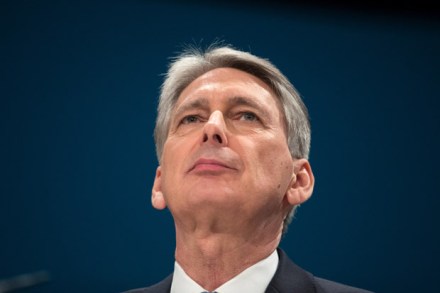
What are now called ‘fiscal events’—the Budget and the Autumn Statement—have become the biggest dates in the Westminster calendar. The Chancellor lights up the landscape with political pyrotechnics. There are attempts to bribe prospective voters through tax and spending changes, a litany of pork-barrel projects designed to help individual MPs, and fiendishly complicated schemes no one expects. But with the Treasury under new management, this will all change on Wednesday. Philip Hammond is the least political Chancellor Britain has had for quite some time. The two longest-serving incumbents of recent times, George Osborne and Gordon Brown, doubled up as electoral strategists whose fiscal policies were informed, above all, by political aims.

My husband’s ‘gay affair’ with Gove

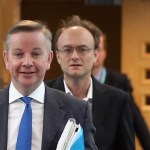
A few weeks ago I discovered that while he should have been focused on the fight of his life during the referendum campaign, David Cameron was instead obsessing over whether or not his justice secretary, Michael Gove, had had an affair with my husband, Dom Cummings, campaign director of Vote Leave. The story was in the Mail on Sunday, who eked it out across two consecutive issues. On week one it kept Dom and Michael’s names under wraps (for ethical reasons, it said) but revealed the source of the thrilling bit of gossip to be an aide of Cameron’s called Gavin Williamson (now Chief Whip). Williamson had, said the MoS, dashed into No. 10 ‘in the heat of the bitter EU campaign’ to deliver news of the fling to the PM.

The moral arc of the universe bends towards me

So I made £250 betting on Trump to win the presidency. It would have been more, except that every time I got close to topping up my stake, this boring, mimsy, responsible voice in my head kept saying: ‘Now, now James. Don’t be silly. All your sensible friends who know much, much more than you do about politics have been telling you that President Trump just isn’t going to happen.’ One of them was m’learned colleague Toby Young. Until recently we used to do a podcast together.

Can we trust the people? I’m no longer sure

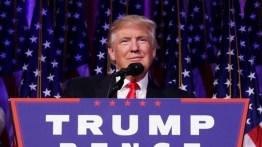
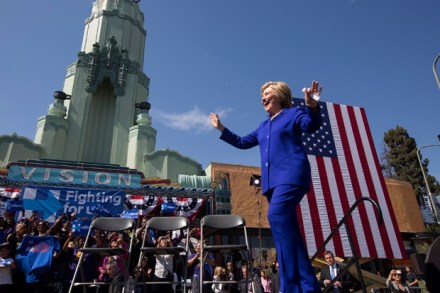
The election of Donald Trump as president of the United States may have signalled the death of the closest thing we have to a religion in politics. On both sides of the Atlantic, democracy risks being knocked from the high altar as an unmitigated and unquestioned good. The man’s obviously a fool and a nasty fool too. The contest should have been a walkover for Hillary Clinton. But it wasn’t. What happened? Can we be sure any longer that democracy works? Is it really the reliable bulwark against political madness that we always supposed? Without hesitation I plead guilty to the obvious charge: Trump supporters could level it at me, enthusiasts for Brexit do.

It’s time to consider the real Trump

For 18 months, Donald Trump was amazingly useful to British politicians. Whatever their party, he provided them with the most magnificent means with which to polish their liberal credentials. In January, when the British Parliament spent three hours debating a public petition to ban Trump from entering the country, we learned from Labour’s Rupa Huq that he was ‘racist, homophobic, misogynist’, from the Conservative Marcus Fysh that he was ‘the orange prince of American self-publicity’ and from the SNP’s Gavin Newlands that he was not only ‘racist, sexist and bigoted’, but ‘an idiot’. So perhaps now that the giggling has subsided, we can get down to a more realistic assessment of the man and his views.

Let’s shut out this angry, unrepresentative mob

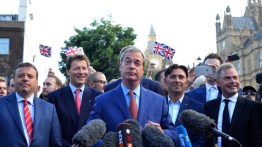
If you’re aiming to refute the suggestion that you can’t comprehend the difference between mob rule and the rule of law, then I suspect it’s probably a bad idea to raise a mob and lead it marching on a law court. Just my little hunch. Yet here come Nigel Farage and his piggybank Arron (Piggy) Banks with a plan to do just that. When the Supreme Court meets next month, the chaps behind Leave.EU aim to lead a march of 100,000 people to Parliament Square, to remind the chaps in wigs what Britain jolly well voted for. As if that had anything to do with anything at all. So far, criticism of the High Court judgment — which the Supreme Court will affirm or overrule — has come in three distinct varieties. We have had the valid, the dim and the frankly sinister.

Trump will be much, much better for Britain

The deplorables are rather wonderful people, aren’t they? Both here and in the United States. The people’s revolution continues apace, defying the odds each time, defying the pollsters, defying the elite. I cannot tell you how pleasurable it was to scamper downstairs on Wednesday morning to check out the reaction on the Guardian’s website. It kept me cackling for hours. The previous morning the paper had concluded its fatuous leader column with the words: ‘Americans should summon a special level of seriousness and display a profound responsibility when they go to the polls.

Ukip is missing an amazing chance

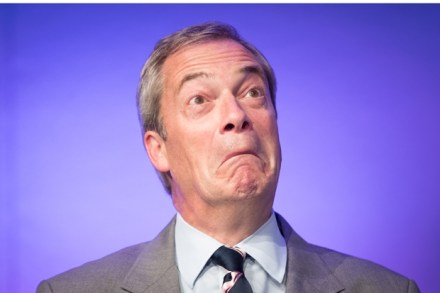
There was a comedy programme about Nigel Farage on the BBC this week, entitled Nigel Farage Gets His Life Back. Purporting to be a Swiftian satire about how Ukip’s former leader would cope with life beyond the political fray, it was, as usual, a case of the corporation sneering at a man who has a decent claim to being the most successful British politician of the modern age and, by extension, sneering at the four million or so Ukip voters and indeed the 52 per cent of the population who voted Leave. In other words, a very large proportion of the BBC’s licence payers, whom the BBC resolutely despises. All of this would have been fine, though, had the programme been even mildly amusing. But it wasn’t.

What’s wrong with early voting

 Washington The outcome of America’s elections might become clear in the first minutes of vote-counting next Tuesday night. That is because Americans are as moody and fussy about voting as they are about everything else. Their elections depend on who is excited enough to show up at the polls and who is too depressed. Black voters, historically loyal to the Democrats but hard to bring to polling stations, went into paroxysms of enthusiasm over Barack Obama and in the last election voted at higher rates than white voters. Born-again Christians used to bring the Republican party victory after victory, but more recently they have decided the party doesn’t mean what it says about Jesus, and have spent their election days at home.