Columns

My meeting with the Durham University mob

My abiding memory of this fairly appalling year is of the face of the young student at Durham University who shouted ‘Disgusting!’ at me as I left the main college building. This followed a very short speech I’d given to about 250 students but which, I suspect, he hadn’t heard because he’d probably walked out before it began. That, incidentally, is one of the reasons this story in which I find myself took a comparatively long while to break. The speech was on a Friday evening — but it wasn’t until Monday, at the earliest, that the lefties got themselves into a real lather.

Arthur Labinjo-Hughes’s death and the problem of evil

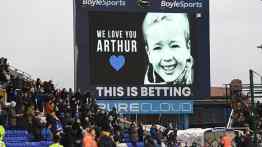
Since I first read about the torture and murder of six-year-old Arthur Labinjo-Hughes, I’ve had what feels like an A-level philosophy class running in my head. There are still those of us who believe in God, and are preparing to celebrate the birth of His son in a week or so. But how is it possible to square the existence of a good and omni-potent God with what happened to Arthur, and to the other children who suffer in the same way? Every year in this country, there are 50 or so children dead from abuse. Year in, year out, lockdown or not, that figure stays roughly the same. Is this original sin at work? Is it just the price we pay for free choice? If so, the price is too high. And anyway, what sort of freedom do violent addicts of the sort who surrounded Arthur actually have?

The conflict at the heart of the migrant question

A friend, a Cambridge professor, passing my old college last week, was startled to encounter a young lady standing outside shouting something and carrying a placard exhorting Mathew [sic] Parris to [expletive deleted] off. He wondered if I knew what this was all about. I don’t, but suppose it relates to my Times column arguing (about asylum seekers) that we do not have an equal obligation to all, but rather concentric circles of obligation at the centre of which we stand, the first circle being to self and family, the next to close friends, neighbours and community, then to nation and, finally, to all mankind.

Our growing unwillingness to understand the past

I was recently reading the works of the 17th-century antiquary John Aubrey, who at one point mentions a ghost craze that had broken out in Cirencester. The ‘apparition’ was reported to have disappeared with ‘a curious perfume and most melodious twang’. Reading this I unconsciously got ready for a man as wise as Aubrey to pooh-pooh the whole thing, pouring scorn on such superstition. But no; while Aubrey does indeed have a correction, it comes via his friend — one Mr W. Lilly — who ventures that the common view is wrong, for he ‘believes it was a fairy’. One of the most familiar joys of reading is the moment of recognition, when a hand seems to reach out across the centuries and a voice seems to say: ‘I was there too.

Does Kamala Harris deserve to be vice president?

Is it rude to refer to the Vice President of the USA as the world’s most famous diversity hire? Possibly. But it is the same with so many things that are true. You needn’t take my word for it. Joe Biden made his selection priorities clear when he was confirmed as his party’s nominee last year. He immediately declared that his search for a running mate was going to focus on non-white women. And in some ways it was a savvy move. Like John McCain in 2008, he knew that the US media might not thrill to a ticket made up of a couple of white, male soon-to-be octogenarians. Yet the decision left him with a relatively small list of qualified people to choose from. It would be the same if he’d decided that his running mate had to be a gay.

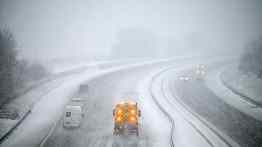
How to spin a storm

If, in the days after Storm Arwen, the north of England began to suspect that the south didn’t much care about it, that suspicion has by now hardened into a cert. Many thousands of homes in the north and in Scotland still have no power and, as I write this, Storm Barra has just arrived, with a forecast of 80mph gales and eight inches of snow. In the south, there’s excitement about the weather — ‘Man the BARRA-cades!’ — and the possibility of a white Christmas. In the north, there are elderly men and women, exhausted, hanging on, day after dismal day in the bitter dark. The village in Northumberland where I grew up has now been without electricity for 12 days. No heat, no light, no access to the news.

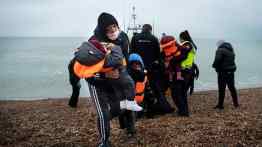
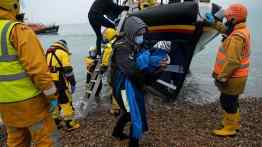
The Tories have no answer to the Channel crossings crisis

One of this government’s favourite tactics is to act as if the beginning of its time in office was the general election of December 2019. This means it can dodge the usual charge against any party that has been in power for more than a decade: why haven’t you fixed the problem already? Some problems, though, have clearly got much worse since December 2019. One of those is the situation in the Channel. Five years ago, pretty much no one was attempting to cross it illegally on a small boat. So far this year, more than 25,000 migrants have arrived via this route. Last month, 1,185 landed in one day: a new record. The crisis poses a particular problem for the government for two reasons. First, Boris Johnson has made much of taking back control of Britain’s borders.

My plan for young people

I have been reading 39 Ways To Save The Planet by the BBC journalist Tom Heap, which includes such ingenious suggestions as capturing refrigerant gases in a large box and then destroying the large box. It is an interesting book. I would like to suggest to Tom a 40th way in which we might help to save the planet, as well as saving the country a lot of money: raise the minimum age at which a person can drive a car from 17 years to 25 years. This would immediately reduce our motor vehicle emissions by a little over 5 per cent — no small contribution. It would also reduce the number of accidents on our roads by 18 per cent, consequently saving the taxpayer an estimated £2.9 billion per year, which we could spend on planting trees or building attractive igloos for polar bears.

Anticolonialists have their myths too

Much is now being made of the evils of empire. As a child of empire I bridle. I acknowledge the wrong and injustices of colonialism, the racism, and the greed too. I accept that a re-balancing of history was due. It’s good that the darker side of the picture has now moved into the light. But from my own boyhood experience I know that mixed among the aims of empire there were also idealism, principle, and a belief in the betterment of those we governed. And success: there were things to be proud of. The roots of my mix of pride and shame about empire are the impressions a white boy in Africa formed of the continent on which our forefathers had landed. I cannot ignore, as some anticolonial opinion does, the situation they came to.

The Tories face their biggest problem yet

Up until a few days ago, ministers could see how the government might regain its footing in the polls after several weeks of self-inflicted damage. The argument went like this: as Christmas approaches voters will see that life in Britain — and specifically England — carries on with very few Covid restrictions whereas elsewhere in Europe more draconian measures have been imposed. This scenario seemed plausible. Austria was in lockdown and heading for compulsory vaccination; there had been rioting in Holland after the announcement of an 8 p.m. curfew and several German states had cancelled Christmas markets.

‘The type of person who makes the world work’: remembering Anthony Smith

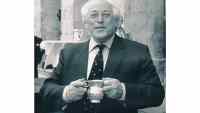
I’m not sure how many readers know the name of Anthony Smith, who died on Sunday aged 83, but a fair number will. He spent almost a decade at the BBC, helped start Channel 4, directed the British Film Institute, chaired many committees and for 17 years was president of Magdalen College, Oxford. But while not every reader will know him, you are lucky if you know the type: that rare person whose passion is helping other people — the type, in other words, who makes the world work. I first met him when I was a precocious schoolboy of 16. I had asked permission from Magdalen’s librarian to look at some manuscripts for a book I was researching. Tony was clearly alerted to this and made the effort to introduce himself and take me for a walk around the college grounds.

Life online is about to get even worse

No sooner had an inch or two of snow fallen on our upland areas last week than the climate-change Morlocks were out on social media, shrieking and bed-wetting themselves into a catatonic stupor. Nurse, nurse, bring the meds, quickly. ‘There! Told you!’ was the general gist. If it is snowing there cannot possibly be global warming. If one day it is a mite cold, the Earth cannot be heating up. That’s simple enough to understand, isn’t it, if you are an imbecile? Subjected to even the mildest query many of these people immediately began to delingpole.

Why the next election will be harder for the Tories

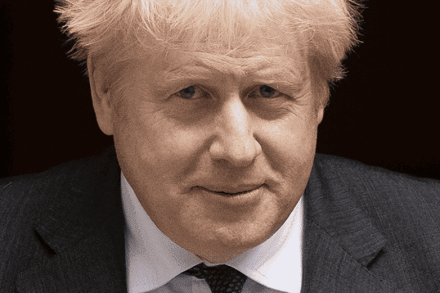
Ever since Boris Johnson’s disastrous decision to try to stay the standards committee’s guilty verdict against Owen Paterson, things have started going wrong for Downing Street. The roots of the government’s problem can be traced back to a speech, though. Not Johnson’s rambling address to the CBI earlier this week, but his speech at Tory party conference last month. Johnson wrote much of the speech on various plane flights. David Cameron’s conference speeches, in contrast, were normally the result of long, painful writing sessions for him and his aides.

Has Covid turned us into a nation of hermits?

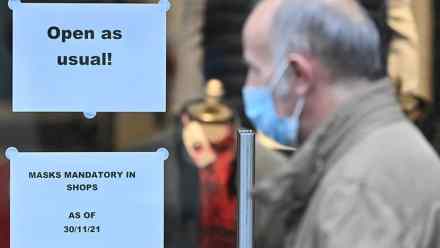
If there’s one thing I misjudged completely, it’s how creepy and long-lasting the effects of lockdown on all of us would be. I’m not in this case talking about the catastrophic medical cost: the heart attacks and strokes, the missed diagnoses. If we’d let Covid rip, if we hadn’t locked down, I’m not sure there’d have been a functioning hospital to go to anyway. What’s troubling me is the effect on our national psyche. Some of us are out and about — anti-vaxxers for instance — enjoying sprightly get-togethers, but others of us have retreated, withdrawn from outside life. Successive lockdowns have knocked us into hibernation mode and it’s not clear that we’re ever coming out.

The American identity crisis

There was no reason for the world ever to hear the name Kyle Rittenhouse. Except that in the summer of 2020 the USA was staring over a precipice. The Covid lockdowns effectively ended after the killing of George Floyd by a Minnesotan policeman. Suddenly mass gatherings in the name of BLM were a public-health duty and, because it was an election year, neither Democrats nor Republicans seemed to know how to react to protests that soon degenerated into serious disorder. For a country that is only one bad police interaction away from meltdown, it was inevitable that something would happen again. Sure enough in August a man called Jacob Blake was shot by police in Kenosha, Wisconsin.

Why the northeast could benefit from the ‘Waitrose Effect’

A Church of England primary school in Richmond, London, has junked Sir Winston Churchill and J.K. Rowling as names for two of its houses and replaced them with the names of the footballer Marcus Rashford and the lady who helped out in the Crimean war, Mary Seacole. This was done, the school said, in order to be ‘more diverse’. Poor old Mary. She is always being roped in, because so many schoolteachers are devoid of imagination as well as being a bit ignorant. Seacole may be regarded as a ‘great Black Briton’, yet she did not consider herself black but Creole and Scottish.

Prostitutes are stigmatised because their trade is filthy

Exciting news from Durham University, which is helping its students to become ‘sex workers’. This noble institution is offering two courses in the various forms of harlotry. My only concern is that at present they do not actually offer an academic qualification in these subjects — at the very least an undergraduate degree in, say, Practical Whoring. Perhaps followed by an MA in Deconstructing the Topless Hand-Shandy1897-1913. Such courses would probably result in more lucrative career opportunities than many of the more traditional subjects which students pay through the nose to study. I am attending a dinner at Durham University next month and fervently hope that some of the ambitious young ladies on these courses will be in attendance.

The absurd theatre of vaccine passports

When a column highlighting under-appreciated breaking news has had absolutely no impact on the course of events (per usual), the urge to make the same point again is irresistible. In August, Public Health England released data which shows that vaccination does not appreciably guard against Covid infection and transmission and protection worked out at around 17 per cent for the over-fifties. As I observed then, this would mean the vaxxed and unvaxxed pose a comparable danger to each other. All Covid apartheid schemes are therefore insensible. Fresher information has fortified this conclusion of the summer. In every age group over 30 in the UK, the rates of Covid infection per 100,000 are now higher among the vaxxed than the unvaxxed.

The sleaze row is a crisis made for Angela Rayner

Almost no MP has emerged with dignity from the sleaze debacle of the past three weeks. Boris Johnson’s botched attempt to spare Owen Paterson a 30-day suspension has badly damaged his credibility with his own party. The 2019 intake of ‘red wall’ MPs have turned on the old guard, accusing their colleagues of damaging the party’s reputation through outside interests. Opposition leaders have struggled to capitalise on Tory disarray. Ed Davey’s £78,000-a-year job as a consultant has left him out of the debate and Keir Starmer has faced questions over his outside earnings for legal work. But there is one politician who suffers from none of these problems: Angela Rayner.