Columns

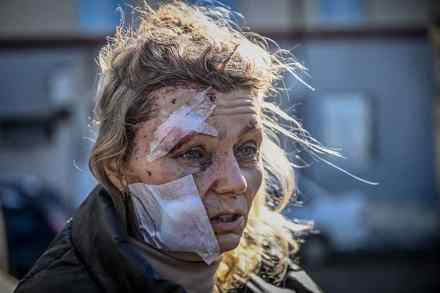
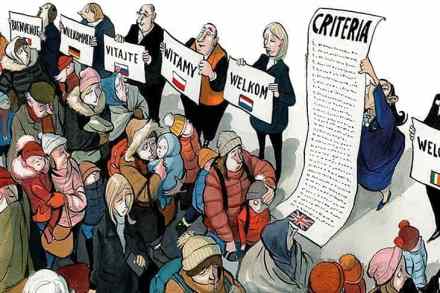
I’m taking in a Ukrainian

Delighted though we all are that Benedict Cumberbatch has decided to allow a Ukrainian family to live in one of his houses, did he have to trumpet this to the entire population of the country? Surely these sorts of decision are best kept to oneself, no? But then, they’re always doing it, the luvvies – proclaiming their saintliness in order to protect and advance the brand, one supposes. Benedict should know that there are more than 100,000 ordinary people in this country, people who have never received a Bafta, who have offered their homes to Ukrainian refugees and they don’t go bragging about it on national media. People such as myself, for example. I have applied to take refugees in, to do my little bit, but it would not occur to me to advertise the fact publicly.
In defence of healthy opposition

Glasses chinked. From massive chandeliers, lights glittered beneath the high vaulted ceiling; heroic statuary around the carved stone walls stared eyelessly down; heraldic flags draped from brass rods; and a sense of history and of – how shall I say? – consequence hung in the air. We were dining at the Guildhall in the City of London, and from my place at the top table, flanked by judges, eminent barristers, our host Lord Grabiner QC of One Essex Court chambers, and the justice minister Lord Wolfson of Tredegar, one could survey the whole hall: perhaps 400 of the brightest and best in the English legal world. These were not, for the most part, old men. The occasion was the Times’s annual law awards: an essay competition for young lawyers.

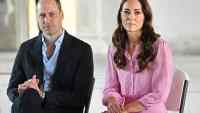
How should Prince William respond to questions about slavery?

It is uncanny how swiftly British culture imitates the worst of American culture. Take Whoopi Goldberg, who distinguished herself again last week on The View. For anyone who does not know, The View is a long-running US TV show in which a collection of the dimmest women in America are invited to opine angrily on things they know nothing about. Goldberg is a long-term resident of this asylum, though she recently had to take a break from the show after declaring that the Holocaust had nothing to do with race, was some white-on-white thing, and in any case (as a woman of colour) didn’t concern her.

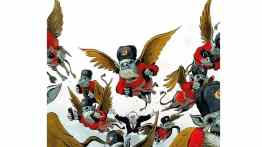
The three stumbling blocks to a Ukraine peace deal

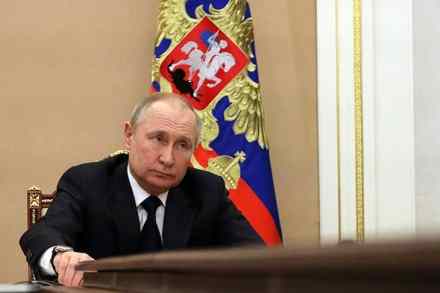
A month in, and the war in Ukraine looks very different to how anyone expected. On the first day of the invasion, western intelligence sources believed that Kyiv would fall to Russian forces within 72 hours, underestimating the Ukrainians’ ability to defend their territory and overestimating the Russian military’s capabilities. Among Vladimir Putin’s many errors was his underestimation of western unity. He did not predict the severity of the sanctions against Russia or that his act of aggression would snap Europe (most notably Germany) out of its complacency over defence spending. In some ways, Putin, by going for a full-on invasion, made it easier for the West to adopt a unified position.

The day I nearly brought RT down

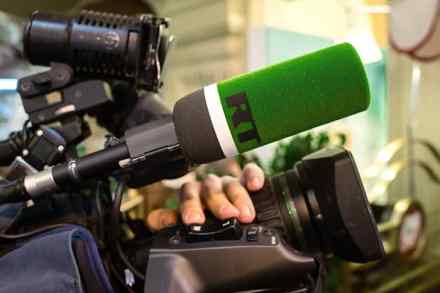
It is interesting to watch Ofcom finally remove the broadcasting licence from the Russian propaganda channel Russia Today (RT). I almost managed to do the job myself about 12 years ago. Back in the 2000s, a number of bad regimes were rushing into the broadcasting space to try to give themselves a better international image. The Chinese Communist party set up a London branch of its state television network called CCTV, apparently unaware of the hilarity this would cause in the English language. Meanwhile, the Iranian government started PressTV to push the ayatollahs’ views of the world. It set up its propaganda channel from a roundabout on the Hanger Lane gyratory system, proving again that totalitarian regimes are not always brilliant.

What schools should be teaching

The state of Florida recently passed a piece of legislation making it illegal for teachers to hold discussions with pupils under the age of eight about gender orientation. It seemed a very reasonable idea to me and I would guess that a largeish proportion of parents in this country, perhaps even a majority, would concur. I would not wish to indulge in an unrealistically idyllic view of childhood, but my own life was certainly less complicated in the years before I suddenly realised, much in the manner of Henry Miller’s famous epiphany, that (to bowdlerise a little) girls were all in possession of cervixes and might thus be receptive to overtures of a sexual nature – or that there might be boys who for complex reasons would remain unmoved by such a revelation.

The Chancellor’s difficult choices

The Office for Budget Responsibility was designed to protect the Chancellor from accusations that he is cooking the books. If the forecasts are prepared by an independent body, there can’t be the suggestion – as there often was before the OBR’s creation in 2010 – that they have been politically influenced. But what the OBR cannot do is eliminate uncertainty. In recent years, the likely trajectory of the financial future changed quite a lot from one month to the next: from interest rates and inflation to the Covid pandemic and Russia’s invasion of Ukraine. The OBR itself admits that it had to conduct its work without knowing the full economic implications of the war. But it has cut its growth forecast for the UK economy anyway.

The West has rediscovered its purpose

Over recent days I have been reflecting on War and Peace. Or Special Operation and Peace as it must now be known in Russia, unless you want to spend 15 years in prison. And I am reminded once again of how utterly unpredictable war always is. On this occasion almost every-thing that people imagined just a couple of weeks back has been completely inverted. In no particular order the list includes the following. A few weeks ago Vladimir Putin looked like a strongman. Today he looks like a weak and deluded leader. A few weeks ago Volodymyr Zelensky looked like an ex-comedian who might soon be out of his depth, if not his country. Today he looks like a remarkable wartime leader and an actual strong man. A few weeks back the Russian military seemed vast and unassailable.

Why are so few Americans willing to defend their country?

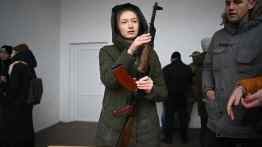
For many of us war voyeurs watching the news with a glass of sherry, admiration of the little-engine-that-could Ukrainian fighters is underwritten by unease. As families escape to safety, plenty of feisty Ukrainians are remaining behind to battle a far more powerful aggressor, and they’re not all men, either. The question nags, then: in the same circumstances, would we stick around to defend our homelands, or would we cut our losses and get out? Earlier this month, that’s precisely what a Quinnipiac poll asked Americans. Some 7 per cent answered ‘Don’t know’. But an astonishing 52 per cent of Democrats predicted that they’d skedaddle. Among Republicans, a full quarter would carpool with the hightailing ‘to hell with this!

What can save China from Covid?

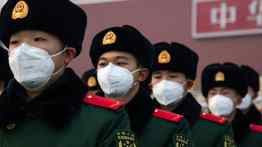
It is tempting to believe that we have gone from one crisis to another: Russia invaded Ukraine hours after Covid restrictions were lifted in England. Tempting, but wrong. Covid is now manageable because of high levels of immunity from vaccines and prior infection (just look at how our high case rate isn’t leading to calls for the reintroduction of restrictions). But it remains problematic in less highly vaccinated countries, particularly those pursuing a zero-Covid strategy. The most dramatic example is China. There are approximately 15 million unvaccinated over-eighties in the country (Beijing prioritised immunisation by profession rather than age).

Nobody will forget what Russia has done

At the heart of the West’s response to Russia’s invasion of Ukraine sits an ambiguity that it is convenient, perhaps even necessary, for our political leaders to maintain. If we can turn the clock back on Putin’s foolish endeavour – if he can be persuaded to withdraw his troops, disavow Russia’s territorial ambitions and return to the status quo ante – then, with Ukraine again an autonomous and independent country, does the West also return to the status quo ante in our own dealings with Russia?

Rising energy bills are a price worth paying to stop Putin

Nato countries are being careful not to do anything that Russia could claim is an act of war. Just look at the reluctance from the US to provide Ukraine with Polish fighter jets. Yet Britain and other Nato members are involved in a huge effort to break Vladimir Putin’s war machine through supplying Ukraine with weapons and imposing financial pressure on Moscow. Russia, a G20 country, has been severed from the world economy. It has now surpassed Iran as the most sanctioned country on Earth and it is beginning to occupy a similar economic position. The speed with which Russia has been hit by these economic measures has been a display of the West’s financial power. Yet western politicians now have to rally their publics to accept the cost of the sanctions.

Is global warming really more dangerous than Putin’s nuclear threats?

Having just dusted down my Geiger counter and argued with the family about whether or not there is room for our dog, Jessie, in the cellar fallout shelter, I thought I would check in with the Bulletin of the Atomic Scientists to see how long we’ve got before our recently acquired small paddock sprouts its first crop of Cobalt-60. The Bulletin of the Atomic Scientists was begun in 1945 by the physicists who, having devoted several years of their lives to the Manhattan Project, suddenly realised that their striving might not be, in the end, exclusively beneficial for the human race. As the most lionised of them, J. Robert Oppenheimer, put it at the time (without a great deal of cheer): ‘Now I am become death, destroyer of worlds.

The myth that Russia and Ukraine are fighting over

It seems strange now that any of us ever imagined that Putin might not invade. He thinks of Ukraine as rightfully Russia’s, heart, mind and soul. It’s there in that essay he wrote last year: Russians and Ukrainians are ‘one people’, he said, meaning not that they’re brothers so much as that Ukrainians have no right to a separate identity. And I wonder whether, in attempting to take Kiev, he isn’t also trying to lay final claim to the founding myth that Russia and Ukraine fight over and both think of as their own. Kiev is the setting for the epic tale of Kievan Rus, the first great Slavic state founded in the 900s by enterprising Viking Swedes. Putin clearly identifies with its warlord saint, Vladimir the Great.

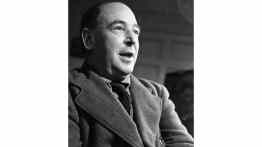
Why C.S. Lewis was right about war

Well, at least Covid is over. No sooner had Vladimir Putin’s tanks rolled into Ukraine than the UK’s Covid advisory group Sage disbanded. The same effect was felt in the US, where the outbreak of war in Europe led to the immediate, unlamented disappearance of Dr Anthony Fauci. After two years on primetime, suddenly the good doctor was nowhere to be seen. Covid already seems so very last season. The ‘climate emergency’ likewise seems to have drifted away. For years, whenever the world was facing no more proximate emergency, every politician from the Scottish parliament upwards insisted that we were all doomed and heading to hellfire.

The free world’s new reality

We are about to see brutality in Europe on a scale that will be almost beyond our comprehension. Russia is turning to increasingly indiscriminate bombardment of Ukraine to try to achieve its aims after the failure of its initial military strategy. Vladimir Putin’s invasion has shattered the old belief that the era of wars between European nation states was over because the consequences were simply too grim. The policy of sanctions as a deterrent failed. The assumptions that have driven European geopolitics for a generation are changing before our eyes. Nowhere is this shift more dramatic than in Germany. After reunification, the country’s defence spending plummeted and for decades subsequent governments rejected requests from allies to spend more on military.

The return of Actual Badness

In the spring of 2020, I advanced an abnormally hopeful proposition: that one blessing that might arise from a pandemic with otherwise few redeeming features was a cultural sobering-up. Maybe we’d regain a sense of perspective about the trivial non-problems of identity politics once finally faced with a proper problem. Boy, was I wrong. Instead, what proved a relatively mild disease, in the big, smallpoxian picture, fostered an even greater frenzy of ineffectual pettiness – park benches wrapped with police tape, government edicts about Scotch eggs, fisticuffs in supermarkets over thin, gap-prone facial napkins.

I’ve found a little Eden in London

I’m not one of life’s early risers but an exception had to be made on Wednesday last week. In an event organised by Lord Chadlington (Peter Selwyn Gummer), Michael Gove was talking about ‘levelling up’ to an invited audience at the Corinthia hotel in London. This was a breakfast meeting, doors open at 7.45, and I wanted to hear Mr Gove, a politician I know and admire. So I was there. Gove was impressive. But in the end neither he nor the breakfast were what I’ll always remember about that morning. Around nine o’clock we tipped out on to the pavements by Embankment Tube station. It was a glorious morning, fresh and clear in the winter sunshine.

What the right gets wrong about Putin

A fracture on the international right may seem small fry given everything that is going on right now. But it is worth loitering over. Because in recent years an interesting divide has grown among conservatives on both sides of the Atlantic. On one side are the Cold War warriors and their successors who have continued to view Vladimir Putin’s Russia as a strategic threat. Meanwhile, a new generation has arrived at a different view. While the West has deranged itself with assaults on its own history, on biology and much more, an assortment of conservatives have come to see Putin as some kind of counterweight. A bulwark – even an admirable corrective – to the madness of our own societies.