Columns

A win for the film critics of Bradford

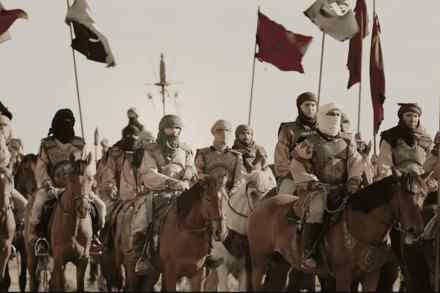
As a general rule, you should never talk about a film you haven’t seen. But The Lady of Heaven is proving a tricky film to catch. Plus whole crowds of people are talking about it without having seen it, so perhaps my joining in won’t do too much harm. Although it sounds like it might be some work of Vatican kitsch, The Lady of Heaven is actually about another religion. A boy in modern-day Iraq loses his mother and through doing so learns the story of Fatima, one of the daughters of Muhammad. And here is where an apparently sweeping historical drama enters tricky terrain. For not all cinema audiences have taken the film to heart. The citizens of Bradford, for instance, turn out to include a surprising proportion of film critics. Like me, they have not actually seen the film.
The British Empire’s despicable treatment of mermaids

I may have broken the law this week, without having intended to, so great was my rush to return home. I forgot to put on my seat belt and may have exceeded the speed limit on more than one occasion. The cause of my intemperate haste was, of course, a desire to be back at my house in time to listen to BBC Radio 4’s daily evening arts magazine programme, Front Row. I live in a part of the world where the radio reception in cars is thinnish to non-existent, you see. Looking around me, as I depressed the accelerator further than I should, I noticed that everybody else was driving with similar fury, presumably for the same reason: haring back to catch Front Row.

The closing of the Chinese mind

I was born in Nanjing five years after the Tiananmen Square protests. By then, records of the demonstrations and the Communist party’s brutal suppression had been scrubbed clean. So Tiananmen was not part of the national conversation when I was growing up. I only fully grasped what had happened when I visited Hong Kong in my early twenties (that would be harder now under the city’s new national security law). Tiananmen isn’t just absent from history books; the Chinese authorities keep an eye on literature and film, so anything that’s politically subversive is censored or driven underground and abroad. One film that fell victim to this regime is Lan Yu, which I recently saw for the first time at a screening in Soho.

The toxic concept of toxic masculinity

Anyone who has passed through an education in the past decade will have encountered the term ‘toxic masculinity’. It is one of the many charming phrases that our age has come up with to pathologise ordinary people. Brewing for some decades, the concept of ‘toxic masculinity’ was brought into the mainstream in the last ten years by fourth-wave feminists intent on portraying half of our species as ‘problematic’, to use another of the delightful watchwords of our era. The simple assertion of the ‘toxic masculinity’ crowd is that specifically male behaviours are a problem. The most extreme aspects of male misbehaviour are portrayed as though they are routine.

How to win my vote

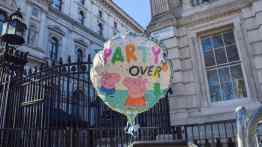
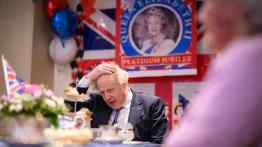
The repeated injunction that we should all ‘move on’ from worrying our silly heads about partygate is as otiose as it is arrogant. It is also, of course, a case of wishful thinking at its most extreme. And yet I hear it every day, on TalkRadio, on GB News, from pro-Conservative friends on Facebook and so on. Listen, you Tories, you need a new strategy, because ‘it’s time to move on’ hasn’t worked. Indeed, a good million or two voters have moved on and according to the polls will not be voting Conservative at the next election, if ever again. Nor is it any use whining about how we have all become obsessed about the Prime Minister eating a piece of cake when there’s a war going on and a cost-of-living crisis. It is not about a piece of cake.

Boris may be toppled by accident

Every Tory leader fears a plot against them. Their paranoia isn’t helped by the layout of Westminster, which lends itself to scheming. They worry about huddled groupings in the tearoom, cosy suppers in townhouses, and what’s said behind closed office doors in Portcullis House. It is no coincidence that before the publication of Sue Gray’s report the Tory whips were keen for their MPs to be in parliament, but once the report was released they were very happy for backbenchers to go home. MPs find it harder to plot when they’re away from the Commons. Yet the truth is that if Boris Johnson faces a no-confidence vote it won’t be because of an organised attempt to topple him. There are too many disagreements among Tory MPs over when is the right time to strike.

For Boris, the hard bit is just beginning

Boris Johnson has been plunged back into the mire of partygate. The publication of a photograph of Johnson raising a glass to his departing communications chief Lee Cain in November 2020 and the long-awaited report by Sue Gray into lockdown breaches in Whitehall means that once again there are Tory MPs publicly calling for him to resign. Some of those who had gone quiet on the basis that the war in Ukraine meant it was not the right time for a leadership election have renewed their calls for the Prime Minister to go. No. 10’s hope is that apologies and an emphasis on how the new Department of the Prime Minister is meant to professionalise Downing Street will be enough to persuade backbenchers to stay their hands.

Monkeypox, Covid and the trouble with our species

I hate to be one of those columnists who says ‘I told you so’. But I told you so. Looking back this week through the vast underground vaults at Spectator HQ I see that centuries ago in April 2020 I explained the problem with us humans as a species. As I said back then, someone always shags a monkey. There are almost eight billion of us on this planet today, and the likelihood that we’re all going to make judicious decisions all the time is vanishingly small. The mating decisions of the species alone are notoriously prone to trial and error. And the entire future of our species rides perpetually along this cliff edge. Last month I read in the Indian press of four men arrested by police in the western Indian state of Maharashtra. Their crime?

Why I was almost thrown out of South Africa

On my 2 p.m. arrival for a week-long work trip to South Africa a fortnight ago, an immigration agent flapped my passport while inquiring as to the purpose of my visit. ‘To appear in the Franschhoek Literary Festival’ clearly meant nothing to this woman, but hey, lit fests aren’t exactly Glastonbury. I only grew, shall we say, concerned when she announced that because my passport lacked two sequential completely clean pages, she was denying me entry to the country. ‘You’re kidding me,’ I said – quietly; I didn’t shout. Yet this reflex expression of disbelief was all it would take for the entire team of Cape Town’s gatekeepers to blackball me as a reprobate with a bad attitude. ‘You think I am joking you?

The close friend I never really knew

I have just read an extraordinary new book. It’s by a close and old pal whom I’d count as one of my best friends. He was my lodger in London for ten years. His book is autobiographical. And I now realise I never knew him at all. In Don’t Ask Me About My Dad, Tom Mitchelson charts a life story that is entirely strange to me, and shocking. And yet the weird thing is that I know many of the people in it – or thought I did. His late father, Austin, who helped launch the Sunday Sport, I met and thought a likeable if flaky chap, and good company. He turns out to have been the most appalling wife-beater, liar, drunkard and debtor.

What we learnt from Eurovision

Twice during the Eurovision Song Contest our television lost the signal and the set went blank – once, mercifully, during the performance of a hirsute, gurning, cod-operatic bellend from that patently European country Azerbaijan. ‘Putin’, my wife and I both reckoned, seeing as Russian hacker groups favourably disposed towards their country’s leader had promised that they would do what they could to disrupt the broadcast and indeed the voting. If this really is the third world war, then I suppose it is a suitably banal and modernist take on universal annihilation – this yearly celebration of joyous gayness and very bad music suddenly part of the same war as the bloodshed, carnage and misery of Mariupol.

Boris’s plan to divide and conquer

Boris Johnson has never quite been able to decide whether he wants to be a great unifier or a great divider. Does he want to govern like he did at City Hall – the ‘generous-hearted, loving mayor of London’, as he once described himself – or is his best chance for re-election a return to the Brexit-style wars that landed him in Downing Street? These days, there are plenty of signs that the government is in fight mode. The Prime Minister is risking a trade war with Brussels with threats to unilaterally rewrite the Northern Ireland Protocol, going to battle with civil servants over home-working and planning to deport asylum seekers to Rwanda. Johnson can see the pros to a public fight.

The dishonesty of how we respond to tragedies

It isn’t hard to notice that some crimes are more important than others. Or at least more politically advantageous. It is six years since Labour MP Jo Cox was murdered in her constituency by somebody who appeared to be a sort of aspiring Nazi. Back then, various campaign groups and newspapers in this country had no problems with claiming that guilt for that attack could be liberally spread around. Some said that everybody on the political right bore responsibility. Others claimed that anyone who was leading Britain’s ‘Leave’ campaign in the EU referendum shared the blame. It was different in October last year, when Sir David Amess MP was murdered – also in his constituency.

The nonsense world of emotional support animals

Sometimes an event or a phenomenon is so perplexing and so terrible that it’s best not to deal with it too directly and for too long. Best to look at something tangentially related, which is why I’ve spent so much time recently worrying about Kirrin Medcalf’s dog. Kirrin is head of ‘trans inclusion’ at Stonewall, the charity which once fought for the rights of gay men and women but now devotes itself to trying to overturn the heteronormative patriarchy, using the notion of transsexual kids as a Trojan horse. Don’t worry. You don’t need to understand that. It’s best not to, if you want to stay sane. All you need to know is that for Kirrin and for Stonewall, it’s violent heresy to say that men and women are biologically different.

My list of Britain’s national character flaws

Before we start, let’s firmly establish my long-standing affection for the United Kingdom. Why, some of my best friends are British. Yet at the risk of overgeneralisation, recent events have exemplified a few shortcomings in the otherwise sterling national character. Nitpicking pettiness. We’ve whole front pages dedicated to the Labour leader’s carryout curry one evening during lockdown; to between which hours (8.40 p.m. to 10 p.m.) the offending curry was consumed (Keir Starmer’s failure to reveal if it was lamb korma or chicken vindaloo is deeply troubling); and to which other eateries were then still open. Thanks to this rigorous coverage, we all know that Starmer’s hotel was serving food outdoors until 9 p.m.

The BBC’s obsession with youth

At long last the state of Oregon has got around to installing tampon machines in the male lavatories of its many schools. I have campaigned long and hard on this issue. It has always seemed to me grossly unfair that girls should be provided with this facility but the poor boys utterly ignored. The sense of shame that these young men must have felt when their monthly cycles arrived unexpectedly – and remember that many of them will be victims of ‘period poverty’. Now, though, thanks to the state’s chirpily named Menstrual Dignity Act, equality has been achieved and I will therefore turn my attention to another consequence of social injustice – the continued proliferation of parking spaces which are not designated solely for disabled persons.

The truth about Britain’s Covid deaths

There has been a considerable hoo-hah in the press about the recent World Health Organisation report estimating Covid-related deaths internationally during the pandemic. The measurement chosen has been ‘excess deaths’ – the difference between the number who died during the pandemic and the number who, on average, died in the same place before the pandemic struck. This has enabled us to compare the British figures with excess deaths across the rest of Europe per 100,000 of the population; and it appears we’re not, after all, at the top of the death-league, but near the middle. Though its methodology has attracted serious criticism, I was struck by the report.

Why silly scandals suit our politicians

I wonder if we will ever be able to resist fixing the suffix ‘gate’ to the end of any not-yet-sufficiently-salacious scandal? Ten years ago Andrew Mitchell MP actually had a scandal involving a gate and caused the dashing of one of my greatest hopes. This was the hope that some day a scandal would emerge involving a gate, and that when hacks tried to call it ‘gategate’ we would finally realise how silly all this was, and do away with the cliché entirely. No such luck. In recent weeks alone we have had ‘partygate’ and ‘beergate’. In fact, reading the news I sometimes wonder whether our media is not simply looking for the next thing they can affix ‘-gate’ to. Because we do seem quite amazingly distracted.

Can the Tories bounce back before the next election?

When David Cameron was prime minister, the Tories flirted with the idea of a Queen’s Speech with no bills in it at all. The aim was to show that more legislation was not the answer. This idea was quickly abandoned on the grounds that it would make the government look like it was out of ideas. This week’s Queen’s Speech contained 38 bills. Yet little of the proposed legislation will have made a difference to the most significant challenges facing this country by the next election. The biggest issue for Britain, the cost-of-living squeeze, won’t be solved by legislation: inflation can’t be brought back to its two per cent target by a bill. But even so, the point of all these bills seems unclear.