Columns

What America gets right about the abortion debate

There are two things non-Americans can almost never understand about America and should probably never speak about. The first is guns. If you have a British accent and arrive in America, or talk about America, you should be very careful before opining on the Second Amendment. It isn’t a precise analogy, but you might compare it to an American arriving in Britain and suddenly talking about the rights and wrongs of hereditary monarchy. There are lots of reasons why countries end up with the institutions they have. And though Her Majesty the Queen is clearly responsible for fewer fatalities each year than America’s right to bear arms, the Second Amendment is as much a centrepiece of American democracy as the monarchy is of our own.


How did we fall for the junk science of forensics?

I grew up in the golden age of forensic science, at a time when expert witnesses were becoming celebs, each with their special little area of crimebusting know-how. The papers were full of excited talk about hair microscopy, ballistics and fibre analysis. Crime scene investigators were hot as pop stars. My brother and I had a nanny with a passion for gore. She wasn’t interested in me as a rule, but I could always hold her attention with a nice chat about blood spatter patterns. We discussed what you could tell from the trajectory of arterial spray or the shape of a drip. Over in America, Herbert MacDonell was the undisputed Blood Spatter King – I think he might have even invented it as a discipline.

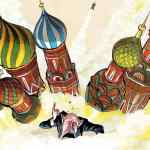
Will Putin go nuclear?

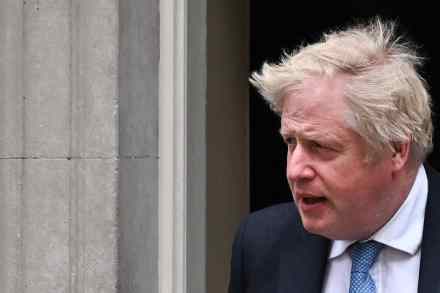
A ghastly tragedy Ukraine may well be, but it is coming to the rescue of a number of British Conservative politicians. Most notably Boris Johnson, of course, who would surely be out of a job by now if Vladimir Putin had not rolled those tanks across the border on 24 February, just as Sue Gray was getting her act together. A little later, Ukraine gave David Cameron a facelift as he was photographed driving a van full of supplies to the transgressed country. Supplies of what? Large sacks full of smuggery and emollience, one supposes. Or tiny wind turbines like that one he shoved on the side of his house to buttress his green credentials and which would take seven years and three months to boil water for a cup of tea. The latest is Brooks Newmark.

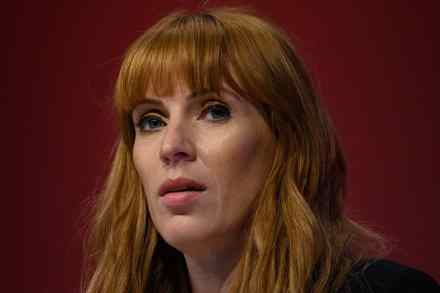
The quiet dignity of Angela Rayner

In those gentle days before internet pornography there was a book you could buy which listed the precise moment in each Hollywood film when the sex scene began, or when the leading lady – very often Greta Scacchi – got her kit off, thus enabling one to buy the video, or rent it from Blockbuster, and fast-forward to the, uh, important bit. Apparently the most requested fast-forward was of Sharon Stone in Paul Verhoeven’s Basic Instinct: a film as dumb as pretty much everything else the Dutchman has committed to celluloid, even if his reputation has lately been rehabilitated (for reasons I do not understand).

America has betrayed its young

Two articles last weekend made me feel sorry for American young people. We in the anti-woke brigade can be awfully hard on kids. But having been born in the 20th century turns out to have been a stroke of good fortune. On Sunday, the New York Times ran a feature about soaring mental illness in American teenagers. Between 2007 and 2018, suicide rates among people aged ten to 24 rose by 60 per cent. Between 2015 and 2019, prescriptions for antidepressants for teenagers rose 38 per cent. Between 2009 and 2019, emergency room visits for self-inflicted injuries among people aged ten to 19 doubled for both sexes; for girls, they more than doubled.

EU: normal disservice resumes

In the past few months, relations between the UK and the EU have been the best they have been since Brexit. Vladimir Putin’s assault on Ukraine reminded the two sides of the need for the world’s democracies to co-operate. Disputes over fishing rights could wait. It is tempting to hope that relations could continue to improve, especially now that the French presidential election is out of the way. But this is unlikely to happen. This week Bruno Le Maire, France’s economy minister, dismissed the suggestion that fixing relations with Britain will be a priority for Emmanuel Macron’s second term.

Has Carole the tarantula cured my arachnophobia?

I’ve been an arachnophobe my whole life. I can’t remember a time when videos of spiders, or even photos or drawings, didn’t give me palpitations. As a kid Charlotte’s Web read as sinister propaganda. Even as an adult, just hearing the word ‘tarantula’ would make me feel like one was crawling on me (kind friends and colleagues took to calling it ‘the t-word’). I wish I could blame someone for these fears, but no one else in my immediate family screamed uncontrollably when a house spider scuttled across the floor. A fear of spiders is the third most common phobia in the UK, so I know I haven’t been alone. But I’d grown increasingly frustrated by my arachnophobia over the years.

The Tories’ summer of discontent

Mid-term unpopularity is a given in British politics. Veterans from the Thatcher era like to joke that a government that isn’t behind at the halfway point of its term isn’t doing its job properly. But the worry for the Tories is that their current unpopularity is different. The usual explanation for the mid-term blues is that a prime minister seeks to get the politically difficult stuff out of the way as soon as possible after an election victory. The government loses support initially before – if everything goes to plan – reaping the rewards of its tough decisions in time for the next general election. Straight after the Tories came into office in 2010, George Osborne hiked taxes and cut spending in his Budget.

The cult of sensitivity

I was extra pleased to have swerved the modern curse that is Wordle when I read that ‘sensitive’ words have been removed from it. A spokesman proclaimed: ‘In an effort to make the puzzle more accessible, we are reviewing the solutions and removing obscure or potentially insensitive words over time. HARRY is an example of an obscure word.’ Other more obviously ‘insensitive’ words had already been removed, such as ‘sluts,’ ‘bitch’ and ‘whore’, and though I’m the most rad of femmes, I do wish they’d stayed. Removing ribaldry makes the language increasingly bland. ‘Sensitivity’ is one of those words that’s changed its meaning. It was once used mostly to refer to sore teeth and gums.

The art of changing your mind

Some years ago there was a study at Harvard that tried to find out what people did when they held an incorrect opinion. Not an opinion of the kind that the era happens to deem incorrect, but one that is actually, provably not the case. The study looked at what happened when that factually incorrect view was introduced to the evidence that it was wrong. We might hope that the results would be clear: man holding wrong view meets the right view, immediately throws up his hands and asks himself how he could have been such a dolt. Alas, as anyone who has ever been married will know, people do not always concede wrongly held views as swiftly as that. And so the Harvard study showed.

My phone call with God

Got slightly wrecked over the bank holiday weekend and had hoped to kind of glide through the early part of the week without too much requirement for that bane of the columnist, research – looking stuff up, talking to people, etc. But I crawled downstairs on Tuesday, switched on the laptop and there was a message bearing the address s.fidelis@almighty.com: ‘Hey Rod, I might have something for you. Give me a call x.’ I hadn’t heard from Semp for three or four years, when he was a canny and ambitious junior press officer, helpful, disinclined to panic, never obsequious. Slightly grating Cardiff accent but other than that, a good sort. Now it seemed he was actually ‘Director of Communications’. For God.

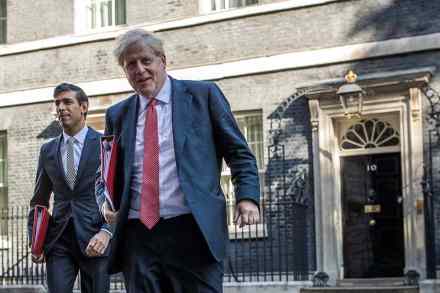
Rishi Sunak’s political naivety

Before the war in Ukraine, ministers and Tory MPs believed a fixed penalty notice for the Prime Minister would mean the end of Boris Johnson. It would result in enough no-confidence letters from Tory MPs to trigger a leadership contest which would run into the summer. There would be a new Prime Minister in time for the party conference in the autumn. But now the Prime Minister has been told he will be fined by Scotland Yard for attending parties during lockdown, no one is quite so sure. The reason? The circumstances around Johnson are changing. Until now, stories about lockdown parties in No. 10 had been overshadowed by the Ukrainian crisis. Johnson has also impressed MPs and the party membership with his response.

A question of bravery

Joe Biden announced in November: ‘Transgender people are some of the bravest Americans I know.’ When Conservative MP Jamie Wallis came out as trans last month, Boris Johnson hailed the revelation as having taken ‘an immense amount of courage’. Mr Wallis says that he was subjected to sexual violence after having ‘hooked up’ with another man in the autumn, which raises the question of whether the parliamentarian might be plain old gay. But then, nowadays being gay is dull. In fact, homosexuality having become a big snooze is one of this century’s healthiest turns of the cultural wheel. ‘There’s something you should know’ – freighted pause – ‘I’m gay.’ OK, fine.

What Rishi Sunak could learn from George Osborne

I was walking last week from Canary Wharf tube station to my flat in east London – not far, little more than a mile, and the walk follows the Thames on the north side, away from traffic: lovely. But as I headed for the river, I saw trouble. A thick curtain of rain had descended over Blackheath across the Thames, and the wind was blowing strongly from that direction. The storm had not yet reached Greenwich, still clear, but the curtain was moving. After Greenwich the rainstorm would cross the river – and hit me. Umbrella-less, I quickened my pace. Few others seemed to have noticed. People were ambling around, some sitting at outside tables at restaurants, some chatting on park benches.

Durham’s maths problem

More exciting news arrives from Britain’s dimmest university, Durham, which is embarking on a programme to ‘decolonise’ mathematics. About time. For too long the subject has been dominated by racist stuff like adding things up or multiplying etc. Hopefully soon there will be room for students, when faced with a question such as ‘what is four plus four?’ to eschew the didacticism of white supremacy by answering ‘eight’ and suggest instead a number which they think feels intuitively right, such as 7,231. (Or indeed any number: it is not for me, as a privileged white straight male, to suggest to people who have been the victims of structural racism an alternative answer to the question ‘what is four plus four?

How to lose elections XXXX

I have remarked here before about our era’s tendency to accept election results if your side wins but to reject them if they lose. Happily in the UK there is no significant body of opinion which believes that Jeremy Corbyn won the 2019 election. True, there are a few Momentum loons who still think that Corbyn would have won had the Tories not somehow got more votes. But even among the most diehard Momentum-ites few actually come up with stories of ballot rigging, high-level corruption and more. Still, our country is not immune to the ‘I only accept the results if my side wins’ tendency. After all, we had Carole Cadwalladr and others insisting for years that the Kremlin had somehow mysteriously manipulated the 2016 Brexit vote.

Can I convert you to my opinion?

I see that on the issue of gay conversion therapy, the Prime Minister has been floating around all over the place, like a giant albino blimp which has suddenly come adrift from its moorings. I believe Boris is now of a mind to ban conversion therapy for gay people but not for trans-gendered people, having already flip-flopped twice. This decision seems to have enraged many more people than it placated and lots of LGBTQI etc groups are shrieking with despair. Could I suggest, then, that the Prime Minister flip-flops again? Rather than banning gay conversion therapy, the government should examine the benefits of making it compulsory. I realise that for many people this would be a controversial move, but that fact alone should not dissuade ministers from going ahead.

The changing face of No. 10

David Canzini has made quite an impression since he joined No. 10 as the Prime Minister’s deputy chief of staff in February. He’s there not just to provide focus but to make the operation feel a bit more traditionally Tory. At a recent meeting with government aides, Canzini, a former Tory party campaign director from the Lynton Crosby school of bluntness, asked for a show of hands: who was a signed-up Conservative party member? More than half the room. For the uninitiated, Canzini pointed to membership forms in the corner. No. 10 plans to check on their progress in a few weeks. Canzini’s approach marks a wider shift in No. 10 to try to repair the Prime Minister’s relationship with the parliamentary party.

Our children are at breaking point – and it’s our fault

I think it’s time we stopped scaring the children. I think they’ve had enough. They’re at breaking point now, every generation more anxious than the last – and anxious younger, too. There’s a record number of British children diagnosed with anxiety, and a record wait – two years – for therapy, though I’m not at all sure the therapy as it is helps much. The usual idea is that if the kids are troubled, it’s the world that’s to blame: smartphones, Instagram, the constant comparing; Trump, Putin, the existence of Tories; Covid, global warming. No wonder they have the heebie-jeebies. But I think in fact that we’re doing it to them. It’s us, the parents, carers, teachers in charge.