Columns

The age of the anti-natalists

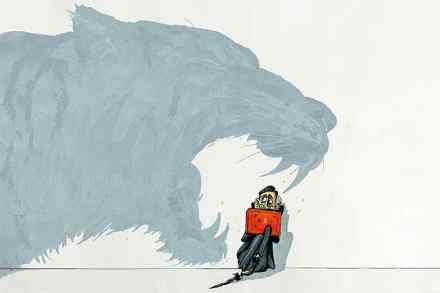
As of 2023, the novel for which I may still be best known will have been out for 20 years. We Need to Talk About Kevin clearly reached the bestseller list because it hit a zeitgeisty nerve. The story of a high-school mass murder (after Virginia Tech, Sandy Hook and Uvalde, the one aspect of the book that has dated is Kevin’s pitiful body-count of nine) is told from the perspective of the killer’s mother, who’s anguished about whether her dislike of her own son from day one made the atrocity her fault. Proliferating the now commonplace expression ‘maternal ambivalence’, Kevin kicked off a larger discussion about the downsides of parenthood and the merits of giving children a miss.


Who’ll stop the art attackers?

One problem of being mugged, I am told, is not just the event itself but the dreams of violence that follow. If a thug relieves you of your wallet and you hand it over without a fight, for some time you will keep dreaming about what you might have achieved had the mugger confronted you when you had a gun or chainsaw to hand. Or if you had studied martial arts and could do over the punk in the style of Jackie Chan. I must admit that similar dreams now haunt me whenever I see the Just Stop Oil protestors. Needless to say, their cause is wrong as well as irritating. Everyone in this country is suffering a cost of living crisis. Everyone looks at their energy bills and wonders ‘How did that happen?

The truth about life as a gay Tory MP

Male Tory MPs molesting young men? Buttock-squeezing and groin-fumbling at a private members’ club? A middle-aged politician slipping into a dressing-gown ‘like a pound shop Harvey Weinstein, with his chest and belly hanging out’ to massage the neck of an Olympic rower? Such are the allegations. ‘What,’ you may think, ‘is the world coming to? It was never like this in my day!’ How wrong you’d be. It was very much like this in the 20th century. There is in fact something tragically old-fashioned about the whole story.

‘It’s just about him’: who can dislodge Boris?

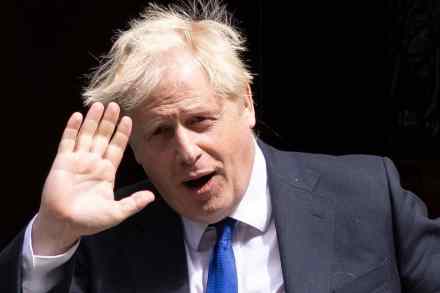
Westminster has always been run more by convention than by rulebook. Prime ministers are seldom forced out: they are persuaded that their position is unsustainable and they walk. Margaret Thatcher quit before facing a final vote. Tony Blair chose resignation in preference to an uprising led by Gordon Brown. Theresa May was technically safe from any leadership challenge when she resigned. After Remain lost the EU referendum, David Cameron decided to go quietly rather than face a warring party. But Boris Johnson is not a creature of Westminster. He did not rise through its ranks, he built no tribe and he is more given to issuing edicts than winning people over. In the same way, he believes he can be vulnerable if he follows convention – something he has always tried to avoid doing.

Beware the sex party bores

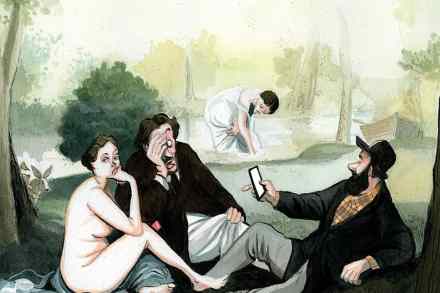
You know you’re getting old when your friends start going to sex parties. In our twenties, there were parties, and sometimes people would have sex at them. But they were never known as sex parties. Now we are firmly in our thirties, the phrase ‘sex party’ is creeping into everyday conversations alongside mortgage rates, nursery options and the cost of living. At a country wedding recently, I caught up with an old acquaintance. While we ate our lemon possets, I bored on about mother-hood and she bored on about sex parties. I can’t repeat what she divulged, but the conversation felt strangely familiar. It concerned racy outfits and group sex. The surprising thing about this was that it wasn’t surprising at all.

Will Hispanic conservatives transform US politics?

If you had to take a guess on which American political party would produce the first Mexican-born Congresswoman, which one would it be? The Democrats? Or the party of Donald Trump? As though to prove that nothing in American politics today is predictable, it is indeed the latter. Two weeks ago Mayra Flores flipped a Democrat-friendly Texas Congressional seat in a special election and became both the first Republican Latina representative from the state of Texas and the first Mexican-born member of the House. She even thanked Trump for her victory. Everything about her win bucks the expectations of the country that now exist outside its borders. For instance, consider the campaign against her. For the foreign press, the Democrat party is presumed to be the party of anti-racism, right?

The law of unintended consequences

When I awoke the other morning and switched on my radio, the airwaves were alive with the sound of furious, transgressed women. Nobody else got a look in. What have we done to get their goat this time, I wondered, rubbing the sleep out of my eyes. Nothing, it transpired. It was all in the USA, where a Supreme Court decision removed the constitutional right for women to have abortions and left it to the 50 states to decide instead. This last part was largely overlooked, incidentally: in essence the women were howling about decentralised democracy and what an awful thing it is. Democracy is sexist. Democracy is especially sexist in those southern states which might impose (or have already imposed) restrictions on terminations.

Why tactical voting is so dangerous for the Tories

Boris Johnson has always been a celebrity politician. It is one of the reasons why the normal rules of politics have so often not applied to him. This status has given him political reach and put him on first-name terms with the public. It makes it easier for him to command media attention than other politicians: a fact that he turned to his advantage in 2016 and 2019. But this strength is now becoming a weakness. Johnson’s ability to dominate politics means that the country is now polarising into pro- and anti-Boris camps. The worry for him is that he has more opponents than supporters. Last week’s by-elections suggest people are prepared to vote tactically to give him a kicking. ‘His celebrity is working against him,’ laments one secretary of state.

The real plan for inflation? To let it rip

Check out these hyperventilating headlines from last week: ‘What the Fed’s largest interest rate hike in decades means for you’ (PBS.org). ‘Federal Reserve interest rate hike opens new era for economy’ (Washington Post). ‘The Fed delivers biggest rate hike in decades to fight inflation’ (National Public Radio). ‘Fed goes for inflation’s jugular with 75bps rate hike’ (Schwab). While it’s true that the US Federal Reserve has not hiked its funds rate by 0.75 percentage points in one go since 1994, the figure prominently missing from those bug-eyed bulletins, and bizarrely unmentioned in all the television news coverage of this ostensibly bold move that I encountered, is what the Fed raised its interest rate to: a miserable 1.

Our shifting definition of shame

In this most holy month of Pride I have been making my observances by thinking about shame. After all, shame is the reason that ‘Pride’ has taken on the meaning it has in recent years. If gay people were once made to feel shame for their sexuality then the counterbalance was apparently to encourage them to feel pride in it. A preferable countermove for some of us would have been simple equality, making sexual preference morally neutral: neither worse nor better. But no, somebody decided on pride, and pride it now is. However, there are several things that this leads to – not least a turn against the use of shame. In recent years, ‘shaming’ people has become something which you should never do, and not only in the realms of sexuality.

British politics is stuck

One of the favourite phrases of British political commentators is ‘oppositions don’t win elections, governments lose them’. As with all clichés, there is a certain amount of truth to it. But both the Tories and Labour seem intent on testing the maxim to destruction: despite everything the Tories appear to be doing to ensure they lose the next election, Labour is still only ahead by single digits in the opinion polls. No incumbent party in the western world is finding the present set of circumstances easy. The Covid shutdowns, overly loose monetary policies and Russia’s invasion of Ukraine have sent inflation soaring. In France, Emmanuel Macron has no way of putting together a majority in the National Assembly.

What took you so long, Seb Coe?

There’s a left-wing internet advocacy group called 38 Degrees which suggests to its followers that all they have to do is click a button and all the bad things in the world will be outlawed. It is a pleasant conceit. Its name derives from the angle at which snowflakes come together to form an avalanche, which is nicely self-deprecating of it. The problem is that so few people believe in its drivel that the closest it gets is about six degrees, which is the angle at which snowflakes remain exactly where they are until it thaws and they melt. Still, it is a useful simile and I think we may be in a 38 Degrees moment with transgenderism. The avalanche seems to be happening.

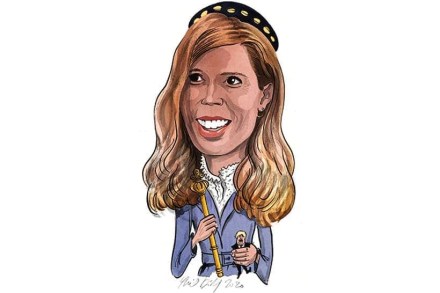
In defence of Carrie Johnson

One is not usually surprised by opinions volunteered to parliamentary hopefuls by voters on whose doors the candidate has knocked; but last week, dropping in on the Tiverton and Honiton by-election, I was taken aback by a subject that came up a number of times. It seemed so relatively unimportant. The door-knocker in this case was Richard Foord, the Liberal Democrat candidate in a safe Conservative seat that looked in imminent danger of falling to his party. I was following him around as he canvassed in the Devon town of Honiton. You may know by the time you read this whether the Conservatives clung on, but you don’t need reminding that they were up against it. I should say at once that my sample of opinion was minuscule: I had perhaps an hour with Mr Foord.

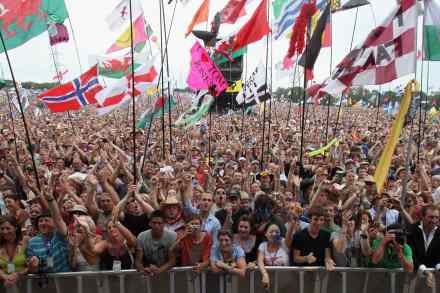
The reason Glastonbury is so white

The former comedian Sir Lenny Henry has questioned why there seem to be so few black people at rock festivals such as Glastonbury. He might equally have asked why there are so few young people. Or just concluded that the festival was a convocation of smug airheaded middle-aged white liberal kidults and that black people were, by and large, well advised to steer clear of it. Sir Lenny and I are engaged in the same sort of research work at the moment. Lenny’s job is to look at various British institutions and to point out that there are too few black people present; mine is to look at British institutions and point out that there are far too many of them.

If only Tom Cruise would ditch his cult

I keep reading that Tom Cruise is the Last Great Movie Star, as if he’s some noble but endangered animal. I think his people must be putting it about as part of the PR for Top Gun 2, though Lord knows what his peers make of it. Think of Tom Hanks, Jodie Foster, Meryl Streep, De Niro… all of them Oscar winners (unlike Cruise) and all with a better claim to being the Last Great Star. Tom Cruise himself seems comfortable with the idea. He walks and talks like the L.G.M.S. – controlled, confident, impeccably dressed with just a hint of a helpful Cuban heel. But the higher his star rises, the odder it seems that no one mentions the cult he belongs to, or how it behaves.

The January 6 hearings are partisan political theatre

Is it possible to hold two ideas in our heads at once? If so, I should like to put forward a case study. That Donald J. Trump did something that makes him ill-suited for public office, and that the current January 6 hearings in Washington are partisan political theatre. For anybody who was in outer space at the time, it is worth recalling that 6 January 2021 was the day Trump urged his supporters to join him in Washington to ‘Stop the steal’. The outgoing president could not accept that he was outgoing. He did not agree that he had lost the election two months earlier, and though it is now clear that some of his advisers told him that he had lost, he chose not to believe them.

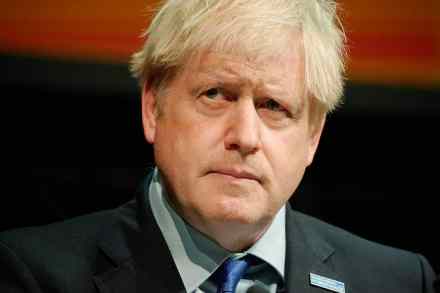
Boris Johnson’s loss of authority

There is an uneasy truce in the Tory party. The 148 MPs who voted no confidence in Boris Johnson last week haven’t suddenly changed their minds, but some of them are prepared to give him a year’s grace to try to turn his premiership around. Others are looking for an earlier opportunity to strike, yet they know it is counterproductive to admit that now. They realise that if they are going to persuade the 1922 executive to change the rules to allow another confidence vote within 12 months they will need to argue that the circumstances have substantially changed. While they wait for the moment to attack, it would not be helpful to their cause if they hinted that they are already working out how to change the rules.

Boris Johnson is my great white sperm whale

‘Steady on, old chap. You’re a bit hard on the boy.’ The arm around my shoulder was that of Boris Johnson’s father, Stanley. I remember where we were standing – it was outside the entrance to the Birmingham International Convention Centre – and I remember the occasion: a Conservative party conference. But which one? All I can say is that this was a long time ago. It was after Johnson minor had become Mayor of London – he was speaking at that conference – and it must have been after (and probably responding to) a column I wrote in the Times more than six years ago: ‘Tories have got to end their affair with Boris.

The Tory cadets who want a shot at the top

When Conservative prime ministers face a problem of logistics – from ambulance-driver shortages to border-force failures – there is a solution they like to fall back on: send in the military. When Boris Johnson was London mayor, he welcomed David Cameron’s decision to invite the army to help with the Olympics after the security firm G4S failed to provide enough staff. Now Johnson is in No. 10, he regularly calls in the troops to deal with any state deficiencies. During the pandemic, army personnel worked closely with the NHS, first in helping to build a Nightingale hospital in ten days and then during the vaccine rollout.

Does advertising matter?

‘Stop! Don’t fast-forward. I love this advert!’ How often do you say that? Considering that some commercial breaks run to five minutes, not often enough. How about, ‘Oh no, not again, I can’t stand this advert’? Mm… nightly? According to recent research by the Pull Agency, a brand consultancy, promotion that strains to impress consumers with a company’s progressive imprimatur is off-putting. You always suspected it, but now it’s official: woke advertising backfires. In a survey of 2,000 representative Britons, 68 per cent of respondents were either ‘uneasy’ or ‘unsure’ about brands supporting fashionable left-wing causes such as climate change, BLM, LGBTQ+, diversity, equality, and female body confidence.