Columns

The BBC’s new direction

I am becoming terribly worried about the people of Sunderland with regard to how they will cope in this coming winter. The greatly increased fuel bills will affect all parts of the country, of course – but none more so than the Mackems who, I suspect, will largely die as a consequence. Their particular problem was highlighted by the local Labour MP, Bridget Phillipson, on BBC2’s Politics Live hosted by the excellent Jo Coburn. Ms Phillipson said people in her constituency opened their doors to her wearing their coats and possibly mufflers, because they were trying to reduce their energy bills. The temperature up here has not dropped below about 21°C for the past two months, but these Mackems are apparently already close to hypothermia.
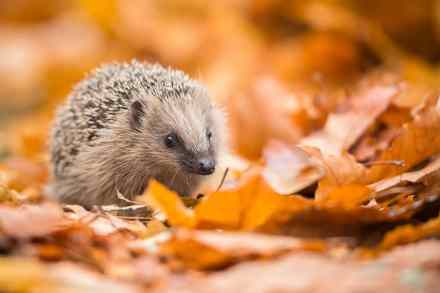
Kill badgers to save hedgehogs

Until last month I hadn’t seen a hedgehog for close to 30 years, though they were part of everyday life when I was a child. In the school holidays, we’d rush first thing to the nearby cattle grids to check for animals who’d fallen in overnight. It’s what passed for fun back then: picking damp critters out of concrete prisons. Sometimes there were lambs, wedged in up to their woolly armpits; sometimes there were angry, pulsing toads. But it was hedgehog rescue that was our sacred duty. We’d pick them up in towels and take them to the hedgehog spa in the boiler room, where they’d spend the day lounging about eating chopped egg. Never feed a hedgehog milk. It gives them horrible diarrhoea.

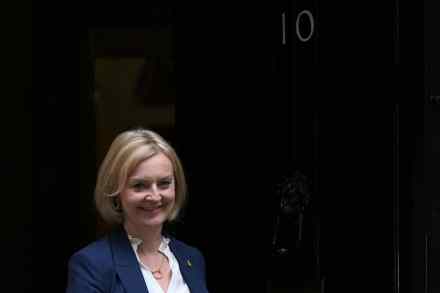
Inside Liz Truss’s No. 10 shakeup

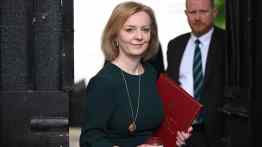
How 10 Downing Street works – or doesn’t – always reflects the character of the prime minister who inhabits it. Boris Johnson’s No. 10 was chaotic and scandal-ridden. Theresa May’s indecision meant that hers was led by the will of her strong-minded advisers, not by her own agenda. David Cameron’s was slick, but last-minute. Liz Truss served in government under all three of them, and so witnessed all three approaches. She wants her Downing Street to be different. Even before Truss entered Downing Street on Tuesday, change was under way. After No. 10 earned a reputation in the past year as a louche place full of late-night drinking, aides have been told that the government is smartening up: there will be a shirt-and-tie dress code.

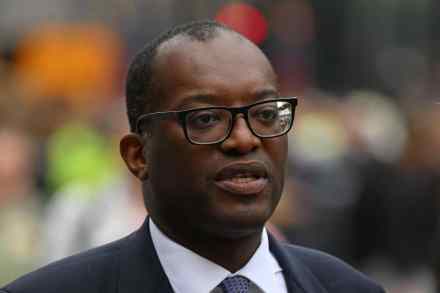
Who cares about Liz Truss’s ‘diverse’ cabinet?

‘Great offices of state set to contain no white men’ was the way one national newspaper reported the formation of the first Truss cabinet. In addition to Liz Truss, the positions of Chancellor, Foreign Secretary and Home Secretary would respectively be held by Kwasi Kwarteng, James Cleverly and Suella Braverman. Of course, all this was presented as something incredibly new and exciting: real progress at work. In fact it isn’t remotely new. As Chancellor, Kwarteng follows those two famous white men Rishi Sunak and Nadhim Zahawi. As Home Secretary, Braverman succeeds Priti Patel and Sajid Javid. And now that Truss is Prime Minister she is the first woman to relieve us from male-dominated rule for a full three years.

After Boris: what will politics look like?

Boris Johnson has so dominated politics for the past few years that it is hard to imagine things without him. His premiership, though relatively brief, has been both eventful and consequential. With him in Downing Street, there was a constant – and exhausting – sense of drama, with frequent cast changes and plot twists. But next week Johnson’s run as Prime Minister will come to an end. Of course, he will not disappear entirely. There will be speeches and memoirs and his comments are bound to attract attention, which will make his successor nervous. Johnson, as previous Tory leaders will attest, knows how to disrupt the news agenda. Already he is trying out ways to avoid answering the question of whether he thinks a comeback is possible or not.

Why didn’t more people resist lockdown?

Last week’s Spectator interview with Rishi Sunak conveyed the anti-science ‘science’, the paucity of even fag-packet cost-benefit analysis and the ideological lockdown of Boris Johnson’s cabinet that brought forth calamitously extensive lockdowns of everyone else. Ever since, numerous politicians and institutions implicated in this rash experiment have had a vested interest in maintaining the myth that putting whole societies into standby mode, as if countries are mere flatscreens that can be benignly switched on and off by governmental remote, saved many millions of lives.

It’s time for some home truths, Rishi

I wonder how many people in the country are bitterly disappointed that Liz Truss pulled out of her exciting one-to-one interview with Nick Robinson? I can think of only two. First, of course, Nick Robinson. Nick was very much looking forward to it. His ideal assignment would be to interview himself for an entire afternoon, but failing that, Liz Truss would do just fine. The other, of course, is Rishi Sunak, who must have been hoping that Liz would dig herself another hole and carry on digging until she emerged somewhere near Maruia Springs, say, in New Zealand’s Southern Alps.

What Macron wants

When Liz Truss said ‘the jury’s out’ on whether France was a ‘friend or foe’, Emmanuel Macron publicly corrected her: of course Britain was a friend, he told a TV camera, adding with a grin: ‘Whoever its leaders are, and sometimes despite and beyond its leaders.’ As a British journalist who has lived in Paris for 20 years, I’d call that mostly true. French leaders consider Britain a friend, albeit probably not top five. But Macron and Boris Johnson were often personal foes, and Macron’s relationship with Truss may play out equally badly, especially if French and British differences over Ukraine come to a head in the coming months. As Johnson noted, the two countries have got on pretty well since Napoleon departed.

Green parties are facing a reality check

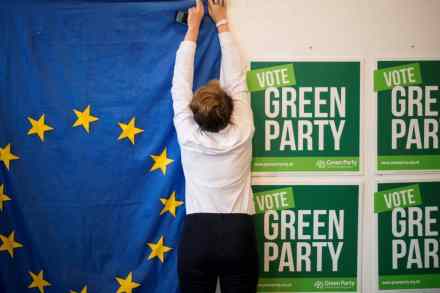
How pleasant it is to watch an idea fall apart. Especially when it is an idea held by people you don’t particularly care for. In recent years all of the democracies have been plagued by green parties. The kindest interpretation of them is that they provide a wake-up call of some sort: a reminder that we should be kind to our planet, that sort of thing. But in every country they got too free a ride. They ended up preaching catastrophism to a supplicant media. And they ended up demanding that we all get off fossil fuels yesterday without any satisfactory explanation of how we were meant to keep the lights on today. That pleasant period for them came to a halt this year, when that old friend of conservatives – reality – kicked in.

How to run a school

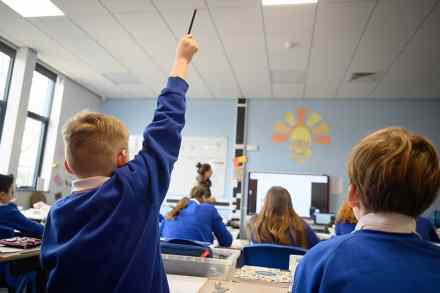
Taking a short break from persecuting Roman Catholic faith schools for ideological reasons, Ofsted has stuck the boot into the Abbey School in Kent. This school, in Faversham, has been given the lowest possible ranking of ‘inadequate’. The report bemoans the fact that pupils are expected to do as they are told, be polite and behave themselves, and describes the atmosphere within the school as ‘oppressive’. By a winning coincidence, Ofsted’s report was published in the very week that the Abbey School reported by far its best ever A-level results. What, Ofsted sees as ‘oppression’, then, is more commonly known as ‘running a school properly’.

I’d be the perfect communist shill

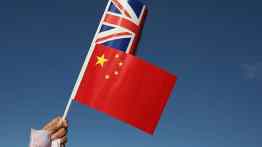
Could I be the model communist shill? Consider these facts: I was born and raised in China. I speak and read Chinese. Some question my English accent, almost suspiciously posh given that I didn’t speak a word of the language until the age of ten. Before the pandemic, I visited China regularly. My podcast, Chinese Whispers, often explains the Chinese government’s way of looking at things. I studied at Oxford and now work at the heart of the British establishment. Am I not ideally placed to advance Beijing’s agenda? When I started my career, this was all a joke. Now it’s less of one. The atmosphere in Britain towards China has soured.

Salman Rushdie and a question of power

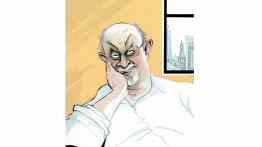
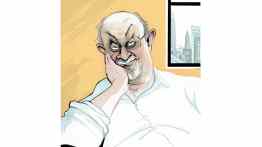
Whenever a terrorist attack occurs, like the recent attempted assassination of Salman Rushdie, our society falls into the usual platitudes. The attack gets condemned, by most people. The ideology behind the attack is fudged so that it becomes as non-specific as possible. What almost never gets any time in the discussion is the question of answers. It is easy to say ‘We must never give in to terror’ or ‘We must defend the right to free speech.’ But personally I like to get more specific than this. Imagine if you were the UK government, say, and had some power actually to do something about it. That brings me to the matter of Sayed Ata’ollah Mohajerani.

Who will Liz Truss forgive?

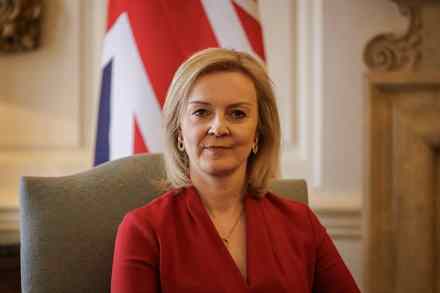
Liz Truss has always been more popular with Tory party members than with Tory politicians. The moment of greatest peril for her in the Conservative leadership race was when MPs were whittling down the final two candidates. After being knocked out in the second round, Suella Braverman urged her Brexiteer backers to get behind the Foreign Secretary. Many refused to do so and instead supported Kemi Badenoch, which meant that Truss’s vote count only went up by seven MPs. The momentum could have moved to Badenoch, then behind by just 13. ‘It was the most stressful point of the contest,’ recalls a supporter of the Foreign Secretary. Eventually Truss made it to the final two and united the right of the party behind her. She now looks on course to enter No.

Who will Liz Truss send to political Siberia?

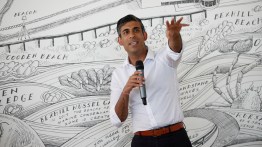
‘Whatever else you do, don’t step backwards,’ a man in the crowd shouts to Rishi Sunak as he stands on the edge of a swimming pool in the garden of a Tory councillor’s home in Bushey, Hertfordshire. About 100 party members have gathered to hear Sunak’s pitch. It’s the first of three stops he’s making before a hustings in Cheltenham. The leadership race will be decided by around 160,000 Tory members – and Sunak seems to be trying to meet as many of them as he can. On each visit he offers a version of his stump speech, including jokes about his height and how, unlike Boris Johnson, he looks as though his mother brushed his hair. Every address he gives has a common theme: the economy.

The shameful truth – terrorism works

This is a bleak version of looking on the bright side, but what’s astonishing about last week’s vicious stabbing in upstate New York is that such an attack didn’t occur decades ago. However sickeningly incapacitated at present, Salman Rushdie himself would doubtless agree. Having survived unharmed for 33 years under a death sentence – endorsed by a depressingly hefty proportion of Muslims – was no mean feat. Yet that’s too long to maintain nonstop vigilance. Little wonder that Rushdie and his minders let down their guards.

The dangers of vegetarianism

I do not doubt that hot weather occasioned by climate change is the primary cause of the many wildfires we have seen in the UK this summer. But I wonder if they have also become more profuse as a consequence of various authorities desperately attempting to make the countryside more ‘accessible’ to people who, in truth, shouldn’t be allowed anywhere near it. The more you encourage the dregs of humanity to visit ‘green spaces’, the more likely it is that they will turn up and ruin them. This is a social class of extremely low intelligence but, concomitantly, a vast gustatory appetite – they are unable to go more than 20 minutes without gnawing or slurping something.

Which artists will define our age?

It glows. The whole painting glows. Glows not just with the way the light from a fire unseen beyond the artist’s frame reflects in his glistening eyes; reflects in the moist redness of his almost girlish lips; reflects in the folds of his turban and silky grey sash. It glows too from an inner radiation, glows from his character. We have in Britain some arcane tax legislation that can bring a harvest that’s anything but arcane. The recent acquisition of Joseph Wright of Derby’s ‘Self-Portrait at the Age of about Forty’ (c. 1772) has been made possible ‘in lieu of inheritance tax… under a hybrid arrangement and allocated to Derby Museums… with further support from the National Heritage Memorial Fund’.

How ‘kindness’ became big business

In those moments when I most fear that the West is on the skids, I find it helps to make a list of end-time signs, phenomena that indicate decay, like sparks along a piece of faulty wiring. So far my list goes like this: NFTs; babyccinos; liver-flavoured ice-cream for dogs; the fashion for encouraging children to cut off their genitals; the fact that Rowan Williams, former Archbishop of Canterbury, thinks it deeply wrong to talk them out of it; freak shakes; Heinz ‘pink’ sauce; gannets dead all down the North Sea coast; swearing six-year-olds still in nappies (says my teacher friend in the North-East); risking nuclear war over Ukraine; the TV show Is It Cake?

The death of saving

I was intrigued to learn from Tom Daley – that young man who became famous for jumping off a platform into some water – that homophobia is a ‘legacy of colonialism’. The Ugandan President, Yoweri Museveni, begs to differ. He believes that it is homosexuality which is a legacy of colonialism and had been brought to his benighted country by effete whitey – and so he may well think Tom is indulging in the disagreeable act of ‘whitesplaining’. However, it is possible, if not likely, that both Tom and Yoweri are correct – after all, it is difficult to be homophobic if you have around you a complete absence of homosexuals, as I have discovered since moving back to the north-east of England.

A strange kind of recession

It’s possible that I owe Joe Biden some sort of an apology, however mealy-mouthed it might be. Last week I mentioned here the weird prevarication from the US government and its supporters over whether or not the US is technically in a recession. It arose from the news that the US had two successive quarters of negative GDP growth. Biden’s critics – myself included – leapt to declare the US in recession. According to the Bank of England, the UK is heading for a recession too, so there should be no especial shame in accepting the fact and then trying to deal with it. But then last Friday the US jobs figures landed and it became clear that the situation in the country is curiouser than we might have predicted. Everybody was expecting a contraction in the economy.