Columns

Should failing students really graduate as doctors?

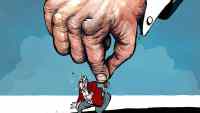
If I seem to be bashing universities lately, they’ve asked for it. The prestigious New York University in lower Manhattan didn’t cover itself in glory when, just before this semester began, it responded to a petition from 82 students (out of a class of 350) by sacking the professor. The petitioners’ main objection? The course was too hard. After retiring from Princeton’s chemistry department where he’d taught organic chemistry for more than 40 years, Maitland Jones Jr taught the same course at NYU on one-year contracts as an adjunct. I used to be an adjunct, and this much hasn’t changed since my day: adjuncts are atrociously paid. I’m just guessing, but Dr Jones would surely have been handsomely remunerated at Princeton.

Is what Conor Burns did really so appalling?

There are times when I feel like certain rakes must have done when they realised that the Regency period was suddenly morphing into the Victorian one. Not that I feel especially rakish. Just that there are times when you see the new rules of sex and think: ‘Well, I guess there’ll be none of that from now on.’ Take the allegations made against Conor Burns MP. Last week, Burns was fired from his ministerial job and had the Conservative party whip suspended. There are efforts to take his name off the list of people put forward for a knighthood in Boris Johnson’s farewell honours list. What is the cause of all this? Here is the allegation in its full, disgusting detail.

Will the free-market cause ever recover from Liz Truss?

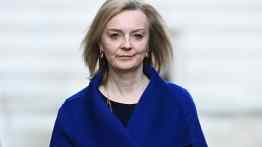
In theory, I should be delighted about the Liz Truss project. She is saying the things I’ve been arguing for years: talking not just about lower taxes but about basic liberty and how it relates to everyday life. She’s passionate about these ideas – and sincere. I remember watching her deliver a rallying cry, a salute to the ‘Airbnb-ing, Deliveroo-eating, Uber-riding freedom fighters’. This was just over three years ago when she was a Treasury minister. Her speeches were getting punchier and her one-liners becoming newsworthy and memorable. She was turning into one of the most recognisable faces of classical liberalism in Britain – a development which clearly delighted her. Truss asked for this job.

Could it be Rishi by Christmas?

What was supposed to be a recovery moment for the Conservatives instead looks like a collective nervous breakdown. The Prime Minister has been forced to U-turn on her flagship tax plan. Her cabinet is in open rebellion. Tory party conference resembled a civil war. The latest polling suggests the party is heading for electoral extinction. And that’s after just four weeks of Liz Truss’s premiership. ‘I know we have had a series of crises but this one really feels like the worst yet,’ says one seasoned government aide. Some Truss supporters are showing signs of buyer’s remorse. ‘I didn’t know it would be this bad,’ says one MP who backed her.

Things can always get worse

As I was saying, way back in July, it is hard to love the Conservative party. Every time it tries to navigate another bend in the road it ends up causing a disaster even its most ardent critics could not have foreseen. ‘Things can’t get any worse,’ said rebels in the party while Boris Johnson was still PM, before the summer. Then we were introduced to Liz Truss. Now, within weeks of her taking office, you can hear members of the parliamentary party saying with vigour: ‘She has to go.’ At which point I feel the country wanting to place our collective heads in our hands, yell and walk away. Does anyone have time for all this? Does the Conservative party just plan to hold endless leadership contests in perpetuity while the country looks on?

Smoking is more hassle than it’s worth

I gave up smoking one year ago this week, as part of a series of pitiful capitulations to the forces of coercive conformity. As far as I see it, the path to the grave is lined with compromise after compromise until, at the moment of the final rattle, one has become a travesty, physically and spiritually, of the person one used to be. Not that I would want to overdramatise the whole thing, mind. I more usually tend to present my dis-avowal of smoking as a kind of glorious epiphany. One moment I smoked, the next I didn’t. And in a sense that is true: no doctors were involved, there were no health scares, nor was I nagged to give up by those close to me. I went to bed one evening – at 23.

How high a price will Truss pay?

This year’s Conservative party conference was supposed to be a moment of celebration for the new Tory leader. Instead there is a sense of mounting alarm. Liz Truss’s radicalism has been met with something approaching panic by both the markets and the public. The Bank of England has had to intervene in the gilts market to prevent ‘a material risk to UK financial stability’. The pound hit a 230-year low against the dollar. Meanwhile, Labour has moved into a 17-point lead in the polls. YouGov finds that just 12 per cent of the public view the government’s so-called ‘fiscal event’ as affordable. Only 19 per cent consider it fair. Tory activists at conference will give Truss the benefit of the doubt.

Why is the right not making the moral case for lower taxes?

There was an article recently in the increasingly woke but still useful New Scientist which attempted to gauge the degree to which luck was responsible for who we are and, hence, an individual’s life circumstances. I think it came in third place after genes and the environment – which are also both down to luck, really, I suppose. The thesis seemed to be we pay too little attention to the role of luck when considering why one man is a millionaire and the other is a lavatory attendant or a book reviewer. I would beg to differ. Ascribing luck to one’s unfortunate position in life is very prevalent indeed and is as left-wing an argument as blaming the class system or the colour of one’s skin (although with slightly less justification).

Shame should not be heritable

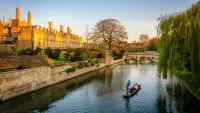
Vice-chancellor Stephen Toope claims it was ‘inevitable’ that a university ‘as long-established as Cambridge’ would have links to slavery. Now that faculties gorge on racial guilt as Cambridge dons once famously feasted on roasted swans, what was really inevitable is that a body christened ‘The Advisory Group on the Legacies of Enslavement’ would find links to slavery. Why, it must have frustrated the authors of the report released last week that their three-year inquiry didn’t manage to dredge up any evidence that the university ever directly owned slaves or plantations. Rather, it’s the money that was tainted; lucre having always passed through dirty hands somewhere along the line, there’s no such thing as clean money.

Maybe Nanny does know best

Not least among the shivers down my spine as I listen to Liz Truss and Kwasi Kwarteng pump up the rhetoric on their economic revolution is the evocation of myself – myself when young. Like Ms Truss, I too joined the Liberal party as an Oxbridge fresher. I too believed in the power of personal choice. I too had a dream of unhindered competition liberating the animal spirits of enterprise and individual genius. I too told myself that we liberals must grit our teeth and keep the faith when sink-or-swim left some to sink. I too thrilled to the metaphor of ‘tall trees’ being allowed unencumbered access to the light.

Why are so many young women buying into polyamory?

The saddest thing I saw this week was a dating advert written by a woman – let’s call her Jane – looking for a man to start a family with. There was nothing sad about Jane per se: she’s attractive and accomplished in the usual alarming millennial way. Not only does she have a well-paid job in a tech firm, but she climbs, plays the cello, writes plays and is a near-professional baker. Because young people these days don’t drink until they pass out, they have time for hobbies. Jane is also polyamorous, she mentioned in the ad, just in passing. She is in a committed romantic relationship with three other people and they live in a shared house – and this, I’ve discovered, is par for the course now in parts of London and across the US.

Liz Truss’s first big test

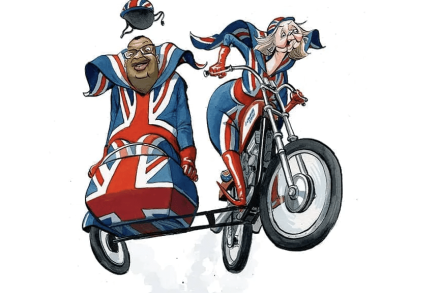
Liz Truss and Kwasi Kwarteng are determined to show that Britain’s economy is under new management. They want to indicate through their decisions – such as cancelling the corporation tax rise and reversing the National Insurance rise – that they are breaking away from the fiscal approach of recent years. More broadly, they want to emphasise that growth is their priority. In contrast to Boris Johnson’s attempts at people-pleasing, Truss is happy to declare she is prepared to be unpopular if that is what it takes to get the economy moving. She is dismissive of arguments about the distributional impact of tax cuts.

Labour has a problem – but it’s not Keir Starmer

I see that Green campaigning groups are angry that the Conservative party has received donations from the aviation industry, because they are not in favour of aeroplanes. Or, at least, these campaigners are not in favour of aeroplanes until they need to use one to get somewhere. A holiday at some eco lodge in Indonesia, perhaps, where they get to gurn at an orangutan and chide the locals about logging. The protestors, then, simultaneously want the aviation industry not to exist but still to avail themselves of its services: this is another marvellous example of the left’s flight from reality. It is all a little like the various institutions which have decided to stop their sponsorship agreements with petroleum and gas companies.

Leicester and the downside with diversity

As I have said many times in recent years, if you import the world’s people you import the world’s problems. Which is not to say that you do not also get some upsides. The upsides of ‘diversity’ are focused on all the time. But we have a curious habit of downplaying the downsides. Just one of which erupted in the city of Leicester last week. The origins of the disturbances are disputed, but what is agreed on is that they initially broke out between local Muslims and Hindus in the last days of August. During the India-Pakistan cricket match on the 28th, local fans of the Indian side began shouting ‘Pakistan Murdabad’ (‘Death to Pakistan’).

Not all Americans are so crass

In the face of American snark about the Queen’s death, many a British newspaper reader was disgusted. With bad tidings imminent on Thursday last week, an academic at Carnegie Mellon tweeted: ‘I heard the chief monarch of a thieving raping genocidal empire is finally dying. May her pain be excruciating.’ An assistant professor in Rhode Island tweeted that she would ‘dance on the graves of every member of the royal family, especially hers’. Once the bleak news was in, a co-host of the popular US television show The View imagined this the ideal time to observe: ‘If you really think about what the monarchy was built on, it was built on the backs of black and brown people… She wore a crown with pillaged stones from India and Africa.

A hereditary monarchy is good for politics

I suppose it was inevitable that with the death of HM the Queen certain floodgates would open. During her reign it often felt as though there were forces that she was single-handedly holding back. As Lionel Shriver has noted elsewhere, they have come in particularly malicious form from parts of the US. But there is one part of the republican critique of monarchy that has returned which is too little addressed, and which I have found myself countering in recent days. Not, I might add, from the sort of people who are simply hostile to our country and its past, but rather from people who wish us well but are somewhat baffled by the sentiment that surrounds the monarch.

In defence of badgers

My dog was bitten by an adder last week. Jessie had been snuffling around in bracken a few yards from where I was walking when I suddenly heard this anguished yelp, followed by still more disquieting, even harrowing yelps. I knew immediately exactly what had happened. I have been boring my family for months with warnings about where not to take Jessie for a walk, because of the adders. They think adders are a manifestation of my warped imagination and do not really exist, possibly something dreamed up by the QAnon people. They never believe me when I tell them anything about animals and yet – ironically, you might think – it is one of the very few things I do not lie to them about. I was not lying about the adders.

Parliament is on pause

Politics is in suspended animation. The only proceedings in parliament are the tens of thousands of mourners moving through Westminster Hall as the Queen lies in state. Party politics was always going to pause after the monarch’s death. But what the planning could not have anticipated was the moment at which the politics would halt. Parliament learned of the Queen’s declining health just as a new prime minister was announcing what may turn out to be the biggest single fiscal intervention in peacetime history. Liz Truss’s plan to cap average household energy bills at £2,500 for the next two years could cost more than £100 billion – equivalent to abolishing the basic rate of income tax for a year.