Columns

What Europe gets wrong about the far right

The head of America’s ‘Department of Government Efficiency’ (Doge) has written to all federal workers in the US asking them to explain in a brief email what they did last week. The exercise is intended to take no more than five minutes but has already lead to howls from many employees. How could anyone expect them to perform such a task? How can one explain the intricacies of supporting transgender opera among the Inuit in such short order? Happily, the new editor is not putting those of us on The Spectator’s payroll through any similar exercise. Nevertheless, something in the global vibe-shift perhaps impels me to mention a little of what I have been doing with my time.


The great betrayal of the SAS

We should all feel scared to our bones about the persecution of the SAS, soldiers harried through the courts for jobs they did many decades ago. It’s not that the SAS should be allowed to behave like trigger-happy psychos, but as Paul Wood wrote in this magazine before Christmas, Special Forces are now being hounded and punished for simply following orders and conducting operations. And what will we soft sofa-sitters do when no one wants to be a soldier any more? Wood described in particular the plight of 12 soldiers of a Specialist Military Unit (SMU) deployed in Ireland in February 1992 to apprehend a gang of IRA terrorists – the East Tyrone brigade of the Provisional IRA (PIRA).

The reformation of the Labour party

The world order has shifted on its axis, having been given a peremptory boot by the US President. What is striking to me is the speed with which our government has accustomed itself to the new dawn, overnight, almost with a sense of relief. Listen to senior Labour figures today and they do not always sound like the internationalist lifestyle-leftist Labour ninnies of old. They sound rather less internationalist than previous Conservative administrations. A whole stupid ideology seems to have been shed within a week or so. It would not surprise me hugely to hear Keir Starmer talk of ‘remigration’ in fond terms in the not-too-distant future.

The engagement vs isolation debate returns

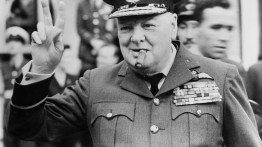
British foreign policy has always oscillated between isolation and engagement. The division has shaped Conservative thinking over generations. The archetypal icon of engagement is Winston Churchill. In the wake of the Munich Agreement, Churchill made his greatest anti-appeasement appeal: ‘What I find unendurable is the sense of our country falling into the power, into the orbit and influence of Nazi Germany.’ He was for rearmament and, ultimately, for war. Churchill had in his sights the isolationists of the right – those Tories who would not ‘die for Danzig’. Victory in the second world war, the western alliance, Nato, America’s nuclear guarantee, the European Union, communist collapse – all seemed to prove Churchill triumphant and correct.

It’s time to scrap the asylum system

Whatever you think of the blizzard of executive orders howling from the White House, at least the new President doesn’t succumb to the seductive gravitational pull of the status quo. This is therefore a fitting juncture at which to not simply think outside the box, but in some cases to chuck the box. For example, Donald Trump wants to chuck the US Department of Education. Yet can’t he set his sights higher? Like, set an example for the rest of the West: chuck the asylum system. Having long ago predicted that the subject would dominate this century, I’ve written about immigration for 35 years. Although repeatedly approaching the radioactive issue with a certain frankness has incurred considerable reputational damage, I’ve no regrets.

J.D. Vance didn’t go far enough on Europe

In January last year the European Union revealed that it had dreamed up a ‘secret plan’ to sabotage the economy of one of its member states. Brussels was growing impatient with the Hungarian Prime Minister Viktor Orban, who had shown the temerity to dissent from EU orthodoxy on a number of issues. In this particular case it was Orban’s continued use of the veto to block a £50 billion aid package to Ukraine that had angered the bureaucrats and liberal politicians. According to the Financial Times, the EU’s strategy in response would involve targeting Hungary’s economy, weakening its currency and reducing investor confidence. Some £20 billion of funding for Hungary was put on hold.

Is Britain ready for blasphemy laws?

In its infinite wisdom, the Labour government appears to be reconsidering the introduction of a blasphemy law in the UK. It has picked up this idea despite it being so idiotic that it was even rejected by the last Conservative government. That well-known theologian Angela Rayner has decided to set up a council to look into the question of ‘Islamophobia’. As mentioned, there was a push to do this during the Conservative era, when a committee including some of the worst people then in public life – Dominic Grieve, Naz Shah, Anna Soubry – looked into the same thing. Their scholarship foundered, as it always will, on how you protect Muslims without simply protecting the feelings of Muslims.

Why the SNP can’t lose

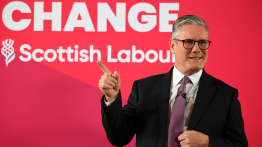
What does a party get after nearly two decades in office, collapsing public services, an internal civil war and a £2 million police investigation? Re-election, again – perhaps with an even bigger majority. Last spring, under the hapless Humza Yousaf, the SNP’s grip on power in Scotland finally appeared to be loosening. But eight months on, the nationalists have managed a remarkable turnaround. The party now has a 15-point poll lead and it looks as though John Swinney will remain in Bute House at next year’s Holyrood elections. ‘The caretaker manager has got the job permanently,’ says one rival. The party’s change in fortunes owes less to Swinney’s skill as an operator and more to the spectacular collapse of Scottish Labour.

The dark reality of surrogacy

I was a twin when I was born, but this was in the days before decent scans and proper neonatal intensive care, and we were more than two months premature, so not long afterwards, my twin died. As a child, I thought nothing of it. It simply wasn’t relevant. But when I was drifting around America in my early twenties, the subject came up one day in conversation. A Texan friend asked me: ‘Do you miss your twin?’ I turned to her, meaning to laugh at the daft question, but instead, embarrassingly, I cried. And I’ve known ever since, whether I like it or not – and I really don’t, actually, because it sounds so sappy – that we form emotional ties in the womb, and that when they’re severed, we feelthe loss.

Je suis Andrew Gwynne

How do you like your members of parliament? Do you prefer them to be vacuous automatons devoid of wit, humour and anything one might call emotion? Or do you actually prefer them to be people, a little like yourself? Prone to human frailties from time to time, rather than being a deracinated good Boy Scout who would be as interesting, conversationally, as a pamphlet from your local health authority trust? This question occurred to me when I read of the sacking of the junior minister Andrew Gwynne, the Labour MP for somewhere awful called Gorton and Denton. Not just sacked, mind, but suspended from the Labour party. A similar fate befell a man I had hitherto been unaware existed – Oliver Ryan, the MP for the diverse and vibrant community we know as ‘Burnley’.

Kemi vs. Nigel: who would Thatcher have backed?

It is 50 years since Margaret Thatcher was elected Tory leader and at this week’s shadow cabinet meeting, Lord Forsyth was invited as guest speaker to mark the occasion. He noted the similarities between 1975 and 2025. Back then the party was broke, reeling from defeat and facing the fallout from a reorganisation of local government. But, despite threadbare resources, Thatcher managed to rebuild to win power four years later. ‘You have the potential to do the same,’ Forsyth told Kemi Badenoch. Yet there is a crucial difference between then and now: a rival on the right. Nigel Farage’s Reform party is vying with Badenoch to inherit Thatcher’s mantle. Each leader is competing for the same voters, members and donors.

Pride in Britain? It’s history

A poll out this week found that only 41 per cent of those aged 18 to 27 are proud to be British. Frankly I’m surprised the figure is that high. After all, if you add together the immigration of recent decades and the concerted effort to demoralise the population that has gone on, that is exactly the sort of result you would expect. It has been achieved in a remarkably short space of time. In 2004, some 80 per cent of young people in the same age cohort said that they felt proud to be British. So within 20 years we have managed to halve our sense of national self-worth. What explains it? Perhaps I should get the most dangerous explanation out of the way first.

How I took on Microsoft’s AI – and won

‘This is an assault!’ I screamed in my study, oblivious to the fact that my husband had a guest downstairs. ‘I’ll never write anything again!’ Thanks to one more helpful word processing ‘update’–which my cousin calls ‘setbacks’– whenever I hazarded a sentence, I suddenly had bossy company: Microsoft 365’s underhandedly money-making ‘Copilot’, when I’ve always written flying solo. (‘Describe what you’d like to write, including notes or an outline, and Copilot can write a draft to help you get started,’ it insists. There’s lots of autofill; the editor button actually gives your text a score on ‘inclusiveness’, when I need a score on antisocial hostility.

America has seen sense on aid. When will we?

The new administration in Washington has somewhat startled its critics by issuing a blizzard of executive orders during its opening weeks in office. So far the reaction from the American left might be summed up by the sentiment: ‘That’s not fair – it’s only us that are allowed to do things when we are in power.’ The American left are in a particular funk about the Department of Government Efficiency (Doge) – as though railing against the proposed reduction of federal spending and reduction of the American deficit is a natural vote-winner. But good news does just keep on coming. On Monday, Elon Musk said that President Donald Trump had agreed to shutter USAID – the US government money spigot that sprays money around the world, much of it to people who hate America.

Could a Tory/Reform pact be looming?

In 1603, James VI managed to do what few thought possible. The self-styled first King of Great Britain succeeded in bringing the ‘auld enemies’ of Scotland and England under one monarch. That union of the crowns is a topic of chatter and inspiration for the British right these days. Admirers of Nigel Farage now talk about the ‘James I model’. The idea is simple: could the two warring tribes of the Conservatives and Reform be brought together under one leader? The next general election may be nearly four years away, but it’s telling that such conversations are already taking place. With every new opinion poll, Conservative MPs grow a little more anxious. The Tories often poll third behind Reform and Labour.

Well done to the Channel 4 halfwits

The number of people arriving here in small boats has increased since Sir Keir Starmer was elected Prime Minister on 4 July last year. The 20,000 figure was passed in December. Perhaps the increase is a consequence of these disparate individuals yearning to live in a country in which Angela Rayner is the Deputy Prime Minister. Or maybe they have noticed that one of the great cabinet posts has been conferred upon David Lammy and they think to themselves – goodness, these guys are taking affirmative action to absurd levels. We can’t go wrong here.

How to solve a problem like the Chagos Islands

Very soon – as soon as the mutual courtesies now being exchanged between the new American President and his British counterpart are over – our government is likely to be at loggerheads with Donald Trump over our plan to cede the British Indian Ocean Territory (BIOT), the Chagos archipelago, to Mauritius, then take out a long and expensive lease on the island of Diego Garcia so we can secure the operational status of our base there. This accommodates an American base of great importance to US defence. The agreement with the new Mauritian government has yet to be signed.

Don’t believe the ‘Believe Her’ movement

I never expected to have strong feelings for a member of Germany’s Green party, but I really do feel extremely sorry for Stefan Gelbhaar, once (but not now or ever again) an MP for Berlin. Women should hang together, say some feminists. I couldn’t disagree with this more  Gelbhaar is a 48-year-old criminal defence lawyer who was, until very recently, running to be a candidate in the 23 February elections. He’s reasonably handsome if you like a Timothy Dalton chin dent. He has two young children and he’s a moderate, centrist Green, which is probably the root cause of his troubles.

The hard truth about Britain’s soft power

How hard is your soft power? According to David Lammy, Britain’s soft power is so strong and underrated that he has decided to set up a ‘soft power council’ to show just how hard we are. Put aside such details as waste and futility for a second. Surely there is something rather embarrassing about boasting about such things? It reminds me of the phrase ‘muscular liberalism’. A person may define the political concept of muscular liberalism. He may even be described by others as a ‘muscular liberal’. But no one should go around declaring themselves to be such a thing, without expecting to be greeted with a chorus of ‘I don’t doubt it, dearie’ and the like.